The Ethical Dilemma: Save the Rabbit or Walk Away?

Section 2.4

The Ethical Dilemma:
Save the Rabbit or Walk Away?

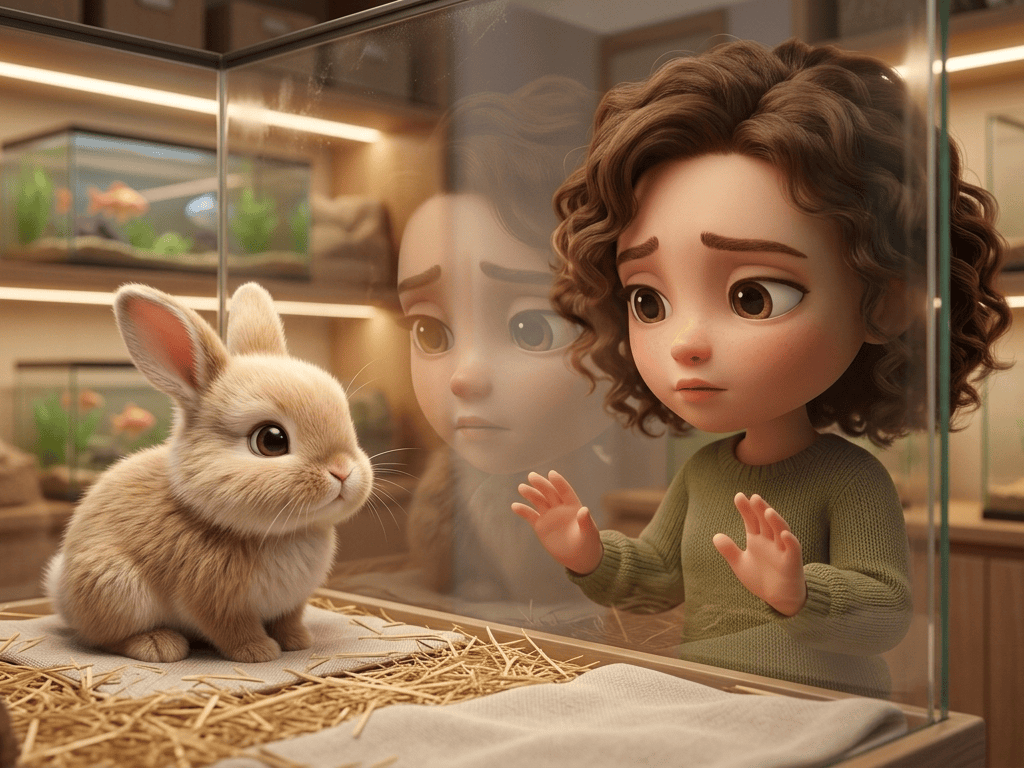
Few situations present a more difficult ethical dilemma for rabbit lovers than seeing a rabbit being kept in poor conditions.
Perhaps the enclosure is overcrowded. 

Perhaps there is little or no hay. Perhaps the rabbit appears thin, dirty, or unwell. The immediate instinct for many people is entirely understandable: 

“If I buy this rabbit, at least I can give it a better life.”

The Individual ViewpointThe Systemic Viewpoint

For that individual rabbit, completing the purchase and extracting them from the environment may indeed lead to an immediate, safer, and happier future.

When an animal is purchased from a business, the sale signals continued consumer demand. This provides revenue to the seller, encouraging the exact same business model to continue.

Helping One Rabbit vs. Helping Many


One of the hardest realities in animal welfare is that the best decision for one individual rabbit may not always be the decision that benefits the greatest number of rabbits.
Purchasing a rabbit from poor conditions may immediately improve the life of that one animal. However, if that purchase contributes to ongoing demand, another animal may eventually be bred, sourced, or displayed to replace it.

An Important Question Worth Considering

“Am I solving today’s problem, or helping prevent tomorrow’s?”

This does not mean buying the rabbit is always the “wrong” decision. Every situation is different, and people often act out of genuine compassion. Instead, it highlights that there is no universal answer.

The Immediate Focus

Some people choose to help the individual animal directly in front of them, prioritizing immediate rescue and relief.

The Long-Term Focus

Others focus on addressing the larger commercial systems that allow poor welfare to continue, prioritizing macro-level change.

Both approaches are motivated by genuine compassion, even if they reach different conclusions.

Best Practices

Taking Action Responsibly


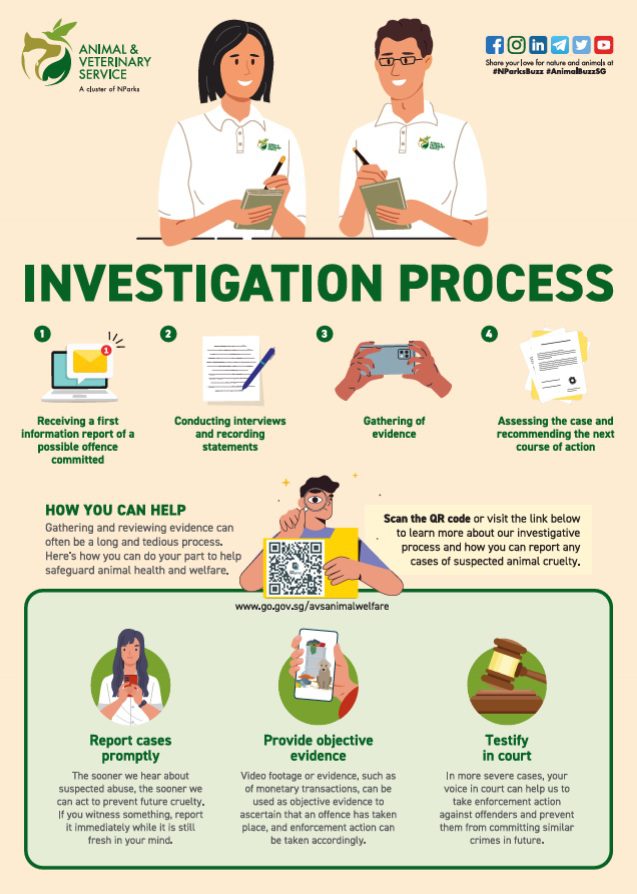
If you genuinely believe a rabbit is being neglected or subjected to cruelty, objective documentation and reporting are generally more effective than confronting staff or relying solely on social media. Whenever it is safe and lawful to do so, consider this structured approach:

  • Recording the specifics: Note the exact date, time, and location.
  • Gathering visual evidence: Take clear, unedited photographs or videos of the conditions.
  • Documenting objective observations: Focus on verifiable facts, such as the absence of food or water, unsafe housing, obvious untreated injuries, or severe hygiene concerns.
  • Avoiding confrontation: Refrain from arguments with staff or management, as this may escalate the situation or unintentionally interfere with subsequent investigations.
  • Reporting promptly: Forward your concerns through the appropriate official channels or recognised animal welfare organisations.

It is important to report observable facts rather than assumptions or accusations. This allows investigators to assess the situation fairly, objectively, and in accordance with the available evidence.

Avoid Public Shaming Before the Facts Are Known


It is understandable to feel upset after seeing animals in poor conditions. However, photographs or short videos rarely tell the complete story. Consider these perfectly valid alternative contexts:


Temporary Situations

  • A rabbit may have been temporarily isolated for veterinary treatment.
  • An enclosure may have been emptied during routine cleaning.
  • A water bowl may have been removed briefly for cleaning or refilling.

Repeated Pattern Concerns

Conversely, repeated observations of poor husbandry, untreated illness, unsafe housing, or inadequate access to food and water may indicate genuine welfare concerns that warrant formal investigation.

Prioritising True Animal Welfare
Before sharing allegations publicly, consider reporting your concerns through the appropriate authorities first. This helps protect both animal welfare and fairness to everyone involved while allowing trained investigators to establish the facts effectively.

Official Reporting Channels For Animal Cruelty


🇸🇬 Reporting in Singapore🇲🇾 Reporting in Malaysia

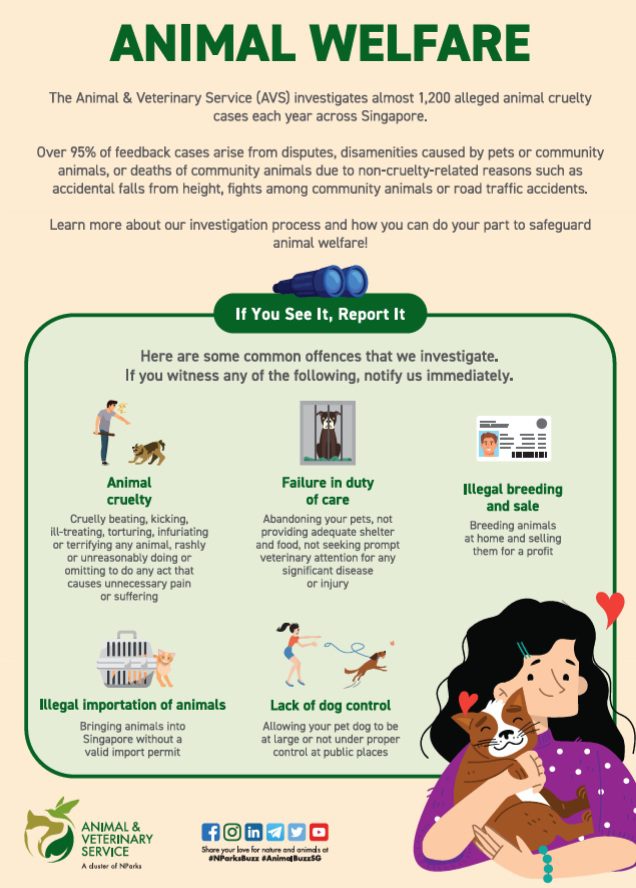
In Singapore, suspected animal neglect or cruelty can be reported to the Animal & Veterinary Service (AVS), a cluster of the National Parks Board (NParks).

To submit a report directly, you can lodge an official report via the online AVS Feedback Form.

Investigations may involve gathering evidence, interviewing witnesses where appropriate, and assessing whether sufficient evidence exists to determine whether offences under the law may have occurred.

Useful information to submit:

  • The business name and precise address.
  • The date and time of your observation.
  • Photographs or videos taken lawfully.
  • A factual and objective description of what you observed.

In some cases, investigators may contact witnesses for additional information or statements. Providing accurate and objective evidence can assist the investigation. Where appropriate, recognised animal welfare organisations such as the SPCA Singapore may also be able to provide guidance or support.

In Malaysia, suspected breaches of animal welfare legislation can be reported to the Department of Veterinary Services (DVS) or other relevant enforcement authorities. For guidelines, you can review the Malaysia Animal Abuse Reporting Guide.

Formal complaints can be filed through the official DVS Feedback Form & Hotline Portal.

As with any report, objective information submitted through official channels is generally more valuable than public speculation.

Useful information to submit:

  • The exact location of the premises.
  • The date and time of the observation.
  • Photographs or videos where legally permitted.
  • A clear, factual description of the observed conditions.

Recognised animal welfare organisations may also be able to provide advice or assistance. You can file a case report or reach out to the Persatuan Haiwan Terbiar Malaysia (SAFM) via their Animal Cruelty Report Form or call their hotline at +6013-706 6770.

Animal Welfare

Chapter Conclusion

Good Welfare Is About Standards, Not Labels


Although this article discusses situations where welfare standards may be poor, it is equally important to recognise that responsible breeders, reputable pet shops, and dedicated rescue organisations all exist. Likewise, poor husbandry can occur in any setting. Rather than judging a rabbit’s source by its label alone, we must learn to evaluate the objective standard of care being provided in real time.

Evaluating the EnvironmentShifting Consumer Habits

Observe carefully and ask questions. Look past the storefront or marketing setup. Verify clean, continuous access to species-appropriate grass hay, fresh water, and adequate space allowing the rabbit to stretch fully.

Inquire explicitly about veterinary checkups, weaning dates, and source backgrounds rather than accepting surface generalities.

Reward biological transparency. Support operations—whether commercial setups or community rescues—that willingly make animal records available, share clear biological parameters, and prioritize health over high-turnover sales patterns.

By actively backing facilities that exhibit open, constructive dialogue, we structurally support better industry-wide conditions.

📢

Join Our Broadcast Community


Want real-time private live sale, rabbit care tips, scientific insights, and welfare updates delivered directly to your device? Step into a space designed exclusively for proactive pawrents who choose education over guesswork.


What to Expect inside:

  • Weekly bite-sized husbandry & dietary tips.
  • Private flash sales, sneak previews.
  • Direct, evidence-based advice for everyday care.

Get Connected Instantly

Tap below to step out of isolation and join a network of like-minded rabbit lovers.

Text <Join> Here

Educational Disclaimer

The information provided in this guide, including dietary parameters, handling guidelines, and husbandry observations, is intended for general educational and informational purposes only. It does not constitute professional veterinary advice, diagnosis, or treatment.

While we strive to maintain evidence-based accuracy, individual biological needs can vary heavily based on a rabbit’s breed, age, and unique medical history. Always consult a licensed exotics veterinarian or qualified animal healthcare professional immediately if your rabbit displays clinical symptoms, sudden behavioral changes, or signs of underlying distress. Never delay or disregard professional veterinary guidance based on any material read online.