
The Home Rabbit First Aid Kit
Why Every Rabbit Owner Needs a First Aid Kit
Emergencies rarely happen when veterinary clinics are open and fully staffed. A rabbit may tear a nail at midnight, develop sudden gastrointestinal stasis during a public holiday, or sustain a minor wound while playing.
Because rabbits are prey animals, their biological survival strategy is to hide pain until they absolutely cannot mask it anymore. By the time you notice your rabbit is “acting a little quiet,” you aren’t dealing with day one of an illness—you are likely dealing with a situation that requires immediate intervention. In these high-stress moments, a well-prepared rabbit first aid kit makes the difference between calm, effective action and frantic searching for supplies.
Important Note
It is important to understand that a rabbit first aid kit is not a substitute for veterinary treatment. Its purpose is to provide immediate supportive care, stabilize the rabbit, prevent further injury, and buy valuable time while professional medical help is being arranged.
A rabbit first aid kit should be assembled before an emergency occurs, stored in an easily accessible location, and checked regularly to ensure that supplies remain clean and within their expiration dates.
The Golden Rule of Rabbit First Aid
First aid is intended to:
- Stabilize the rabbit.
- Prevent the condition from worsening.
- Reduce pain and stress where possible.
- Support vital functions.
- Facilitate safe transport to a rabbit-savvy veterinarian.
What First Aid Is Not
First aid is not intended to diagnose diseases, replace veterinary treatment, or delay seeking professional care.
IMMEDIATE VETERINARY CARE REQUIRED:Whenever a rabbit appears seriously ill, collapses, struggles to breathe, experiences severe bleeding, develops neurological symptoms, or stops eating completely, veterinary attention must be sought immediately.
Essential Components of a Rabbit First Aid Kit
1Digital Rectal Thermometer & Water-Based Lubricant
A small digital rectal thermometer is one of the most vital diagnostic tools a rabbit owner can possess. When a rabbit goes into GI stasis or shock, their body temperature drops rapidly.
- Normal Rabbit Temperature: 38.5°C to 40.0°C (101.3°F to 104.0°F).
- Hypothermia Warning: A temperature below 38.1°C (100.5°F) indicates dangerous hypothermia.
- Lubricant: A small tube of sterile, water-based lubricant must always accompany the thermometer to prevent discomfort or tissue injury during insertion.
2Nutritional Support & GI Arsenal
Gastrointestinal slowdowns are the number one emergency rabbit owners face. If a rabbit stops eating for more than 6 to 8 hours, they risk developing life-threatening hepatic lipidosis (fatty liver disease).
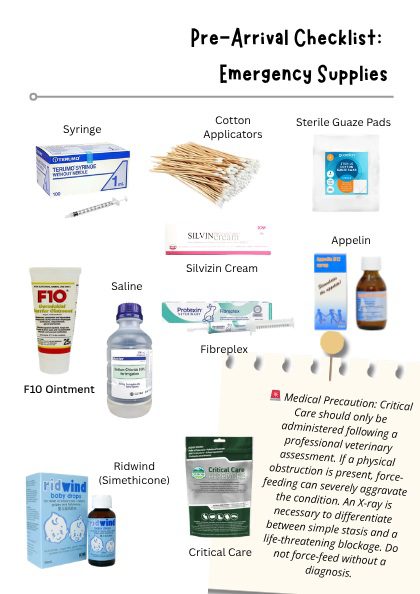
- Critical Care (Herbivore): A powdered, high-fiber recovery food designed for syringe-feeding. Always keep an unexpired bag on hand to support vital gut motility.
- Fibreplex: A high-fiber probiotic and prebiotic paste designed for rapid intestinal support during gut flora disruptions.
- Ridwind (Simethicone Drops): Liquid infant gas drops (20mg/mL) to safely relieve painful gas accumulation in the GI tract.
- Appelin: A nutritional supplement used under veterinary guidance to stimulate appetite and kickstart voluntary feeding during recovery.
- Needleless Syringes: Keep oral syringes available in multiple sizes (1mL for precise medication delivery and 35mL–60mL catheter tips for thick recovery mixtures).
3Wound Care & Infection Control
Rabbits have incredibly thin, fragile skin that tears easily. Furthermore, rabbit pus is thick and paste-like (heterophilic), meaning abscesses form quickly and do not drain easily on their own.
- Sterile Saline Solution: Invaluable for safely flushing debris out of wounds, irrigating sensitive eyes, or cleaning minor abrasions without stinging.
- F10 Ointment: A veterinary-grade antimicrobial barrier cream used to treat minor skin infections, hot spots, or surface abrasions while keeping external pathogens out.
- Silvizin Cream (Silver Sulfadiazine): A specialized topical antimicrobial cream highly effective for managing minor burns, skin lesions, and clean dermal wounds.
- Sterile Gauze Pads: Ideal for packing wounds, absorbing discharge, or applying clean pressure to bleeding areas without leaving behind loose threads.
- Cotton Applicators: Double-ended cotton swabs that provide clean, precise application tools for targeted topical creams and ointment treatment.
4Bandages and Dressings
- Non-Stick Dressings: Essential base layers for wounds because ordinary adhesive tapes and traditional bandages will painfully rip delicate rabbit fur and fragile healing skin tissue.
- Self-Adherent Bandage Wrap: Commonly known as cohesive bandage wrap, this material sticks cleanly to itself without sticky adhesives. It is used to secure primary dressings. Bandages must never be wrapped tightly, as rabbits have extremely delicate limb circulation.
5First-Aid Tools
- Blunt-Tipped Scissors: Used for trimming dressing gauze or cleanly cutting away entangled materials. The rounded blunt tips drastically minimize the risk of accidentally puncturing fragile rabbit skin during an emergency struggle.
- Fine-Tipped Tweezers: Used to gently safely extract hay splinters, small foreign bodies, or loose environmental debris around fresh wounds. Always disinfect after use.
- Clean Towels: Keep at least two thick towels handy. Essential for safely securing an uncooperative rabbit via the protective “bunny burrito” handling method, providing immediate warming, or padding an emergency carrier box.
6Hemostasis & Warming Supplies
- Styptic Powder or Cornstarch: A broken nail bleeding from the quick is a very common minor household panic. Applying styptic powder or plain cornstarch with steady pressure controls the bleeding quickly.
- Emergency Heat Source: Essential for treating shock hypothermia. Use microwaveable heat packs or wrapped warm water bottles. Never put raw heat sources directly against skin; always wrap them inside a protective towel layer.
7Pediatric Stethoscope (Advanced Monitoring)
A pediatric or small-animal stethoscope is a valuable diagnostic tool for advanced owners to assess gastrointestinal motility during suspected stasis.
- Gut Motility Monitoring: Placing the stethoscope gently against your rabbit’s flanks allows you to listen for normal gut sounds (gurgling, bubbling, and tinkling). Total silence over a 2-minute period indicates a highly critical, advanced state of GI stasis.
- Why Pediatric?: Standard adult stethoscopes have a chest piece that is far too wide to isolate specific sides of a rabbit’s abdomen or pick up their rapid heart rate cleanly.
Items That Should NOT Be Used Without Veterinary Guidance
Many well-intentioned rabbit owners unknowingly cause severe harm by administering medications intended for humans or other animals. Avoid keeping or administering the following without explicit veterinary instruction:
- Human Painkillers / NSAIDs: (e.g., Ibuprofen, Acetaminophen). These can cause fatal organ failure.
- Leftover Antibiotics: Certain common antibiotics (like oral amoxicillin or penicillin-based drugs) disrupt a rabbit’s delicate cecal flora, triggering fatal enterotoxemia.
- Anti-Diarrheal Medications: True diarrhea in rabbits is rare and usually fatal; over-the-counter anti-diarrheal medications can halt gut motility entirely.
- Essential Oils & Herbal Remedies: Many are highly toxic to a rabbit’s sensitive respiratory system and liver.
- Topical Creams: Over-the-counter human creams (especially those containing steroids or triple antibiotics) can be toxic if ingested when the rabbit grooms itself.
Monthly Rabbit First Aid Kit Maintenance
A rabbit first aid kit is only useful if its contents are ready when needed. Set a recurring reminder once a month to perform a five-minute check:
- Check Expiration Dates: Especially on recovery food bags.
- Replace Opened Sterile Products: Once a saline pod or dressing pack is opened, it is no longer sterile.
- Restock Used Supplies: Ensure syringes are clean and moving smoothly.
- Verify Emergency Details: Ensure clinic phone numbers or hours haven’t changed.
- Inspect Heat Sources: Ensure microwaveable discs or bottles remain fully functional and leak-free.
Medical Precaution
Critical Care requires a professional assessment. If an obstruction is present, force-feeding can be fatal. An X-ray is necessary to differentiate between simple stasis and a life-threatening blockage. Do not force-feed without a diagnosis.
Emergency After-Hours
Westside Vet Emergency Hospital
86 Serangoon Garden Way Singapore 555982
3-Hour Protocol
Ridwind (Simethicone) Administration:
Hour 1: Administer 1ml immediately.
Hour 2: Administer second 1ml dose.
Hour 3: Administer final 1ml dose.
Final Thoughts
Responsible rabbit ownership is not merely about providing food, housing, and affection. It means preparing for the unexpected.
A thoughtfully assembled rabbit first aid kit will not replace veterinary care, but it provides the precise tools needed to respond calmly, logically, and effectively when emergencies arise. The goal is not to become your rabbit’s doctor—it is to become your rabbit’s first responder. In an emergency, preparation is often the most valuable medicine of all.