
 Pro-Tip: Viewing on a phone? Select desktop mode or rotate to landscape for the best reading experience!
 Estimated Read Time: 12 Minutes
Oishi Bunnies Herbal Atlas
Astragalus Root
Astragalus membranaceus & A. membranaceus var. mongholicus
Pee-Casso inspected a dried astragalus slice and declared it “a tongue depressor with ambitions.”
Bunnini checked the jar. “Before we review the flavour, let’s confirm which plant this is.”
Good instinct. Astragalus has a long traditional history, a growing pile of rabbit research, and a few look-alikes worth knowing about. Let’s sort it out.
Written by Cookie Yiyi, herbalist, gardener, fosterer and rehomer of 18 rabbits, guardian to four resident house rabbits, and avid gardener growing forage for her bunnies.
Educational Notice: This profile explores astragalus root’s traditional uses, phytochemistry and rabbit-specific research. Whole root, decoctions, extracts and isolated compounds differ in composition and concentration; findings about one preparation cannot automatically be applied to another. The evidence reviewed does not establish a whole-root serving for companion rabbits. Medicinal use requires individual assessment with a rabbit-savvy veterinarian.
The Verdict on Astragalus Root for Rabbits
Astragalus root is a longstanding traditional herb with genuine rabbit-specific research. Most rabbit studies examined extracts, isolated compounds or herbal mixtures; the evidence reviewed does not establish a serving dose of whole dried root for companion rabbits.
This entry explores its traditional uses, chemistry and potential relevance to rabbit care. Medicinal use should be considered individually, with attention to the exact preparation, health conditions and prescribed medicines.
Herb at a Glance
| Common names | Astragalus root, milkvetch root, Huang Qi; also sold as Bei Qi |
|---|---|
| Chinese name | 黄芪 |
| Names in herbal references | Astragalus membranaceus and A. membranaceus var. mongholicus, also called A. mongholicus |
| Current botanical treatment | Kew accepts Astragalus mongholicus and lists the names above among its synonyms. |
| Family | Fabaceae (legume) |
| Traditional part used | Dried root |
| TCM taste and temperature | Sweet, slightly warm |
| TCM channels | Spleen and Lung |
| Research interests | Immune signalling, oxidative stress, inflammation, metabolism, intestinal function |
| Feeding position | No established whole-root serving |
Botanical databases and pharmacopoeias use different naming systems, so a good supplier names the exact medicinal source. “Astragalus” on its own doesn’t say enough.
Why Astragalus Interests Rabbit Researchers
Astragalus has an extensive research literature, and rabbit researchers have noticed. Its compounds have been investigated for effects on immune signalling, oxidative stress, inflammation, metabolism and the gut.
A 2026 rabbit feeding study gave dietary astragalus polysaccharides (APS) to breeding does under heat stress. Other rabbit work covers kidney injury, blood lipids, vaccine responses and heart remodelling. Each used a different preparation, route and rabbit population; the full list is in Traditional Use & Modern Scientific Understanding.
Edible Anatomy & Preparation
The root is the part this entry covers. Leaves, stems, flowers and seeds are separate questions, and the traditional record is about the root.
| Preparation | What It Is |
|---|---|
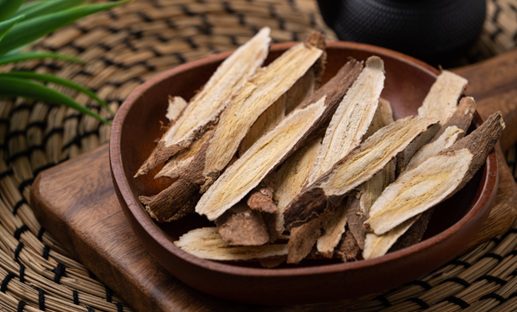
| Plain dried root | The dried plant material, commonly sold in slices |
| Root powder | Ground whole root, distinct from a purified extract |
| Decoction | Compounds simmered into water; strength varies with how it’s made |
| Honey-prepared root | A separate processed herbal preparation with added honey |
| APS extract | An extracted polysaccharide fraction; composition depends on production |
| Flavonoid fraction or astragaloside IV | Concentrated or isolated substances used in particular experiments |
The Hong Kong Chinese Medicine Regulatory Office identifies the dried root as the medicinal material. Human capsules, injectable products and research extracts are separate products from whole root, and they belong under a vet’s specific instructions.
Astragalus-Specific Feeding Cautions
No whole-root serving is established. The studies reviewed did not establish an evidence-based serving of plain dried astragalus root for companion rabbits, so this entry doesn’t give one. Teas need a defined concentration before a volume means anything. If a rabbit-savvy vet builds astragalus into a care plan, the plan should name the exact product and preparation, the purpose, the amount and frequency, and the review period.
Keep one unit mix-up in mind: studies often report milligrams per kilogram of feed, which is not milligrams per kilogram of body weight.
Identification matters. Never feed unidentified wild astragalus, and don’t assume an ornamental plant is the medicinal one. Details are in Astragalus Names & Look-Alikes.
Medications and medical conditions. Human references identify possible interactions with immunosuppressants and other medicines, and rabbit-specific interaction data are limited. A rabbit on medication, particularly immunosuppressive treatment, needs vet review before astragalus is introduced. Autoimmune or immune-mediated disease also deserves individual assessment.
Pregnancy, nursing and young rabbits. The breeding-doe APS study used a defined preparation in that population. We give no home whole-root recommendation for pregnant or nursing does or for young rabbits. Human pregnancy cautions are human guidance, and we label them that way.
Acute illness. Traditional TCM cautions about fever belong to a TCM pattern framework. An acutely unwell rabbit needs a vet first; herbs can be considered inside the diagnosis and treatment plan.
Buying well. Look for a supplier who can tell you the botanical identity and plant part, the processing and any added ingredients, the batch traceability and the contaminant testing. Honey-prepared root is its own product and shouldn’t be passed off as plain root.
Sulfur fumigation changes astragalus chemistry: a 2018 analytical study found shifts in several measured saponins and flavonoids, and separate research has measured sulfur dioxide residues. “Sulfur-free,” “organic” and “premium” are claims worth checking against documents.
Meet the Plant
Medicinal astragalus is a perennial legume of temperate Asia. It grows a substantial root, compound leaves and pea-family flowers. Kew records A. mongholicus across a broad temperate range that includes parts of China, Mongolia, Korea and Russia. Huang Qi is traditionally prepared from the recognised medicinal source plants, with the roots cleaned, dried and cut into pieces.
Dried slices are generally pale yellow to beige and fibrous. Appearance describes the material, and identity and quality come from documentation.
Does Older Root Mean Better Root?
A study of 38 samples from Hunyuan, Shanxi, reported the highest measured totals of selected flavonoids and saponins in five-year-old roots. That result applies to the material examined, and root age is one factor among several.
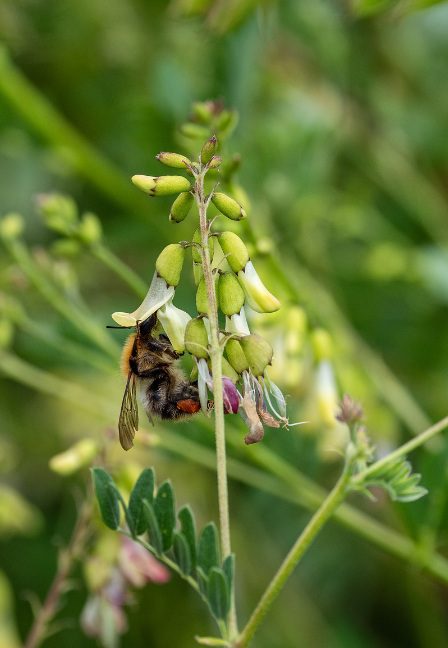
Astragalus — a temperate perennial legume traditionally used for its root
Astragalus Names & Look-Alikes
The naming tangle. Herbal references retain the names A. membranaceus and A. membranaceus var. mongholicus. Kew currently places these names under the accepted A. mongholicus. Clear botanical identification helps readers connect older herbal references with current taxonomy.
The locoweeds. Some Astragalus and Oxytropis species are toxic locoweeds. Swainsonine-containing plants can cause serious neurological and reproductive effects in livestock, and other toxic plants in these groups present different hazards. The takeaway is simple: buy documented medicinal root, and leave field-collected “astragalus” in the field.
Nutritional & Phytochemical Profile
Astragalus chemistry is better charted than its value as a rabbit food.
| Compound Group | Examples |
|---|---|
| Polysaccharides | Astragalus polysaccharides (APS), a mix of fractions, not one uniform compound |
| Triterpenoid saponins | Astragalosides, including astragaloside IV |
| Isoflavonoids | Calycosin, formononetin, ononin and related glycosides |
| Other constituents | Additional carbohydrates, amino acids and other plant compounds |
Chemical studies have measured several astragalosides and flavonoids directly. Amounts vary with the material and processing.
We didn’t find a representative standard table to publish dependable fibre, protein or calcium figures for commercial dried Huang Qi, so we haven’t printed any. Its tough texture also doesn’t make it a stand-in for grass hay. Hay stays the foundation.
Traditional Use & Modern Scientific Understanding
Traditional herbalism and modern research describe the same root in different languages. Both are worth reading.
Traditional / TCM Use
Huang Qi has a long place in Chinese materia medica. In TCM it’s sweet and slightly warm, linked to the Spleen and Lung channels. Its classical functions include:
- Tonifying Qi
- Raising Yang
- Securing the exterior and addressing spontaneous sweating
- Promoting urination and relieving oedema
- Supporting tissue regeneration and wound healing
These terms come from a traditional diagnostic framework. In TCM, Spleen Qi describes a traditional functional concept rather than the anatomical spleen alone. Modern herbal writing often calls astragalus a tonic or adaptogen, and that’s how it’s usually described outside TCM.
Food Use in Humans
Astragalus root is cooked into soups and decoctions. In 2023, China’s health authorities added Huang Qi to the substances traditionally used as both food and Chinese medicinal material, under the applicable conditions. That listing is about human food use.
What Has Been Studied in Rabbit Diets?
The rabbit literature is genuine and varied. Dietary studies have examined extracted polysaccharides and herbal combinations:
- Heat-stressed breeding does, 2026: A study gave dietary astragalus polysaccharides (APS) to 460 Hyla does. Certain inclusion levels improved reproductive and kit-growth outcomes, alongside changes in inflammatory markers, gut microbiota and fermentation measures. This involved APS extract in breeding rabbits; whole-root effects remain unresolved.
- Five-herb dietary mixture, 2025: A formula containing astragalus and four other herbs produced changes in growth, intestinal and immune-related outcomes. Effects cannot be assigned to astragalus alone.
Experimental Kidney Injury Studies
- Renal shock-wave injury, 2005: An intravenous astragalus preparation was investigated for protection against free-radical renal tubular injury. Superoxide dismutase levels recovered faster in treated rabbits.
- Renal shock-wave injury, 2006: A study involving astragalosides and 30 male rabbits reported improvements in several oxidative-injury and tubular-damage measures. Serum creatinine did not change significantly.
Both studies examined experimentally induced shock-wave injury, a different setting from naturally occurring chronic kidney disease.
Cardiovascular & Vaccine Research
- Experimental atherosclerosis, 2012: Total astragalus flavonoids were studied in rabbits receiving a high-cholesterol diet. Researchers reported changes in blood lipids and reduced aortic fatty-streak formation. The findings concern a flavonoid fraction in an induced disease model.
- Vaccine research, 2011: Polysaccharide preparations, including APS, were investigated with an inactivated rabbit haemorrhagic disease vaccine, examining immune responses and production outcomes. This was vaccine-associated research, distinct from dietary root use.
- Cardiac remodelling, 2026: Isolated astragaloside IV was studied in rabbits with induced renal artery stenosis. Cardiac changes were reported, with methodological limitations affecting interpretation.
The heat-stress study stands out because it used dietary administration in a large group of does. The microbiome and short-chain fatty acid changes are associations, and the mechanism is still being worked out.
Remaining research gaps. We did not identify studies establishing whole-root feeding guidance for companion rabbits, or clinical benefit for snuffles, E. cuniculi or naturally occurring chronic kidney disease.
Herb Profile: Evidence Ratings
Rating principle: These assessments describe the quality, depth and relevance of the evidence in each category. They are not a safety score or a feeding recommendation.
| Evidence Category | What the Record Shows |
|---|---|
| Botanical Identification | Well documented; recognised medicinal source names and authoritative botanical records exist, and individual products still need authenticating. |
| Traditional Herbal History | Strong; established materia medica and pharmacopoeial use. |
| Edibility / Food Use | Documented for humans, with regulatory recognition in China; rabbit servings aren’t established. |
| Phytochemical Evidence | Well characterised; polysaccharides, saponins and flavonoids are studied extensively, and preparations vary. |
| Rabbit-Specific Evidence | Published studies examine dietary polysaccharides, isolated compounds and herbal combinations. Whole-root serving sizes and routine schedules for companion rabbits remain unresolved. |
Growing Astragalus in Singapore
Astragalus is mainly a temperate plant, so Singapore’s heat is a real challenge. A Korean greenhouse study found that rising temperatures affected growth, chlorophyll, photosynthesis and medicinal marker compounds. It wasn’t a test of long-term cultivation in Singapore, so the question is open.
Growing an authenticated plant can be a fun garden experiment. Foliage in a pot is lovely, and root quality is a separate matter that foliage can’t answer.
The Oishi Bunnies Bottom Line
After caring for rabbits through the easy days and the difficult ones, we have learnt that good care does not always look the same.
For a healthy rabbit, herbs can be part of the simple pleasures of everyday life — different scents to investigate, leaves to forage through, new flavours to taste and a little more botanical variety alongside a hay-based diet. Many of these same plants also carry long histories of traditional medicinal use, with fascinating chemistry that modern science continues to investigate.
We believe there is room to respect both traditional herbal knowledge and modern science without asking either to be something it is not. Traditional use does not automatically prove that a herb will treat disease, while limited scientific evidence does not necessarily mean that generations of observation have nothing useful to teach us. Sometimes research supports an old idea, sometimes it changes our understanding, and sometimes the answer simply remains uncertain.
That uncertainty becomes especially important when caring for a rabbit who is elderly, chronically ill or approaching the end of life. There may come a time when surgery is no longer suitable, treatment options have become limited, or the burden of further intervention may outweigh what it can realistically give the rabbit.
In those moments, care does not stop simply because cure is no longer possible.
The priorities may change towards comfort, pain relief, appetite, hydration, familiar foods, companionship, mobility, rest and the small things that tell us a rabbit is still finding pleasure in their day. Herbal and botanical support may sometimes have a place within that bigger picture. At other times, a particular herb may offer little benefit or may be inappropriate because of the rabbit’s condition or medications. The individual rabbit matters more than the reputation of any herb.
For us, palliative care is not about trying everything simply because something might help. Nor is it about dismissing a supportive option simply because it comes from traditional herbal practice. It is about choosing thoughtfully, watching the rabbit in front of us, working with veterinary care where it is needed, and continually asking whether what we are doing is adding comfort and quality to that rabbit’s life.
Sometimes medicine is about curing. Sometimes it is about managing a condition for years. And sometimes our responsibility is simply to make the days that remain comfortable, familiar, interesting and filled with as many good moments as possible.
Respect the tradition. Understand the plant. Follow the evidence. But above all, look at the rabbit in front of you — because their comfort, dignity and quality of life are what ultimately matter.
Stay Curious with Oishi Bunnies
Enjoy learning about rabbits and the plants around them? Join our broadcast channels for rabbit-care guides, Herbal Atlas updates, adoption news and shop announcements. Bunnini brings the reading list. Pee-Casso checks whether there’s a cookie announcement.
Join Our Instagram Broadcast Channel
Keep up with Oishi Bunnies in the app you already scroll. Join the conversation around care, curious botanicals and happy bunny news.
Join Our WhatsApp Broadcast
Prefer updates through WhatsApp? Message us at 8202 2272 to request to join our broadcast list.
FAQ
Can rabbits eat astragalus root?
It’s a traditional herb with real rabbit research behind it, and no serving of whole dried root has been established. Choose a clearly identified product, and check with a rabbit-savvy vet first if your bun has health conditions or takes medication.
Is medicinal astragalus the same as locoweed?
No. Huang Qi comes from recognised medicinal source plants, while locoweeds are toxic Astragalus and Oxytropis relatives. Buy documented medicinal root and avoid wild-collected plants.
Can rabbits have the leaves or stems?
This entry does not establish the feeding suitability of astragalus leaves or stems. Findings about root preparations cannot automatically be applied to other plant parts.
Does astragalus protect rabbits against RHD?
The cited vaccine research looked at polysaccharide preparations given alongside a vaccine. Vaccination remains the protection against RHD.
References & Further Reading
Identification, Tradition and Food Use
Rabbit Research
- Wang and colleagues, 2026: APS, heat stress, doe fertility and kit growth
- Sheng and colleagues, 2005: astragalus and renal tubular injury after shock waves
- Li and colleagues, 2006: astragalosides and shock-wave-induced renal oxidative injury
- 2012: total astragalus flavonoids in experimental rabbit atherosclerosis
- 2011: polysaccharides and rabbit haemorrhagic disease vaccine responses
- 2025: a five-herb dietary mixture in rabbits
- 2026: astragaloside IV in an experimental rabbit cardiac-remodelling model
Quality, Cultivation and Safety
- Peng and colleagues, 2017: root age and selected bioactive constituents
- Xing and colleagues, 2018: sulfur fumigation and chemical composition
- 2017: sulfur dioxide residue analysis in Radix Astragali
- Kwak and colleagues, 2024: temperature effects on growth and medicinal chemistry
- MSD Veterinary Manual: poisonous range plants, including locoweeds
- NCCIH: Astragalus, usefulness and safety
- Memorial Sloan Kettering: Astragalus and potential interactions
Our Approach to Herbs and Disclaimer
We write the Herbal Atlas because we believe herbal knowledge is worth taking seriously — humans have found value in these plants for centuries, rabbits naturally interact with a remarkably diverse botanical diet, and modern research keeps giving us better ways to understand what these plants contain and what they may do. This section pairs that respect for herbalism with a few practical ground rules.
- Educational use, not a prescription. This profile is for botanical learning and enrichment — it isn’t veterinary advice, a diagnosis, or a treatment protocol. Use it to make an informed feeding decision, not to replace a vet visit.
- Whole herb ≠ medicine. Edible herbs can carry genuinely active phytochemicals and interesting nutritional properties, but feeding a whole herb is a different act from administering a standardised medicinal preparation. Dietary herbs can complement a healthy rabbit’s diet; they don’t substitute for veterinary treatment of a sick one.
- Hay comes first. Unlimited grass hay and clean water are the foundation of a rabbit’s diet. Herbs are a complementary, rotational addition — flavour, variety and enrichment on top of that foundation, not a replacement for it.
- Every rabbit is different. Age, digestive health and medical history all vary. Introduce anything new gradually, in small amounts, and watch appetite, droppings and general behaviour over the next 24–48 hours.
- Concentrates and extracts are their own category. A dried herb and a standardised extract are chemically different exposures, and neither should be confused with essential oils. Never diffuse or administer concentrated aromatic oils to rabbits, orally or topically.
- Extra care for vulnerable rabbits. Kits, frail seniors, pregnant or nursing does, rabbits taking medication, and rabbits with significant chronic disease may tolerate dietary changes differently. Introduce new herbs more cautiously and check with a rabbit-experienced veterinarian when the rabbit’s condition or medication makes food choices clinically relevant.
- Sourcing matters as much as the herb itself. Identify plants correctly, source cleanly, and discard anything spoiled, mouldy or of uncertain origin. No herb is safe if it’s the wrong herb — or a bad batch.
- When in doubt, see a vet. If your rabbit is unwell, professional veterinary care always comes first — no dietary remedy is a substitute for prompt treatment.
Our evidence promise: This Atlas reflects our best current reading of the evidence, and we update it as better research comes along.