 Pro-Tip: Viewing on a phone? Select desktop mode or rotate to landscape for the best reading experience!
 Estimated Read Time: 7 Mins

1. The Great Deception: Trust vs. Trance
To the untrained eye, a tranced rabbit looks "zen." They are limp, their eyes may partially close, and they don't struggle. However, physiologically, this is a Fear-Induced Paradox.

Trancing (Tonic Immobility)
A primitive survival reflex. The rabbit "shuts down" to play dead. They are physically paralyzed but in high-alert panic.
- Eyes: Fixed, "glassy" stare; may show the third eyelid.
- Nose: Frozen or moving in erratic, rapid bursts.
- Limbs: Completely flaccid (limp) like a dead weight.
- Paws: Tucked tightly or splayed rigidly.

True Relaxation
The rabbit stays still because they trust you. They retain the ability to move and choose to stay.
- Eyes: Soft, expressive; may slow-blink or partially close.
- Nose: Slow, rhythmic, and steady twitch.
- Limbs: "Melted" but with subtle muscle tension (warm loaf feel).
- Paws: Tucked comfortably or "superman" stretch.
The Verdict: If your bunny looks like a statue, don't celebrate. A happy bunny is an active participant in their grooming, not a victim of their own reflexes.
2. Why "Head Lower Than Chest" is a Death Trap
While flipping a bunny for inspection is a common handling technique, the danger arises when they are positioned with the head lower than chest level. Science now tells us this orientation, especially when used to induce a trance, is biologically dangerous for several reasons:
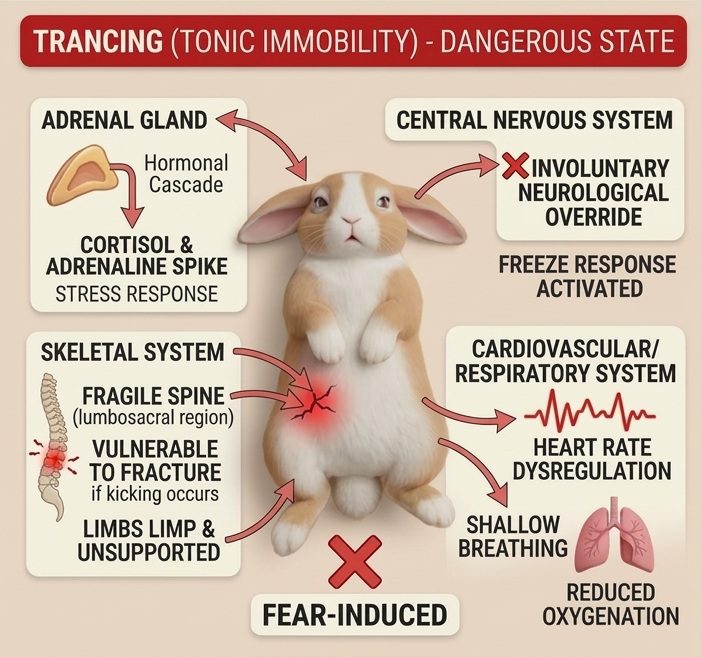
🦴 The "Mortal Kick" (Skeletal Risk)
Rabbits have incredibly powerful hind legs but a very fragile spine (only 7% of their body weight). When a rabbit is flat on its back or poorly supported, its spine is vulnerable.
Danger: If they suddenly "snap out" of the trance and kick, the lack of anatomy-aware support can lead to a lumbar spine fracture or dislocation instantly.
🫁 The Respiratory Crisis
Rabbits are obligate nasal breathers. When the head is lower than the chest, gravity shifts heavy internal organs toward the head.
- Compression: This shifts massive weight onto the diaphragm.
- Restriction: It becomes nearly impossible for the lungs to expand fully.
- Aspiration: This orientation increases the risk of fluids entering the lungs.
- Distress: This leads to shallow breathing, reduced oxygenation, and extreme panic.
⚠️ Note on Trancing: Flipping a bunny to induce stillness is known as Tonic Immobility. This isn't relaxation; it is a state of extreme fear. An anatomy-aware handling technique prioritizes head elevation to ensure the rabbit can breathe clearly while being inspected.
"Stillness is not success if it compromises the very breath and backbone of your bunny."
3. Why Elevation is Life-Saving
Truly good groomers strictly follow the ELEVATION Rule at all times. This means the rabbit's head must always be positioned significantly higher than their chest during any form of handling or restraint.

Graphic: Correct elevation prevents internal organ shift and respiratory distress.
Clear Airways
Elevation uses gravity to keep internal organs from sliding forward. This keeps the lungs clear and ensures your rabbit can breathe deeply, even during the stress of a grooming session.
Vestibular Grounding
A rabbit’s inner ear (balance) is hypersensitive. Maintaining an incline prevents the "free-fall" sensation that triggers the panic-induced trance reflex, keeping them conscious and "grounded."
Pro-Tip: If you aren't sure of the angle, aim for your bunny to be sitting in your arm like they would on a gentle slope—never like they are lying on a bed.
4. Anatomy Aware Techniques Masterclass
This section provides a variety of methods in handling rabbits through the lens of their unique physiology and safety needs. By prioritizing the Elevation Rule—keeping the head significantly higher than the chest—these methods ensure clear airways and a "Safe & Supported State" at all times. From the low-stress stability of the Upright Support to the precision of the Upright Cradle, each technique is designed to respect the rabbit's flight-or-fight equilibrium while allowing for thorough grooming. These holds capitalize on the rabbit's natural anatomy and calming triggers, such as the "blindfold" effect in a Football Carry, to minimize cortisol levels and transform potentially stressful procedures into secure, trust-building interactions..

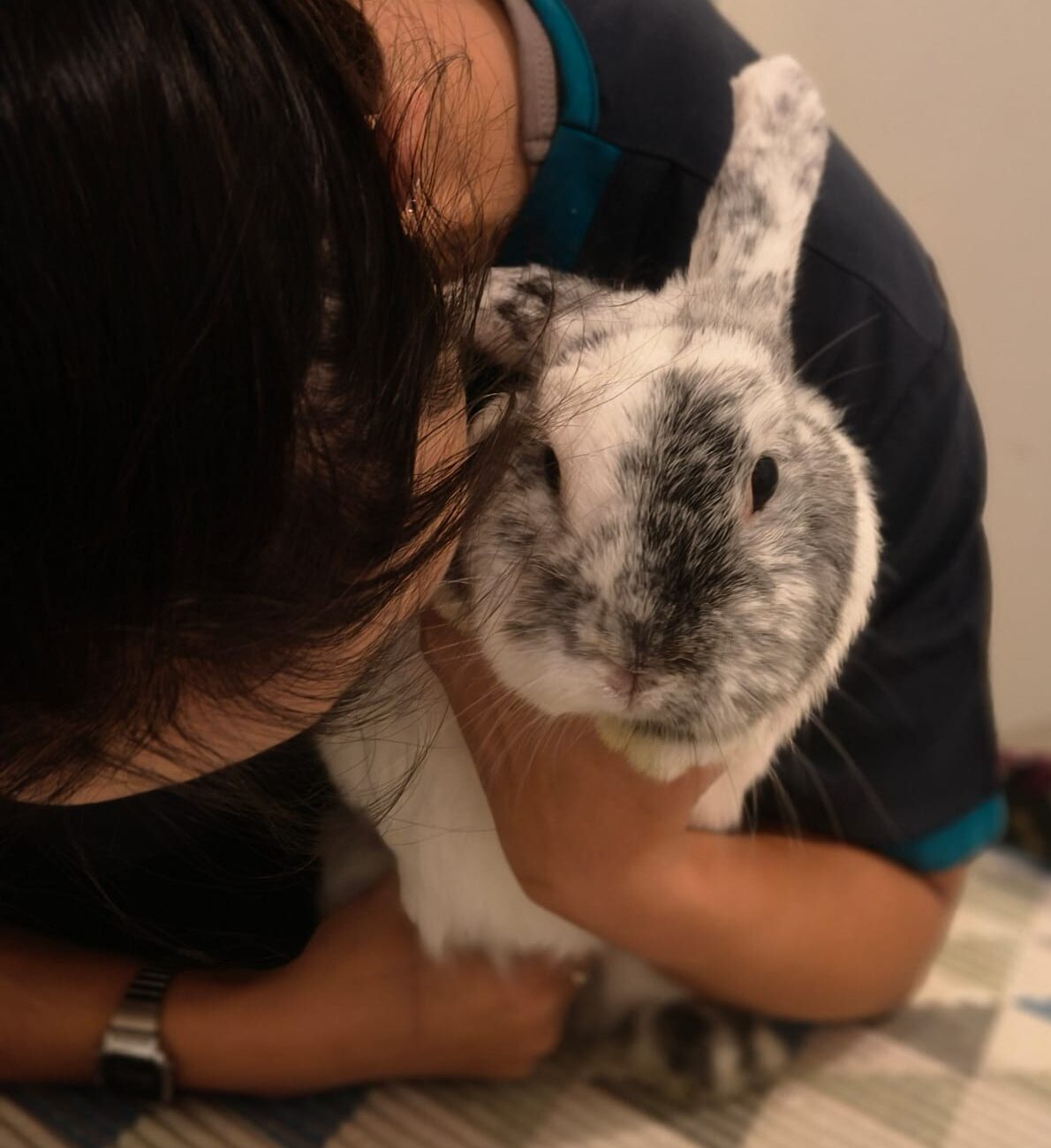
Upright Support (On All Fours)
| Goal: | Maximum Stability & Autonomy |
| Key Technique: | Grounded Shoulder-Rump Framing |
| Best For: | Initial calming, top-coat brushing, and fur shaping. |

Upright Cradle
| Goal: | Visual Inspection & Upper Access |
| Key Technique: | 2-Handler Synergy |
| Best For: | Precision work on the chin, chest, and front paws. |
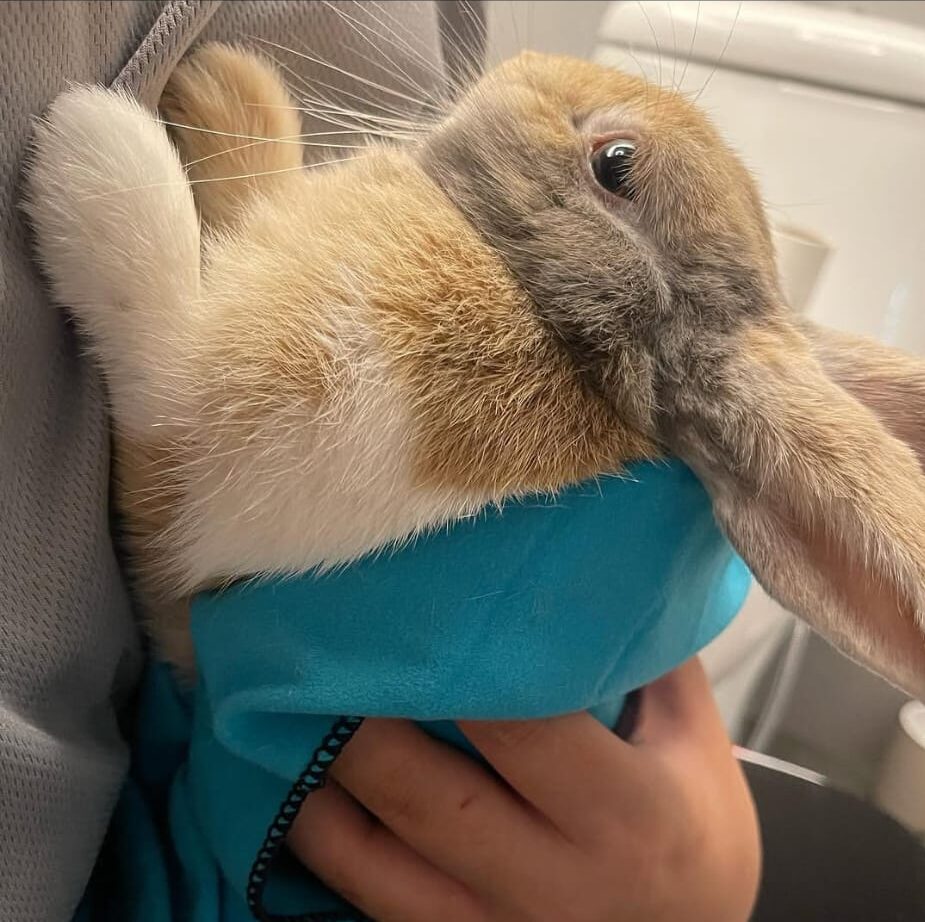

Upright on Two (Chest-to-Chest)
| Goal: | Upper Underside Access |
| Key Technique: | Axillary Exposure |
| Best For: | Belly and underarm brushing. |


Football Carry
| Goal: | Secure Transport & Lower-Body Access |
| Key Technique: | Forearm Shelf & Elbow Nook |
| Best For: | Cutting nails, brushing hind legs/tail. |

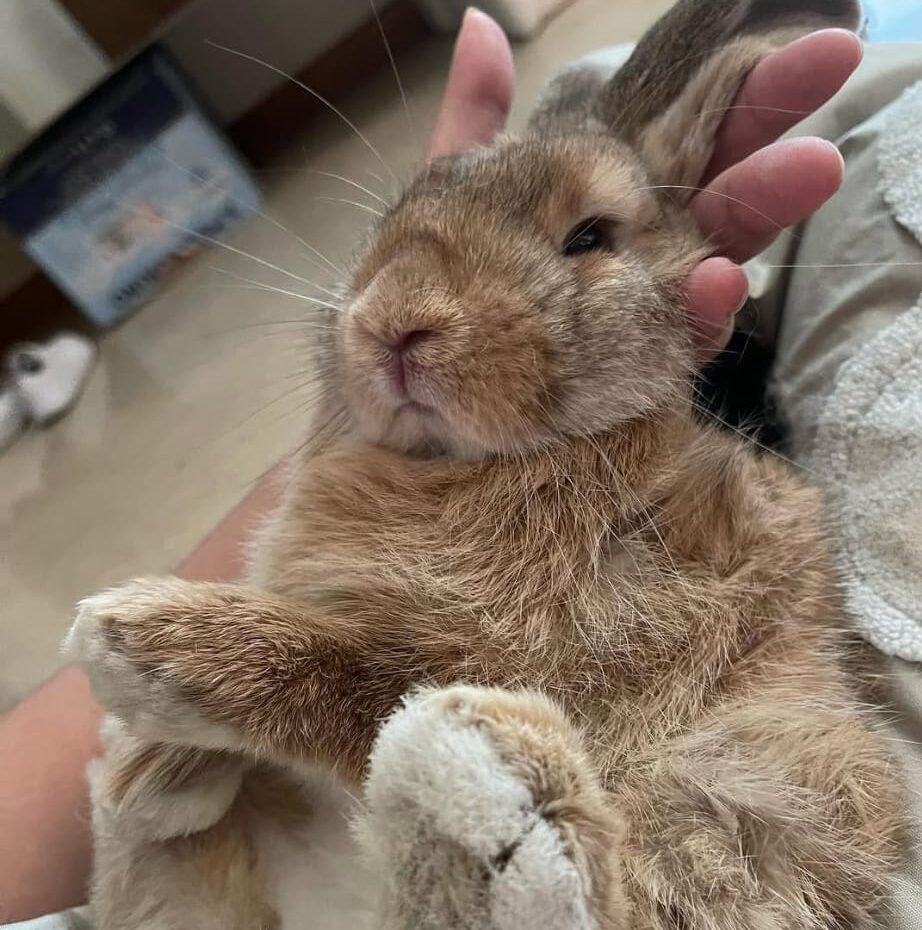
Supported Recline (30°)
| Goal: | Stability & Vision |
| Key Technique: | Lap Base & Palm Stabilization |
| Best For: | Chin/neck/chest checks. |
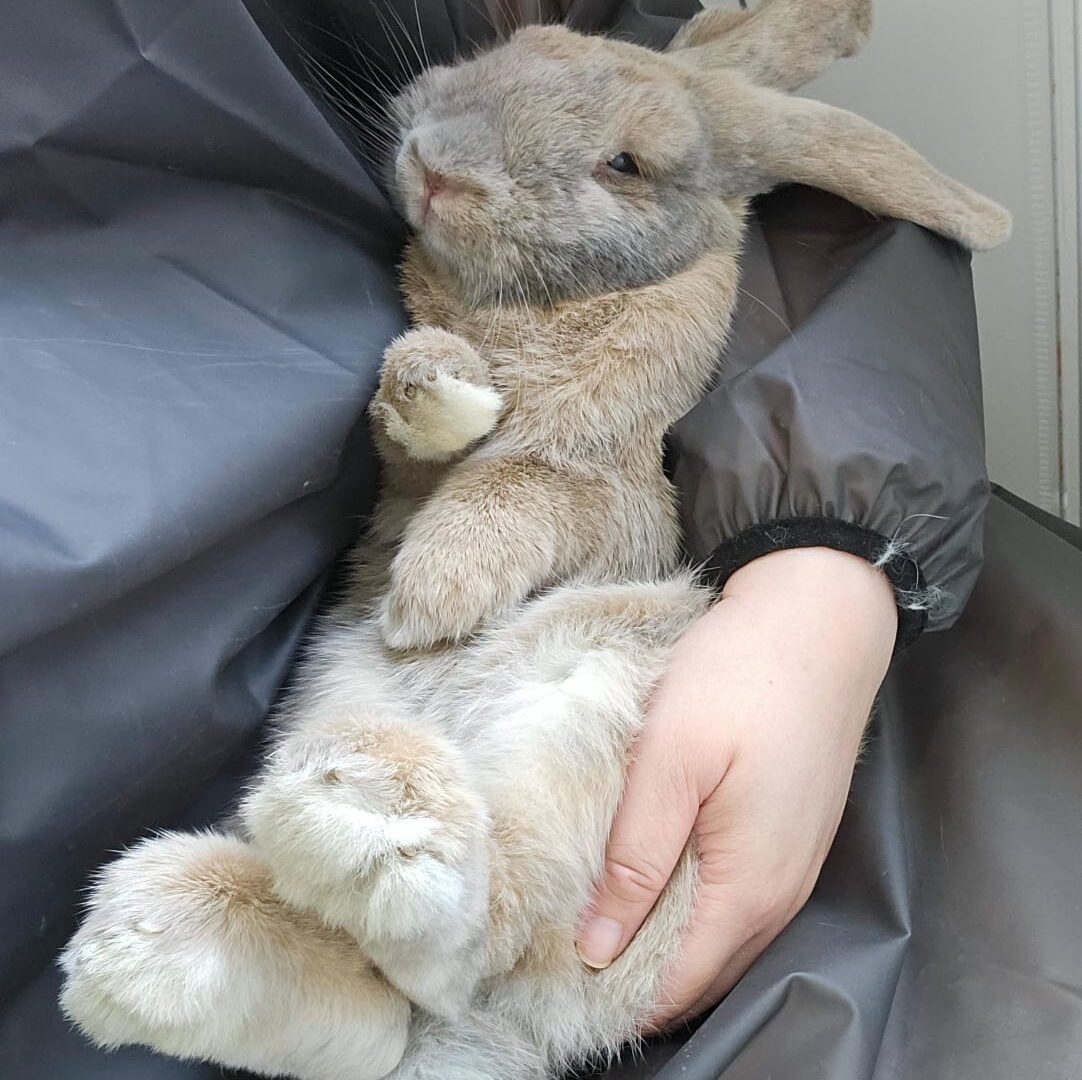

Baby Cradle (45°)
| Goal: | Full Underside Access |
| Key Technique: | Spinal Lockdown |
| Best For: | Scent glands & belly mats. |

Bunny Burrito (Towel Wrap)
| Goal: | Total Immobilization |
| Key Technique: | Swaddle Pressure |
| Best For: | Extreme kickers or meds. |