Before Buying a Rabbit for Kids: A High-EQ Parenting Guide

Before Getting a Rabbit for Kids: A High-EQ Parenting Guide

Before Getting a Rabbit for Kids: A High-EQ Parenting Guide

📱 Pro-Tip: Viewing on a mobile device? Switch your browser to Desktop Mode or rotate to Landscape Layout for the ultimate masterclass reading layout!

📖 Estimated Read Time: 6 Mins

CHAPTER 2.1
Mindful Parenting

Before Getting a Rabbit for Kids:

High-EQ Parenting Guide

Transforming an impulsive pet request into a lifetime lesson in empathy.

Every year, thousands of pets—especially rabbits—are bought entirely on impulse, handed over as birthday gifts, or surrendered under immense pressure because a child cried, begged, and promised the moon.

In the shop or shelter, it’s a picture-perfect moment. The bunny looks like a fluffy, low-maintenance plush toy come to life. But within weeks, the novelty fades. The aesthetic social media photos stop. The daily grind of sweeping up stray hay, scrubbing pungent litter boxes, and managing destructive chewing sets in.

“When the reality of caring for a living creature becomes ‘boring,’ the tragic cycle begins: the pet is neglected in a corner, relegated to a lonely balcony cage, abandoned or surrendered to overcapacity rescue groups.”

As a parent, giving in to an impulsive pet demand doesn’t just put an animal at risk—it teaches your child a dangerous lesson: that living beings are disposable, and that commitments can be discarded the moment they require effort.

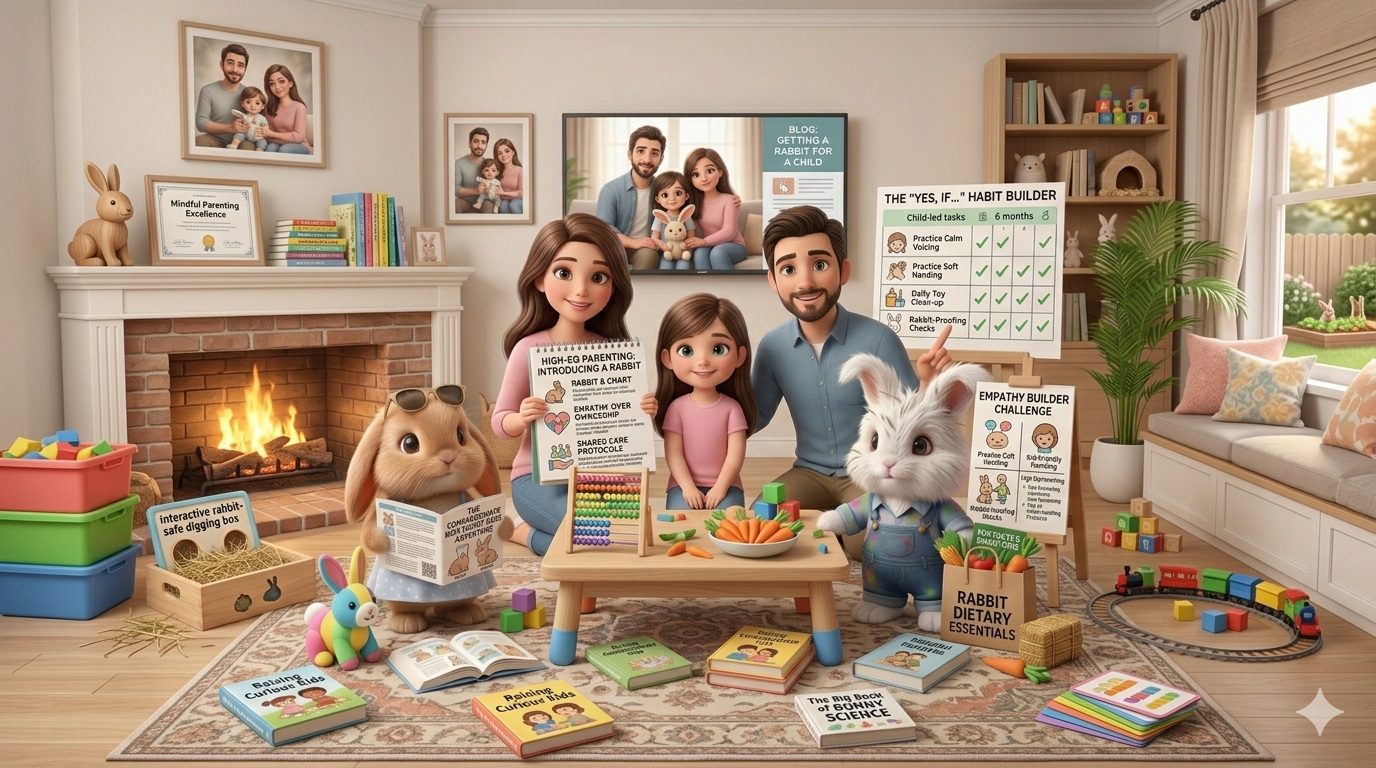
High-EQ parenting flips this entirely. By transforming the request for a bunny into an intensive, thoughtful process, you teach your child that true love isn’t about possession; it’s about sustained, unglamorous responsibility. Here is how you can use the “Bunny Phase” to teach your child high-EQ life skills before a single pet enters your home:

Four Steps to Deepen Empathy

1. The “Empathy Swap”

Children naturally view pets through the lens of what the pet can give them. High-EQ parenting flips the script to focus on what the child can give the animal, building deep cognitive empathy.

The High-EQ Conversation: “Bunnies are prey animals, which means they get scared easily. They don’t cry; they freeze or hide. If our home gets loud, how can we make sure our bunny feels safe, even if it means we can’t hold them whenever we want?”

2. De-Weaponize “The No”

A flat, angry “No” shuts down communication. High-EQ parenting uses conditional agreement, placing the outcome entirely on the child’s demonstrated readiness.

The High-EQ Pivot: “My answer isn’t ‘never,’ it’s ‘not yet.’ For our family to safely welcome a bunny, we need to know certain habits are automatic. Let’s work together over the next six months to build those habits first.”

3. Establish the “Financial Reality”

Many kids are blind to the hundreds or thousands of dollars required for specialized exotic veterinary care, fresh herbs, and premium hay. Research the ongoing costs together.

The High-EQ Strategy: “Let’s look up exotic vet consultation costs together. If we get a bunny, we will need a ‘Bunny Emergency Fund.’ How much of your pocket money are you willing to contribute to this fund every month to show you are a partner?”

4. Normalize the “Unglamorous” Side of Love

Social media clips display clean, perfectly behaved bunnies hopping in beautifully lit rooms. They don’t show the reality of digestive shut-down (GI stasis), shedding, or flying hay.

The High-EQ Action: “True love isn’t just celebrating the fun moments; it’s showing up for the messy, boring parts. Let’s go see what a real rabbit environment looks like on a normal Tuesday afternoon, not just on a social feed.”


When the Child Says…Instead of Saying (Low EQ Parenting)Try Saying (High EQ Parenting)
“All my friends have pets, it’s not fair! You never let me have anything!”“I pay for everything in this house, don’t you dare talk to me about fair!”“It feels lonely when everyone else is sharing stories about their pets, doesn’t it? I understand why you feel left out. Let’s talk about what kind of connection you’re looking for.”
“I promise, promise, promise I will clean the cage every single day!”“You can’t even clean your room, stop lying.”“I love your enthusiasm. Because a bunny can’t ask for a clean space, that promise is a heavy weight. Let’s practice that level of consistency with a small daily household task first to see how it feels.”
“If you loved me, you would let me get one.”“How dare you say I don’t love you after everything I do!”“It hurts when we don’t get what we desperately want, and it might feel like I’m holding back out of anger. But my job is to protect our family’s peace and the safety of that animal. I love you too much to let us enter a situation we aren’t fully ready for.”
“Bunnies are so small, they don’t need to go to the doctor like dogs do. If they get sick, it won’t cost much anyway!”“Are you crazy? Exotic vets cost a fortune! I’m not spending thousands of dollars on a tiny rodent!”“Rabbits are actually exotic pets, which means they hide their pain and need highly specialized doctors. A clinic visit can cost more than a gaming console. Let’s research exotic vet fees together so we can budget our savings fund as a team.”
“Why can’t we just leave the bunny alone for the weekend while we go away? He has a big bowl of water!”“Because it will die! See? This is why you’re not responsible enough to have a pet!”“A rabbit’s digestive system can stop working completely if they go without fresh hay for even half a day. Being a caregiver means our holiday plans change because someone must stay or we hire a pet sitter. How can we balance that duty?”
“The rabbit is being mean! He ruined my favorite book on purpose! Keep him locked up!”“I told you so! I knew that animal would chew up the house! It’s going straight back to the shop!”“Bunnies chew because their teeth grow constantly; it’s how they explore. It’s not his fault he found your book—it’s our job to bunny-proof the room. Let’s work together to protect our things and keep him from swallowing plastic.”
“He doesn’t love me! He just hides all day and runs away when I try to hug him. He’s boring.”“Well, you begged for him! Now you have to take care of him anyway, stop complaining!”“It feels disappointing when you want to cuddle and they hide, doesn’t it? But to a tiny prey animal, a giant hand reaches down feels like an eagle. Let’s practice sitting quietly at his level without touching him. Earning a bunny’s trust is a quiet, beautiful journey.”
•••

Conclusion: A Legacy of Compassion

Bringing a pet into your home is a beautiful, milestone event that deserves to be celebrated. Whether you choose to adopt from a shelter or purchase from a responsible source, welcoming an animal means opening your heart to a sentient being with its own unique personality, fears, and feelings.

By shifting from an impulsive “yes” to a thoughtful journey of preparation and trading the illusion of a low-maintenance toy for the reality of shared responsibility, you do more than just protect a vulnerable animal from the heartbreak of abandonment. You fundamentally reshape your child’s character.

You are teaching them that love is an active choice, that commitments are sacred, and that true maturity means showing up even when the novelty wears off. In doing so, you aren’t just bringing home a pet; you are raising a compassionate, empathetic, and profoundly responsible human being who looks at the world—and all the living creatures in it—with a protective and loving heart.

•••

🧺

Ready to Welcome a Bunny?

If your family has successfully built consistent habits and completed your preparation phase, explore our curated selection of healthy munchies, premium hay, and rabbit-safe wellness essentials.

Explore The Buntique

📖

Deepen Your Rabbit Knowledge

True responsibility stems from deep understanding. Dive into our scientific, evidence-backed guides on rabbit behavior, complex dietaries, specialized medical care, and gut health.

Read the Bunny Bulletin

✨ Living Content Notice

The Modern Art of Rabbit Care is a dynamic work of passion and scientific precision. To maintain a masterwork level of accuracy, this content is routinely updated as new veterinary data emerges, lag-free scientific insights surface, or sudden inspiration hits. Check back frequently for the latest refinements.

Want to contribute to the Masterpiece?

If you possess a deep fire for rabbit advocacy, a background in evidence-based scientific writing, or a dedication to animal welfare education, we would love to build something beautiful together.

✉️ Let’s collaborate: oishibunnies@gmail.com
Cookie Yiyi

About the Author: Cookie Yiyi

Founder & Rabbit Advocate

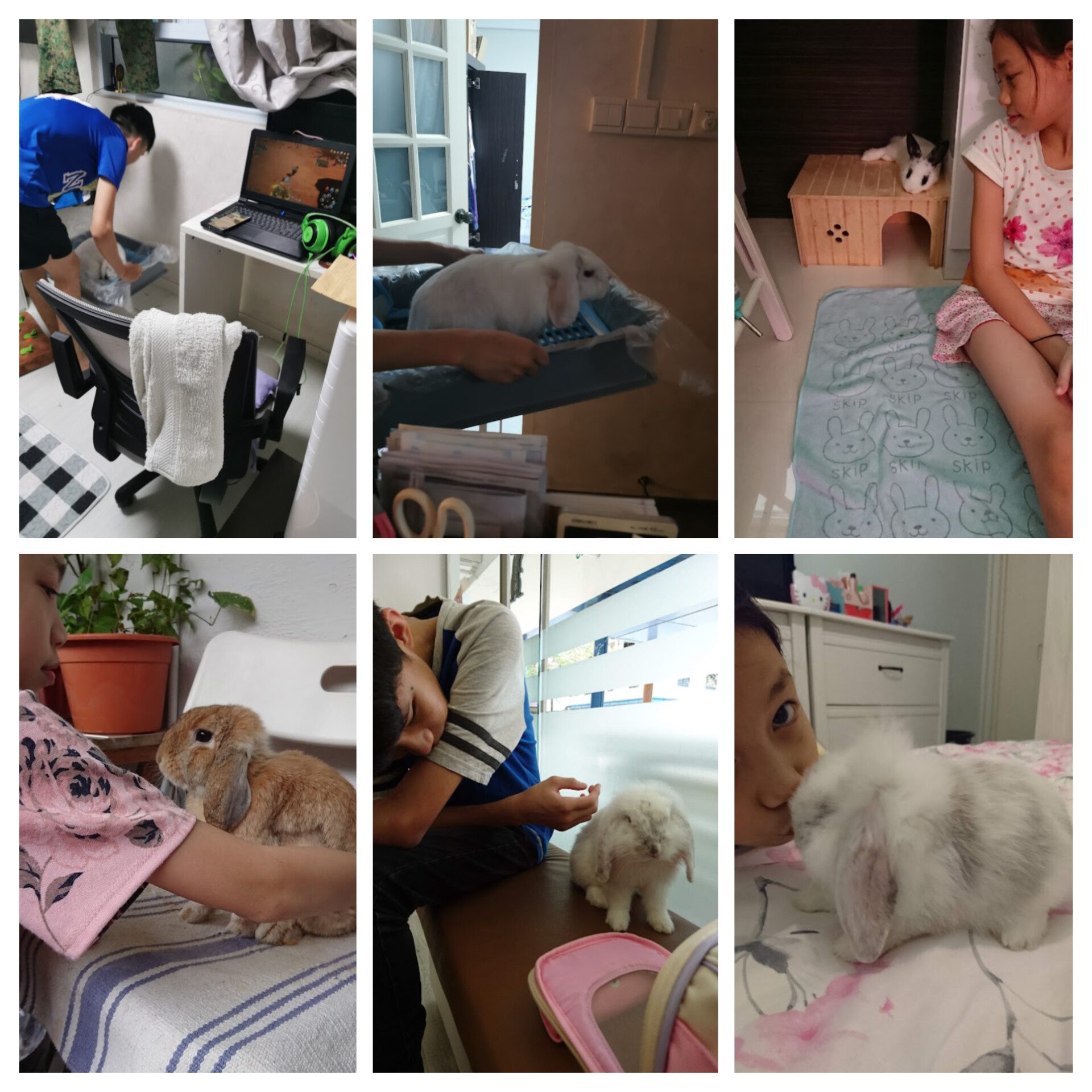
Cookie Yiyi is a full-time working mother and former human nurse whose family journey with rabbits spans nearly a decade. Her two children began their rabbit-keeping education at the formative ages of 10 and 16, embedding structured daily hygiene protocols, deep compassion, and intense accountability into their lives by actively rescuing, fostering, and rehabilitating rabbits. Today, clinical care runs deep in the family: her younger daughter, a second-year NUS Nursing student, channels her training directly into managing daily therapies for their four senior resident bunnies.