1. Handling & Anatomy of Rabbit
Safe rabbit grooming begins with understanding how a rabbit’s body responds to restraint and stress. When choosing a rabbit groomer in Singapore, handling knowledge is just as important as technical grooming skills. A qualified rabbit groomer should understand rabbit anatomy, recognise distress, and know how to minimise unnecessary risks.
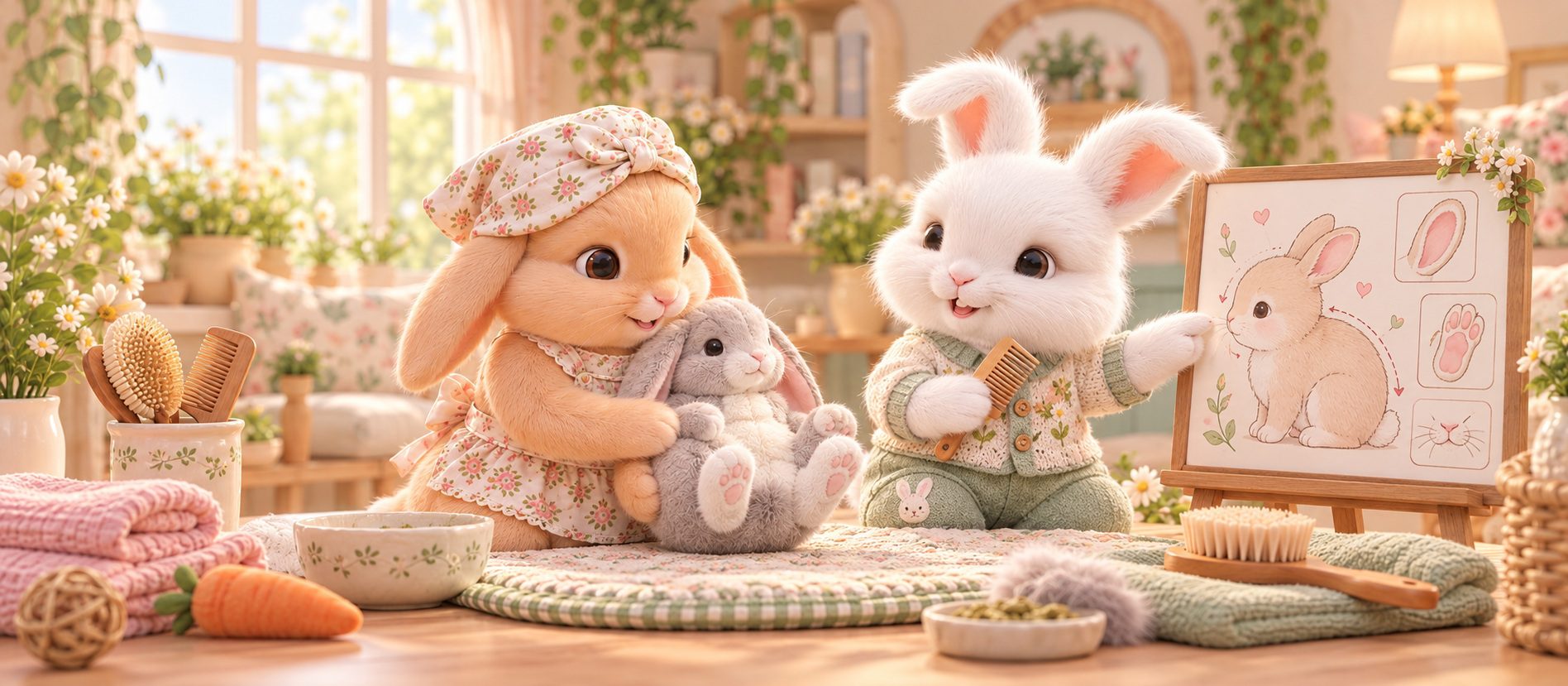
What is your policy on ‘trancing’ versus ‘cradling’?
Why it matters:
Trancing, also known as tonic immobility, is a fear-related immobility response. A rabbit may appear still, but that does not mean it is relaxed. Deliberately placing rabbits on their backs to induce this response can cause significant distress and should not be used as a routine grooming technique.
A responsible rabbit groomer should use gentle, species-appropriate handling and provide support for the rabbit’s body and hindquarters. The correct approach is to avoid deliberately trancing rabbits during grooming.
Do you ever trim or cut away whiskers?
Why it matters:
Whiskers are important sensory structures that help rabbits detect nearby objects and navigate their surroundings. Cutting whiskers reduces the sensory information available to them, especially in poor lighting or when their vision is limited.
An experienced rabbit groomer understands that whiskers are functional, not decorative. They should be protected during facial grooming and never trimmed simply to achieve a neater appearance.
How do you handle a rabbit that kicks or struggles?
Why it matters:
Rabbits have powerful hind legs and relatively delicate skeletal structures. Violent kicking or struggling without adequate support can result in serious injuries, including spinal trauma.
A rabbit groomer should know how to support the chest and hindquarters securely, using appropriate carrying techniques such as the “Football Carry” when suitable for the individual rabbit. Safe handling also means recognising when restraint is increasing distress and allowing the rabbit to settle before proceeding.
How do you handle scent gland cleaning?
Why it matters:
The scent glands near a rabbit’s anus may accumulate waxy secretions. Excessive buildup can cause discomfort or irritation, although not every rabbit requires routine cleaning.
A knowledgeable rabbit groomer should assess whether cleaning is necessary and, when appropriate, gently remove accessible buildup using a suitably moistened cotton bud without forcing or irritating the delicate tissue. Any redness, swelling, discharge or suspected infection should be referred to a rabbit-savvy veterinarian.
Do you check for ‘Sore Hocks’ (Pododermatitis) during the groom?
Why it matters:
Sore hocks, or pododermatitis, can develop when the skin on a rabbit’s feet becomes irritated, inflamed or damaged. Thinning fur, redness, scabs and open sores are warning signs that deserve attention.
During rabbit grooming, a careful body check can reveal early changes that owners may overlook. A responsible rabbit groomer should document these observations and alert the owner so that appropriate environmental adjustments or veterinary assessment can be arranged.
What is your practice on grooming pee-stained paws? Do you cut the fur on paws?
Why it matters:
Rabbit paws do not have exposed pads like dogs or cats. They rely on thick fur covering the soles for cushioning and protection. Shaving away this protective fur simply to remove urine stains can expose the skin to friction and pressure, increasing the risk of Sore Hocks (Pododermatitis).
A good rabbit groomer understands that stained fur is not automatically unhealthy fur. When cleaning is necessary, the goal should be to protect the rabbit’s skin, preserve essential cushioning and investigate persistent urine staining rather than simply removing the evidence.
Your rabbit’s comfort and structural safety must always come before aesthetics.
Do you clean rabbit ears, and what is your process?
Why it matters:
Rabbit ears are highly sensitive and contain delicate structures. Inserting a cotton bud too deeply may cause injury or push wax farther into the ear canal. Routine deep ear cleaning is generally unnecessary for healthy rabbits.
A rabbit groomer should instead observe the ears for warning signs such as inflammation, unusual odour, excessive wax, discharge or the dark, crumbly material sometimes associated with ear mites. These findings warrant appropriate veterinary assessment rather than invasive grooming.
For more information about rabbit ear conditions, visit MediRabbit.
Remember: A qualified rabbit groomer should be able to explain not just what they do, but why they do it. Safe rabbit grooming begins with respect for anatomy, gentle handling and the willingness to put welfare before appearance.
Technical Grooming Skills & Tools
When choosing a rabbit groomer in Singapore, the right tools and techniques matter as much as the finished appearance. A skilled rabbit groomer knows when to trim, when to leave the coat alone, and when to stop. Safe rabbit grooming should always prioritise comfort, handling and coat health over aesthetics.

What is your policy on bathing rabbits?
Why it matters:
Submerging a rabbit in water can cause extreme stress and hypothermia. A professional rabbit groomer should generally favour dry grooming and use carefully controlled, localised cleaning only when necessary. The goal is to maintain hygiene without exposing the rabbit to unnecessary risks.
What tools do you use for dematting thin skin?
Why it matters:
Rabbit skin is exceptionally delicate. Harsh de-shedding tools and inappropriate dematting techniques can cause serious cuts and injuries. Ask your rabbit groomer which brushes, combs and clippers they use, and how they protect the skin when removing mats. Safe grooming may involve gentle brushing, careful clipping or referral for veterinary assistance when matting is severe.
Do you groom on your lap or on a table?
The Difference:
Grooming on “all fours” on a table gives a rabbit a sense of control and security. Many skittish bunnies do better when they can see their surroundings. However, tables should be low to the ground, lined with an anti-slip mat, and rabbits must always be supervised to prevent injury.
Important:
Continuous cradling throughout a long session can be stressful. A good rabbit groomer adapts handling to the individual rabbit, provides appropriate support and allows short breaks to sit naturally and reset when safe to do so.
What is your take on shaving down long-coated breeds?
Why it matters:
For breeds like Angoras, a shave-down may be necessary for hygiene, particularly in Singapore’s warm and humid climate. However, coat length should be assessed individually. A good rabbit groomer considers the coat’s condition, matting, skin health and the rabbit’s living environment before recommending how much fur to remove.
The Reason:
Leaving an appropriate protective layer of fur can help reduce direct skin exposure, but there is no universal 1–2cm rule suitable for every rabbit or coat type. The technique must balance hygiene, comfort and skin protection while avoiding clipper injuries and irritation.
I do not want to shave down my long coat rabbit, do you think that is ok?
Why it matters:
A top-tier rabbit groomer prioritises the rabbit’s well-being while respecting the owner’s aesthetic wishes. They should act as a consultant—listening to your lifestyle and assessing whether maintaining a long coat is sustainable for the rabbit’s health.
If a groomer defaults to “shave everything” without a conversation, they may be prioritising convenience over your rabbit’s individual needs. An experienced rabbit groomer should explain the options, the likely maintenance commitment and circumstances in which a shorter coat would be safer.
LONG-COAT CARE
When “Staying Long” Is the Right Choice
Keeping a longer coat can be manageable when the rabbit’s environment and daily care routine support it. Discuss these four considerations with your rabbit groomer before deciding whether a full shave-down is necessary.
01 / ENVIRONMENT
The 24/7 AC Rule
A consistently cool, well-ventilated environment helps reduce heat-stress risk. The rabbit’s comfort, coat density and individual needs matter more than any single temperature setting.
02 / DAILY CARE
10-Minute Commitment
You can commit to a consistent daily brushing and coat-inspection routine. Some long-coated rabbits may require more than 10 minutes depending on coat density, shedding and matting.
03 / MAINTENANCE
Regular Maintenance
Professional mini-grooms approximately every four weeks may help maintain the coat. Your rabbit groomer should adjust the schedule to the individual rabbit’s grooming needs.
04 / HYGIENE
Sanitary Clip Compromise
You are open to keeping fur shorter around hygiene-sensitive areas while maintaining the longer body coat where appropriate. Protecting the rabbit’s skin and comfort remains essential.
A professional rabbit groomer should balance hygiene, coat condition, environmental comfort and the rabbit’s tolerance for handling. In rabbit grooming, welfare must always come before aesthetics.
Environment, Hygiene & Transparency
A beautiful grooming result means little if the environment is unsafe. When choosing a rabbit groomer in Singapore, cleanliness, calm surroundings, transparency and accountability should matter just as much as technical grooming skills.
Can I sit in or observe the grooming session?
Why it matters:
Transparency is the ultimate safety net. You need to see if they use non-slip mats and how they lift your rabbit. A “closed-door” policy is a major red flag.
Is the grooming area calm, quiet, and temperature-controlled?
Why it matters:
In Singapore’s humidity, heat stress is a silent killer. The area must be away from direct sunlight and elements, and free from predator sounds like barking dogs.
How do you sanitize your tools between different rabbits?
Why it matters:
This helps prevent cross-contamination and reduces the risk of spreading contagious conditions such as mites and fungal infections. Good hygiene also requires appropriate cleaning of shared surfaces, equipment and materials between appointments.
Do you provide Revolution treatment, and how do you calculate the dosage?
Why it matters:
Parasite-control products formulated for dogs and cats are not automatically safe for rabbits. Products containing fipronil, such as Frontline, can cause severe poisoning and potentially fatal reactions in rabbits.
Selamectin, sold under brands such as Revolution, may be prescribed for certain rabbit parasites, but the appropriate product, concentration and dose must be determined by a rabbit-savvy veterinarian. A responsible groomer should not independently diagnose, prescribe or calculate medication doses without veterinary direction. Ask how prescribed treatments are verified and documented before any product is applied.
How do you identify whether a rabbit has mites, and what is your protocol if you find them?
Why it matters:
Fur mites (Cheyletiella parasitovorax) are often called “walking dandruff” because they can cause visible flakes, sometimes around the shoulders, back or base of the tail. However, flaky skin does not automatically mean mites are present. Other skin conditions can produce similar signs.
A knowledgeable rabbit groomer should recognise suspicious changes and understand when veterinary assessment is necessary.
01.
Observe unusual flaking, crusting, thinning fur, itching or skin irritation and distinguish these warning signs from ordinary shedding where possible.
02.
Record the areas affected and communicate the observations clearly to the owner without presenting a visual assessment as a confirmed diagnosis.
03.
Pause or discontinue grooming when a contagious condition is suspected, take appropriate hygiene precautions, and advise assessment by a rabbit-savvy veterinarian. Any selamectin treatment should follow the veterinarian’s prescription.
What is your ‘Stop-Work’ threshold?
Why it matters:
A groomer must be willing to stop the session if a rabbit shows signs of mouth-breathing, lethargy, or extreme stress. Safety must always come before an aesthetic result. Open-mouth breathing, collapse or severe distress requires urgent veterinary attention, not simply a grooming break.
Are you familiar with the revised AVS Code of Animal Welfare for Pet Groomers, and how do you apply it?
Why it matters:
Singapore’s Animal & Veterinary Service (AVS) updated its Pet Groomers guidance under the Code of Animal Welfare for the pet industry in October 2026. The Code sets out minimum welfare standards and recommended best practices. A groomer’s responsibility extends beyond producing a beautiful haircut to keeping animals safe and treating them humanely throughout the session.
A responsible rabbit groomer should be able to explain how these welfare principles are reflected in everyday practice:
Competency:
Understanding rabbit-specific anatomy, handling techniques, signs of distress, and when a task falls outside the groomer’s training.
Supervision and safety:
Providing appropriate support and restraint, supervising rabbits closely, and reducing avoidable risks during grooming.
Equipment and procedures:
Maintaining clean and suitable tools, using them carefully, and recognising when stress or illness requires the session to stop.
Transparency and accountability:
Discussing procedures with owners, communicating concerns and incidents, and keeping appropriate grooming and welfare records.
The Oishi Bunnies Perspective:
We welcome clearer welfare expectations for the grooming industry, but a code is only meaningful when its principles become everyday practice. For rabbits, that means species-appropriate handling, recognising stress before it escalates, knowing when to stop, and communicating openly with their owners. A reassuring promise is not the same as demonstrable care.
Further Reading from Oishi Bunnies
Understanding Singapore’s Updated Grooming Welfare Standards
What do Singapore’s updated AVS grooming standards mean for pet owners and professional groomers? Explore the Oishi Bunnies perspective on welfare, professional responsibility, and the difference between written expectations and everyday practice.
Important distinction:
The AVS Code is not itself a grooming licence or a professional certification. The existence of the Code should not be interpreted as proof that an individual groomer is AVS-licensed or officially accredited. Failure to meet applicable minimum welfare standards may be relevant in animal welfare investigations.
Official reference: AVS — Code of Animal Welfare (Pet Groomers Annex)
A trustworthy rabbit groomer should welcome questions about hygiene, handling, safety procedures and welfare standards. Transparency is not an optional extra—it is part of responsible care.
Qualities of a Top-Tier Rabbit Groomer
Heart & Soul
Technical skills keep a rabbit alive; “Heart & Soul” qualities keep a rabbit happy.
 “Bunny-First” Disposition
They possess a “Zen” energy. Rabbits mirror human adrenaline; a calm, patient groomer keeps the session safe even when a bunny is difficult.
 The “Conversationalist”
She talks to your rabbit in low, soothing tones. This “auditory comfort” ensures they never feel abandoned or startled by the silence.
 A Detailed Memory
She treats your bunny as an individual, remembering their name, favorite treats, and unique quirks.
 Post-Groom Check-in
The job doesn’t end at the door. A quick text 3–5 hours later to check on eating and pooping habits is the hallmark of true care.
 Intuitive Health Screening
While brushing, she performs a silent “body check”—noticing lumps, head tilt, or dental smells—and provides a detailed report card.
 Adaptability & Patience
She is willing to pivot. If a bunny is scared, she might spend the first 10 minutes hand-feeding herbs to build trust before grooming.
 Transparency
100% honesty regarding “mistakes.” If a nail is nipped or a session is cut short due to stress, she tells you immediately. No secrets.
 Environmental Sensitivity
She slows down for panicky bunnies and ensures AC vents don’t blow directly. She notices the small things.
 Supportive of the “Pawrent”
Zero judgment. If you struggle with mats, she teaches you how to brush and recommends the right tools for your specific bunny.
Always trust the vibe: A great groomer feels like a partner in your rabbit’s health.