Description
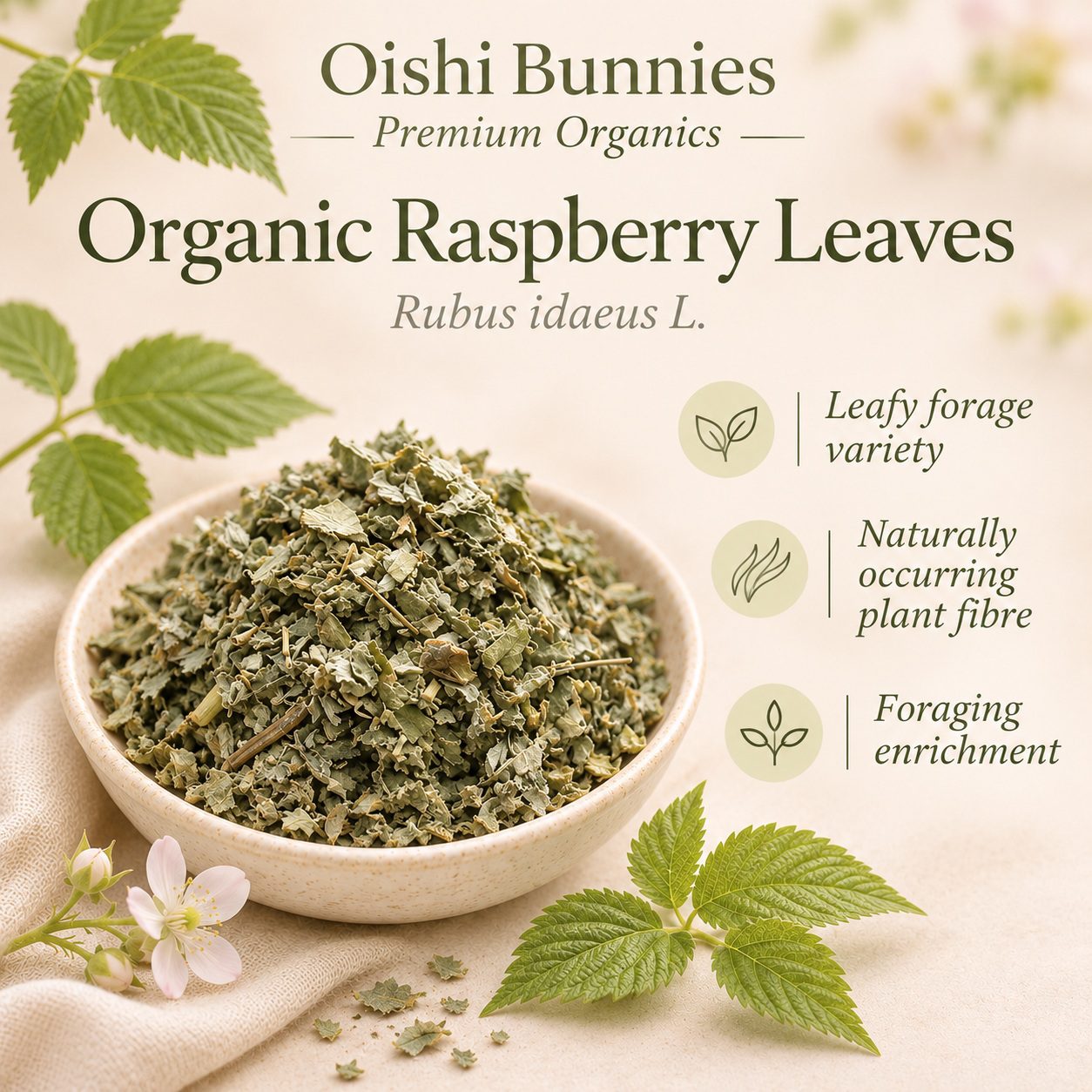
Organic Raspberry Leaves — A Little Taste of the Berry Garden
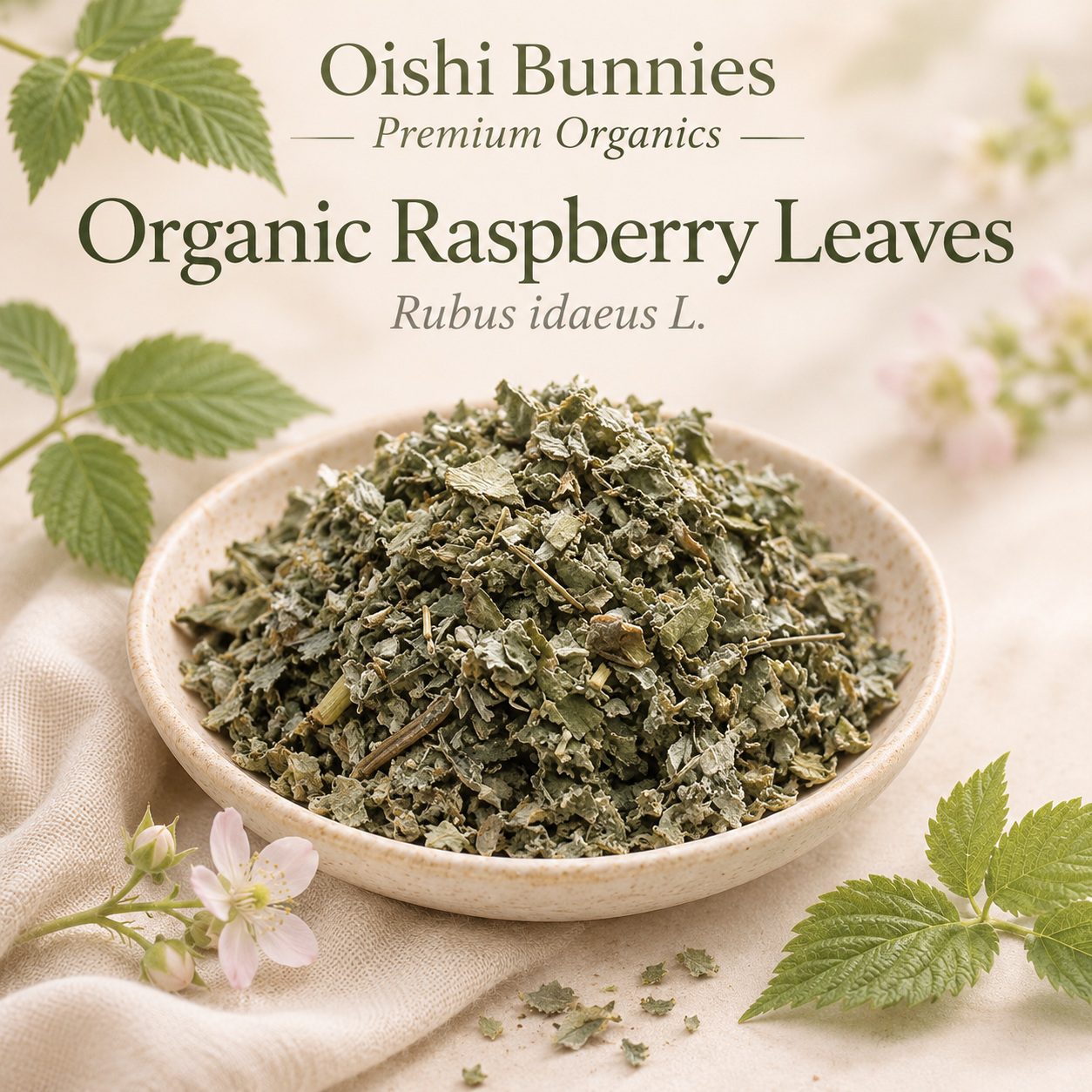
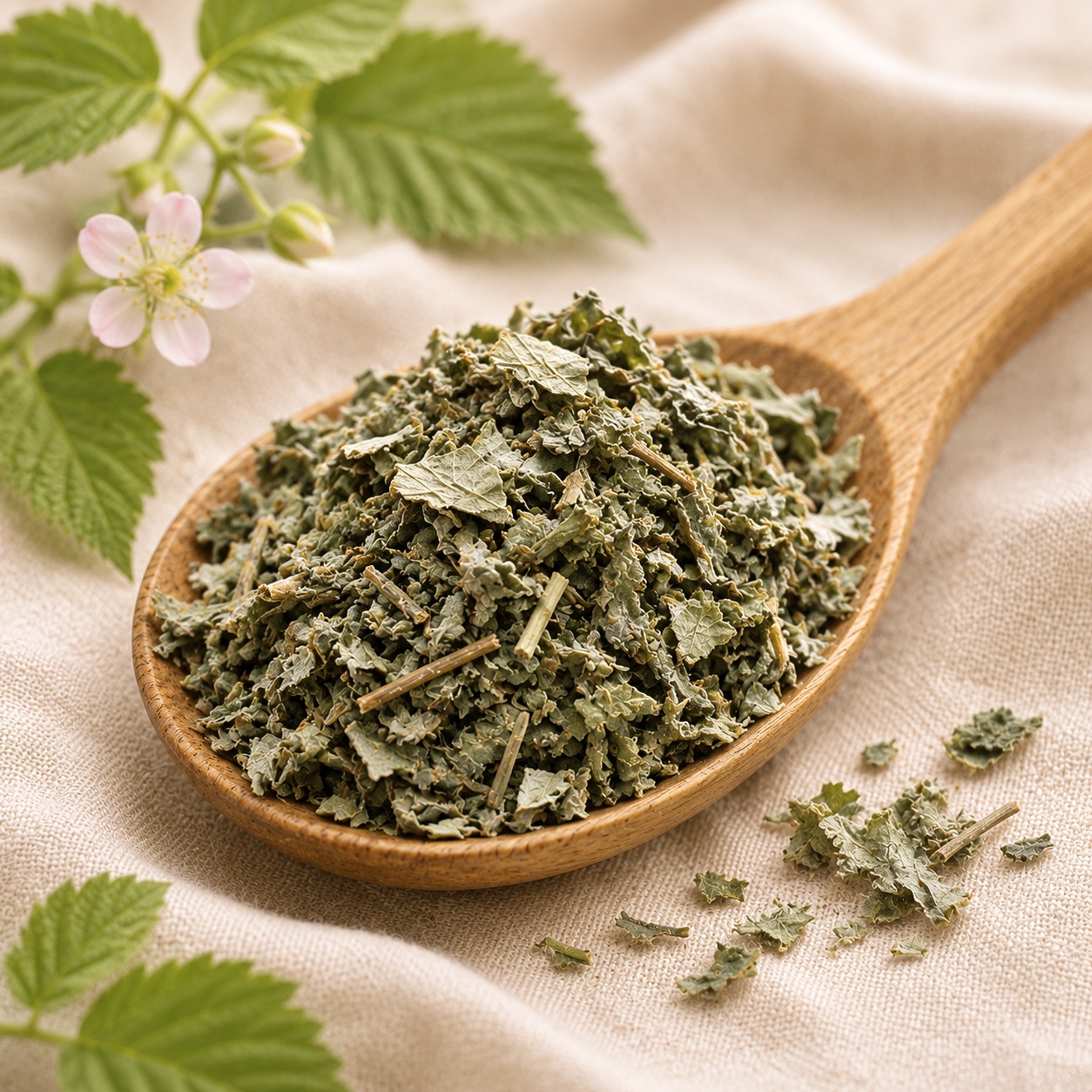
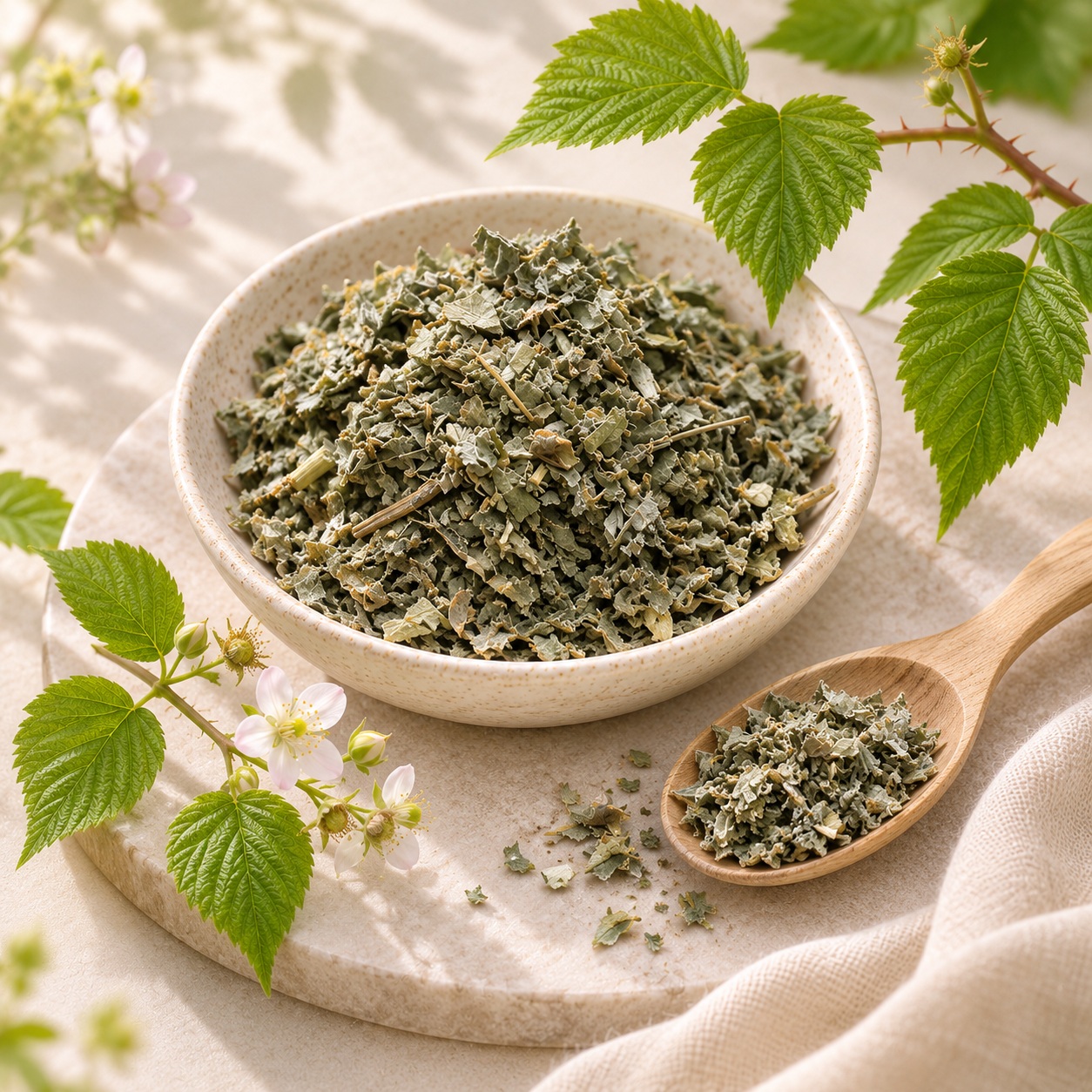
Before the raspberry plant produces its familiar jewel-red berries, its beautiful green foliage has a botanical story of its own. Raspberry (Rubus idaeus L.) belongs to the rose family, Rosaceae, and produces delicately serrated leaves with an earthy aroma and subtly astringent character. While most of us are drawn to the sweet fruit, those leafy branches offer another fascinating part of the plant to discover.
Our Organic Raspberry Leaves bring a little hedgerow magic into your bunny’s indoor forage routine. These naturally dried leaves offer botanical texture, plant fibre and a distinctive selection of polyphenols, including tannins and flavonoids. Unlike raspberry fruit, the leaves provide a leafy forage experience without the sweetness associated with ripe berries.
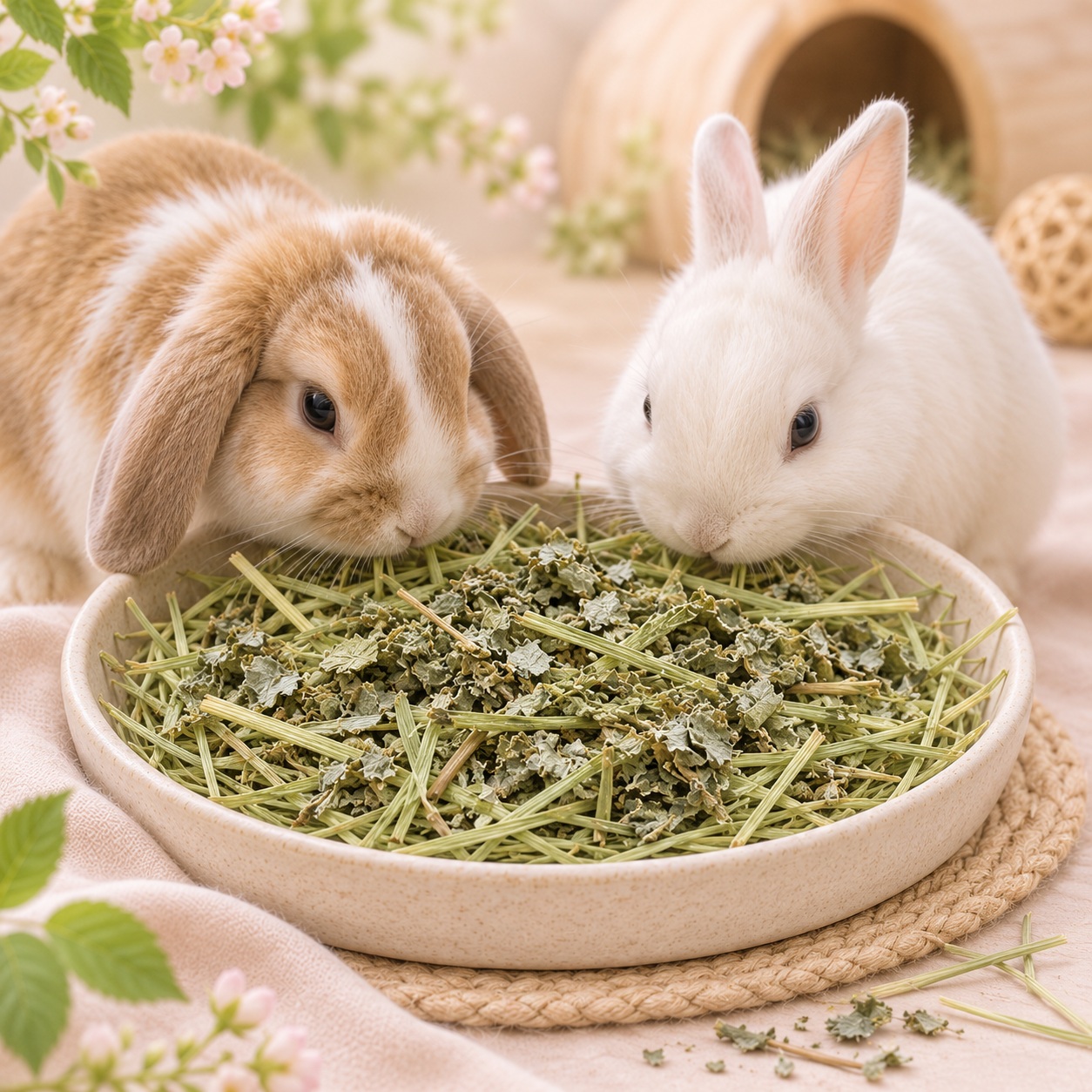
Sprinkle a little through hay, pair it with other suitable leafy botanicals or scatter a few pieces for your bunny to discover. A little sniff, a curious nibble and suddenly an ordinary hay pile has become a miniature berry garden. No berry-picking required!
Benefits & Botanical Science
Raspberry leaves are more than the green backdrop to a delicious berry. Their composition includes structural plant fibre and a diverse family of naturally occurring polyphenols, especially ellagitannins and flavonoids. These compounds contribute to the leaf’s distinctive chemistry, while its leafy texture makes raspberry foliage a wonderful addition to a bunny’s varied forage selection. Let’s explore the science behind this charming hedgerow favourite.
🌿 Leafy Plant Fibre & Natural Browsing Nutrition
Raspberry leaves naturally contain structural plant fibre, including components of the plant cell wall. These fibrous structures are part of what gives leaves their distinctive texture and form. For rabbits, plant fibre is particularly significant because their digestive system is adapted to a diet rich in fibrous vegetation, with specialised hindgut fermentation supporting the processing of suitable plant material.
Rabbits are both grazers and selective browsers, naturally investigating different grasses, herbs and leafy plants. Raspberry leaves introduce a different botanical texture and flavour from ordinary salad greens, adding another dimension to this instinctive feeding behaviour. Together with abundant long-strand grass hay, varied edible foliage helps create a more interesting and naturalistic feeding experience.
🍃 Ellagitannins — Fascinating Botanical Polyphenols
One of the most interesting features of raspberry leaves is their naturally occurring ellagitannins, a group of hydrolysable tannins belonging to the larger polyphenol family. Researchers have identified compounds such as sanguiin H-6 and lambertianin C in raspberry foliage. These complex molecules contribute to its characteristic astringency and have attracted scientific attention for their antioxidant chemistry.
Ellagitannins are particularly fascinating because their structures can interact with proteins and undergo transformation during digestion. Their phenolic groups also allow them to participate in oxidation-reduction reactions, helping explain antioxidant activity observed in laboratory research. The way these compounds behave in a living animal depends on digestion, microbial metabolism and the amount consumed, making raspberry leaf phytochemistry an intriguing field of nutritional research.
🌱 Flavonoids & Plant Defence Chemistry
Raspberry foliage also contains flavonoids, including quercetin- and kaempferol-related compounds, alongside other phenolic constituents. In plants, these secondary metabolites participate in responses to environmental conditions such as light exposure and biological stress. Their presence illustrates how leaves possess their own specialised chemistry, quite apart from the colourful berries they eventually support.
Flavonoids are widely investigated for their antioxidant and cell-signalling properties in experimental research. For rabbit owners, the practical appeal is the opportunity to introduce a suitable edible leaf with its own distinctive phytochemical profile, as part of a diverse botanical rotation. The leaves’ natural compounds are interesting in their own right without needing to promise medicinal effects.
Curious about the botanical science behind raspberry leaves? Discover more about rabbit-friendly foliage, plant polyphenols, natural forage and evidence-based rabbit care in our Bunny Bulletin and Herbal Atlas.
Feeding Tips for Your Bunny
🌱 A Gentle Introduction to the Berry Garden
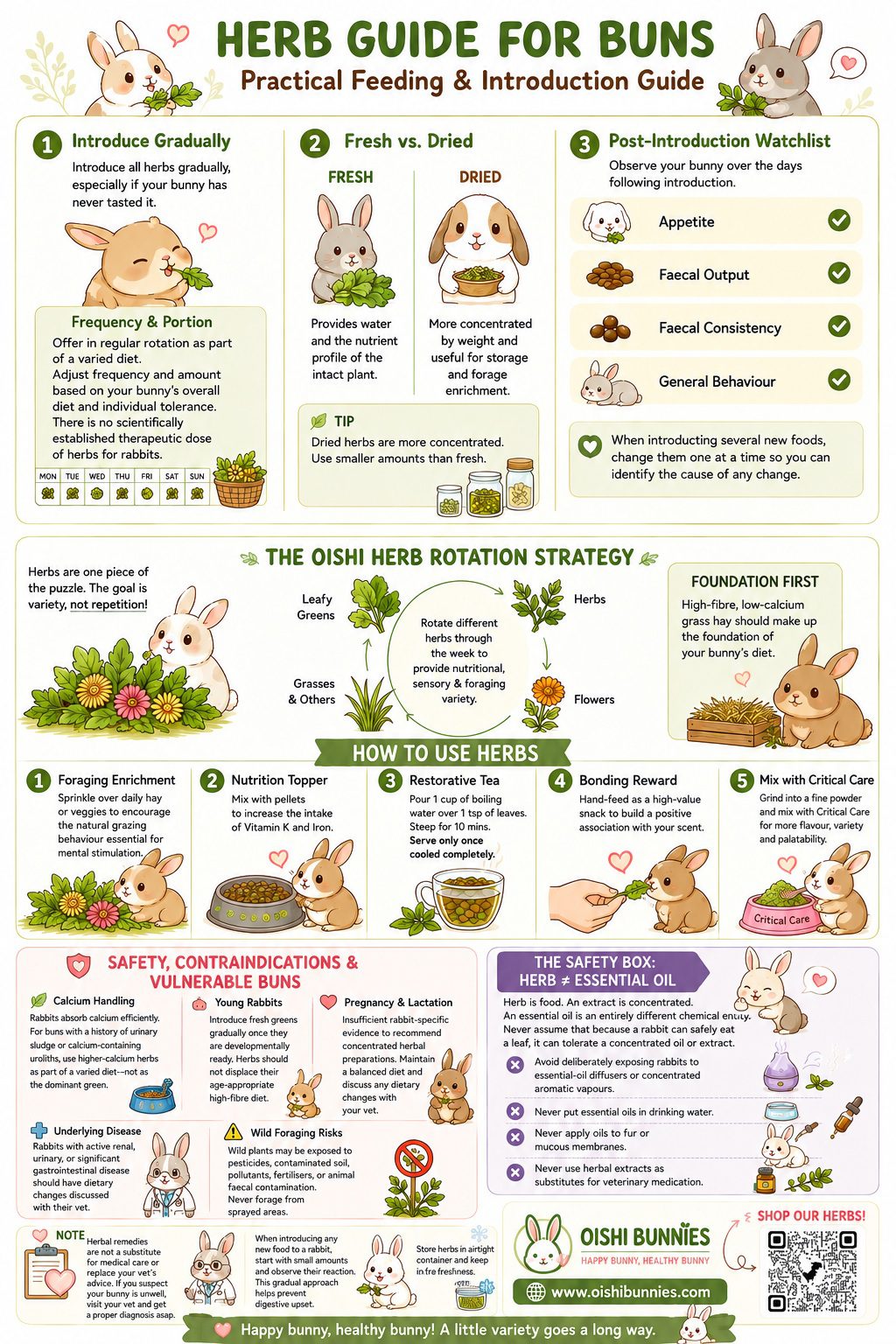
If your bunny is discovering raspberry leaves for the first time, start with a small pinch of dried foliage. Introduce new botanicals one at a time and observe your rabbit’s normal appetite and droppings. Some bunnies welcome new flavours enthusiastically, while others insist on giving every unfamiliar leaf a thorough sniff-test first.
🌾 Turn Hay Time Into Hedgerow Time
Sprinkle a little Organic Raspberry Leaves through your bunny’s favourite Timothy, Orchard or Meadow Hay. The different leafy texture and gentle aroma introduce an extra layer of interest to their familiar hay pile. Grass hay remains the daily foundation, while raspberry foliage adds a small botanical surprise worth investigating.
🍃 Build a Thoughtful Botanical Rotation
Pair raspberry leaves with other familiar, suitable leafy botanicals such as dandelion, plantain or strawberry leaves. Different plants offer different aromas, textures and natural constituents. Rotating appropriate foliage provides sensory variety and helps avoid relying on any single herb as the centre of your bunny’s plant selection.
🐰 Make a Little Foraging Treasure Hunt
Scatter a few leaf pieces around a safe foraging tray, tuck them into a hay-filled cardboard tube or offer them gently by hand during bonding time. Allow your bunny to follow their nose and investigate at their own pace. The reward is more than a nibble — it’s an opportunity to express natural searching and exploratory feeding behaviours.
🏡 Keep Your Hedgerow Botanicals Fresh
Store dried raspberry leaves in a tightly sealed container away from moisture, heat and direct sunlight. A cool, dry storage space helps preserve their aroma, colour and quality. Check your dried botanicals periodically and discard anything that develops dampness or mould.
Berry-garden leaves, without the sugary berries. A little botanical variety makes foraging more interesting!
From Our Herb Garden to the Bunny Bakery
Fancy another little bakery adventure? Discover two Oishi Bunnies creations that complement the berry-garden theme. Raspberry fruit and raspberry leaves are different ingredients, each with its own botanical character, so the cakes and cookies below are separate treats rather than alternative forms of dried raspberry foliage.
🎂 Crème Brûlée Rabbit Cake
A charming birthday cake featuring organic raspberry fruit and black mulberries. A beautiful way to celebrate a special bunny occasion with a berry-inspired bakery creation.
🍪 Hay-Pia — Fine Grind Hay-Based Cookies
An airy, crunchy bunny bake featuring finely ground Timothy hay, organic oats and selected botanicals. A delightful companion to your bunny’s wider collection of occasional treats.
Ordering & Delivery
Please allow approximately 2–4 weeks for pre-order preparation and fulfilment.
Items in the same order are generally dispatched together. If you require ready-stock products earlier, additional shipping charges may apply.
For order-related enquiries, contact us through the WhatsApp chat button on our website.
🐰 Important Bunny Health Notice
Herbal remedies and botanical ingredients are not substitutes for medical care or veterinary advice. If you suspect your bunny is unwell, seek prompt veterinary attention for a proper diagnosis.