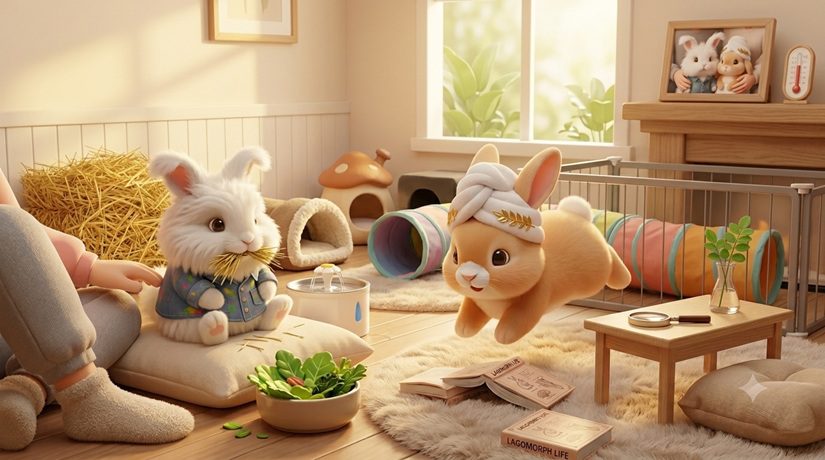
Wild Rabbits vs. Domestic Rabbits: What’s the Difference?
One of the most common misconceptions about rabbits is the belief that domestic rabbits are simply wild rabbits that have been tamed. While domestic rabbits may look similar to their wild cousins, they are actually very different animals.
Just as dogs are not wolves and house cats are not wildcats, domesticated rabbits have undergone centuries of human-directed intervention that have fundamentally changed their appearance, behavior, and biology. Understanding these differences is crucial for responsible rabbit ownership and rabbit welfare.
Wild Rabbits vs. Domestic Rabbits: Appearance & Evolution
Wild rabbits have evolved under intense natural selection. Every single millimeter of their body is optimized for a high-stakes game of hide-and-seek where the loser becomes dinner.
Wild Rabbits Feature:
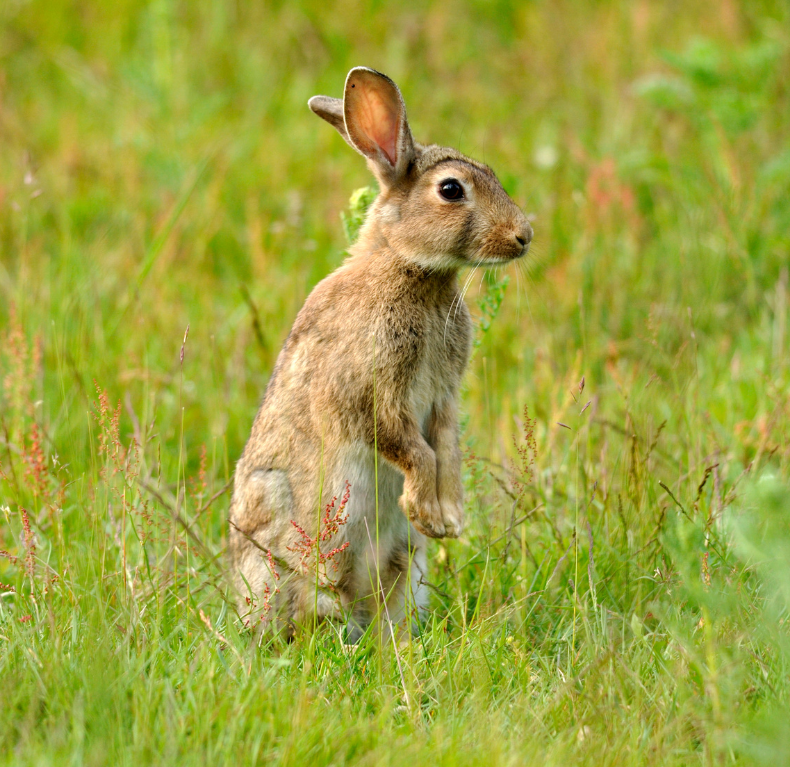
Wild European rabbits are evolutionary masterpieces of survival, engineered over millennia where every physical trait is optimized strictly to outrun, outsmart, and outlast predators.
- Agouti Camouflage: A highly specific, speckled brown-grey coat that blends perfectly into dirt and dried grass.
- Lean, Athletic Frames: Built like fine-tuned track athletes, featuring dense bone structure and powerful hind legs designed for explosive, zig-zag sprinting.
- Radar Ears: Always upright, alert, and highly mobile to catch the faintest sound of an approaching predator.
Domestic Rabbits Feature:
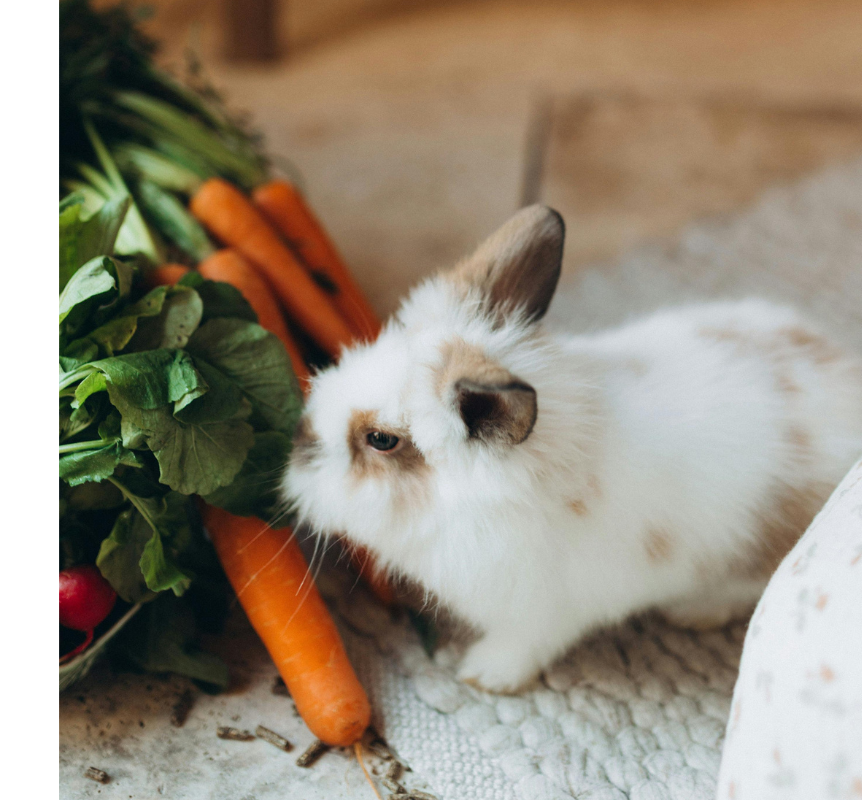
Domestic rabbits, conversely, have been selectively bred into hundreds of varieties where aesthetics, size, and temperament trump survival instincts.
- The Rainbow of Coats: Shaking up the genetic lottery has given us white, black, blue, spotted, and chocolate coats, alongside long wool (Angoras) or plush velvet fur (Rex).
- Altered Shapes: Lop ears that droop down (which drastically reduces acute hearing and mobility), shortened faces (brachycephalic skull shapes), and heavy, compact, or giant commercial bodies.
Many of these human-selected traits would be an immediate death sentence in nature. A bright white rabbit acts as a glowing neon sign for hawks, while a heavily wooled rabbit would quickly mat, attract parasites, obstruct its own vision, and overheat without regular human grooming.
Wild Rabbits vs. Domestic Rabbits: Behavioral Instincts
Both wild and domestic rabbits retain fundamental lagomorph behaviors: digging, chewing, hiding, and forming intense social bonds. However, domestication has drastically altered how these instincts are dialed in.
The Complex Social Life of Wild Rabbits
Wild Oryctolagus cuniculus are incredibly social, living in structured underground groups of two to eight adults plus juveniles.
The Behavioral Shift in Domestic Bunnies
In Nature
Wild Rabbits operate at 110% capacity at all times. They are hyper-reactive, strictly crepuscular or nocturnal (leaving the burrow at dusk and returning at dawn), and use a high-pitched, terrifying scream of terror only when facing imminent death. If apprehensive, they thump the ground with their hind feet to broadcast an alarm to the warren.
Breed seasonally (spring–summer); high mortality means large litters (4–12 kits); only strongest survive; no human intervention.
In Our Homes
Domestic Rabbits have dropped their guard. While they remain prey animals with a strong flight response, generations of living with humans mean they can experience deep sleep, tolerate human handling, show curiosity rather than terror in new environments, and execute joyous “binkies” (mid-air twists) and “flops” when they feel safe.
Breed seasonally (spring–summer); high mortality means large litters (4–12 kits); only strongest survive; no human intervention.
Crucially, science has shown that wild rabbit behavior is deeply hardwired. Studies show that even wild rabbit kits carried via embryo transfer and raised by completely tame, domestic mother rabbits still grow up to be incredibly shy, fearful, and wild. Domestication is a genetic journey, not just a matter of upbringing.
Wild Rabbits vs. Domestic Rabbits: Husbandry & Lifespan
While their complex, continuous-growth digestive systems remain fundamentally identical—requiring massive amounts of long-strand fiber to prevent gastrointestinal stasis (GI stasis)—their daily realities look vastly different.
| Category | Wild Rabbits | Domesticated Rabbits |
|---|---|---|
| Primary Diet | Tough native grasses, bark, twigs, weeds, and seasonal vegetation. | Unlimited high-quality grass hay (like Timothy or Orchard), fresh leafy greens, and measured pellets. |
| Grooming & Nails | Nails are naturally ground down daily by digging in rough soil and terrains. Short coats shed efficiently during seasonal moults. | Nails grow continuously and require clipping to prevent joint damage. Fancy coats (like Angoras or Manes) require human brushing to prevent fatal matting. |
| Health & Medical | Hard faeces are voided above ground, and nutrient-rich caecotrophs are consumed secretly underground during rest. No medical care exists; dental issues or injuries are fatal. | Rely on humans for a clean environment. Benefit from preventive veterinary care, dental filing, parasite control, and life-extending surgeries. |
| Average Lifespan | 1 to 3 years (due to starvation, heavy parasite loads, and intense predation) | 8 to 12+ years (thanks to predator protection, tailored nutrition, and specialized veterinary care) |
Can Pet Rabbits Survive in the Wild?
One of the most critical distinctions between wild and domestic rabbits is their survival ability. Well-meaning but misinformed people sometimes assume that releasing a pet rabbit outdoors is a kind, “natural” act. Biologically and medically, the opposite is true.
When a domestic rabbit is abandoned outdoors, they face an immediate, overwhelming crisis:
Releasing a pet rabbit is not “setting it free.” It is abandoning a dependent animal without a single one of the evolutionary tools required to survive.
The Legal Reality: Cross-Border Animal Welfare Laws
Abandoning a domestic animal is not just an ecological death sentence—it is a serious criminal offense in both Singapore and Malaysia.
Singapore: Animals and Birds Act
Under Section 41C of the Animals and Birds Act, pet owners are legally required to provide sufficient and appropriate food, water, and shelter. The law strictly prohibits the abandonment of any animal.
The act of abandonment is an offense regardless of whether the animal suffered, was distressed, or was found injured.
First-time offenders face up to 18 months imprisonment, a fine of up to $15,000, or both. Subsequent offenses double the maximum penalties.
Malaysia: Animal Welfare Act 2015
Enforced by the Department of Veterinary Services (DVS) Malaysia, the Animal Welfare Act 2015 (Act 772) creates a strict statutory offense specifically targeting the act of abandonment in any circumstances.
The Malaysian legal framework explicitly treats dumping a pet as a form of criminal cruelty, setting a mandatory duty of continuous care.
Convicted offenders face harsh financial and statutory punishments: a court fine from RM20,000 to RM100,000, up to 3 years in prison, or both.
Rehoming with Love: What to Do If You Can No Longer Care for Your Pet
It is a reality that many rabbit guardians face with an incredibly heavy heart: sometimes, life changes in ways we never anticipated, and we find ourselves no longer able to provide the care or shelter our beloved companions need. If you ever find yourself at this painful crossroads, please remember that abandoning your pet should never be an option.
Releasing a domestic rabbit into the wild or leaving them behind is illegal and considered a severe form of animal cruelty under the Animals and Birds Act. Furthermore, agencies like the Animal & Veterinary Service (AVS), a cluster of the National Parks Board, do not take in pets from owners.
If you are facing challenges in caring for your pet, don’t carry the weight alone. Reach out to other experienced rabbit owners, friends, or professionals. For example, if the struggle stems from a medical or behavioral issue, consulting a rabbit-savvy veterinarian or an experienced trainer can often provide solutions that allow you to address the problem safely at home.
However, if rehoming is truly the only viable path forward, please consider these compassionate options to secure their future:
- •Look Within Your Network: Start by asking family, friends, neighbors, relatives, co-workers, or trusted acquaintances if they have the space and heart to adopt your rabbit. A familiar face can make the transition much smoother for your pet.
- •Leverage Social Media: Put up thoughtful advertisements on platforms like Facebook, Instagram, X, or TikTok to seek a dedicated adopter.
- •Screen with Extreme Care: To ensure your rabbit continues to be loved and well taken care of, be completely transparent about any existing medical or behavioral conditions with potential adopters. Screen adopters thoroughly to assess their suitability, and never give your pet away without checking their homes carefully and asking for references.
- •Seek Assistance from Animal Welfare Groups: Connect with local registered animal welfare groups and rescue organizations that specialize in rabbit care.
Rehoming your pet takes time, and it is not uncommon for pet owners to take weeks or months to find a suitable adopter. Give yourself sufficient time to find your pet a suitable new home. We trust that you will make every effort to find the best outcome for the pet.
Final Thoughts: The Ultimate Act of Stewardship
At the end of the day, our domestic rabbits are entirely at our mercy. They did not choose the colors of their coats, the unique shapes of their ears, or the indoor life they lead—we chose that for them. Because centuries of domestication have traded their wild survival instincts for a place on our rugs and in our hearts, they rely completely on human hands to shield them from a world they are no longer built to endure.
True compassion isn’t about giving an animal “freedom” in a wild world where they cannot survive; it is about providing a life filled with safety, proper nutrition, medical dignity, and dedicated love. Whether that lifelong sanctuary happens under your roof, or through the heartbreaking, selfless choice to carefully and responsibly transition them into the arms of a new guardian, ensuring their welfare is the greatest kindness we can ever offer them.