 Pro-Tip: Viewing on a phone? Select desktop mode or rotate to landscape for the best reading experience!
 Estimated Read Time: 4 Mins
 Matching & Care Guide
Rabbit Compatibility Guide: Which Rabbits Bond Best?
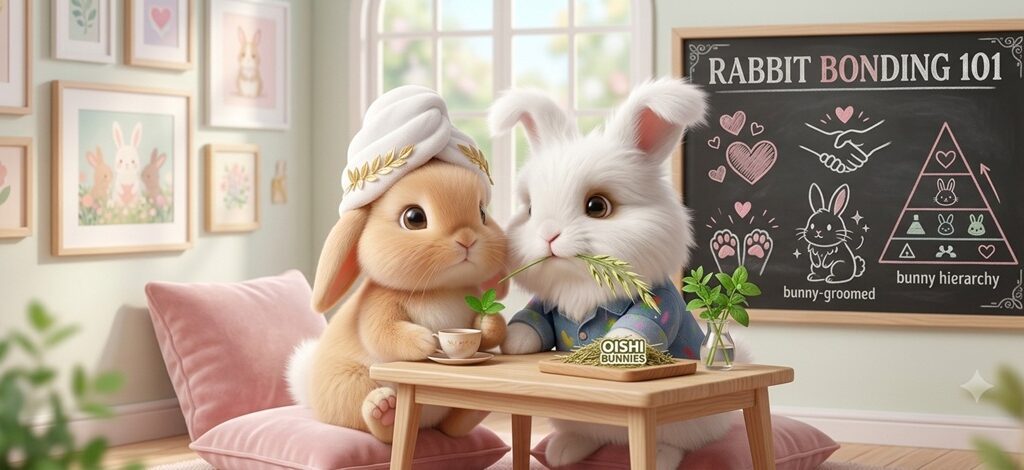
Understanding rabbit bonding compatibility is the key to finding a lifelong companion for your bunny.
Rabbits are naturally social, herd-oriented animals, but they are also highly territorial. While bringing home a second rabbit can give your bunny a lifelong companion, successful matchmaking involves far more than choosing a rabbit of the same breed, age, or size.
Experienced rabbit rescues know that personality is the single biggest predictor of a successful bond. Gender, age, size, and breed all influence rabbit compatibility, but none are as important as finding two rabbits whose temperaments complement each other.
 Here’s everything you need to know before choosing your rabbit’s future companion. The Core Factor
Personality Matters Most
If there is one factor that consistently predicts bonding success, it is personality.
Rabbits establish a social hierarchy, and successful pairs naturally settle into compatible roles. Breed, colour, or appearance mean very little to rabbits compared with how another rabbit behaves.
Dominant + SubmissiveThis is generally the easiest combination. The dominant rabbit naturally takes the leadership role, while the more submissive rabbit is comfortable following. Once established, these pairs often become very affectionate. | Dominant + DominantUsually the most challenging pairing. Neither rabbit wants to give way, which can lead to repeated mounting, boxing, chasing, fur pulling, and sometimes serious fighting before either accepts the other. |
Confident + ShyOften an excellent match. A confident rabbit can encourage a timid companion to explore, eat more confidently, and feel secure in unfamiliar situations. | Submissive (Shy) + Submissive (Shy)A very peaceful, low-drama match, though progress can be slow. Because neither demands dominance, fighting is rare. However, because both are hesitant, they take longer to approach each other initially. |
High-Energy + Laid-BackThese pairings can work surprisingly well, provided the calmer rabbit isn’t constantly overwhelmed by an energetic companion. Matching similar activity levels generally creates a more harmonious household. | |
 Remember: Personality is why many rabbit rescues conduct “rabbit speed dating.” Rather than choosing based on appearance, they allow rabbits to choose companions they naturally feel comfortable with.
Gender Pairings On Rabbit Bonding Compatibility
Hormones play a major role in rabbit behaviour. The following assumes both rabbits are fully desexed and have had sufficient time (typically 4–6 weeks) for hormones to settle.
Male + FemaleMost Successful This is generally considered the easiest and most reliable pairing. Opposite-sex rabbits often experience less territorial conflict after desexing and tend to establish a stable social relationship relatively quickly. |
Male + MaleTwo neutered males can develop exceptionally close bonds. While they may challenge one another during the early stages, many male pairs become lifelong companions once their hierarchy is established. Success depends more on personality than gender. |
Female + FemaleFemale pairs can absolutely succeed but often require the greatest patience. Even after being spayed, some females retain stronger territorial instincts than males, meaning introductions may progress more slowly. |
Key Takeaway: Regardless of gender combination, ensuring both rabbits are fully healed and post-op hormonal spikes have cleared is essential before starting introductions. Life Stage Dynamics
Age Pairings On Rabbit Bonding Compatibility
A rabbit’s life stage influences its energy level, confidence, and daily routine.
Baby + BabyTemporary Bond As puberty approaches (3–6 months), hormonal behavior appears rapidly. Rescues recommend separating young rabbits before fighting starts and delaying permanent bonding until both are desexed. | Adult + AdultMost Predictable Generally considered the most predictable pairing. Both rabbits have mature personalities, stable hormones, and established social behaviors, making compatibility easier to assess. |
Adult + BabyCaution Babies create a “false bond” before puberty. Once hormones surge, fighting can start suddenly. Adults can also accidentally injure fragile young rabbits during chasing or mounting. | Senior + SeniorSenior rabbits often appreciate gentle companionship. They typically enjoy spending time grooming one another, resting together, and sharing quiet routines rather than energetic play sessions. |
Mixed-Age PairingsMixed-age households work beautifully when activity levels match. A calm adult is great for a senior, but a hyperactive youngster can easily overwhelm an elderly rabbit with arthritis or mobility issues. | |
Key Takeaway: Always prioritize matching energy levels and physical capacities—especially when introducing younger rabbits to seniors with joint issues or reduced mobility. Breed, Size & Age Dynamics
Does Breed Matter?
The short answer is not really.
Rabbits do not choose companions based on breed or pedigree. However, certain physical characteristics may slightly influence how they communicate.
Lop Ears vs Upright EarsLop rabbits have reduced ear mobility, which may make some visual and ear-position signals less obvious than in upright-eared rabbits. However, rabbits communicate through posture, scent, facial expressions, and movement, so ear shape alone rarely affects compatibility. |
Giant vs Dwarf RabbitsA Flemish Giant and a Netherland Dwarf can become inseparable friends. The primary concern is physical safety during introductions, as a much larger rabbit may accidentally injure a smaller companion during chasing or mounting. |
Purebred vs Mixed BreedThere is no evidence that pedigree affects compatibility. Mixed-breed rabbits are every bit as capable of forming strong, lifelong bonds as purebred rabbits. |
Does Size Matter?
Surprisingly, size alone rarely determines whether two rabbits will become friends.
Can Large and Small Rabbits Live Together?Absolutely. It is common to see a tiny dwarf rabbit confidently bossing around a giant rabbit several times its size. |
Safety ConsiderationsDuring early bonding stages, mounting, chasing, and circling are normal. When there is a significant size difference, careful supervision is essential because a larger rabbit could accidentally injure a smaller one. |
Matching Energy LevelsEnergy level often matters far more than body weight. A large but gentle rabbit may be a much better companion than a small rabbit with endless energy. |
Does Age Really Matter?
Age certainly influences compatibility, but not as much as personality.
Baby + BabyTemporary Bond Young rabbits often appear instantly bonded before hormones develop. They should be separated before puberty (around 12–16 weeks) if un-desexed, as aggression can develop rapidly. Permanent bonding begins after both are desexed and recovered. |
Adult + AdultMost Stable One of the most stable combinations. Personalities are fully developed, so what you observe during bonding is usually a reliable indicator of the long-term relationship. |
Senior RabbitsOlder rabbits often benefit from calm companions who respect their slower pace and physical limitations. |
Mixed-Age HouseholdsMany mixed-age combinations thrive provided the younger rabbit does not constantly pressure or exhaust the older rabbit. |
The Takeaway: Body size and pedigree are secondary—energy match, personality hierarchy, and safe supervision during bonding are what truly make a partnership work. Pre-Introduction Readiness
Rabbit Bonding Compatibility Checklist
Before introducing two rabbits, make sure you can tick every box:
Both rabbits are desexed and fully recovered (allow at least 4–6 weeks after surgery for hormones to settle).
Both rabbits are healthy and free from illness or pain.
Their energy levels are reasonably similar.
Their personalities appear complementary (avoid pairing two strongly dominant rabbits whenever possible).
A truly neutral territory has been prepared where neither rabbit has previously lived or marked.
You have enough time and patience to allow the bond to develop naturally.
Summary & GuidanceKey Takeaways on Rabbit Bonding Compatibility
There is no single “perfect” rabbit pairing based on breed, size, or colour. While male–female pairs are often the easiest, every combination can succeed when both rabbits are properly desexed, introduced carefully, and matched according to temperament. |
The most successful bonds are built on compatible personalities, similar lifestyles, and patient introductions. This is why experienced rabbit rescues rely on compatibility assessments and rabbit speed dating rather than appearance alone. |

