Pro-Tip: Viewing on a phone? Select desktop mode or rotate to landscape for the best reading experience!
Estimated Read Time: 8 Mins
Singapore Haze and Rabbits: How to Keep Your Bunny Breathing Easy When the Sky Turns Grey
By Cookie Yiyi. Rabbit rescuer, fosterer, herbalist and full-time staff to four senior house bunnies.
Written during the September 2026 haze from fires in Sumatra and Kalimantan. Check the NEA website or myENV for live readings before you act on any number in this article.
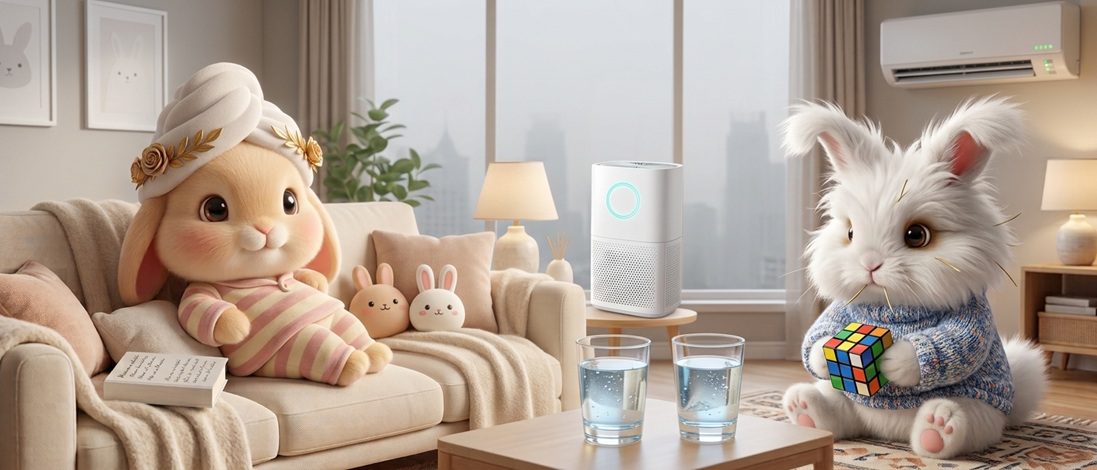
Bunnini has read the NEA advisory twice and highlighted the important bits. Pee-Casso sneezed on it. Between them, you’ve got both halves of haze season: the research, and the chaos.
Here’s the research part. Through September, Singapore’s 24-hour PSI has bounced between Moderate and Unhealthy, and on 28 September the 1-hour PM2.5 readings reached as high as 138 µg/m³ in some parts of the island. Your bunny can’t check an app or close a window. That’s your job, and this guide covers it.
The Quick Answer

- Keep rabbits indoors. Close windows and external doors when outdoor air worsens. Pause outdoor time and balcony grazing when the air is Unhealthy or you can smell smoke.
- Filter the air. Run a room-sized HEPA purifier with any ioniser or ozone-generating feature switched off.
- Keep the room cool. Rabbits cannot pant effectively, and a closed room can heat up quickly.
- Cut indoor smoke and dust. Avoid incense, joss sticks, mosquito coils, sprays and diffusers. Keep hay available, but choose a less dusty batch and handle it gently.
- Postpone non-urgent outings, including grooming. If grooming cannot wait, ask whether a suitable mobile groomer can visit without disrupting your rabbit’s routine.
- Check breathing, eating, water and droppings. Open-mouth breathing or obvious breathing difficulty is an emergency: seek veterinary care immediately.
Can Haze Affect Rabbits
Rabbits are obligate nasal breathers: air normally enters through the nose, and they cannot switch effectively to breathing through the mouth. If the nasal passages become blocked or inflamed, breathing can take more effort. A relaxed rabbit typically breathes about 32–60 times a minute, although heat, stress, pain and illness can change that number. How hard your rabbit is working to breathe matters more than a number alone.
During Singapore’s smoke haze, fine particles called PM2.5 are a main air pollutant of concern. Rabbit research gives us a reason to take them seriously: in one experiment, PM2.5 exposure worsened damage to the tiny hair-like structures that help clear mucus from the noses of rabbits with existing chronic rhinosinusitis. Other rabbit studies have found airway changes after polluted-air or direct smoke exposure. These studies used different conditions; none establishes a safe PSI for a pet rabbit at home.
What if your rabbit starts sneezing? Haze or household dust may irritate the nose, but sneezing and discharge can also have other causes, including infection, dental disease or a piece of hay lodged in the nasal passage. Some healthy-looking rabbits carry Pasteurella multocida; that does not mean haze has been shown to turn a quiet carrier into an active infection. Persistent or worsening signs deserve a rabbit-experienced vet’s assessment.
The honest gap: there is no validated PSI or PM2.5 safety cut-off for pet rabbits. The practical steps in this guide are precautions based on air-quality guidance, rabbit anatomy and experimental rabbit research. Bunnini approves of knowing where the evidence ends.
Reading the Numbers: PSI vs PM2.5
NEA provides two readings for different decisions. Check your region’s 1-hour PM2.5 concentration for what the air is like now, especially before going outdoors. Use the 24-hour PSI forecast to plan ahead. PM2.5 is a particle concentration measured in µg/m³; PSI is an air-quality index. The numbers are not interchangeable.
The bands are NEA’s; the bunny plan is my precautionary rule of thumb, not an NEA rule or a proven rabbit safety threshold.
| 24-hour PSI | NEA band | Precautionary bunny plan |
|---|---|---|
| 0–50 | Good | Usual routine. Windows can open when outdoor air is clear and the room stays comfortable. |
| 51–100 | Moderate | Keep the usual indoor routine. Check 1-hour PM2.5 before optional outdoor time; skip it if conditions worsen or smoke is noticeable. |
| 101–200 | Unhealthy | Keep rabbits indoors. Close windows while outdoor air is poor; cool and filter their room. |
| 201–300 | Very Unhealthy | Continue the clean-air setup, avoid non-urgent outings, and check breathing, appetite and droppings regularly. |
| Above 300 | Hazardous | Minimise outdoor exposure and keep your veterinary transport plan ready. Seek veterinary advice for concerning changes; breathing distress is an emergency at any PSI. |
Why do apps disagree? The AQICN Central Singapore page displays an AQI, which uses a different scale and may cover a different averaging period from NEA’s 24-hour PSI. Don’t compare the two numbers directly. For Singapore’s official readings and advisories, use NEA or myENV.
Your at-home haze plan
How to Protect Rabbits During Haze
12 Ways to Keep Your Bunny Comfortable
1
Bring everyone indoors
If your rabbit lives on a balcony, in a hutch or in a garden run, move them into a suitable indoor space when outdoor air is poor. Bring their familiar hide, hay, water and bonded companion along. A rabbit outdoors cannot choose a cleaner room when the smoke drifts in.
2
Seal the room, not the air
Close windows and external doors while outdoor air worsens. Reducing an obvious draught through a gap may help, but don’t shut your bunny into a hot, stuffy room. Keep the space cool, circulate its air, and reopen windows for ventilation when outdoor air improves.
3
Pick the right purifier
Choose effective particle filtration, such as HEPA, in a unit sized for the room. If it lists separate ratings, smoke CADR is the one to check for haze. Activated carbon may help with some smoke gases if the filter contains enough carbon; a thin carbon sheet cannot promise complete gas removal.
Avoid ozone generators and switch off optional ioniser or plasma modes that may produce ozone. Keep the cord beyond bunny teeth, leave the airflow unobstructed, and don’t aim a strong draught at your rabbit. Run the purifier continuously at a useful fan speed during bad haze—a very quiet setting may move much less air. Check the filter according to the manufacturer’s instructions.
4
Keep it cool
Closed windows in Singapore can make a room heat up quickly. Rabbits cannot pant effectively, so check the temperature where your bunny rests. Air-conditioning can help; check whether your system brings in outside air and use recirculation when appropriate. Offer shade, fresh water and a cooler spot your rabbit can move away from. Rapid breathing, weakness or unusual lethargy in a warm room needs prompt attention. Open-mouth breathing is an emergency.
5
Clean up the air you make yourself
During haze, avoid adding incense, joss sticks, mosquito coils, candles, cigarette or vape smoke, aerosol sprays, air fresheners and essential-oil diffusers to the rabbit’s room.
Choose less dusty hay and portion it gently instead of shaking it beside your rabbit. Keep hay freely available. Damp-wipe surfaces rather than dry-sweeping. Spot-clean soiled litter promptly, too: waste buildup and poor ventilation can raise ammonia levels.
6
Use a sealed HEPA vacuum on rabbit mats
A well-maintained vacuum with a sealed HEPA filtration system can help remove settled dust, loose fur, hay debris and smoke particles. A HEPA filter alone cannot prevent particles escaping through leaks elsewhere in the machine. Vacuuming can also stir settled particles into the air, so let your bunny rest in another clean, closed room and keep the purifier running during and after cleaning. Avoid shaking mats indoors. Wash washable mats when needed, especially if urine-soiled, and dry them completely before returning them.
7
Dry laundry indoors, away from your rabbit’s room
Drying clothes and freshly washed mats indoors avoids exposing them to smoky outdoor air; it does not filter PM2.5 from the room. Wet laundry adds moisture, so use a separate drying room with air-conditioning or a dehumidifier where possible. Avoid persistent dampness and condensation, which encourage mould. A HEPA purifier removes particles, but does not control humidity.
8
Keep water and familiar food available
Refresh the water bowl and continue your rabbit’s usual hay and meals. Washed leafy greens can remain part of the normal diet. If balcony-grown leaves are visibly coated with ash or soot, don’t feed them; washing isn’t a reliable fix for heavy contamination. Extra water does not “flush” particles from the lungs.
9
Keep days calm and low-key
Keep feeding and rest routines familiar. Swap optional outdoor time for indoor enrichment: a hide, a clean cardboard tunnel or hay-based foraging. Pee-Casso considers cardboard confetti an interior-design choice.
10
Skip the DIY respiratory fixes
No rabbit masks or wet cloths over the face. They do not provide a tested, safe fit and could obstruct breathing. Steam rooms and humidifier experiments do not remove PM2.5 or identify the cause of symptoms. Skip essential oils and DIY nebulising; use inhaled treatments only under veterinary direction.
11
Talk to your groomer before the air gets bad
A studio appointment means travel and handling. If the groom is routine, ask whether it can move to a clearer day. If your rabbit has tight mats, urine-soiled fur or another urgent problem, explain that to the groomer rather than simply waiting weeks.
- Agree on rescheduling early. Check the 1-hour PM2.5 on the day and discuss cancellation terms beforehand.
- Ask about a home visit. It may avoid the commute if the groomer can work safely in your cool room without scented products or unnecessary dust.
- Ask about clean grooming workwear. Check whether your mobile groomer brings a freshly washed, low-lint apron or gown to put on indoors. If they don’t, consider offering a clean, suitable one. This may help limit dust carried on clothing, but clean room air, hand hygiene and clean grooming equipment remain the priorities.
- If visiting a studio, ask about its air and handling. Check cooling, filtration and how long your rabbit would wait.
Gentle, brief brushing at home can help a rabbit who tolerates it between appointments. Collect loose fur instead of shaking it around the room.
12
Sort out your vet and transport plan before you need it
Save your rabbit-experienced vet’s number and know where to go after hours. Keep a secure, ventilated carrier ready. For a necessary trip, cool the vehicle first, keep the windows closed and use cabin recirculation if available.
Coordinate with your pet transporter in advance. Tell them about your bunny’s health condition, especially any breathing difficulty, and share the appointment time, planned arrival and estimated departure from the clinic. Agree on pickup arrangements for both journeys and update them if the consultation runs late. This helps them prepare a cool vehicle and be ready when your bunny is, reducing time spent waiting in smoky outdoor air. Keep your rabbit inside the clinic until the vehicle is ready, where the clinic permits.
For planned transport enquiries, contact @tutubaogaigai on Instagram. Confirm availability and arrangements directly before your appointment.
Never delay urgent veterinary care because the air outside is poor or while waiting for a preferred transporter. If your rabbit is struggling to breathe, phone the emergency clinic and arrange the quickest suitable transport.
Who Needs Extra Care?
Take a more cautious approach with rabbits who have chronic nasal or lung disease, nasal obstruction, known heart disease, or dental disease affecting the nose. Frail seniors, very young rabbits and those recovering from illness also deserve closer observation.
These are sensible precautions, not proven rabbit-specific PSI risk categories. Ask your vet for an individual plan if your bunny has an existing condition.
The Daily Bunny Body Check
Check your rabbit each day during haze. Learn what is normal for them on a calm, comfortable day so you can recognise a change.

Count breaths. Watch while your bunny is fully relaxed in a cool room, before handling or exercise. One rise and fall of the flank is one breath; nose twitches are not breaths. Count for a full minute if possible. A 30-second count doubled gives a quick estimate. Roughly 32–60 breaths per minute is commonly cited for a resting rabbit, but breathing effort and change from your bunny’s usual pattern matter more than one number.
Look at the nose, eyes and inner forepaws. Rabbits wipe their faces with their front paws. Damp, crusted or thinned fur there can reveal discharge you missed at the nose.
Watch eating, poops and behaviour. Is your rabbit eating their usual hay and meals? Are droppings appearing in their usual size and quantity? Are they moving, resting and responding normally?
| Call your rabbit vet promptly | Emergency vet now |
|---|---|
| Repeated or worsening sneezing | Open-mouth breathing |
| Nasal discharge or wet, crusted inner forepaws | Obvious or worsening struggle to breathe; sides or abdomen heaving |
| New watery or squinting eyes | Blue or grey gums or tongue |
| New breathing noise or a persistent change in resting breathing | Head and neck extended in an effort to breathe |
| Eating less, smaller or fewer poops, or unusually withdrawn behaviour | Collapse, severe weakness, or breathing trouble together with refusal to eat |
Not eating is urgent even if breathing looks normal. Reduced food intake and droppings can signal illness and may accompany gastrointestinal stasis. A rabbit with respiratory signs and no appetite needs immediate veterinary advice.
If you see an emergency sign, keep handling gentle and brief, phone the clinic to say your rabbit is struggling to breathe, and leave for emergency care. Do not wait for the PSI to improve.
Plan before you need help: Read our guide to choosing a rabbit-savvy vet, with Singapore and Malaysia clinic listings. Save your clinic’s number and confirm its current hours and emergency arrangements in advance.

Fact check with the bunnies
Pee-Casso’s Myth Corner
Pee-Casso asks the questions. Bunnini checks the answers.
“No sneezing means no problem, right?”
Not sneezing is reassuring, but it cannot tell you everything. Watch breathing effort, appetite, droppings and behaviour too.
“Just a crack of window?”
When outdoor air is smoky, an open window lets particles in. Close it while conditions are poor, keep the room cool, and ventilate when the air improves.
“Is an ioniser even better?”
Some ioniser and plasma features can produce ozone, a lung irritant. Use effective particle filtration and switch off optional ozone-producing modes.
“What about a nice-smelling diffuser?”
A pleasant smell does not mean cleaner air. Skip essential-oil diffusers and added fragrances in your rabbit’s room.
“Could my bunny wear a tiny mask?”
A mask or damp cloth has no tested, safe fit for a rabbit and may interfere with breathing. Clean the surrounding air instead.
Before the Next Haze
✓ Purifier filter checked; replacement ready
✓ Low-dust hay and unscented litter
✓ Carrier and emergency vet contacts
✓ Grooming and rescheduling plan
✓ Resting-breathing baseline or video
✓ Water bowls and a cool resting spot
✓ NEA or myENV readings bookmarked
When the Singapore Haze Lifts
Check the current 1-hour PM2.5, the forecast and the air outside before reopening windows or resuming optional outdoor time. A Moderate 24-hour PSI can coexist with a shorter PM2.5 spike. Once outdoor air improves, ventilate, damp-wipe settled dust, wash soiled bedding and check the purifier filter.
Still seeing symptoms? Persistent or worsening sneezing, discharge, breathing changes or reduced appetite needs veterinary assessment, even after the sky clears.
Frequently Asked Questions
Can rabbits wear masks during haze?
No. There is no tested, properly fitted haze mask for pet rabbits. A mask or cloth over the nose may cause distress or interfere with breathing. Clean the air around your bunny instead.
Do I really need an air purifier?
It is a useful extra layer, especially when outdoor air stays poor. Start with an indoor room that is cool and free of added smoke and dust. A room-sized HEPA purifier can reduce particles further. Avoid ozone-generating features.
At what PSI should my rabbit stay indoors?
There is no validated rabbit-specific PSI threshold. Keeping rabbits indoors when the 24-hour PSI is Unhealthy is a cautious household rule. Bring them in sooner if the current 1-hour PM2.5 rises, smoke is noticeable, or your rabbit has a health concern.
When can my rabbit go outside again?
Check the current 1-hour PM2.5 as well as the 24-hour PSI and forecast. If outdoor air has improved and there is no noticeable smoke, you may resume optional outdoor time gradually, with shade and supervision. A rabbit recovering from symptoms should stay indoors and follow veterinary advice.
Does haze cause snuffles?
Haze can irritate airways, but sneezing or nasal discharge does not tell us the cause. Rabbit rhinitis can involve infection, dental disease, environmental irritants or foreign material. Haze has not been shown to activate a silent Pasteurella carrier. Persistent or worsening signs need a rabbit-experienced vet’s assessment.
Sources & Further Reading
Official air-quality guidance, rabbit research and veterinary references used in this guide.
Singapore haze & clean indoor air
- NEA: Air Pollution FAQs — PSI, 1-hour PM2.5, household steps and purifier selection.
- NEA: Haze Situation Update, 28 September 2026 — the dated readings and fire-smoke context in the introduction.
- US EPA: Guide to Air Cleaners in the Home — particle filtration, carbon filters, fan speed and ozone cautions.
Studies conducted in rabbits
- Polluted urban air and rabbit bronchial cilia — 40-day exposure study.
- PM2.5 in a rabbit model of chronic rhinosinusitis — nasal cilia, mucus and tissue changes.
- PM10, lung inflammation and vascular effects in rabbits — particles delivered experimentally into the airways; not an ambient-haze threshold study.
- Acute wood-smoke inhalation in rabbits — direct smoke exposure, distinct from regional haze indoors.
Rabbit health & emergency care
- Rabbit Basic Science — nasal breathing and resting respiratory rate.
- Merck Veterinary Manual: Lung and Airway Disorders of Rabbits — rhinitis, discharge and other possible causes.
- Merck Veterinary Manual: Housing of Rabbits — heat, ventilation, hay and ammonia.
- Merck Veterinary Manual: Smoke Inhalation Injury in Animals — why direct fire smoke needs emergency assessment.