
 Pro-Tip: Viewing on a phone? Select desktop mode or rotate to landscape for the best reading experience!
 Estimated Read Time: 12 Mins
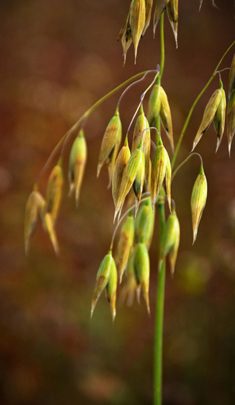
Meet the Oat: Avena sativa
Oats belong to the grass family Poaceae — the same botanical family that includes many of the grasses rabbits naturally eat.
The part commonly sold as oatmeal or rolled oats, however, is the mature grain rather than leafy grass. Nutritionally, that makes it very different from hay.
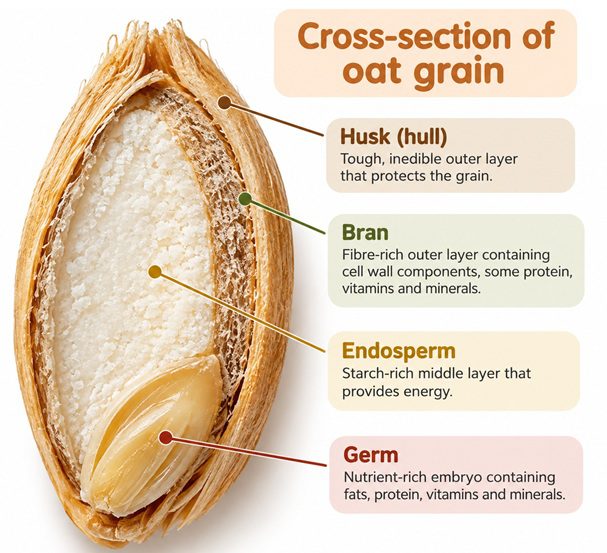
Oat kernels contain approximately 51–65% starch depending on cultivar and growing conditions, making starch their major carbohydrate component.
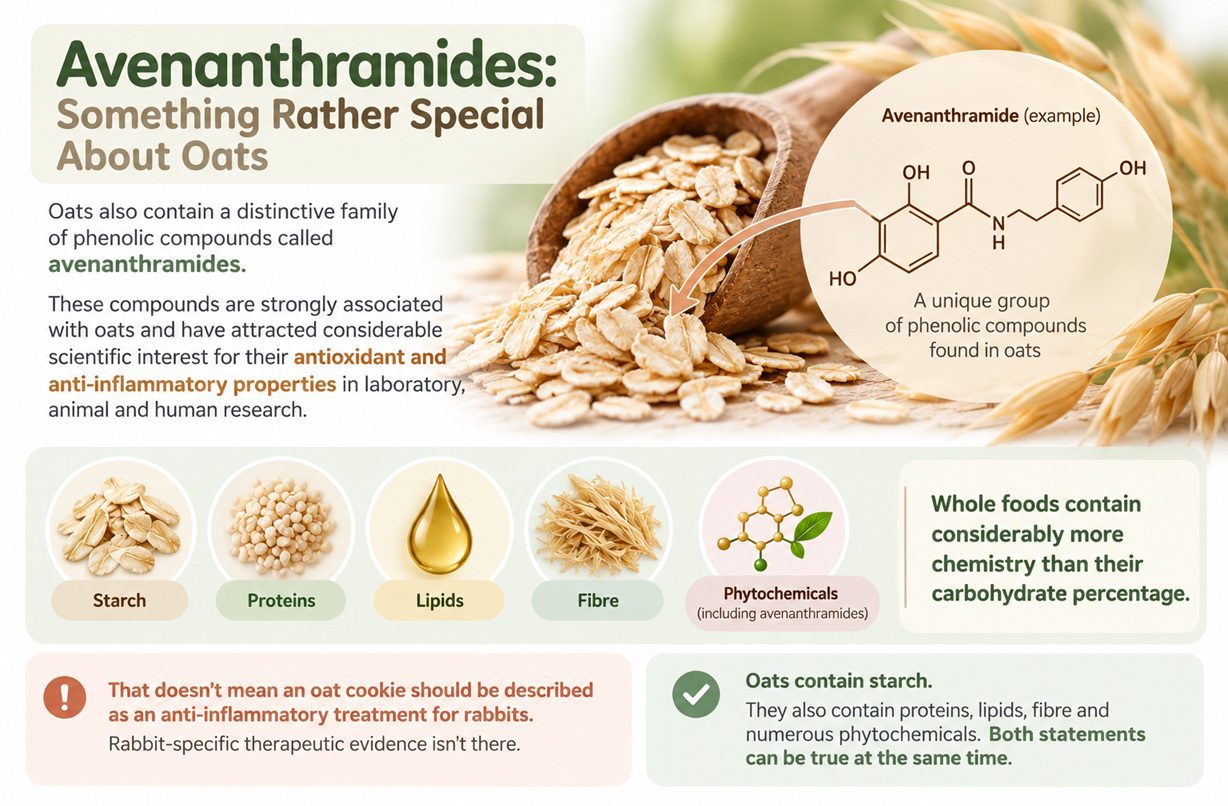
But that’s far from the whole oat.
Oats also provide:
Oats therefore occupy a very different nutritional category from hay, but describing them as nothing more than starch misses quite a lot of interesting chemistry.
The Real Case for Oats — and Why It’s Not Really About the Oats
It’s easy to lose the core argument in a wall of citations when exploring a healthy rabbit diet, so let’s state it plainly.
When owners ask whether can rabbits eat oats, the answer is grounded in feed science: oats are a legitimate rabbit-feed ingredient, not a folk remedy that’s been smuggled into rabbit diets on faith. They show up across decades of literature at inclusion rates far beyond a normal treat, without depressing growth when the complete diet was correctly balanced.
Wondering are oats safe for rabbits? They’re energy-dense, and that’s precisely why portion timing matters so much. Unrestricted raw grain is a bad idea for a sedentary house rabbit, but measured portions serve as a practical supplemental calorie source or an occasional treat. Energy density is a tool, and like any tool, it’s judged by how it’s used—a philosophy we embrace daily at our specialty rabbit bakery Singapore.
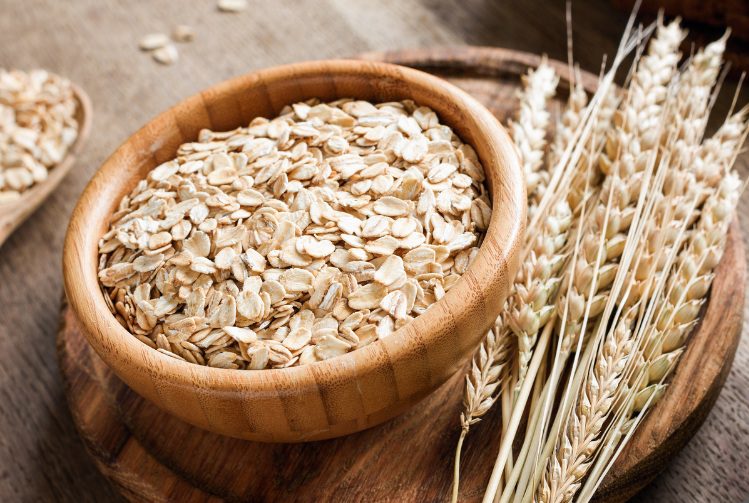
Which brings us to where preparation stops being a footnote and becomes the actual story. Loose rolled oats poured into a bowl and an oat cookie that’s been hydrated, gently baked through a gelatinisation-range temperature and thoroughly dried are not the same food. One is a raw commodity grain. The other is a deliberately prepared food matrix, built to bind herbs and botanicals without syrup, thoroughly dried and portionable, and sized into something a rabbit eats in a few bites rather than free-fed from an open bag.
Legitimate ingredient + right dose + preparation with intent
That combination is the difference between “oats are fine, I guess” and what we’re actually doing in the kitchen.
The rest of this article is about that third part: what happens to an oat when we bake it, and why we think that’s worth doing properly.
Why Oats Can Be Useful When Additional Calories Are Needed
Here’s another situation where context changes the nutritional objective within a balanced rabbit diet.
Oats are relatively energy-dense and highly palatable.
For a rabbit maintaining an ideal body condition, that energy density is precisely why portions should remain modest.
For a genuinely underweight rabbit, however, additional dietary energy may sometimes be desirable.
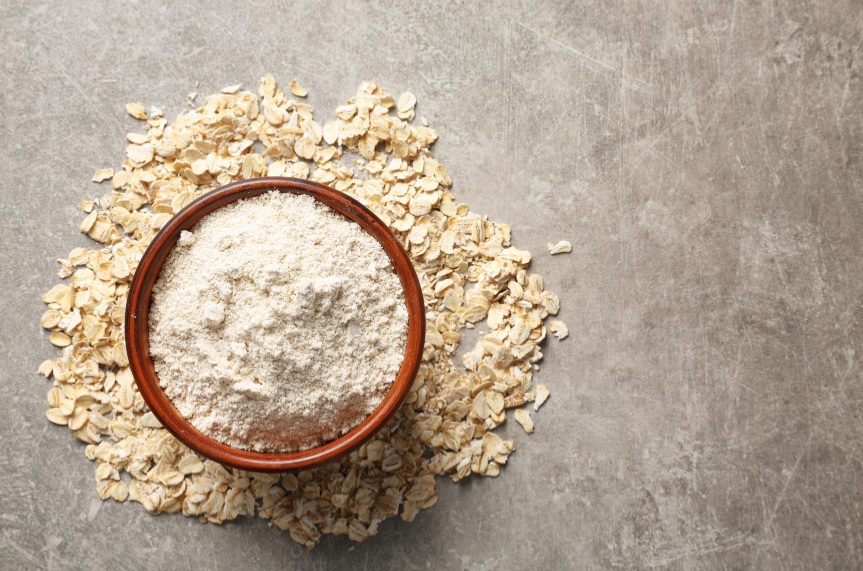
When owners question whether are oats safe for rabbits, this helps explain why plain oats are sometimes used by rabbit carers, rescue organisations, and specialty experts like our rabbit bakery Singapore community as a supplemental calorie source for weight gain.
That doesn’t mean every thin rabbit needs oats.
Unexplained weight loss should be investigated, not simply covered up with extra calories.
Dental disease, chronic pain, gastrointestinal disease, kidney disease, infection, parasites and many other conditions can contribute to weight loss.
A sick rabbit also has very different nutritional requirements from a healthy rabbit who simply needs modest additional calories.
The important point is more subtle:
The same energy density that makes unlimited oats inappropriate for an overweight rabbit can make them useful in selected nutritional situations where additional calories are actually the objective.
Nutrition rarely works well when foods are permanently classified as either heroes or villains.
β-Glucan: One of the Most Interesting Parts of the Oat
Oats are particularly well known for β-glucan, a soluble dietary fibre found in the cell walls of the grain.
And unlike many botanical compounds discussed in a healthy rabbit diet, oat β-glucan has actually been investigated in rabbits.
2022 Rabbit Study
A 2022 study used 24 young female New Zealand White rabbits. Twelve rabbits received a normal basal diet while twelve received the basal diet plus purified oat β-glucan at 200 mg/kg body weight for four weeks.
The researchers reported increases in body weight, average daily weight gain and average daily food intake.
Several bacterial groups increased, including Lactobacillus, Pediococcus, Bacillus and Prevotellaceae_UCG-001.
Concentrations of butyrate, propionate and valerate also increased.
Meanwhile, serum concentrations of the inflammatory markers TNF-α and IL-1β, as well as lipopolysaccharide (LPS), were lower in the β-glucan group.
When evaluating whether are oats safe for rabbits, this scientific background offers deep insight. The researchers concluded that oat β-glucan influenced gut microbial composition, microbial metabolites, intestinal function and growth performance in these weaned rabbits. That’s genuinely interesting rabbit-specific research.
β-Glucan Study ≠ Oat Cookie Study
The researchers administered a controlled dose of purified oat β-glucan. They didn’t feed rolled oats. They didn’t feed oat flour. And they certainly didn’t test an authentic rabbit bakery Singapore creation.
We therefore cannot take the study results and claim: “Oat cookies increase beneficial bacteria and reduce inflammation in rabbits.” That would be extrapolating beyond the experiment.
What the research does demonstrate is that one naturally occurring constituent of oats has measurable biological activity in rabbits. That makes oats considerably more interesting than describing them simply as a source of carbohydrate.
What Happens to Oats During Our Baking Process?
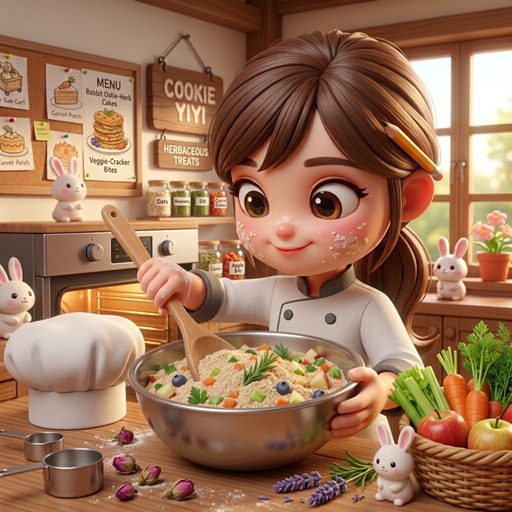
How oats are prepared matters just as much as the ingredient itself.
At Oishi Bunnies, our organic oats are finely milled and combined with moisture-rich plant ingredients before undergoing our slow, low-temperature baking and drying process. We have refined this method through nine years of making rabbit cookies.
One of the food-science processes that can occur during baking is starch gelatinisation.
When oat starch is heated in the presence of sufficient moisture, its tightly organised starch granules begin absorbing water, swelling and losing some of their original crystalline structure. This process occurs across a temperature range rather than at one precise temperature.
Our cookies are baked within a temperature range in which oat-starch gelatinisation can occur while moisture is still present in the dough.
Gelatinisation changes the physical structure of starch and generally makes it more accessible to digestive enzymes.
Rabbits themselves are capable of enzymatically digesting dietary starch in the small intestine; the amount, source, processing and overall composition of the rabbit diet all influence what ultimately reaches the caecum.
What we’re not claiming: We don’t claim that our baking process completely gelatinises the oat starch, nor that gelatinisation turns a cookie into hay. Only laboratory analysis could establish the degree of gelatinisation in a finished product.
What we can say is that our baking method deliberately combines hydration, gentle thermal processing and thorough drying under conditions where some gelatinisation can occur, rather than simply feeding loose, uncooked grain.
Why We Keep Our Baking Below 100°C

Temperature doesn’t just drive gelatinisation. It can also change the nutritional and physical properties of oats, and this is one of the reasons we keep our own baking below 100°C.
Research on oat cereals prepared with water at 40°C, 60°C, 80°C and 100°C found significant differences in measured protein, fat, magnesium and dietary fibre between preparation temperatures. There is an important complication, however: because the oats absorbed water and the study did not measure the resulting water content, some of the apparent reductions in protein, fat and magnesium may have reflected dilution rather than nutrient destruction by heat alone. [1]
Protein has its own temperature story. Research into oat proteins has examined heat-induced changes at 100°C to 115°C, with oat globulin — an important storage protein in the grain — progressively losing its native extractable form during thermal treatment.
[2]
Fibre behaved differently. In the same oat-cereal experiment, measured dietary fibre was actually higher in samples prepared at 100°C than at the lower temperatures. That doesn’t mean heat simply “creates fibre,” or prove what happens to β-glucan specifically, but it does show why processing can’t be reduced to the idea that higher temperature simply destroys everything.
[1]
A caveat worth being upfront about: the first study looked at oat cereal prepared in water, not oats baked into a dough, while the protein research examined oat protein under controlled experimental conditions. Neither reproduces an Oishi Bunnies cookie. We’re applying the broader food-science principle that temperature, moisture, time and food structure matter, rather than claiming that either experiment proves nutrient retention in our finished cookies.
The exact recipe and baking protocol remain part of our bakery craft, but the principle behind it is simple: we care about how an ingredient is prepared, not merely whether it appears on an ingredient list.
Why Does Processing Matter?
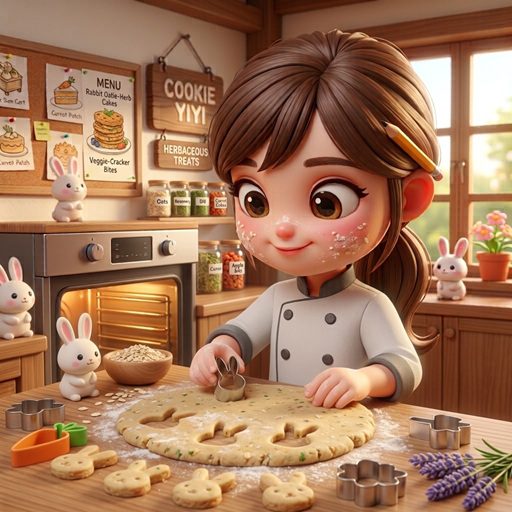
Food isn’t chemically frozen in time.
Grinding, hydration, heating, cooling and drying can change the physical structure of food.
Oat starch research demonstrates that thermal and physical processing can alter:
That doesn’t automatically make processed oats “better” than raw oats.
It means processing matters.
This principle extends beyond starch. Heat can preserve some compounds, reduce others and alter the availability of still others.
That’s why we prefer to discuss our cookies as a finished food matrix, rather than pretending that the nutritional behaviour of an ingredient can always be predicted simply by reading its name on the label.
Why We Use Oats With Herbs
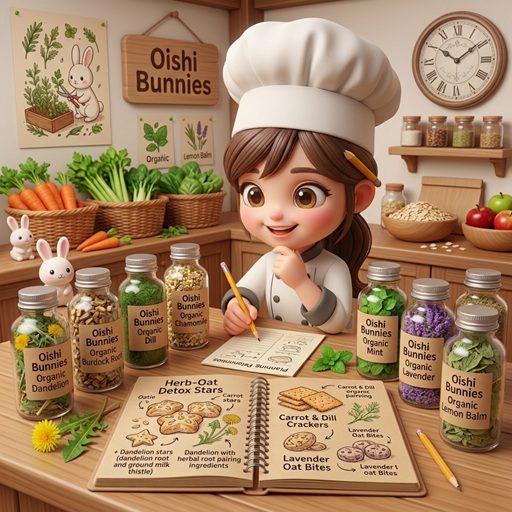
Oats also have another very practical role in the Oishi Bunnies kitchen.
They allow us to incorporate carefully selected herbs and other plant ingredients into a small, cohesive and portionable treat.
Depending on the recipe, our cookies may incorporate different botanicals chosen for flavour, aroma, nutritional variety and their traditional or scientifically investigated properties.
The oat matrix helps bring those plant ingredients together without requiring the sort of sugary syrups commonly used as binders in conventional human biscuits.
Oats + botanicals: the oat matrix gives us a practical way to combine herbs and other plant ingredients into a measured, portionable format.
That doesn’t mean adding herbs somehow cancels the calories or starch in oats.
It doesn’t. The finished cookie should still be treated as a complementary food in the rabbit diet.
But it does explain why oats have remained such a useful ingredient in our bakery for almost a decade.
Organic Oats: What “Organic” Means, and What It Doesn’t
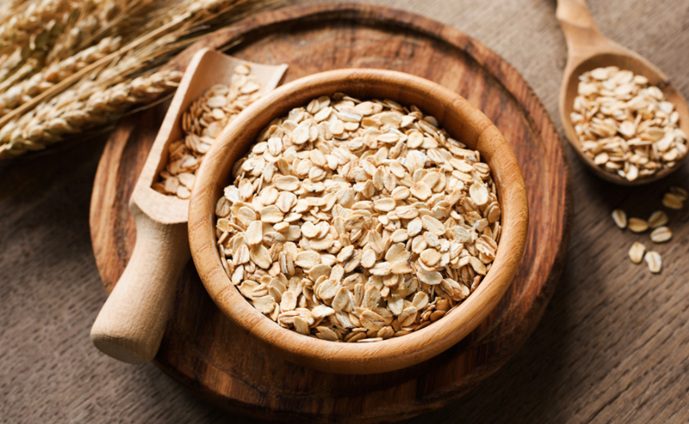
We choose organic oats for our bakery, and we’d like to be precise about what that word does and doesn’t tell you.
What organic actually means
Organic is a production standard rather than a nutritional claim. Certified organic crops are grown under rules that restrict synthetic pesticides, herbicides and fertilisers and specify which substances and inputs may be used. Organic farming systems also emphasise practices such as crop rotation, soil management and composting, while certified products are subject to traceability and auditing requirements.
Singapore doesn’t have its own national organic certification standard, so the oats we buy are certified under recognised international programmes.
What organic can offer
The clearest benefit is on the input side. Pooled analyses of organic and conventional crops have generally found that synthetic pesticide residues turn up less often in organic produce, and that cadmium, a heavy metal taken up from soil, tends to be lower in organic grain. For oats in particular, some conventional growers apply a herbicide shortly before harvest to dry the crop down, a practice organic rules don’t allow.
For a small animal eating a concentrated grain product regularly, fewer synthetic residues is a sensible thing to prefer. There are also environmental arguments for organic farming, including soil health and biodiversity, though these vary by farming system, region and management practice.
What organic doesn’t do
It doesn’t transform the oat itself. Organic oat starch is still starch, and organic oats are still energy-dense. Organic also doesn’t mean residue-free or contaminant-free, because grains of any kind can pick up mould toxins if they’re stored badly, which is why storage and sourcing matter as much as the label.
And we aren’t aware of rabbit-specific research showing that organic oats produce better health outcomes than equivalent conventionally grown oats.
Why we choose them
For Oishi Bunnies, it’s primarily an ingredient-sourcing decision. Where practical, we prefer ingredients grown under systems that restrict synthetic inputs and fit the standards we’ve set for our bakery. We think that’s worth doing, and we don’t need to invent a medical benefit to justify it.
Nine Years in the Oishi Bunnies Bakery
 As a premier rabbit bakery Singapore, Oishi Bunnies has been baking handmade rabbit cookies with organic oats since 2017.
Over those years, we’ve learned a great deal about how oats behave when they’re milled, hydrated, combined with different plant ingredients and gently baked for a healthy rabbit diet.
Some lessons came from books. Others came from standing in front of an oven. And some came from watching your rabbits — noticing which textures get eaten with enthusiasm and which get left half-nibbled in the corner of the bowl, which tells us plenty about palatability and acceptance within a proper rabbit diet, even if it can’t tell us whether a formulation is “working” in any nutritional sense. That kind of feedback keeps pushing us to do better.
But practical experience and scientific evidence aren’t interchangeable.
Conclusion
 Oats have sometimes been reduced to one word in rabbit diet discussions: starch.
But Avena sativa is more interesting than that.
Oats provide energy, protein, lipids, fibre, β-glucan and a collection of phytochemicals including avenanthramides. Oat grain has a long history of inclusion in rabbit feeding research, and modern rabbit-specific research has demonstrated measurable biological effects from purified oat β-glucan.
None of this changes the foundation of good rabbit nutrition.
Oats cannot reproduce the structural fibre, prolonged chewing or dietary role of grass hay, and energy-dense foods should never be allowed to displace it.
But “not hay” doesn’t mean “bad food.”
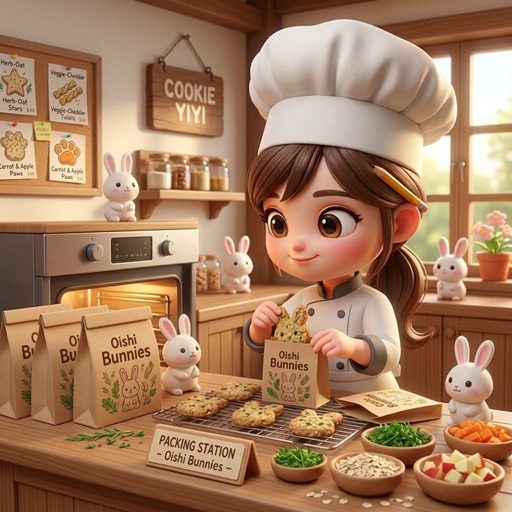
At Oishi Bunnies, our rabbit bakery Singapore operations use organic oats for a specific purpose: as a carefully portioned baking ingredient and plant-based matrix that allows us to incorporate herbs and other botanicals into our artisanal rabbit cookies.
Our baking process includes hydration and gentle thermal processing at temperatures where oat-starch gelatinisation can occur, followed by thorough drying.
Evidence matters: We don’t claim that this completely gelatinises the starch or creates therapeutic benefits that haven’t been demonstrated.
What we do believe after nine years of baking is that ingredients deserve more thought than simply dividing them into “good” and “bad.”
The ingredient matters, the amount matters, the rabbit matters, and how the ingredient is prepared matters too.
That’s the difference between a bag of raw grain and a cookie we’re willing to put our name on.