
 Pro-Tip: Viewing on a phone? Select desktop mode or rotate to landscape for the best reading experience!
 Estimated Read Time: 6 Mins
Why Slow Introductions Matter
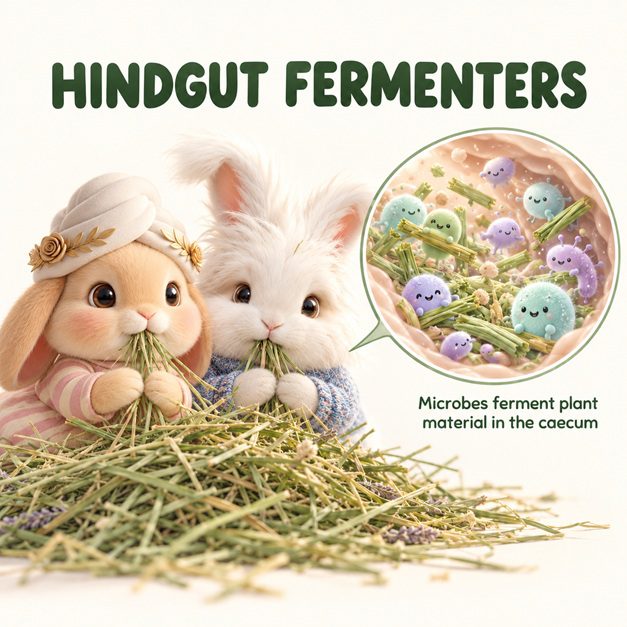
Rabbits are hindgut fermenters. Their caecum houses microbes that ferment material not digested earlier in the digestive tract. Meanwhile, the larger, less digestible fibre particles help support gut movement and leave as hard faecal pellets.
Sudden dietary changes can cause digestive upset or food refusal. Slow introductions keep the familiar diet stable and give you time to notice changes. GI stasis has several possible causes, including pain, illness and stress, so symptoms shouldn’t automatically be blamed on the latest food.
Pee-Casso: “But she LOVED it. Look at her face.”
Bunnini: “Enthusiasm is a review, not a lab result.”
Before You Start
Choose a settled period when your rabbit is eating normally, passing their usual droppings and behaving comfortably.
- Recently arrived or facing major changes? Keep their established diet steady while they settle in.
- Unwell, recovering or following a prescribed diet? Ask your vet before making changes.
- Droppings already abnormal? Investigate the problem before adding another variable.
- Under 12 weeks old? SPCA New Zealand advises avoiding unfamiliar foods before this age. Seek individual guidance when feeding history is uncertain.
Rabbit Diet Transition: Switching Pellets, Hay or Fresh Foods
How to introduce new food to rabbits depends partly on what you’re changing. Switching rabbit pellets calls for gradually mixing the old and new rations. A hay change needs close attention to actual eating, while unfamiliar fresh foods start with a tiny taste.
Switching Rabbit Pellets
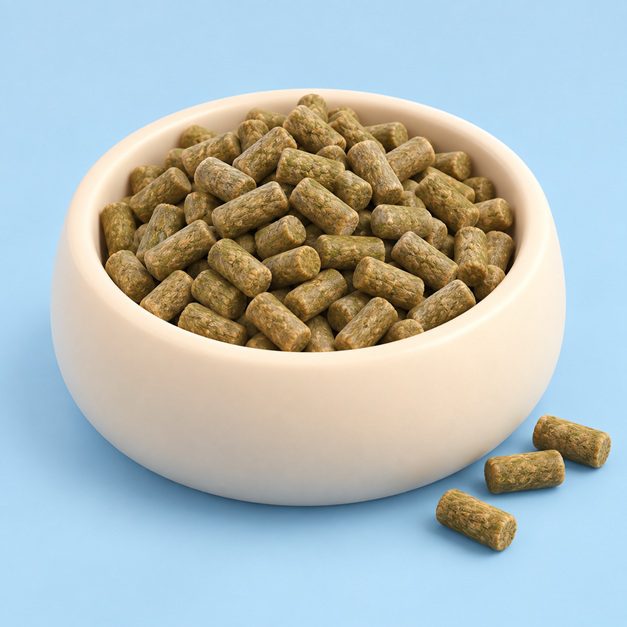
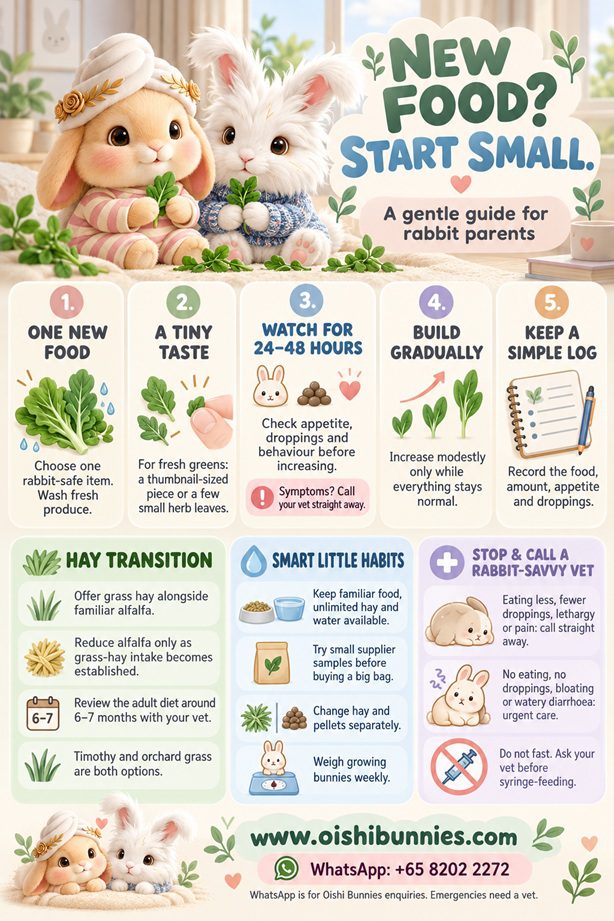
When switching rabbit pellets, mix a little of the new pellet into the familiar ration, gradually increasing its share while reducing the old pellets. Keep the total daily ration appropriate for your rabbit.
A conservative example is:
- 75% old / 25% new
- 50% old / 50% new
- 25% old / 75% new
- 100% new
Spread these stages over roughly 2–4 weeks, with slower changes where needed. These ratios are a practical example rather than a mandatory prescription. During this rabbit diet transition, monitor appetite, droppings and behaviour before progressing.
Grass Hay and the Move from Alfalfa to Timothy Hay
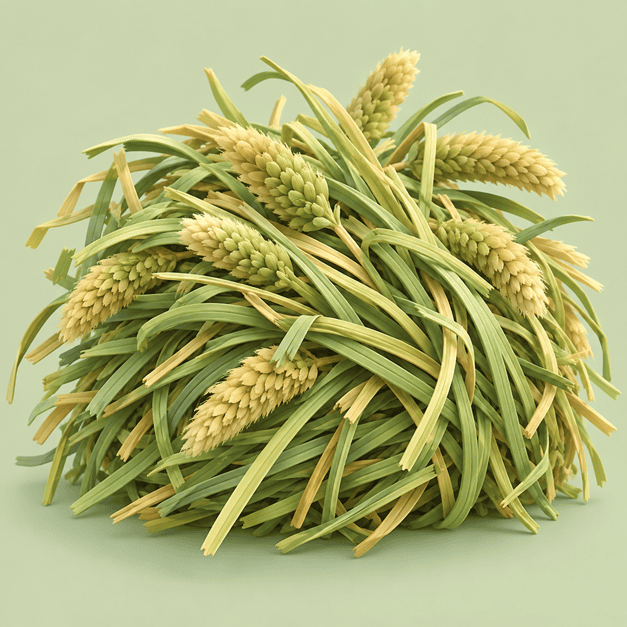
Keep grass hay freely available. Offer a new variety or batch alongside familiar hay, or blend them together, and check actual intake. Changes in scent and texture can make picky rabbits reject a new batch.
Moving a young rabbit from alfalfa to timothy hay is a separate nutritional transition. Orchard grass and other suitable grass hays are also options. Follow the
alfalfa-to-grass-hay guide further down
for timing, gradual changes and checks before reducing familiar alfalfa.
Fresh Fruits and Vegetables
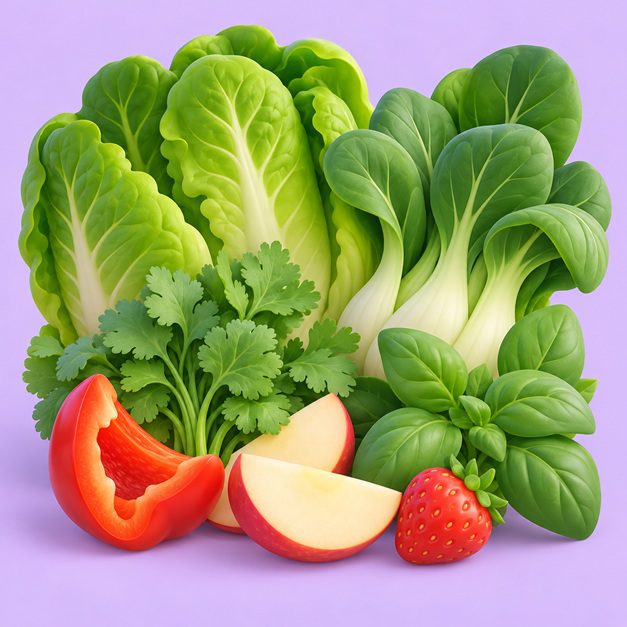
Introduce one rabbit-safe item at a time, starting with a tiny taste and increasing gradually if appetite, droppings and behaviour remain normal. Leafy greens can join the familiar fresh-food selection; fruit remains an occasional, small treat.
Rabbit sensitive stomach concerns are a reason to keep changes small and clearly recorded. If your rabbit has ongoing digestive symptoms or a history of gut problems, ask your rabbit-savvy vet to guide the rabbit diet transition.
Fresh grass:
Introduce gradually if your rabbit isn’t accustomed to it.
Never feed lawnmower clippings.
Budget-Friendly Rabbit Diet Transition: Try Before You Stock Up
Learning how to introduce new food to rabbits has a useful side effect: you don’t need to commit to a giant bag on day one. Whether you’re switching rabbit pellets or moving from alfalfa to timothy hay, small trial packs let you check acceptance before stocking up. Rabbits can be fussy, and a rejected bag is a sad (and expensive) sight.
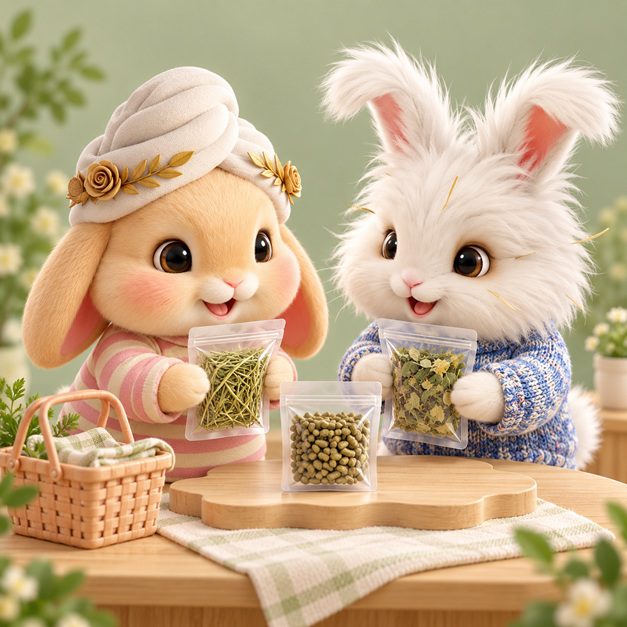
1. Ask for Samples Before Switching Rabbit Pellets or Hay
Ask sellers whether they offer small samples or trial packs of hay, pellets or treats. Explain that you’re planning a rabbit diet transition and want to check whether your rabbit accepts the replacement before buying a larger bag.
A sample pack gives you a little food to trial; it isn’t the portion to serve all at once. Offer only the small amount appropriate for that food. If your bun turns up their nose, you’ve avoided committing to a cupboard full of rejected snacks.
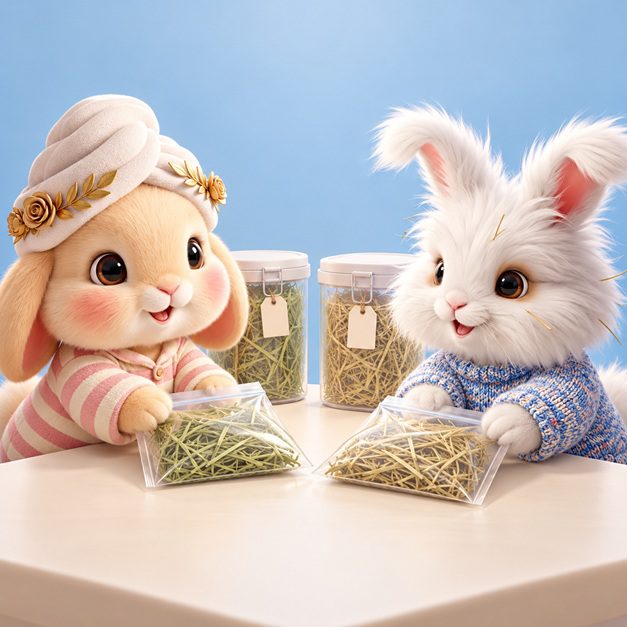
2. Swap Clean, Unused Hay Samples Carefully
Fellow rabbit parents are often keen to exchange small handfuls so everyone can trial new varieties or batches. If you’re moving from alfalfa to timothy hay, a small sample can help you explore which grass-hay texture your rabbit accepts.
Exchange only hay taken from stored stock with clean hands or utensils, never from another rabbit’s feeder, enclosure or litter tray, and keep the original supplier and batch details where possible.
A fresh smell and clean appearance help you judge quality, but they can’t rule out infectious contamination. Supplier samples are the better choice when the source or handling history is uncertain.
Swapped hay follows the same rabbit diet transition principles: offer it alongside familiar hay and check actual intake before reducing the old hay.
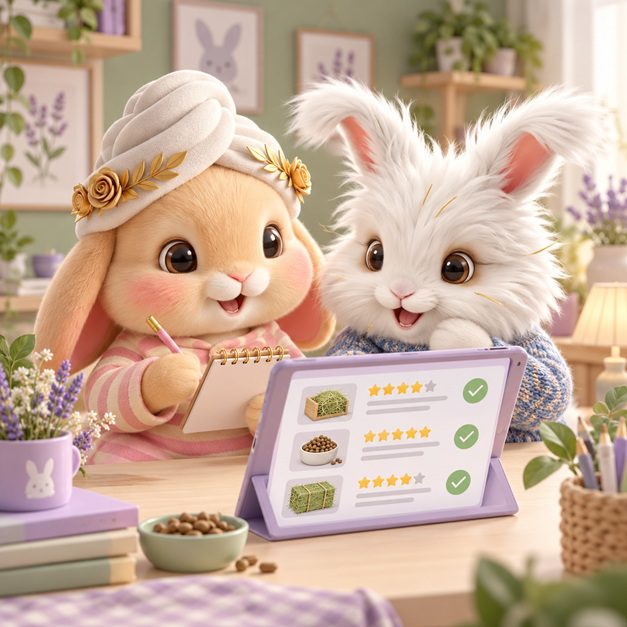
3. Read Online Reviews Before Stocking Up
Reviews can offer useful clues before buying: whether picky buns accepted the food, how fresh it arrived, and whether buyers reported dusty hay or damp packaging. Look for recent reviews of the same product or batch where possible.
Reviews mentioning rabbit sensitive stomach concerns don’t establish whether a food will suit your rabbit. Treat them as clues, not a verdict. Your own rabbit’s appetite, droppings and behaviour guide the trial, and ongoing digestive symptoms need veterinary advice.
From Alfalfa to Timothy Hay: A Beginner’s Rabbit Diet Transition Guide
Learning how to introduce new food to rabbits includes knowing when to change their main forage. Moving from alfalfa to timothy hay should be gradual, with familiar hay available while grass-hay intake becomes established. This rabbit diet transition guide helps you plan each stage without rushing your bunny.
When Should You Switch from Alfalfa to Timothy Hay?
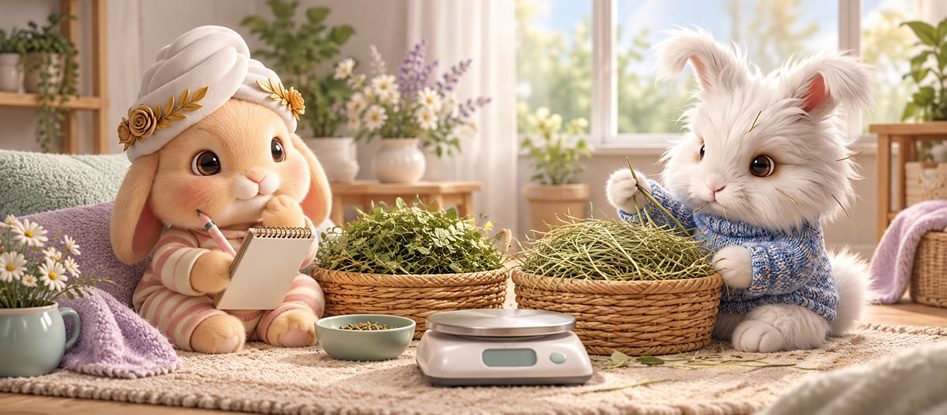
For many healthy rabbits, around 6–7 months is a useful point to review the move towards an adult, grass-hay-based diet. San Diego House Rabbit Society describes alfalfa for babies under six months, while House Rabbit Society places rabbits on unlimited grass hay from seven months. Treat these as age guides, not a compulsory birthday deadline. Growth, body condition and health matter too, so ask your vet to confirm the timing for your rabbit.
Why make this rabbit diet transition? Alfalfa is a legume hay, generally richer in protein and calcium, and often more energy-dense, than grass hay. It can support growth and additional nutritional needs. Healthy adults usually do better with grass hay as their main forage. The right balance depends on the whole diet, body condition and health, and underweight, pregnant, nursing or medically vulnerable rabbits need an individual feeding plan from a vet.
Timothy isn’t the only suitable destination. Orchard grass and other suitable grass hays are also options. The goal is a rabbit that eats plenty of appropriate hay, not one that reluctantly obeys the word “Timothy”.
Start Familiarising Them with Grass Hay Early
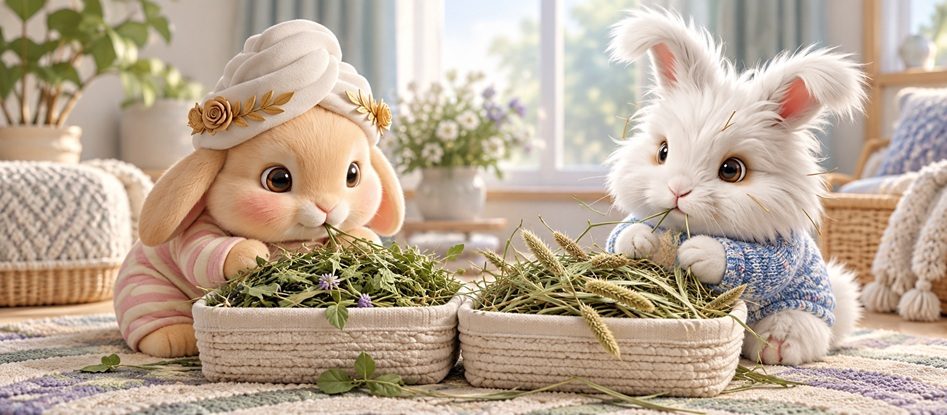
Offer grass hay alongside the established young-rabbit diet well before it’s time to reduce alfalfa. Early exposure to different hay tastes and textures can make the eventual move from alfalfa to timothy hay easier.
Guidance differs on alfalfa allowance. RWAF recommends grass hay throughout growth, with alfalfa as a small supplement. Some US resources, including Oxbow and House Rabbit Society, recommend unlimited alfalfa for youngsters, with grass hay offered alongside it. Both approaches support familiarising young rabbits with grass hay. Ask your rabbit-savvy vet to tailor the balance to growth, body condition and the rest of the diet.
A Systematic Rabbit Diet Transition Plan
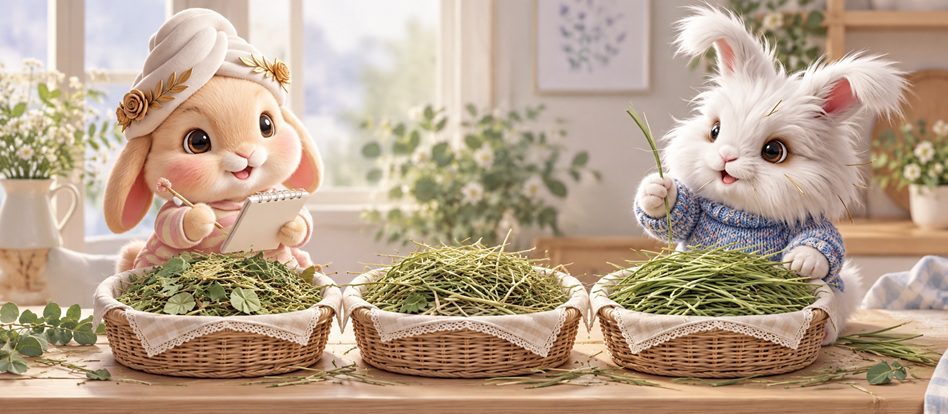
This is a practical framework, not a clinically validated hay schedule. When moving from alfalfa to timothy hay or another suitable grass hay, each stage may take several days or longer. Progress depends on actual eating, droppings and weight, not the calendar.
| Stage | What to do | Before progressing |
|---|---|---|
| 1. Establish the baseline | Record the familiar diet, usual hay intake, droppings and starting weight. Keep pellets and greens steady. | Your rabbit is well and eating normally. |
| 2. Offer both hays | Put grass hay beside familiar alfalfa, or blend a little into it. Keep sufficient familiar hay available. | You see your rabbit actually chewing and swallowing grass hay. |
| 3. Reduce alfalfa gradually | Offer progressively less alfalfa while keeping grass hay freely available. | Total hay intake and droppings remain normal. |
| 4. Make grass hay the main forage | Continue reducing alfalfa as grass-hay consumption becomes established. | Weight and body condition remain appropriate. |
| 5. Maintain and review | Keep grass hay unlimited. Change pellets separately if needed. | Your rabbit consistently eats well without relying on alfalfa. |
Small Habits That Make a Rabbit Diet Transition Easier
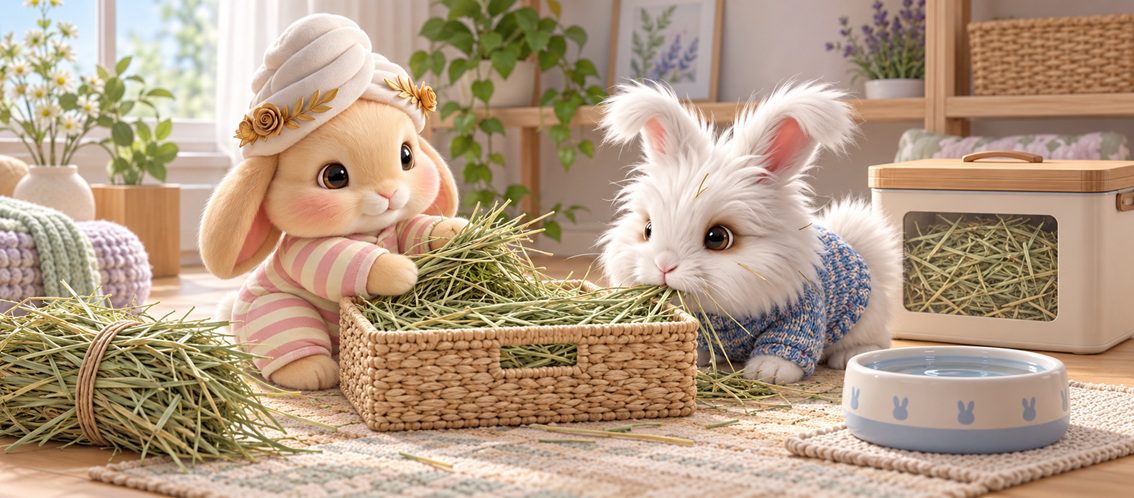
- Buy the replacement before the old bag runs out. Allow time to overlap familiar and new hay when moving from alfalfa to timothy hay.
- Make hay easy to reach. Try an accessible hay pile or feeder near the litter tray, kept clean.
- Watch eating, not just an empty rack. Hay may have been scattered or used as bedding.
- Expect some preferences. Many young rabbits pick out alfalfa first. Keep grass hay freely available, refresh small bundles regularly, and try another grass-hay texture or variety if needed. Reduce alfalfa only as actual grass-hay intake becomes established.
- Keep switching rabbit pellets separate from the hay change. Don’t swap hay, pellets and greens together. Complete one change and establish normal intake before starting the next, so you can identify which addition might be associated with a problem.
- If droppings change, pause the transition. Stop increasing the new food and seek veterinary advice for soft faeces or repeated uneaten caecotrophs. Reduced appetite, fewer droppings, pain or watery diarrhoea need prompt or urgent attention, as explained in “When to Stop and Seek Help” below.
- Don’t compensate with extra treats or pellets. If hay intake declines, address the reason instead of filling the gap with favourite snacks.
- Mind your hay. Check packs for freshness, and in Singapore’s humidity keep hay dry and check for mould before every feed.
Rabbit sensitive stomach concerns shouldn’t explain away persistent hay avoidance. If your rabbit repeatedly avoids hay, especially if this is new, arrange a dental and health assessment.
 Living Content Notice
 Disclaimer
 Stay Connected
 Facebook
 Instagram
 TikTok
 Shopee
 Lazada
 TakeApp
oishibunnies.com.sg • Singapore