 Pro-Tip: Viewing on a phone? Select desktop mode or rotate to landscape for the best reading experience!
 Estimated Read Time: 10 Mins
Oishi Bunnies Herbal Atlas
German Chamomile
Matricaria chamomilla
Welcome to the Oishi Bunnies Herbal Atlas. Here, we explore German chamomile for rabbits as food, forage and sensory enrichment—bringing together its long history in traditional medicine, modern phytochemical research.
Chamomile has some of the best PR in the entire herbal kingdom. It turns up on tea boxes, in bedtime rituals, in skincare products and in centuries-old herbal remedies, and its reputation is that of a gentle flower that calms the mind, settles the stomach and soothes irritated tissues.
German chamomile gets its familiar apple-like scent from its aromatic constituents, and even its name carries the association: chamomile comes from Greek roots meaning “ground apple.” It has a substantial history in traditional medicine, a well-characterised phytochemical profile and, interestingly, several studies involving rabbits.
Let’s investigate.
Written by Cookie Yiyi, fosterer of 18 rehabilitated buns, guardian to 4 resident house rabbits, and passionate organic balcony gardener—the Atlas pairs careful research with years of lived sanctuary experience.
Educational Notice:
Herbal profiles are provided for botanical learning, responsible forage use and enrichment. Whole German chamomile flowers are not equivalent to concentrated extracts, medicinal tinctures, herbal infusions or essential oils. Research involving chamomile extracts and essential oils should not be interpreted as home dosing instructions for rabbits. German chamomile should never replace professional veterinary diagnosis, treatment, prescription medication or emergency care. If your rabbit is unwell, please seek appropriate veterinary care.
The Verdict
Yes. Correctly identified German chamomile (Matricaria chamomilla L.) flowers are an acceptable small forage addition for healthy adult rabbits.
Chamomile is included among rabbit-safe forage plants by veterinary welfare guidance, and rabbit feeding studies have examined dried flower supplementation without identifying overt toxicity under the conditions tested. Its clearest everyday role is as fragrant forage, botanical variety and sensory enrichment—not as a treatment herb. A safe forage flower and an effective herbal medicine are two different things.
Why it stands out:
German chamomile is more scientifically interesting than its gentle reputation suggests because several studies involving actual rabbits exist, examining whole dried flowers, aqueous extracts, specialised feed additives and essential oils.
Some studies reported improvements in nutrient digestibility, production performance, selected biochemical measurements or responses to experimentally induced disease. Others found no therapeutic benefit, changes that warrant caution, or potentially adverse tissue findings. These experiments provide genuine rabbit-specific evidence, but they are not clinical trials proving that ordinary chamomile flowers or tea can treat illness in companion rabbits. The evidence remains preparation-specific and preliminary.
Two important cautions:
Asteraceae sensitivity—chamomile belongs to the daisy family. Severe allergic responses have been documented in humans, although the frequency and mechanisms of comparable reactions in rabbits have not been established. Flower ≠ extract ≠ essential oil—concentrated experimental preparations deliver different chemical exposures from ordinary flowers or homemade tea. Findings from these preparations cannot be used to establish home dosing instructions. Rabbits with complicated medical conditions or receiving prescribed medication deserve individual veterinary consideration before medicinal preparations are introduced.
How much:
there is no scientifically established ideal serving size or validated medicinal dose of German chamomile flowers or homemade chamomile tea for companion rabbits. For a healthy adult already accustomed to varied greens, introduce one small flower head or a similarly small amount of dried material first. Observe appetite, droppings and normal hay consumption before including chamomile in small, measured amounts within a varied botanical rotation.
The percentages and doses used in experimental rabbit diets or extract studies are research protocols—not household feeding instructions.
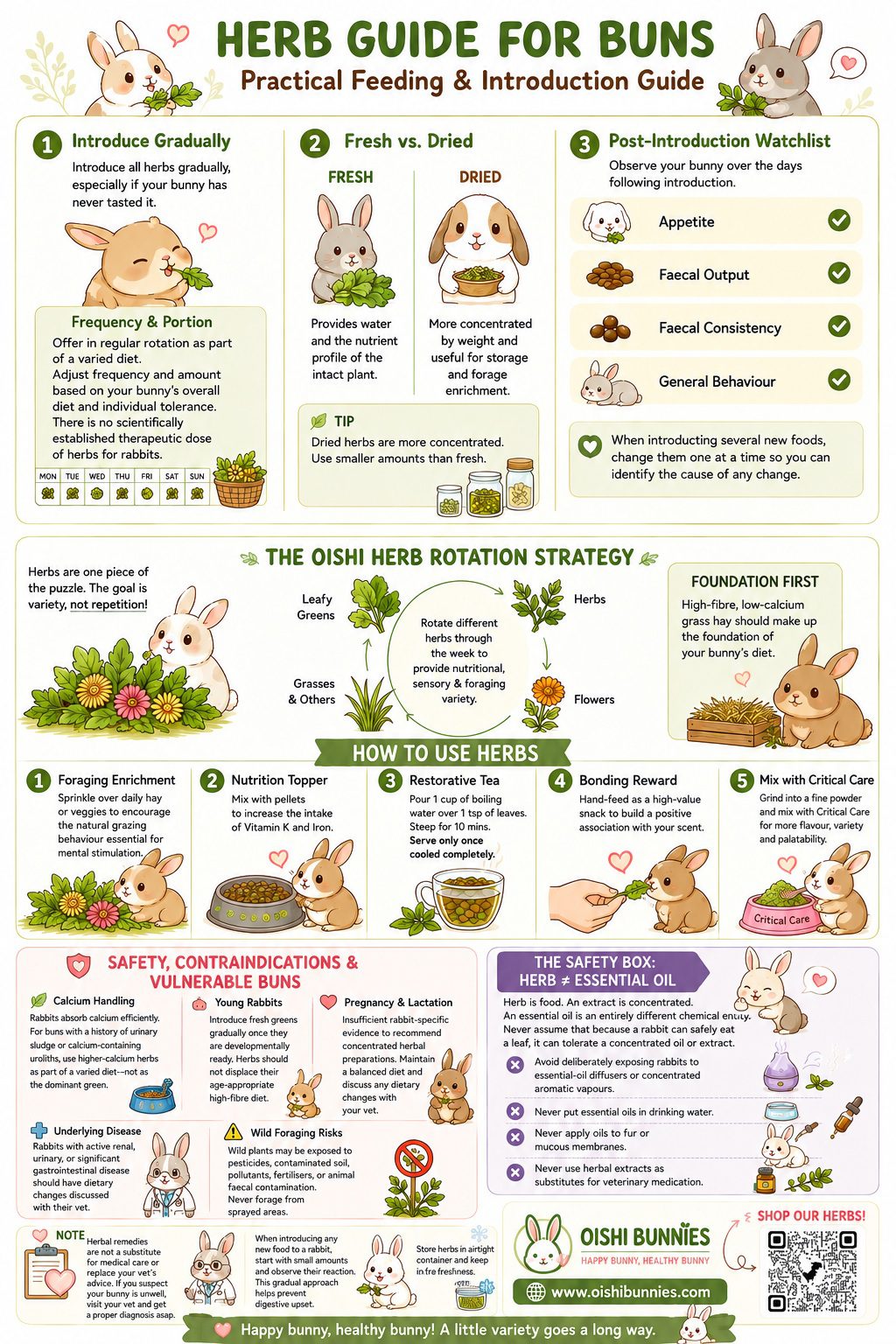
For the universal introduction steps—going slowly, fresh versus dried, the post-introduction watchlist, general vulnerable-bun guidance, herb rotation strategy and the essential-oil safety box—see the Oishi Herb Guide for Buns, which applies to every herb in this Atlas.
Our Verdict:
A fragrant, worthwhile forage flower for most healthy adult rabbits when correctly identified, clean and introduced sensibly. German chamomile deserves a place in the Herbal Atlas, but not a promotion to veterinary medicine before the evidence supports it.
Think fragrant forage, not prescription.
Herb at a Glance
| Common names | German chamomile, true chamomile, wild chamomile, scented mayweed, Hungarian chamomile |
| Accepted botanical name | Matricaria chamomilla L. |
| Botanical synonyms | Matricaria recutita L.; Chamomilla recutita (L.) Rauschert |
| Chinese names | 洋甘菊 |
| Family | Asteraceae |
| Growth habit | Upright, branching annual herb |
| Typical height | Up to approximately 60 cm |
| Primary herbal material | Flower heads |
| Fragrance | Sweet, aromatic, apple-like |
| Traditional uses | Digestive discomfort, nervousness, minor inflammation and topical soothing |
| Major compounds | Apigenin, luteolin, α-bisabolol, bisabolol oxides, matricin, spiroethers |
| Rabbit research | Yes — controlled feeding studies, biochemical experiments, essential-oil studies and isolated-intestine experiments |
| Practical role | Forage diversity and sensory enrichment |
| Therapeutic dose for pet rabbits | Not established |
| Main cautions | Plant identification, individual sensitivity, concentrated preparations and medicine interactions |
Why Offer German Chamomile?
Botanical Variety & Foraging Enrichment
Rabbits explore food through smell, texture and taste, so German chamomile’s small, aromatic flower heads offer a different sensory experience when scattered among familiar forage or hay. Encouraging rabbits to search, sniff and select their food supports natural foraging behaviour rather than simply presenting everything in a bowl.
Traditional Digestive Uses & Smooth-Muscle Research
In human herbal medicine, chamomile has traditionally been used for gastrointestinal cramps, abdominal discomfort and diarrhoea. Laboratory experiments offer plausible explanations for some of these observations, including the ability of certain chamomile extracts to relax isolated rabbit intestinal smooth muscle.
Digestibility & Feeding Performance
Controlled rabbit studies have investigated chamomile flowers as feed ingredients and chamomile-derived preparations as dietary additives. One trial involving 40 growing New Zealand White rabbits reported higher nutrient digestibility and feeding-value measurements in the chamomile and fennel groups. Other experiments examined growth, feed intake, blood parameters and intestinal microorganisms.
Oxidative Stress, Inflammation & Calming Claims
Chamomile contains compounds investigated for antioxidant and anti-inflammatory activity. Some rabbit experiments examined these effects during experimentally induced toxicological or metabolic challenges. Results differ according to preparation, dose and disease model, and one favourable biochemical marker does not establish an effective medical treatment.
Traditional medicine also associates chamomile with relaxation, while preclinical research suggests that certain compounds may influence neurological signalling. However, no convincing rabbit-specific clinical evidence reviewed here establishes that ordinary chamomile flowers reliably reduce anxiety during travel, grooming, medical procedures or postoperative recovery.
The simple case for German chamomile:
its fragrant flowers bring botanical variety, sensory enrichment and natural foraging opportunities into a hay-first diet. Its phytochemistry and rabbit-specific research make it scientifically interesting, but the effects of concentrated extracts and laboratory preparations cannot be assumed to occur when a rabbit eats a few flowers. Enjoy chamomile as forage without needing to promote it as a cure.
Edible Anatomy
| Plant Part | Rabbit Guidance |
|---|---|
| Flower Heads | Yes. The principal material used in herbal infusions and many traditional medicinal preparations. Each apparent “flower” is actually a composite flower head made up of numerous tiny florets: a central yellow disc of tubular florets surrounded by white ray florets. The flower heads contain aromatic volatile compounds, flavonoids and other phytochemicals. Dried flower heads are the most directly relevant form for ordinary rabbit forage, because whole flowers have been included in experimental rabbit diets. |
| Fresh Flower Heads | Suitable in small amounts. Fresh, correctly identified flowers may be introduced in small, measured portions to healthy rabbits already accustomed to varied greens. They contain more moisture than dried flowers and may have a somewhat different aroma and texture. The available feeding studies do not establish a fresh-flower serving size, and fresh and dried flowers should not be compared gram-for-gram without accounting for moisture loss. |
| Leaves & Stems | Limited rabbit-specific evidence. German chamomile has fine, feathery foliage and slender, branching stems. These aerial parts have a history of herbal use, but the rabbit feeding studies reviewed provide much stronger information about flowers than leaves or stems. For practical forage use, flower heads remain the preferred focus. |
| Dried Flowers | Practical for forage mixes. Properly dried chamomile is convenient to store and easy to incorporate into a botanical rotation. Drying removes moisture, making the remaining material more concentrated by weight. It may also change the amount and balance of volatile aromatic constituents. For rabbit use, choose plain, untreated, single-ingredient flowers without colouring, fragrance additives or sweeteners. |
A useful identification clue:
German chamomile (Matricaria chamomilla) has small, daisy-like flower heads with white ray florets surrounding a yellow central disc. As the flower matures, the yellow centre develops into a cone-shaped receptacle that is hollow inside—an important feature for distinguishing German chamomile from Roman chamomile and several similar-looking daisies. Its finely divided leaves and characteristic apple-like fragrance provide additional clues. No single feature should be relied upon in isolation; we’ll explore the important look-alikes later in this guide.
German Chamomile-Specific Feeding Cautions
Asteraceae Sensitivity
German chamomile belongs to the Asteraceae (daisy) family, alongside chrysanthemums and ragweed. Human medical literature documents immediate allergic reactions to chamomile, including anaphylaxis. In a 2000 study involving 14 chamomile-sensitised patients, ten had experienced immediate-type reactions, some severe. The researchers also identified heat-stable allergens and cross-reactivity involving mugwort and birch pollen.
What does this mean for rabbits? Introduce the flowers carefully, offer a small first portion and observe for unusual reactions. If anything appears abnormal, stop offering the herb.
A Spasmolytic Herb in a Motility-Dependent Gut
Some chamomile extracts have demonstrated the ability to relax isolated rabbit intestinal smooth muscle. This is a genuine laboratory finding, but a rabbit’s digestive tract relies on coordinated muscular activity. Relaxing isolated tissue does not automatically mean improving gastrointestinal motility in a living rabbit.
Antispasmodic activity ≠ treatment for GI stasis.
No clinical evidence reviewed here demonstrates that chamomile treats gastrointestinal stasis or trapped gas in companion rabbits. A rabbit with reduced appetite, abnormal droppings, abdominal discomfort or suspected obstruction needs urgent veterinary assessment.
Aqueous Extracts Aren’t Harmless by Default
In a 2021 rabbit study, a higher concentration of chamomile aqueous extract was associated with lower red blood cell counts compared with controls, alongside changes in other blood measurements. Although the authors interpreted their overall findings favourably, individual results deserve closer examination.
A separate 2020 study involving orally administered aqueous flower extract also reported changes in blood cell counts, platelets and biochemical parameters. These findings remind us that a concentrated preparation does not become automatically safer simply because it originates from an edible herb.
Medication Interactions
In human medicine, chamomile has been discussed in relation to potential interactions with anticoagulants, sedatives and medicines affected by metabolic enzymes. Rabbit-specific interaction data remain limited. The greatest concern is with concentrated preparations, particularly in rabbits already receiving prescribed medication. Medicinal-strength chamomile extracts should not be combined with veterinary treatments without guidance from the attending veterinarian.
Meet the Plant
German chamomile (Matricaria chamomilla) belongs to the enormous Asteraceae family, alongside daisies, sunflowers and chrysanthemums. Unlike low-growing Roman chamomile, German chamomile is an upright, branching annual herb that can reach approximately 60 cm, depending on climate, soil and growing conditions. Its slender stems support delicate, finely divided foliage and numerous small, white-and-yellow flower heads.
The familiar daisy-like “flower” is actually a composite flower head made up of many individual florets. White ray florets surround a yellow central disc composed of tiny tubular florets. As the flower matures, its yellow centre develops into a raised, cone-shaped structure that is hollow inside—one of the plant’s most useful identification features. German chamomile is also recognised by its distinctive sweet, apple-like fragrance.

Matricaria chamomilla — German chamomile has delicate white-and-yellow composite flower heads, feathery leaves and slender branching stems.
Field identification checklist:
- Growth habit: An upright, branching annual herb, typically reaching up to approximately 60 cm under suitable conditions.
- Leaves: Narrow, finely divided and feathery, with delicate, almost thread-like segments arranged along the stems.
- Stems: Slender, branching and generally smooth, carrying leaves and flower heads above the ground.
- Flower heads: Small, daisy-like structures with white ray florets surrounding a golden-yellow central disc of numerous tubular florets.
- Flower receptacle: The yellow centre becomes raised and cone-shaped as the flower matures. When cut lengthwise, the mature receptacle is hollow inside—an important botanical identification feature.
- Fragrance: Distinctively sweet, aromatic and reminiscent of apples, particularly when the flower heads or foliage are gently crushed.
- Seeds: After flowering, small dry fruits called achenes develop. Under suitable conditions, mature plants can disperse seeds and self-sow.
A Little Flower With a Role in the Herb Garden
German chamomile attracts bees, butterflies and other flower-visiting insects, making it a useful addition to mixed herb, vegetable and ornamental gardens. Its small, fragrant flowers provide opportunities for pollinator visits while adding botanical diversity to the planting area.
Chamomile is also sometimes promoted as a companion plant that repels garden pests. However, these claims are not consistently supported across different pests and growing conditions. Attracting beneficial insects is not the same as reliably preventing pest infestations, so chamomile should not replace appropriate garden pest management.
As an annual, German chamomile completes its life cycle after flowering and seed production. It can self-sow readily under favourable conditions, which makes it convenient in temperate herb gardens. Natural reseeding may be less dependable in Singapore’s hot, humid environment, where temperature, rainfall and soil moisture can affect plant establishment.
Don’t Identify German Chamomile by Its Daisy-Like Flowers Alone
Numerous members of the Asteraceae family produce small white-and-yellow flower heads, including Roman chamomile, scentless mayweed and other chamomile-like plants. Some are botanically distinct and contain different chemical constituents. A similar flower or pleasant fragrance does not establish that a plant is German chamomile—or that it shares the same feeding evidence.
Look at the combination of upright annual growth, slender branching stems, finely divided leaves, aromatic flower heads and the hollow mature flower receptacle. No single feature should be used in isolation. German chamomile (Matricaria chamomilla, also known as Matricaria recutita) is also botanically different from perennial Roman chamomile (Chamaemelum nobile). We’ll compare these species and other important look-alikes in the next section.
Botanical identification references: NC State Extension — German Chamomile and University of Wisconsin Horticulture — German Chamomile.
German Chamomile vs Roman Chamomile & Look-Alikes
The word “chamomile” can refer to more than one plant. The species at the centre of this monograph is Matricaria chamomilla, also known as Matricaria recutita—German chamomile, the upright annual widely used in herbal teas and traditional medicinal preparations.
Roman chamomile (Chamaemelum nobile) is another recognised herbal species within the Asteraceae family. The two share similar daisy-like flowers, apple-like fragrances and overlapping traditional uses, but they differ in growth habit, botanical structure and phytochemical composition.
These distinctions matter when interpreting scientific research. Most of the rabbit experiments discussed in this Atlas entry concern German chamomile and its preparations. Roman chamomile should not automatically inherit the same feeding-trial findings, medicinal claims or extract safety conclusions simply because both plants share the name “chamomile.”
| Feature | Matricaria chamomilla German Chamomile | Chamaemelum nobile Roman Chamomile |
|---|---|---|
| Botanical name | Matricaria chamomilla L., also known as Matricaria recutita L. | Chamaemelum nobile (L.) All. |
| Family | Asteraceae — the daisy family. | Asteraceae — the daisy family. |
| Life cycle | Annual. Completes its life cycle through flowering and seed production. | Perennial. Can persist and regrow under suitable growing conditions. |
| Growth habit | Upright and branching, with slender stems and finely divided foliage. | Low-growing and spreading, often forming a mat-like groundcover. |
| Typical height | Up to approximately 60 cm, depending on growing conditions. | Often around 8–15 cm in low-growing foliage, although flowering stems may extend higher. |
| Flower centre | The mature yellow receptacle becomes raised and cone-shaped, with a hollow interior when cut lengthwise. | The receptacle is generally solid rather than hollow, providing a useful distinguishing feature. |
| Fragrance | Sweet, aromatic and distinctly apple-like. | Also aromatic and apple-like, with a somewhat different volatile-compound profile. |
| Major volatile constituents | Bisabolol derivatives, farnesene and other terpenoids. Chamazulene forms from matricin during distillation, contributing to the characteristic blue essential oil. | Predominantly ester-rich volatile oil, including angelate and related esters. Its chemical profile differs substantially from German chamomile oil. |
| Notable phytochemicals | Apigenin derivatives, matricin, spiroethers, flavonoids and other secondary metabolites. | A different balance of volatile constituents, flavonoids and sesquiterpene lactones, including nobilin-type compounds. |
| Herbal tea use | Particularly common in commercial herbal teas and traditional medicinal infusions. | Also traditionally used in herbal preparations, although generally less common in commercial chamomile teas. |
| Rabbit research | Multiple experimental studies exist, including research involving dried flowers, aqueous extracts, essential oils and isolated intestinal tissue. These findings do not establish a medicinal dose for companion rabbits. | No comparable rabbit-specific feeding or clinical studies were established in the research reviewed for this entry. Findings from German chamomile cannot automatically be transferred to Roman chamomile. |
Can We Treat the Two Species as Interchangeable?
No. Their common names, appearance and traditional uses overlap, but their botanical identities and chemical compositions differ. The rabbit studies covered in this entry principally concern German chamomile, so Roman chamomile should not automatically inherit the same medicinal claims, feeding-trial findings or extract safety conclusions.
Other Chamomile Look-Alikes
Plants commonly called scentless mayweed, stinking chamomile and feverfew may resemble German chamomile. Some contain different phytochemicals and can present different safety considerations. A similar daisy-like flower or familiar fragrance does not establish that a plant shares German chamomile’s feeding evidence.
For rabbit forage, correctly identified commercial herbs or carefully verified home-grown plants are preferable to unidentified flowers collected outdoors. Check the Latin botanical name rather than relying on a common name alone.
Similar flowers, different species. Botanical identity comes before feeding advice.
Nutritional & Phytochemical Profile
The Flower’s Nutritional Composition
German chamomile’s scientific reputation comes mainly from its secondary plant metabolites, rather than the protein, fibre or minerals it contributes to a rabbit’s diet. Analytical studies describe the flowers as containing protein, lipids, fibre, carbohydrates, minerals and numerous phenolic compounds.
One reported analysis of dried German chamomile flowers described approximately 12.6% crude protein, 5.8% crude fat and 3.8% ash. These are sample-dependent analytical figures, not universal nutritional guarantees. Cultivar, growing conditions, harvesting stage, drying and laboratory methodology can influence the results.
Dried Flower Heads
Nutrients + Plant Compounds
Contain protein, lipids, fibre, carbohydrates, minerals and a complex mixture of naturally occurring phytochemicals. Their primary interest for this Atlas is botanical diversity rather than major nutrient provision.
Calcium & Phosphorus
Ratio Not Established
A consistent, rabbit-relevant calcium-to-phosphorus ratio for dried German chamomile flowers was not established from the sources reviewed. Avoid marketing them as low-calcium forage without reliable supporting data.
Phytochemical Variation
Not Every Flower Is Identical
German chamomile has several recognised chemotypes. Genetics, growing conditions, harvest timing, drying, storage and extraction methods influence the proportions of aromatic compounds and other constituents.
The standard nutrient panel tells only part of the story. German chamomile also contains a complex mixture of secondary plant metabolites that help explain its distinctive fragrance, long herbal history and continuing interest in pharmacological research.
The Compounds That Interest Pharmacologists
Apigenin & Luteolin — Flavonoids
Apigenin is one of German chamomile’s best-known flavonoids. Researchers have investigated its involvement in neurological signalling, inflammatory processes, antioxidant activity and smooth-muscle physiology. Particular interest surrounds interactions with GABA-related signalling pathways, including benzodiazepine-sensitive receptor sites, which help explain why chamomile continues to attract research into its traditional calming reputation.
Luteolin is another flavonoid investigated for effects on inflammatory pathways and oxidative stress. Like apigenin, much of its pharmacological evidence comes from laboratory and preclinical experimental models.
α-Bisabolol & Bisabolol Oxides
α-Bisabolol is an aromatic sesquiterpene alcohol investigated for anti-inflammatory and tissue-related effects. It is among the constituents contributing to German chamomile’s interest in skincare and other topical formulations.
Bisabolol oxides belong to a related group of volatile constituents studied for their contribution to chamomile essential-oil chemistry and biological activity. Different German chamomile populations can produce markedly different proportions of α-bisabolol and its oxides.
Matricin & Chamazulene
Matricin is a naturally occurring sesquiterpene lactone in German chamomile. It is investigated in relation to precursor chemistry and inflammatory processes, and its importance extends beyond its activity in the unprocessed flower.
Chamazulene is associated with antioxidant and anti-inflammatory laboratory activity. It forms largely through chemical transformation of matricin during steam distillation and is responsible for the distinctive blue or blue-green colour of some German chamomile essential oils.
Spiroethers, Herniarin & Umbelliferone
Spiroethers, including en-yn-dicycloethers, are among the chamomile constituents investigated for smooth-muscle relaxation and antispasmodic mechanisms. Their presence contributes to scientific interest in chamomile’s traditional digestive uses.
Herniarin and umbelliferone are coumarin compounds found in chamomile and investigated for their chemical and biological properties. They contribute to the plant’s broader phytochemical profile, although their presence does not establish a medicinal effect from ordinary dietary portions.
Phenolic Acids & Mucilage Polysaccharides
Phenolic acids are part of German chamomile’s antioxidant-related phytochemical profile. Their activity has been investigated through laboratory assays and other experimental systems, where they can interact with oxidative processes.
Mucilage polysaccharides contribute to the flower’s physicochemical characteristics and have attracted interest in relation to traditional digestive preparations. These water-associated plant constituents differ substantially from the volatile compounds concentrated in essential oil.
The Blue Chamomile Mystery
German chamomile essential oil is sometimes called “blue chamomile” because of its characteristic blue or blue-green appearance. That colour comes from chamazulene, a compound formed when the naturally occurring precursor matricin undergoes chemical transformation, particularly during steam distillation.
Fresh German chamomile flowers therefore do not naturally contain the same concentration or balance of chamazulene found in the finished distilled oil. The processing method changes the mixture of compounds being examined.
Why Chamomile Composition Varies
German chamomile has several recognised chemotypes—chemical profiles characterised by different proportions of major constituents. Depending on the plant population, its essential oil may contain different balances of α-bisabolol, bisabolol oxides, farnesene and other volatile compounds.
A 2026 scientific review discusses substantial variation across geographic populations and extraction methods. Reported essential-oil content in dried flowers ranges approximately from 0.25% to 2%, depending on plant material and analytical conditions. Cultivar, cultivation climate, soil, harvesting stage, drying and storage can also influence composition.
The chemistry of a water infusion differs from that of a steam-distilled essential oil. Some constituents are readily extracted into water, while others are poorly water-soluble or may change during heating. A laboratory extract can undergo additional processing and concentration, making it different again from homemade herbal tea.
Does Apigenin Guarantee a Calming Effect?
No. Apigenin has been investigated for interactions with GABA-related neurological signalling, including benzodiazepine-sensitive receptor sites. However, the claim that eating chamomile flowers produces selective anxiolysis in rabbits without respiratory depression has not been established.
Even when a compound shows receptor activity in laboratory experiments, several questions remain. How much apigenin is present in the flowers? How much survives preparation and digestion? How much is absorbed? What concentration reaches the relevant tissues? And does the rabbit actually experience a clinically meaningful change in anxiety or stress-related behaviour?
Without those answers, receptor pharmacology cannot be translated into a feeding recommendation. Chamomile’s long-standing calming reputation is scientifically interesting, but ordinary flower portions have not been shown to produce a reliable anxiolytic effect in companion rabbits.
From Plant Chemistry to Rabbit Health
German chamomile contains a fascinating mixture of compounds, and its phytochemical profile helps explain why researchers continue investigating the plant. But identifying a substance and demonstrating biological activity are only the beginning. Establishing a useful medical effect in rabbits requires appropriate exposure, safety testing and evidence of meaningful clinical outcomes.
A compound’s laboratory behaviour is a research lead, not a serving instruction.
Traditional Herbal History & Modern Scientific Understanding
Traditional herbal knowledge and modern science offer different perspectives on the same plant. Tradition documents centuries of preparation and use, while scientific research examines botanical identity, chemical constituents and measurable biological effects. German chamomile is particularly interesting because several experiments have involved actual rabbits, although their findings do not always support its gentle medicinal reputation.
European & Mediterranean Herbal Tradition
German chamomile has a long history in European and Mediterranean herbal practice, with historical associations reaching back to ancient Greek, Roman and Egyptian traditions. Its flowers were traditionally prepared for digestive discomfort, abdominal cramps, nervousness, minor respiratory complaints and irritated skin. Over time, chamomile became a familiar household tea and an ingredient in topical remedies, cosmetics and fragrances.
The European Medicines Agency recognises traditional medicinal uses of matricaria flower preparations for certain minor gastrointestinal and inflammatory complaints. This recognition reflects longstanding human use, not clinical proof that chamomile treats these conditions in rabbits.
Persian, Unani & Chinese Herbal Context
Chamomile also appears in Persian and Unani medicine, where traditional preparations have been associated with digestive comfort, relaxation and inflammatory complaints. These systems have their own historical concepts and preparation methods, which should be understood within their respective traditions.
In China, German chamomile is particularly associated with traditional Uyghur medicine rather than being a classical TCM herb comparable to astragalus root. Chinese names include 母菊 (mǔ jú) and 洋甘菊 (yáng gān jú), with 洋 often indicating a foreign-origin association.
Although these traditions share some descriptions of soothing and digestive support, their historical applications concern humans. Traditional use provides research questions, not automatic evidence of rabbit-specific benefits.
What Modern Pharmacology Investigates
Chamomile extracts and isolated compounds have been investigated for antispasmodic, antioxidant, anti-inflammatory, antimicrobial, neurological and metabolic effects. Laboratory research explores smooth-muscle contractions, inflammatory signalling, oxidative processes, neurotransmitter receptors and glucose metabolism.
These findings help explain chamomile’s scientific appeal, but whole flowers, aqueous extracts, isolated compounds and essential oils deliver different chemical exposures. Their results cannot be treated as interchangeable.
What Has Actually Been Studied in Rabbits?
Unlike many traditional herbs, German chamomile has several rabbit-specific experimental studies. They cover feeding performance, intestinal physiology, blood measurements and experimentally induced diseases. The research is promising in some areas, but positive, neutral and potentially adverse results all deserve attention.
2007 — Essential Oil & Intestinal Microorganisms
Simonová and colleagues studied 10 young female rabbits, divided into two groups of five. The experimental group received chamomile essential oil in drinking water for seven days, with observations continuing for 21 days.
Selected bacterial populations and Eimeria oocyst counts decreased, but several blood measurements also changed, including reduced glutathione-peroxidase activity.
2015 / 2020 — Dried Flowers & Digestibility
El-Adawy and colleagues investigated medicinal plants in formulated diets for growing rabbits. The 2020 report involved 40 male New Zealand White rabbits, with experimental diets containing 1% chamomile flowers, basil, fennel or ginger.
Chamomile and fennel groups showed improved nutrient digestibility and feeding-value measurements, although fennel performed better for several growth outcomes.
2015 & 2017 — Rabbit Intestinal Smooth Muscle
Mehmood and colleagues (2015) found concentration-dependent relaxation of isolated rabbit jejunum, with evidence implicating potassium-channel activation. Their separate antidiarrhoeal experiments were conducted in mice.
Yazdi and colleagues (2017) also observed relaxation of isolated rabbit intestinal tissue, investigating calcium-related pathways, nitric oxide and protein kinase A signalling.
2017 — An Unfavourable Mucosal Finding
Zahawi and colleagues examined chamomile extract in an experimental model of 5-fluorouracil-induced oral mucositis. The paper describes 36 rabbits and assessed tongue-tissue injury and cellular markers.
Chamomile did not improve the damaged tissue. Treated animals showed worse injury-related findings, including reduced Ki-67 and increased caspase-3 expression.
2019 & 2022 — Feed Additives & Growth
Voroshilin et al. (2019): Studied a chamomile-based phytobiotic additive in 60 young Californian rabbits. Some blood and production measurements improved, with 1 g of the particular additive per rabbit daily identified as the preferred experimental level.
Nasr et al. (2022): Compared chamomile oil, grape seed oil and other additives in 96 growing New Zealand White rabbits. Some chamomile-oil groups showed favourable growth measurements, particularly at 0.5 ml/kg formulated feed, although feed-conversion benefits were inconsistent.
Limitation: These are distinct prepared feed additives, not ordinary dried flowers. Their experimental quantities are not home feeding doses.
2020 & 2021 — Aqueous Extracts & Blood Parameters
Alsaadi et al. (2020): Studied 20 male rabbits over 60 days using an aqueous flower extract described in the methods as 70 mg/kg. Red blood cells, haemoglobin, white blood cells, platelets and biochemical measurements changed. The paper also contains inconsistent concentration reporting.
Egyptian rabbit study (2021): Investigated chamomile and rosemary aqueous extracts in 72 weaned rabbits under summer conditions. Some production and blood measurements improved, but the higher chamomile concentration was associated with lower red blood cell counts.
2020 & 2024 — Experimental Disease Models
Saghahazrati et al. (2020): Studied chamomile oil in experimentally diabetic rabbits. Treatment at certain experimental levels was associated with lower blood glucose, higher insulin and changes in NF-κB and NLRP3 inflammatory signalling.
Rashad et al. (2024): Investigated chamomile flower extract in growing rabbits experimentally exposed to aflatoxin B1. Some performance, antioxidant and liver-related measurements improved compared with the aflatoxin-only group.
Limitation: These are specialised disease models using concentrated preparations. They do not establish treatment of diabetes or mycotoxin poisoning with chamomile flowers or tea.
2025 — No Significant Liver Protection
Ghazi investigated chamomile flower extract in 20 rabbits exposed experimentally to 5-fluorouracil, a chemotherapy medicine associated with tissue injury. The study examined liver histology after treatment with the extract at 100 mg/kg/day in relevant groups.
Giving chamomile after the induced injury did not significantly reduce liver inflammation compared with the untreated chemotherapy-exposed group.
Limitation: One experimental dose and injury model. The result does not rule out every possible anti-inflammatory action, but it challenges broad claims that chamomile reliably protects the liver.
Where Tradition Meets Evidence
Chamomile illustrates how traditional herbal knowledge and scientific investigation can complement one another. Traditional practitioners documented its uses, botanists established its identity, chemists studied its constituents and pharmacologists investigated biological mechanisms. Rabbit researchers then tested specific preparations under controlled conditions.
Each layer answers a different question. An isolated compound, concentrated essential oil, laboratory extract and a rabbit eating a few dried flowers are not equivalent exposures. The negative studies are equally valuable because they help challenge assumptions and identify where further research is needed.
Traditional knowledge gives us questions worth investigating; science helps us test, refine and sometimes challenge them.
Herb Profile
| Category | Assessment | What We Can Say |
|---|---|---|
| Botanical Identification | Strong | German chamomile (Matricaria chamomilla) is a well-characterised species with established botanical synonyms. Its upright annual growth, finely divided leaves, aromatic flower heads and hollow mature flower receptacle provide useful identification features. |
| Traditional Herbal History | Well documented | Extensive historical human use in European, Mediterranean, Persian, Unani and Uyghur herbal traditions, particularly for digestive discomfort, relaxation and minor inflammatory complaints. Traditional use is well documented but does not establish veterinary effectiveness. |
| Edibility / Food Use | Supported | Chamomile flowers have established culinary and herbal-infusion uses and are recognised as suitable rabbit forage. Controlled feeding research has included dried flowers in formulated rabbit diets. However, a standard serving size for companion rabbits has not been established. |
| Phytochemical Evidence | Substantial | Extensive laboratory characterisation has identified apigenin, luteolin, α-bisabolol, bisabolol oxides, matricin, spiroethers, coumarins and other plant compounds. Their concentrations vary with chemotype, cultivation and processing. Laboratory activity does not automatically establish clinical benefits. |
| Rabbit-Specific Evidence | Direct, with limits | Multiple rabbit experiments have investigated dried flowers, aqueous extracts, essential oils and isolated intestinal tissue. Findings include favourable, neutral and potentially adverse outcomes. Most studies involve production rabbits or experimental disease models rather than clinical trials in companion rabbits. |
Assessment principle: These assessments describe the quality, depth and relevance of available evidence within each category. They are not assessments of overall safety or therapeutic effectiveness.
German chamomile is strongly supported as an identifiable botanical with a long herbal history and well-characterised phytochemistry. Rabbit-specific experimental evidence exists, but the findings are mixed and do not establish medicinal effectiveness in companion rabbits. Its clearest everyday role remains small portions of suitable flowers for botanical variety, sensory enrichment and natural foraging behaviour within a hay-first diet.
Growing German Chamomile in Singapore
German chamomile is often described as an easy herb to grow. In a temperate garden, that description is reasonable. On a Singapore balcony? The plant may have other opinions. This cool-season annual generally favours bright light, well-drained soil and cooler growing conditions. Singapore’s year-round heat, humidity and heavy rainfall make successful cultivation more challenging, particularly when managing flowering, drainage, airflow and fungal diseases. It is possible to experiment with growing German chamomile here, but results will depend on individual growing conditions.
Getting Started
- Seed: Choose reputable seeds labelled Matricaria chamomilla or Matricaria recutita. Confirm the species rather than relying on the common name “chamomile.”
- Sowing: German chamomile seeds are tiny and benefit from light during germination. Scatter them over moist seed-starting medium, gently press them into contact with the surface and avoid burying them deeply.
- Germination: Seeds commonly germinate within approximately 1–3 weeks under suitable conditions. Keep the medium evenly moist without saturating it.
- Container: Use a pot with drainage holes and enough space for root development. Transplant seedlings carefully to avoid unnecessary root disturbance.
- Growing medium: Choose a clean, free-draining sandy or loamy mix suitable for edible plants. Chamomile does not require excessively rich soil or heavy fertilisation.
- Life cycle: German chamomile is an annual, generally growing up to approximately 60 cm. It may self-seed under favourable conditions, although natural reseeding can be less reliable in tropical climates.
Heat, Water & Airflow
- Climate: German chamomile generally performs better under cooler conditions. Prolonged tropical heat may shorten flowering periods and affect plant growth.
- Light: Full sun is suitable in temperate climates. In Singapore, try bright morning sunlight with some protection from intense afternoon heat, particularly on exposed balconies.
- Watering: Keep moisture reasonably consistent during germination and establishment. For mature plants, water according to actual soil moisture rather than a rigid daily schedule.
- Drainage: Avoid heavy, compacted soil and persistent waterlogging. Waterlogged roots are more vulnerable to disease, particularly during prolonged rainy periods.
- Airflow: Provide enough spacing for leaves and stems to dry after watering or rain. Crowded, damp foliage increases the risk of fungal problems.
- Flowering: Monitor the plant during hot weather. Strong afternoon exposure, prolonged humidity and excessive moisture may affect flower production and quality.
Rabbit-Garden Biosecurity
- Animal contamination: Protect edible plants from rodents, cats, birds and other animals that may contaminate flowers, soil or irrigation water with faecal material.
- Water quality: Use potable water for crops intended for rabbits. Avoid dirty standing water and splash-back from contaminated surfaces.
- Garden chemicals: Avoid pesticides, fungicides and ornamental sprays unsuitable for edible crops. Keep rabbit-forage plants away from neighbouring chemical-treated plants.
- Tools & hygiene: Keep harvesting scissors, containers and hands clean. Garden tools and footwear can transfer soil, faecal material and microorganisms between growing areas.
- Plant health: Inspect flowers and foliage for pest damage, fungal growth, unusual discolouration and disease before harvesting.
- Source verification: Whether home-grown or purchased, verify botanical identity and avoid flowers of unknown origin, particularly florist arrangements, dyed flowers and roadside plants.
Harvesting & Drying German Chamomile
Harvest: Collect healthy, fully opened flower heads from correctly identified plants. Avoid damaged, discoloured, mouldy or pest-infested flowers, and discard anything exposed to unsuitable chemicals or animal contamination. Wash fresh flowers appropriately before offering them to rabbits.
Drying: Spread harvested flowers in a thin, single layer with good airflow, away from strong direct sunlight and excessive heat. Singapore’s humidity makes thorough drying especially important. Flowers can retain internal moisture even when the petals appear dry. Ensure they are completely dry before storing them in a clean, moisture-resistant container away from heat and light.
Fresh versus dried: Fresh flowers contain more moisture, while properly dried flowers provide a greater concentration of plant solids per gram. Drying can also change their fragrance and volatile-compound profile. Comparing their appearance, scent and texture makes an interesting gardening experiment, but these differences should not be interpreted as evidence of medicinal effects in rabbits.
Musty flowers belong in the bin, not the bunny bowl.
The Singapore gardener’s takeaway: German chamomile can be an interesting herb-growing experiment, but it is not necessarily a dependable year-round tropical crop. Cooler conditions generally favour its growth and flowering, while Singapore’s heat and humidity demand closer attention to drainage, airflow and moisture management. Correctly identified dried flowers from a reputable supplier may be more reliable for routine forage use.
Growing your own does offer greater control over plant identity, soil, water quality, chemical exposure and harvesting conditions. It also creates opportunities to observe the plant’s growth, fragrance, flowering and seed production firsthand.
For the wider microbial and environmental picture—including contaminated soil and water, animal faeces, splash-back, pest exclusion, equipment hygiene and safe harvesting—see the Oishi Bunnies Safe Gardening & Biosecurity for Rabbits guide.
The Oishi Bunnies Bottom Line
After caring for rabbits through the easy days and the difficult ones, we have learnt that good care does not always look the same.
For a healthy rabbit, herbs can be part of the simple pleasures of everyday life — different scents to investigate, leaves to forage through, new flavours to taste and a little more botanical variety alongside a hay-based diet. Many of these same plants also carry long histories of traditional medicinal use, with fascinating chemistry that modern science continues to investigate.
We believe there is room to respect both traditional herbal knowledge and modern science without asking either to be something it is not. Traditional use does not automatically prove that a herb will treat disease, while limited scientific evidence does not necessarily mean that generations of observation have nothing useful to teach us. Sometimes research supports an old idea, sometimes it changes our understanding, and sometimes the answer simply remains uncertain.
That uncertainty becomes especially important when caring for a rabbit who is elderly, chronically ill or approaching the end of life. There may come a time when surgery is no longer suitable, treatment options have become limited, or the burden of further intervention may outweigh what it can realistically give the rabbit.
In those moments, care does not stop simply because cure is no longer possible.
The priorities may change towards comfort, pain relief, appetite, hydration, familiar foods, companionship, mobility, rest and the small things that tell us a rabbit is still finding pleasure in their day. Herbal and botanical support may sometimes have a place within that bigger picture. At other times, a particular herb may offer little benefit or may be inappropriate because of the rabbit’s condition or medications. The individual rabbit matters more than the reputation of any herb.
For us, palliative care is not about trying everything simply because something might help. Nor is it about dismissing a supportive option simply because it comes from traditional herbal practice. It is about choosing thoughtfully, watching the rabbit in front of us, working with veterinary care where it is needed, and continually asking whether what we are doing is adding comfort and quality to that rabbit’s life.
Sometimes medicine is about curing. Sometimes it is about managing a condition for years. And sometimes our responsibility is simply to make the days that remain comfortable, familiar, interesting and filled with as many good moments as possible.
Respect the tradition. Understand the plant. Follow the evidence. But above all, look at the rabbit in front of you — because their comfort, dignity and quality of life are what ultimately matter.
Forage & Botanical Alternatives
For guardians who cannot reliably grow German chamomile, commercially prepared dried flowers offer a convenient alternative when sourced from a reputable supplier. Explore our botanical forage, handcrafted treats and celebratory bakes to bring more variety and little moments of joy into your bunny’s day.
Chamomile WrigglersA playful botanical treat that brings different textures and flavours to your bunny’s routine. Perfect for occasional rewards and a little extra foraging fun. | Organic German ChamomileNaturally fragrant organic German chamomile flowers, ideal for adding botanical variety to your bunny’s forage bowl. Sprinkle a small amount among hay to encourage sniffing, searching and selecting. |
3D Bunny CakeCelebrate birthdays, Gotcha Days and special bunny milestones with our charming 3D Bunny Cake. A delightful centrepiece for those moments worth remembering. | Bunadol · Oat-Based CookieDiscover Bunadol from our playful oat-based Cookie Blindbox collection. A fun occasional treat that adds a little surprise to your bunny’s snack time. |
German Chamomile FAQ
Can rabbits eat dried German chamomile flowers?
Yes. Plain, correctly identified dried German chamomile flowers are an acceptable small forage addition for healthy adult rabbits. Introduce them gradually and keep providing unlimited suitable grass hay.
Can rabbits eat fresh chamomile flowers?
Correctly identified fresh flower heads may also be offered in small, measured amounts. The experimental feeding evidence is stronger for dried flowers than fresh ones, and no universal fresh-flower dose has been established.
Can rabbits eat chamomile leaves and stems?
The aerial plant has a history of herbal use, but rabbit-specific data are much more limited for leaves and stems than for flower heads. For the clearest practical guidance, focus on the flowers rather than assuming every plant part has identical properties.
How often can rabbits eat chamomile?
There is no scientifically established ideal weekly frequency. Keep portions small within a varied forage selection, rather than feeding chamomile in large quantities or expecting a daily medicinal benefit.
Can chamomile calm an anxious rabbit?
Chamomile has a longstanding calming reputation in human herbal medicine. However, feeding chamomile flowers has not been clinically demonstrated to relieve anxiety in companion rabbits. A stressed rabbit needs suitable environmental and behavioural care, and possible pain or illness should be assessed.
Can chamomile help with gas or gastrointestinal stasis?
Chamomile extracts have shown antispasmodic effects in isolated rabbit intestinal tissue. That doesn’t establish a treatment for gas, reduced gastrointestinal motility or obstruction. Do not syringe-feed chamomile tea as a home remedy for suspected GI stasis. Seek urgent veterinary assessment.
Can rabbits drink chamomile tea?
A plain chamomile infusion is not equivalent to an experimental extract. There is no established therapeutic tea regimen for pet rabbits. Fresh drinking water should remain freely available, and medicinal use should be discussed with a rabbit-savvy veterinarian.
Can chamomile help rabbits sleep after surgery?
No rabbit clinical evidence reviewed here establishes this benefit. Postoperative care requires appropriate analgesia, monitoring, nutrition and veterinary follow-up. Do not use chamomile to substitute for prescribed postoperative medication.
Is chamomile anti-inflammatory?
Its compounds show anti-inflammatory activity in laboratory and some animal experiments, but the effect depends on preparation and experimental conditions. Rabbit disease-model findings are mixed, including studies reporting no benefit or worse tissue changes. It shouldn’t be described as a proven anti-inflammatory treatment for companion rabbits.
Can chamomile prevent coccidiosis?
A small 2007 essential-oil experiment reported lower Eimeria oocyst counts. That doesn’t establish a safe or effective coccidiosis prevention or treatment protocol for pet rabbits. Appropriate hygiene, veterinary diagnosis and prescribed treatment remain essential.
Can chamomile tea be used to clean a rabbit’s eyes?
Homemade chamomile tea isn’t a sterile ophthalmic preparation and may cause irritation or introduce contaminants. Watery eyes and discharge need investigation of the underlying cause. Use veterinary-approved eye-care products.
Is Roman chamomile also safe for rabbits?
Roman chamomile is a different botanical species. Its traditional uses overlap with German chamomile, but the experimental rabbit evidence in this article shouldn’t automatically be transferred to it. Use species-specific evidence rather than assuming that all plants sold as chamomile are equivalent.
Can pregnant or nursing rabbits eat chamomile?
Chamomile-specific safety evidence for breeding does and nursing rabbits is insufficient. Avoid medicinal-strength preparations without veterinary guidance.
What about kits?
Young rabbits have specific dietary requirements. Don’t introduce unfamiliar herbs merely because they are considered safe for healthy adults, and follow age-appropriate feeding guidance.
Is chamomile suitable for senior rabbits?
It may be an acceptable small forage addition for a medically stable senior rabbit already accustomed to varied herbs. However, age-related illnesses and prescribed medicines may affect the decision, and familiar foods are generally preferable during periods of clinical instability.
Does chamomile essential oil have the same benefits as the flower?
No. Essential oil is a concentrated preparation with a substantially different chemical exposure, so experimental oil findings can’t be applied directly to ordinary dietary flowers. Do not administer or diffuse chamomile essential oil around companion rabbits.
Can I grow German chamomile in Singapore?
Yes, it is possible to experiment with growing it from seed. However, the species generally favours cooler conditions, and Singapore’s heat and humidity may affect flowering and increase disease pressure. Good drainage, airflow and suitable light exposure are particularly important.
References & Further Reading
The following botanical, pharmacological, veterinary and rabbit-specific research sources support the discussions throughout this German chamomile profile. Experimental findings are presented in their original study contexts and should not be interpreted as established medicinal recommendations for companion rabbits.
Rabbit Feeding & Experimental Studies
- Simonová et al. (2007). Chamomile Essential Oil and Its Experimental Application in Rabbits. Acta Horticulturae, 749, 197–201. Small essential-oil experiment investigating microorganisms, Eimeria oocysts and blood measurements.
- El-Adawy et al. (2015). The Influence of Addition Some Medical and Aromatic Plants to Growing Rabbit Diets. Egyptian Journal of Rabbit Science, 25, 149–168. Early aromatic-plant feeding investigation.
- El-Adawy et al. (2020). Influence of Four Tropical Medicinal and Aromatic Plants on Growth Performance, Digestibility, and Blood Constituents of Rabbits. Agroforestry Systems, 94, 1279–1289. Controlled diets containing 1% dried chamomile flowers.
- Mehmood et al. (2015). Antidiarrhoeal, Antisecretory and Antispasmodic Activities of Matricaria chamomilla Are Mediated Predominantly Through K+-Channels Activation. BMC Complementary and Alternative Medicine, 15, 75. Includes isolated rabbit intestinal-tissue experiments.
- Yazdi et al. (2017). Hydro-Alcoholic Extract of Matricaria recutita Exhibited Dual Anti-Spasmodic Effect. Avicenna Journal of Phytomedicine, 7, 334–344. Mechanistic study involving isolated rabbit jejunum.
- Zahawi et al. (2017). Evaluation of the Effect of Chamomile Extract on Lingual Histological Changes in Rabbit Received 5-Fluorouracil. Zanco Journal of Medical Sciences, 21, 1552–1560. Reported unfavourable findings in an experimental oral-mucositis model.
- Voroshilin et al. (2019). Effect of Wild Chamomile Extracts on the Complex of Economic Benefits of Rabbit Meat. Food Processing: Techniques and Technology, 49, 643–651. Production-rabbit phytobiotic-additive research.
- Alsaadi et al. (2020). Effects of Matricaria chamomilla Flower Aqueous Extract on Some Haematological, Biochemical Parameters and Carcass Traits in Iraqi Local Rabbits. Plant Archives, 20, 1044–1049. Experimental aqueous extract with changes in blood and biochemical measurements.
- Mousa et al. (2021). Productive and Physiological Effects of Chamomile and Rosemary Aqueous Extract on New Zealand White Growing Rabbits. Egyptian Journal of Rabbit Science, 31, 217–235. Heat-stress feeding experiment with mixed physiological outcomes.
- Nasr et al. (2022). A Comparative Study Among Dietary Supplementations of Antibiotic, Grape Seed and Chamomile Oils on Growth Performance and Carcass Properties of Growing Rabbits. Saudi Journal of Biological Sciences, 29, 2483–2488. Concentrated oil in formulated production diets.
- Saghahazrati et al. (2020). Attenuation of Inflammation in Streptozotocin-Induced Diabetic Rabbits by Matricaria chamomilla Oil. Chinese Herbal Medicines, 12, 73–78. Experimental diabetes and inflammatory-signalling research.
- Rashad et al. (2024). Dietary Chamomile Flowers Extract Improved Performance and Mitigated Aflatoxin B1 Toxicity in Rabbits. Journal of Animal Physiology and Animal Nutrition, 108, 1348–1359. Experimental aflatoxin-exposure model.
- Ghazi (2025). Effects of Matricaria chamomilla Flower Extract on Hepatotoxic Effect of 5-Fluorouracil in Rabbits. Zanco Journal of Medical Sciences, 29. Did not demonstrate significant improvement in chemotherapy-related liver inflammation.
Botanical Identity, Phytochemistry & Traditional Medicine
- North Carolina State University Extension. Matricaria chamomilla. Botanical identification, morphology and cultivation characteristics.
- European Medicines Agency. Matricariae Flos. Herbal monograph and established traditional-use context for human medicinal preparations.
- Dai et al. (2023). Chamomile: A Review of Its Traditional Uses, Chemical Constituents, Pharmacological Activities and Quality Control Studies. Molecules, 28, 133. Broad scientific review of traditional medicine and chamomile chemistry.
- Such et al. (2026). German and Roman Chamomile: Species-Specific Phytochemical Profiles, Bioactive Potential, and Relevance for Functional Foods and Nutraceutical Development. Nutrients, 18, 2181. Species differences, phytochemistry and preparation-dependent exposure.
- Comprehensive Cultivation Review (2022). A Comprehensive Review on Biology, Genetic Improvement, Agro and Process Technology of German Chamomile. Plants, 11, 29. Cultivation requirements, plant biology and processing considerations.
Safety & Allergy Considerations
- Reider et al. (2000). Anaphylaxis to Camomile: Clinical Features and Allergen Cross-Reactivity. Clinical & Experimental Allergy, 30, 1436–1443. Human allergy and cross-reactivity research; not a rabbit allergy-rate study.
- National Center for Complementary and Integrative Health. Chamomile: Usefulness and Safety. Human safety information, allergy considerations and potential medication interactions.
How these sources are used: Botanical and herbal references establish plant identity, traditional uses and chemical composition. Rabbit-specific studies examine particular flowers, extracts, oils and experimental conditions. Findings from concentrated preparations, laboratory tissues or production-rabbit models cannot automatically be transferred to ordinary forage portions or clinical treatment of companion rabbits.
Our Approach to Herbs and Disclaimer
We write the Herbal Atlas because we believe herbal knowledge is worth taking seriously — humans have found value in these plants for centuries, rabbits naturally interact with a remarkably diverse botanical diet, and modern research keeps giving us better ways to understand what these plants contain and what they may do. This section pairs that respect for herbalism with a few practical ground rules.
- Educational use, not a prescription.
This profile is for botanical learning and enrichment — it isn’t veterinary advice, a diagnosis, or a treatment protocol. Use it to make an informed feeding decision, not to replace a vet visit. - Whole herb ≠ medicine.
Edible herbs can carry genuinely active phytochemicals and interesting nutritional properties, but feeding a whole herb is a different act from administering a standardised medicinal preparation. Dietary herbs can complement a healthy rabbit’s diet; they don’t substitute for veterinary treatment of a sick one. - Hay comes first.
Unlimited grass hay and clean water are the foundation of a rabbit’s diet. Herbs are a complementary, rotational addition — flavour, variety and enrichment on top of that foundation, not a replacement for it. - Every rabbit is different.
Age, digestive health and medical history all vary. Introduce anything new gradually, in small amounts, and watch appetite, droppings and general behaviour over the next 24–48 hours. - Concentrates and extracts are their own category.
A dried herb and a standardised extract are chemically different exposures, and neither should be confused with essential oils. Never diffuse or administer concentrated aromatic oils to rabbits, orally or topically. - Extra care for vulnerable rabbits.
Kits, frail seniors, pregnant or nursing does, rabbits taking medication, and rabbits with significant chronic disease may tolerate dietary changes differently. Introduce new herbs more cautiously and check with a rabbit-experienced veterinarian when the rabbit’s condition or medication makes food choices clinically relevant. - Sourcing matters as much as the herb itself.
Identify plants correctly, source cleanly, and discard anything spoiled, mouldy or of uncertain origin. No herb is safe if it’s the wrong herb — or a bad batch. - When in doubt, see a vet.
If your rabbit is unwell, professional veterinary care always comes first — no dietary remedy is a substitute for prompt treatment.
Our evidence promise:
This Atlas reflects our best current reading of the evidence, and we update it as better research comes along.