 Pro-Tip: Viewing on a phone? Select desktop mode or rotate to landscape for the best reading experience!
 Estimated Read Time: 10 Mins
Milk Thistle
Silybum marianum (L.) Gaertn.
Welcome to the Oishi Bunnies Herbal Atlas. Milk thistle (Silybum marianum) is one of the better-supported herbs in this Atlas, backed by a long history as food and fodder. Unlike most “backyard herbs,” it has actually been tested directly in rabbits in properly controlled trials—which is the good news.
Written by Cookie Yiyi, fosterer of 18 rehabilitated buns, guardian to 4 resident house rabbits, and passionate organic balcony gardener—the Atlas pairs careful research with years of lived sanctuary experience.
Educational Notice: Herbal profiles are provided for botanical learning, responsible forage use, and enrichment. Whole milk thistle leaves or seeds are not concentrated extracts, tinctures, or essential oils. Milk thistle should never replace professional veterinary diagnosis, treatment, prescription medication, or emergency care. If your rabbit is unwell, please seek appropriate veterinary care immediately.
Rabbits have been fed whole milk-thistle herb, ground milk-thistle seed, processed fruit products and seed cake in controlled studies. Milk-thistle extract has also been investigated during severe environmental heat stress, while concentrated silymarin has been studied in several experimental rabbit models involving chemically induced liver injury. Some results are genuinely interesting, others are mixed — which is exactly what you’d expect when research is behaving like research rather than an advert.
There’s also a part of this that’s personal to Oishi Bunnies. For around nine years, I’ve incorporated ground milk-thistle seed into selected baked rabbit treats, and over that time, multiple customers have independently told me their rabbits’ follow-up bloodwork improved while eating those treats — including rabbits being monitored for abnormal liver-related values.
Once I found that controlled rabbit research had also used dietary milk-thistle seed, with reductions in serum ALT and AST reported in the supplemented rabbits, those customer observations started to make a lot more sense. Lived experience raised the question; the research is what let us take it seriously.
The Verdict
Can rabbits have milk thistle? Yes — but “milk thistle” needs a surname. Young leaf, dried aerial herb, ground fruit (“seed”), seed cake and standardised silymarin extract are not nutritionally or pharmacologically equivalent, and the right answer depends on which one you mean.
For a healthy rabbit: correctly identified young leaf works well as rotational forage; small, measured amounts of ground milk-thistle seed folded into a formulated food or treat have direct rabbit-study precedent; whole seeds shouldn’t be free-fed by the handful, since they’re oil-rich and energy-dense; and standardised silymarin extracts belong in a different category entirely, one that shouldn’t be casually home-dosed.
What makes milk thistle unusually valuable for this Atlas is that it has actual rabbit-specific evidence behind it. A controlled study in rabbit bucks used milk-thistle seed at 5 and 10 g/kg of the complete diet, with a later veterinary review reporting reduced serum ALT and AST in the supplemented rabbits, and separate rabbit studies have looked at whole-herb powder, processed fruit, seed cake, milk-thistle extract during heat stress, and concentrated silymarin during experimentally induced hepatic injury. That’s a genuine biological basis for interest in the herb. It does not establish a therapeutic dose for a pet rabbit with liver disease — both of those things are true at once, and they sit comfortably in the same paragraph.
Herb at a Glance
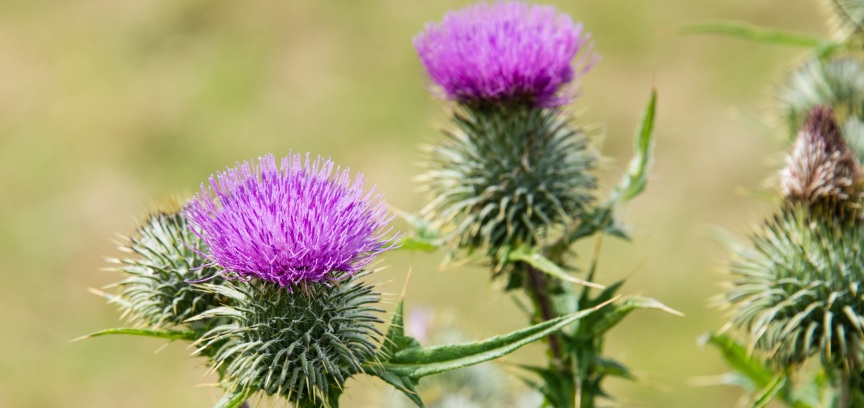
| Scientific name | Silybum marianum (L.) Gaertn. |
| Family | Asteraceae |
| Chinese name | 水飞蓟 (shuǐ fēi jì) — also commonly called 奶蓟 / 奶蓟草 |
| Plant type | Annual or biennial thistle |
| Native range | Macaronesia and the Mediterranean through parts of Central Asia, India and Ethiopia; now naturalised widely |
| Primary medicinal part | Mature fruit, commonly called the “seed” |
| Practical rabbit parts | Young leaf; measured ground fruit/seed incorporated into formulated foods or treats |
| Major phytochemical complex | Silymarin |
| Key flavonolignans | Silybin A/B, isosilybins, silychristin and silydianin |
| Fresh leaf profile | Very high moisture and extremely low fat |
| Seed profile | Oil-rich, protein-containing and considerably more energy-dense than the leaf |
| Rabbit research | Whole herb, ground seed, processed fruit, seed cake, milk-thistle extracts and concentrated silymarin |
| Main cautions | Sharp spines, nitrate accumulation in the growing plant, high seed fat, oxidative deterioration of ground seed during storage, and concentrated extracts |
| Atlas role | Botanical forage, measured ground-seed ingredient, and a pharmacologically interesting plant with unusually good rabbit-specific research |
Botanical note:
Kew recognises Silybum marianum as an accepted species in the Asteraceae, with a native range that extends well beyond the Mediterranean shorthand commonly used in herbal writing.
Why Offer Milk Thistle? — Potential Relevance for Rabbits
Milk thistle earns its place in a rabbit herb cupboard for three fairly different reasons, and it’s worth keeping them apart.
Botanical Variety & Foraging
Young milk-thistle leaves add a different smell, texture and species to a forage rotation — value that doesn’t need to invoke liver medicine at all. Rabbits are selective herbivores, and appropriately sourced botanical variety lets them sniff, investigate, sort and choose.
An herb doesn’t need to treat something before it’s allowed to be interesting.
Measured Ground-Seed Use
This is where milk thistle becomes particularly relevant to Oishi Bunnies. A randomised study of 35 adult rabbit bucks tested milk-thistle seed at 5 and 10 g/kg of the complete diet — the study was mainly about reproductive performance, but blood metabolites were measured too, and a veterinary review of the rabbit milk-thistle literature reports reduced serum ALT and AST activity in the milk-thistle groups.
That moves ground seed out of the purely theoretical category: measured dietary milk-thistle seed has actually been consumed and studied in rabbits.
Experimental Hepatic Relevance
Concentrated silymarin has shown hepatoprotective effects in rabbit models of chemically induced liver injury. In a 2026 study, rabbits given methotrexate plus 100 mg/kg oral silymarin daily showed more favourable biochemical measurements and less severe hepatic histological damage than methotrexate-only rabbits.
It was a small trial — five rabbits per group — but a genuine preclinical result. Earlier work using an isoniazid-induced hepatotoxicity model also reported improvements in serum bilirubin and ALT with concurrent silymarin.
The Oishi Field Observation
For around nine years, we’ve used ground milk-thistle seed in baked rabbit treats, and multiple customers have independently reported improved follow-up bloodwork in rabbits eating them, including rabbits being monitored for abnormal liver values.
These are real-world observations rather than controlled clinical data — the rabbits weren’t randomised, diagnoses varied, and many likely also received medication or other veterinary care alongside the treats.
What makes them worth recording is that they point in the same direction as controlled rabbit research showing changes in ALT and AST with dietary milk-thistle seed.
A Note on Baking
Silymarin isn’t automatically destroyed the moment it sees an oven. A food-processing study using milk-thistle oilseed-cake flour found that bread baked at 170°C for 45 minutes retained roughly 80% of the measured total silymarin complex, though individual flavonolignans varied in heat stability and silydianin held up considerably less well.
Edible Anatomy — What Part, and What Not
| Plant Part | Feed It? | Notes |
|---|---|---|
| Young leaves | ✅ Small amounts | Practical rotational forage when correctly identified and carefully sourced. Direct rabbit-specific fresh-leaf safety data are limited, so avoid treating unlimited fresh-leaf intake as established. |
| Soft young stems | ✅ Small amounts | Traditionally edible; trim tougher or spiny sections before offering. |
| Mature spiny leaves | ⚠️ With care | Chemically edible, but mechanically sharp. Remove the spines before offering. |
| Young flower head | ⚠️ Occasional | Traditional human food use exists, but direct rabbit-specific feeding evidence is limited. |
| Whole fruit (“seed”) | ⚠️ Measured amounts | Oil-rich and energy-dense, so not appropriate for unrestricted free-feeding. Ground form is preferable for measured dietary use. |
| Ground milk-thistle seed | ✅ Measured dietary use | Direct rabbit-study precedent exists at 5–10 g/kg of complete diet. Grinding allows more even distribution through food and increases exposed surface area, but this is not a therapeutic home dose. |
| Seed cake / expeller | Feed / research ingredient | Lower-fat material remaining after oil extraction; used in controlled rabbit nutrition research and not nutritionally equivalent to whole seed. |
| Silymarin extract | ⚠️ Veterinary context | Concentrated and pharmacologically active. Experimental rabbit doses should not be converted into home-treatment instructions. |
| Human capsules / tinctures | ❌ Don’t self-dose | Concentration, extraction method, excipients and bioavailability vary between products. |
| Root | ⚠️ Not routinely used | Traditional human food use exists, but useful rabbit-specific feeding evidence is lacking and there is little practical reason to prioritise it. |
The distinction that matters: Milk thistle is not a simple “safe part / unsafe part” plant. Young leafy forage, whole oil-rich fruit, ground seed, seed cake and standardised silymarin are materially different exposures.
It isn’t “leaf good, seed bad” — it’s form, amount and purpose.
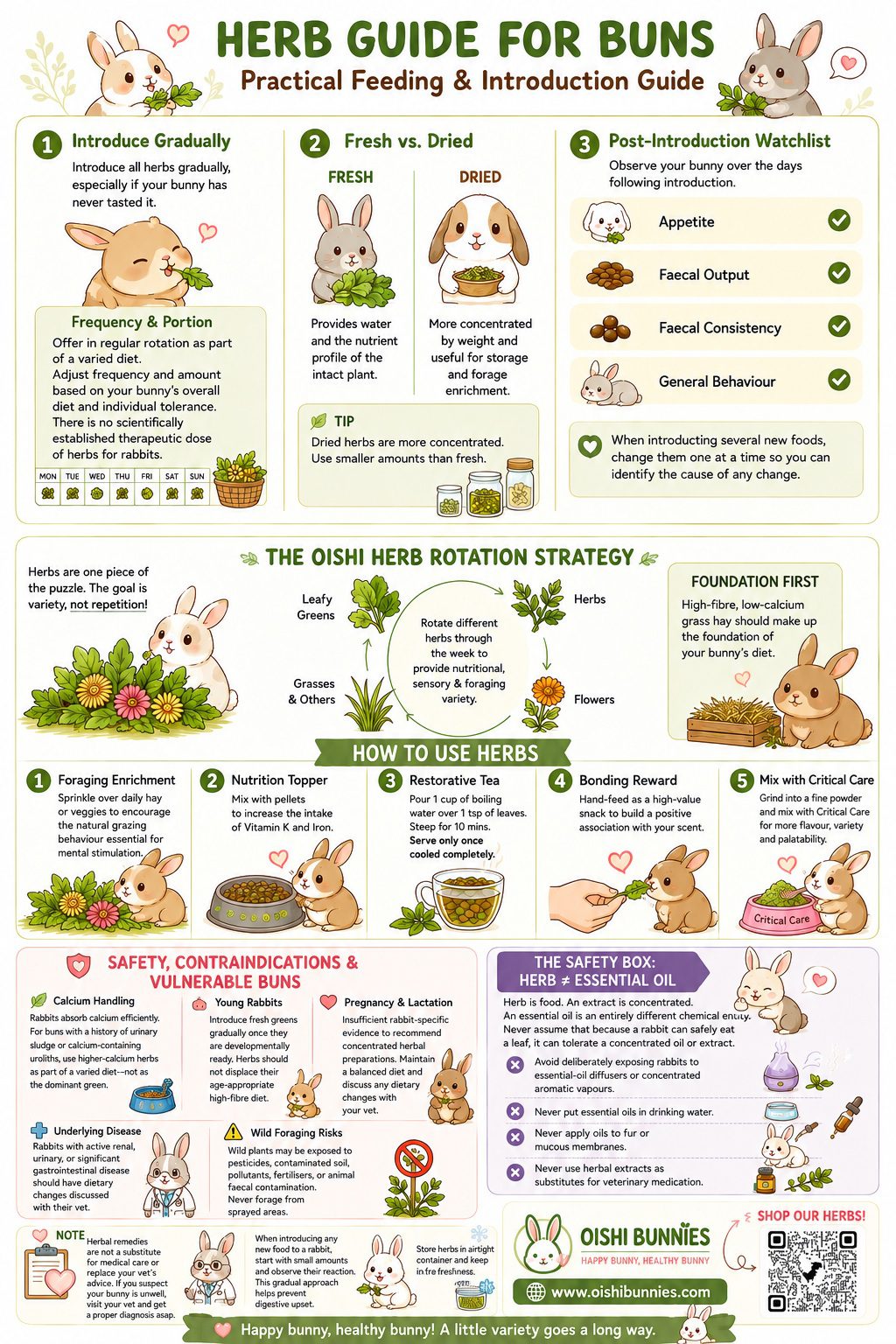
Milk-Thistle-Specific Feeding Cautions
Milk thistle has better rabbit-specific research than most herbs in the Atlas, but that doesn’t make every plant part, preparation or dose interchangeable. These are the points that matter most in practice:
- The seed is richer than it looks: milk-thistle fruit is an oilseed, commonly containing roughly 20–30% lipid depending on cultivar and growing conditions, with linoleic acid usually dominant and oleic acid the next major fatty acid. That doesn’t make seed “bad” — it makes it concentrated. For rabbits, the sensible distinction is measured ingredient rather than free-fed snack bowl.
- Ground seed is the preferred form: the rabbit feeding study that directly investigated milk-thistle seed used dried seeds milled into a fine powder before incorporation into the diet. Grinding allows a small amount to be distributed evenly through food and increases the surface area available for digestion and release of seed constituents. Whole seeds are not known to cause gastrointestinal obstruction in rabbits specifically, so grinding should not be presented as proven blockage prevention.
- Storage matters once the seed is ground: milk-thistle seed contains a substantial unsaturated-oil fraction, and grinding exposes more of that oil to oxygen, light and surface contact. Grind in small batches where practical and store the powder in an airtight, light-protected container. Refrigeration is suitable for shorter-term storage; freezing is a sensible option for longer-term storage, particularly in Singapore’s warm climate. Portioning is preferable to repeatedly warming and refreezing one large container.
- Experimental dose ≠ kitchen dose: the rabbit-buck study used 5–10 g/kg of the complete diet, while the 2026 methotrexate study used 100 mg/kg body weight of concentrated silymarin. Those are completely different exposures and neither should be converted into a teaspoon dose for a pet rabbit.
- Milk thistle can accumulate nitrate: Silybum marianum is a documented nitrate accumulator. Avoid feeding plants that have been heavily nitrogen-fertilised, grown in very manure-rich soil, exposed to uncertain agricultural fertilisation, or collected from unknown roadside or farm locations. Rabbits are not ruminants, so cattle toxicity thresholds should not simply be copied across — but the plant’s nitrate-accumulating ability still matters. Washing removes dirt; it does not remove nitrate already stored inside plant tissue.
- Spines are mechanical, not toxicological: they’re simply sharp. Trim mature spines before offering the leaf. A rabbit may be capable of eating around them, but there’s little welfare benefit in asking a tongue to negotiate needles for lunch.
- Bloodwork needs context: in rabbits, neither ALT nor AST is particularly liver-specific. ALT is found in liver and cardiac muscle, while AST is distributed across liver, skeletal and cardiac muscle, kidney and other tissues and may also rise with struggling during blood collection or sample haemolysis. Changes in ALT or AST can be interesting, including in milk-thistle research, but neither value should be read in isolation as “the liver number.”
- Drug interactions and concentrated extracts: human laboratory studies suggest that milk-thistle flavonolignans can affect some drug-metabolising enzymes, although the clinical significance of many proposed interactions remains uncertain and rabbit-specific interaction data are limited. Concentrated extracts deserve particular caution in rabbits already receiving medication.
- Pregnancy and lactation: milk thistle has a historical reputation as a human galactagogue, but modern evidence remains insufficient to establish that effect and pregnancy/lactation safety data are limited. That history should not be translated into “milk thistle is ideal for pregnant or nursing rabbits.” Food-level exposure and concentrated extracts are very different things.
Practical takeaway: For companion rabbits, the safest interpretation of the evidence is small, measured dietary use rather than medicinal self-dosing. Ground seed, whole fruit, seed cake and standardised silymarin are different exposures — and the form matters just as much as the herb name.
Meet the Plant
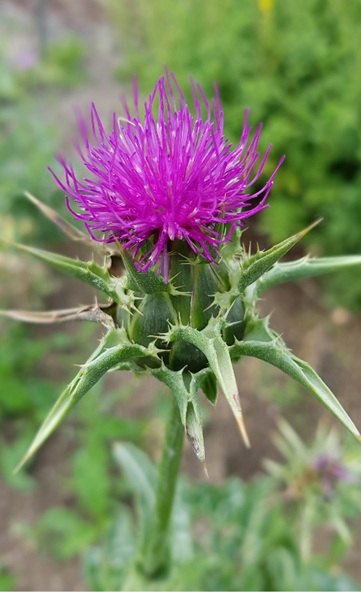
Milk thistle isn’t subtle. It’s a large annual or biennial thistle that can reach roughly 30 cm to well over a metre, sometimes approaching two metres under favourable conditions. Its most useful identifying feature isn’t actually the purple flower — it’s the leaf. The foliage is glossy green with conspicuous milky-white marbling, often tracing along the veins, and the lobed margins are armed with sharp yellowish spines. At maturity, the plant produces solitary purple to reddish-purple composite flower heads surrounded by large, rigid, spine-tipped bracts. The fruit — commonly called the “seed” — is a hard, dark achene-like structure associated with a pale pappus when mature. Field identification checklist:
|
Silybum marianum — purple flower head, spiny bracts and distinctive white-marbled foliage |
Not Just a Mediterranean Plant
Kew recognises Silybum marianum as an annual or biennial species naturally distributed from Macaronesia and the Mediterranean through parts of Central Asia and India, with additional native populations in Ethiopia. It has since naturalised widely, including parts of China and Southeast Asia.
Don’t Identify Milk Thistle by the Purple Flower Alone
Purple thistles are not exactly rare. The much more useful clue is the combination of glossy green leaves, conspicuous white marbling, deeply lobed spiny margins and the large spine-bracted flower head. Sow thistle, blessed thistle and other plants carrying “thistle” in their common name are not interchangeable with Silybum marianum. If the plant is going anywhere near a rabbit’s bowl, identify the species — not merely the colour of its flower.
Why “Milk” Thistle?
European folklore attributes the white leaf markings to drops of the Virgin Mary’s milk, hence the names milk thistle, Mary thistle and Marian thistle. Botanically, of course, the plant didn’t acquire its variegation through supernatural dairy spillage — but folklore does occasionally produce an excellent common name.
Botanical identification reference: Royal Botanic Gardens, Kew — Plants of the World Online
.
Milk Thistle vs Sow Thistle — and the Blessed-Thistle Trap
These names get muddled constantly. The problem isn’t that all “thistles” are dangerous — it’s that they are different plants with different edible parts, phytochemistry and evidence bases. Once rabbit feeding or liver research enters the conversation, the Latin name matters.
| Feature | Milk Thistle | Sow Thistle | Blessed Thistle |
|---|---|---|---|
| Scientific name | Silybum marianum | Sonchus spp. | Centaurea benedicta (historically Cnicus benedictus) |
| Typical flower | Large purple to reddish-purple composite flower head | Yellow, dandelion-like flower heads | Yellow flower head surrounded by conspicuously spiny bracts |
| Leaf clue | Glossy green leaves with distinctive white marbling and sharp spiny margins | Usually softer green leaves when young, often lobed or toothed, without milk thistle’s characteristic white marbling | Narrower, hairy or spiny-looking foliage; does not have milk thistle’s glossy white-marbled pattern |
| Milky latex | Not the key identification feature | Commonly produces milky latex when damaged | Not the defining feature |
| Main herbal interest | Fruit rich in silymarin flavonolignans; substantial liver-related pharmacology and rabbit research | Common forage plant with a very different nutritional and phytochemical profile | Traditional European bitter herb with its own separate chemistry and herbal history |
| Rabbit context | Direct rabbit studies exist for whole herb, ground seed, processed fruit, seed cake, extract and silymarin | Frequently appears in rabbit-foraging practice, but milk-thistle research cannot be transferred to it | Separate evidence base; should not inherit milk thistle’s liver-related claims |
| This Atlas entry covers | Yes — Silybum marianum | No | No |
This doesn’t mean sow thistle or blessed thistle are automatically unsafe. It means the evidence belongs to different plants. Sow thistle should not quietly borrow milk thistle’s silymarin and liver research simply because both names contain “thistle.”
The naming gets even messier because “blessed milk thistle” has historically been used as a common name for Silybum marianum, while “blessed thistle” usually refers to Centaurea benedicta. One missing word can quietly turn into a different plant.
Common names are charming right up until they become a safety problem. For anything being fed, researched or prescribed: check the Latin name.
Nutritional Profile — Milk Thistle for Rabbits
Milk thistle is a good example of why a nutrition table needs the plant part written at the top in large letters. A leaf and a seed aren’t remotely the same food.
Fresh leaf, dried leaf and milk-thistle fruit (“seed”) are nutritionally very different forms of the same plant.
Fresh Milk-Thistle Leaf — Published Food Composition
Published Mediterranean wild-food data report the following approximate composition per 100 g fresh leaf:
| Nutrient | Approx. Amount | Nutrient | Approx. Amount |
|---|---|---|---|
| Water | 93.4 g | Energy | ~52 kJ / 12 kcal |
| Protein | 0.6 g | Fat | 0.01 g |
| Available carbohydrate | 1.1 g | Fibre | 2.6 g |
| Ash | 1.5 g | Plant part | Fresh leaf |
What does this mean for rabbits? Fresh milk-thistle leaf is mostly water, with modest plant solids and almost no fat. In practical feeding terms, young leaf behaves much more like leafy botanical forage than like the concentrated liver-supplement image attached to milk thistle online.
Fresh vs Dried: Nutritional Origami
Dried leaf looks dramatically richer per gram once the water is gone, but that’s dehydration, not botanical alchemy. Protein, minerals, fibre and phytochemicals simply become more concentrated by weight because fresh leaf was mostly water. Think of dried herbs as nutritional origami: fold away the water, and one innocent-looking gram suddenly represents much more plant material. Fresh and dried herbs should never be compared gram-for-gram without accounting for that.
The Fruit (“Seed”) Is a Different Nutritional Animal
Modern compositional work places milk-thistle seed oil commonly around 20–30% of seed weight, although cultivar and growing conditions matter. Linoleic acid is usually the predominant fatty acid, followed by oleic acid.
Broad phytochemical reviews also describe the fruit as containing roughly 20% protein alongside a substantial carbohydrate/starch fraction. The practical rabbit takeaway is simple: seed is much richer than leaf. That is why small, measured ground-seed inclusion makes sense while bowls of whole seeds do not.
In short: fresh leaf is watery, fibrous botanical forage; dried leaf is the same plant solids concentrated by water loss; ground seed is a richer, oil-containing ingredient that should be measured; and silymarin extract isn’t really a nutrition discussion anymore — it’s pharmacology.
Traditional Use & Modern Scientific Understanding
Traditional knowledge and modern science aren’t opposing systems here. Traditional herbal practice records accumulated human observation; modern phytochemistry identifies what compounds are actually present; pharmacology asks what those compounds do under controlled conditions; toxicology asks what goes wrong; and rabbit research asks the question we actually care about: does any of this translate meaningfully to lagomorphs? Milk thistle is unusually interesting because all of those layers genuinely exist for it.
Western Herbal Tradition
Milk thistle has been associated with liver and digestive disorders for centuries. The European Medicines Agency’s traditional herbal monograph concerns specifically the milk-thistle fruit, rather than generic preparations of the entire plant, and recognises long-standing traditional use for digestive complaints and for supporting liver function once serious underlying disease has been medically excluded.
Traditional liver use is genuine history. It is not automatically modern clinical proof.
Chinese / TCM Perspective
Milk thistle is not a major classical Chinese herb in the same sense as plants documented throughout China’s ancient materia medica tradition. Silybum marianum was introduced into China rather than originating there. Modern Chinese materia medica nevertheless adopted it, specifically its dried mature fruit, appears in both the 2020 and current 2025 editions of the Chinese Pharmacopoeia. The 2025 edition came into force on 1 October 2025.
Modern Chinese pharmacopoeial descriptions classify milk thistle as bitter and cooling, associated with the Liver and Gallbladder channels, with the traditional functions 清热解毒,疏肝利胆. Within the Chinese medical framework it is used for patterns described as 肝胆湿热,胁痛,黄疸.
Translation matters:
terms such as 清热解毒 and 疏肝利胆 are traditional Chinese medical concepts. They should not be rewritten as direct biomedical claims such as “anti-inflammatory,” “detoxifying,” “hepatoprotective” or “choleretic.” Modern pharmacology may independently identify effects in some of those areas, but one medical system should not be reverse-engineered into another’s vocabulary simply because the words sound convenient.
For this Atlas, milk thistle is best described as a modern Chinese materia medica / pharmacopoeial adoption rather than a major classical Chinese herb. Modern Chinese practice uses milk-thistle-derived silymarin and silybin preparations in hepatoprotective contexts, but that modern adoption should remain historically distinct from ancient TCM tradition.
It is also worth separating pharmacopoeial status from food status. Milk-thistle seed is not currently established nationally as a standard 药食同源 / 食药物质 ingredient, although applications have been under development. Milk-thistle seed oil, however, was approved separately in China as a new food ingredient in 2014.
What Modern Phytochemistry Tells Us
The star of milk-thistle chemistry is silymarin — but silymarin isn’t one molecule. It is a mixture of flavonolignans concentrated mainly in the mature fruit, including silybin A and B, isosilybin A and B, silychristin, isosilychristin and silydianin, alongside associated compounds such as taxifolin.
Two distinctions matter: silymarin is the mixture; silybin (silibinin) is one major component. Neither term means “the milk-thistle plant.”
Raw milk-thistle fruit is not “70–80% silymarin.” That figure generally refers to standardised extracts. Plant and extract are not interchangeable — that’s pharmacology, not pedantry.
What Experimental Research Suggests
Silymarin and silybin have been investigated for effects on oxidative stress, lipid peroxidation, inflammatory signalling, membrane integrity, toxin-related hepatocyte injury and cellular recovery pathways. These mechanisms give the historical liver association a plausible biochemical foundation.
A plausible mechanism, however, is not the same thing as a proven treatment.
Milk thistle doesn’t literally “detox” the liver. The liver already performs detoxification continuously. A more accurate description is that certain milk-thistle constituents may modify cellular injury and oxidative or inflammatory responses under particular forms of hepatic stress.
What Has Actually Been Studied in Rabbits?
This is where milk thistle separates itself from most herbs in the Atlas: there is real rabbit data here, not just extrapolation from rodents or humans.
- Whole-herb powder (2016):
144 weaned rabbits received 0, 5 or 10 g/kg dried Silybum marianum powder. Growth and feed conversion were not substantially improved and the expected meat-antioxidant effect wasn’t confirmed, but mortality was lower in supplemented groups during a digestive-disease-heavy period. - Ground seed (2017):
35 adult rabbit bucks received milk-thistle seed at 5 or 10 g/kg complete diet. Reproductive outcomes were the primary target, but a later veterinary review reports reduced serum ALT and AST activity in supplemented rabbits. This is particularly relevant because the seed was ground before incorporation into the diet. - Processed fruit:
mechanically processed milk-thistle fruit at 0.2% and 1% of the diet produced few dramatic biochemical changes, although one disease-associated cycle showed lower morbidity and mortality at the higher inclusion. Interesting signal; not evidence that milk thistle treats gastrointestinal disease. - Isoniazid-induced liver injury (2015):
silymarin at 50 mg/kg/day produced a more favourable bilirubin and ALT profile when given alongside isoniazid. The study is supportive but relatively weak: only bilirubin and ALT were used for liver assessment, ALT also fell in the isoniazid-only group, and no liver histology was reported. - Hepatic coccidiosis (2019):
silymarin improved some aspects of general condition but did not significantly reduce oocyst shedding or protect the liver from Eimeria stiedae. Severe hepatic lesions still occurred. This is an important negative result — sometimes the useful finding is where an herb didn’t work. - Severe heat stress (2024):
96 newly weaned male rabbits received milk-thistle extract at 0, 5, 10 or 15 g/kg diet. Supplemented rabbits showed favourable changes in growth, feed utilisation and several physiological, immune and antioxidant measurements. Useful physiology research — not a heatstroke treatment. - Seed cake (2025):
90 HYLA rabbits received control feed, 2% non-fermented milk-thistle seed cake, or a fermented preparation providing roughly 1% milk-thistle material. The non-fermented group reached the highest body weights, while fermentation altered feeding responses. No health problems or mortality were reported. - Methotrexate-induced liver injury (2026):
20 rabbits were divided into four groups of five. Rabbits receiving methotrexate plus 100 mg/kg oral silymarin daily had more favourable biochemical measurements and substantially better hepatic tissue architecture than methotrexate-only rabbits. Genuine rabbit-specific hepatoprotective evidence — but from one induced-injury model, one preparation and a very small group size. - Ochratoxin A toxicity (2026):
48 New Zealand White rabbits were studied over 80 days. Groups receiving either 0.5% whole milk-thistle fruit powder or 2.5% silymarin extract powder alongside ochratoxin A showed less severe biochemical and pathological abnormalities than rabbits exposed to the toxin alone. Particularly useful because whole fruit and concentrated extract were studied within the same experimental framework.
So Does Milk Thistle Protect a Rabbit’s Liver?
The honest answer still sits in the middle — but the rabbit literature is far more substantial than a simple “there’s no evidence” dismissal would suggest.
Dietary studies show that rabbits have consumed whole-herb material, ground seed, processed fruit and seed cake under controlled conditions. The ground-seed work provides a particularly relevant biochemical signal. Experimental silymarin studies provide hepatoprotective evidence of varying strength in selected chemically induced injury models, with the methotrexate and ochratoxin-A work adding biochemical and tissue-level evidence. The isoniazid study is weaker. The hepatic-coccidiosis experiment provides an important counterweight because silymarin did not prevent the characteristic liver damage.
What we still do not have is the final clinical step: controlled trials in companion rabbits naturally presenting with conditions such as hepatic lipidosis, cholangiohepatitis, chronic hepatobiliary disease, liver lobe torsion, spontaneous neoplasia or naturally occurring toxin exposure.
Herb Profile — Evidence Ratings
Rating principle: These assessments describe the quality, depth and relevance of available evidence within each category — not a verdict on whether milk thistle is “good” or “bad” for rabbits.
| Evidence Category | Assessment | What We Can Say |
|---|---|---|
| Botanical Identification | Strong | Well-characterised accepted species with distinctive white-marbled foliage, spiny morphology and strong authoritative botanical records. |
| Traditional Herbal History | Well documented | Extensive European herbal history centred on the fruit and liver-related use, together with modern Chinese pharmacopoeial adoption as 水飞蓟. |
| Edibility / Food Use | Documented, with context | Documented human food and fodder history plus direct rabbit dietary studies. Young leaves can function as forage, while the oil-rich fruit is a materially more concentrated ingredient and the living plant’s nitrate-accumulating ability deserves context. |
| Phytochemical Evidence | Substantial | Silymarin and its major flavonolignans — including silybin, isosilybin, silychristin and silydianin — are extensively characterised, with a substantial pharmacological literature behind them. |
| Rabbit-Specific Evidence | Substantial experimental research | Unusually strong for an herb: multiple rabbit studies have investigated whole-herb material, ground seed, processed fruit, seed cake, milk-thistle extract and concentrated silymarin. Clinical trials in companion rabbits with naturally occurring liver disease are still absent. |
Why the Rabbit-Specific Evidence Stands Out
Milk thistle has a genuinely substantial rabbit literature for a botanical. It has been examined in dietary feeding trials, experimental stress models, toxin-induced liver injury, hepatic infection and controlled supplementation studies, with several preparations investigated rather than one extract being repeatedly recycled through the literature.
The missing layer is clinical research in companion rabbits. Most available studies involve production rabbits, experimentally induced disease or toxicity, environmental stress, or controlled dietary supplementation rather than companion rabbits naturally presenting with liver disease.
The experimental evidence is unusually rich for an herb. Its clinical relevance to a pet rabbit with liver disease remains a separate question.
Growing Milk Thistle in Singapore
Milk thistle is built for a Mediterranean/subtropical seasonal rhythm, and Singapore offers something rather different — hot, humid, and reliably wetter than a plant like this expects. That doesn’t make it impossible to grow; it just means drainage becomes the main character in the story.
Balcony & Container Setup
- Light: Give the plant as much direct sun as your balcony allows. Weak light encourages soft, stretched growth rather than a sturdy rosette.
- Container: Use a substantial, deep and stable pot with generous drainage holes. Milk thistle gets large — this is not a windowsill pot pretending to be basil.
- Growing medium: Use a clean, well-draining, moderately fertile mix. A gritty or well-aerated medium helps considerably during Singapore’s frequent rain.
- Watering: Water thoroughly, then allow excess water to drain freely. Avoid keeping the root zone continuously wet or leaving the pot standing in stagnant water.
Humidity, Fertility & Nitrate
- Airflow: Leave space around the plant so wet foliage dries quickly. Crowded, humid growth creates better conditions for fungal disease.
- Fertiliser: Use balanced fertility rather than pushing aggressively for lush leaf growth.
- Nitrate caution: Milk thistle can accumulate nitrate under high-nitrogen conditions. Bigger leaves are not automatically better rabbit forage.
- Organic isn’t exempt: Heavy manure use can also supply substantial nitrogen. “Organic fertiliser” does not make nitrate accumulation biologically impossible.
Pests & Rabbit-Forage Safety
- Common problems: Watch for aphids, mites, caterpillars, scale and fungal lesions, particularly during prolonged humid weather.
- Pest control: For rabbit-food plants, favour physical removal, exclusion and rabbit-compatible controls over systemic pesticides.
- Bought plants: Unless the grower can tell you otherwise, assume the pesticide history is unknown. A clean-looking leaf tells you nothing about systemic insecticides absorbed weeks earlier.
- Best control: Starting from seed gives you much greater control over soil, fertiliser, pesticide exposure and the plant’s entire growing history.
Don’t Forget the Biosecurity Around the Plant
Keep rabbit-food pots away from cat faeces, rodent access, contaminated runoff and shared gardening equipment of unknown history. The plant may be perfectly edible while the environment around it creates the actual risk.
For the wider microbial picture — including E. cuniculi, coccidia, RHDV2, toxoplasmosis, composting practices and equipment hygiene — see the Oishi Bunnies Safe Gardening & Biosecurity for Rabbits guide.
The Singapore gardener’s takeaway:
Give milk thistle strong light, sharp drainage, airflow and moderate fertility. If the eventual goal is rabbit forage, starting from seed gives you the cleanest chain of custody — and with this particular herb, resisting the urge to over-fertilise matters just as much as keeping the pot alive.
The Oishi Bunnies Bottom Line
After caring for rabbits through the easy days and the difficult ones, we have learnt that good care does not always look the same.
For a healthy rabbit, herbs can be part of the simple pleasures of everyday life — different scents to investigate, leaves to forage through, new flavours to taste and a little more botanical variety alongside a hay-based diet. Many of these same plants also carry long histories of traditional medicinal use, with fascinating chemistry that modern science continues to investigate.
We believe there is room to respect both traditional herbal knowledge and modern science without asking either to be something it is not. Traditional use does not automatically prove that a herb will treat disease, while limited scientific evidence does not necessarily mean that generations of observation have nothing useful to teach us. Sometimes research supports an old idea, sometimes it changes our understanding, and sometimes the answer simply remains uncertain.
That uncertainty becomes especially important when caring for a rabbit who is elderly, chronically ill or approaching the end of life. There may come a time when surgery is no longer suitable, treatment options have become limited, or the burden of further intervention may outweigh what it can realistically give the rabbit.
In those moments, care does not stop simply because cure is no longer possible.
The priorities may change towards comfort, pain relief, appetite, hydration, familiar foods, companionship, mobility, rest and the small things that tell us a rabbit is still finding pleasure in their day. Herbal and botanical support may sometimes have a place within that bigger picture. At other times, a particular herb may offer little benefit or may be inappropriate because of the rabbit’s condition or medications. The individual rabbit matters more than the reputation of any herb.
For us, palliative care is not about trying everything simply because something might help. Nor is it about dismissing a supportive option simply because it comes from traditional herbal practice. It is about choosing thoughtfully, watching the rabbit in front of us, working with veterinary care where it is needed, and continually asking whether what we are doing is adding comfort and quality to that rabbit’s life.
Sometimes medicine is about curing. Sometimes it is about managing a condition for years. And sometimes our responsibility is simply to make the days that remain comfortable, familiar, interesting and filled with as many good moments as possible.
Respect the tradition. Understand the plant. Follow the evidence. But above all, look at the rabbit in front of you — because their comfort, dignity and quality of life are what ultimately matter.
Explore Milk Thistle & Botanicals with Oishi Bunnies
Looking to introduce a powerhouse botanical boost to your bunny’s daily rotation? Bunnini and Pee-Casso have thoroughly investigated and signed off on these! Oishi Bunnies brings you premium organic botanicals and artisanal hand-baked treats, turning everyday forage into an exciting, sensory-rich enrichment for your furkid.
Organic Ground Milk Thistle SeedPure, ethically sourced, and finely milled Silybum marianum seeds. Carefully prepared to preserve natural silymarin content, making it easy to sprinkle precisely over daily hay or greens for targeted liver and wellness support. View Ground Milk Thistle Seed |
⭐ Detox Smiley Stars ⭐Adorable, hand-crafted herbal treats shaped into cheerful stars! Baked in small batches with wholesome, rabbit-safe botanicals to make natural health support both delicious and fun for picky eaters. View Detox Smiley Stars |
Our forage philosophy: Variety makes lifetime nutrition exciting! Rotate different rabbit-safe botanicals, flowers, and healthy treats to spark natural foraging instincts, while keeping the main foundation solid: unlimited fresh grass hay and clean water.
Frequently Asked Questions
Can rabbits eat milk thistle?
Yes — correctly identified milk thistle can be used in small food-level amounts. Young leaves work as rotational forage, and measured dietary milk-thistle seed also has direct rabbit-study precedent. The word “measured” matters.
Can rabbits eat milk-thistle seeds?
Yes, but there’s a real difference between small, measured dietary inclusion and free-feeding whole oilseeds. Milk-thistle fruit is energy-dense, commonly around 20–30% oil, and ground seed at 5–10 g/kg of complete diet has been directly studied in rabbit bucks.
Is ground milk-thistle seed safe for rabbits?
Controlled rabbit research gives direct precedent for dietary milk-thistle seed at measured inclusion levels, but it doesn’t establish an unlimited safe intake or a therapeutic home dose. At Oishi Bunnies, ground seed is used as a small formulated ingredient, not a free-fed seed snack.
Does baking destroy milk thistle’s active compounds?
Not necessarily. A food-processing study found roughly 80% of total measured silymarin remained after baking milk-thistle-containing bread at 170°C for 45 minutes, although individual flavonolignans varied in heat stability. That doesn’t tell us the exact retention in every rabbit-treat recipe, but it does show that baking doesn’t automatically obliterate silymarin.
Can milk thistle improve ALT or AST in rabbits?
There’s direct rabbit research linking dietary milk-thistle seed to lower serum ALT and AST, and several silymarin injury-model studies report improvements in liver-associated measurements.
ALT and AST aren’t diagnoses. An abnormal value still needs interpreting alongside the rabbit’s full blood panel, clinical signs, imaging and suspected disease process.
My rabbit’s liver bloodwork improved after eating milk-thistle treats — does that prove they worked?
It’s encouraging, and it lines up with what the rabbit research shows. Without controlled conditions, though, we can’t fully separate the contribution of milk thistle from treatment, recovery, medication or other dietary changes. We call these field observations rather than clinical proof — useful signals worth recording, but not something we need to inflate into certainty.
Can I give a human silymarin capsule to my rabbit?
Not without veterinary guidance. Commercial products vary in concentration, standardisation, excipients, extraction method and bioavailability, and the experimental rabbit doses in the research aren’t permission to improvise a home prescription.
Is milk thistle a liver “detox”?
Not in any literal medical sense — the liver already handles detoxification continuously. Silymarin research is more accurately about modulating oxidative injury, inflammatory signalling, membrane damage and hepatocyte responses under particular experimental conditions.
“Detox” is shorter. It’s also a lot less accurate.
Can milk thistle cure hepatic coccidiosis?
No. In the rabbit Eimeria stiedae experiment, silymarin improved aspects of general condition and mitigated some adverse effects of infection, but it didn’t significantly reduce oocyst shedding and didn’t prevent severe hepatic lesions. The authors concluded that silymarin did not protect the liver from E. stiedae.
Treat the parasite with appropriate veterinary therapy; don’t ask a hepatoprotective herb to do an antiparasitic drug’s job.
Is milk thistle safe for a rabbit with liver disease?
This is where a rabbit-savvy veterinarian should be involved. Milk thistle has enough rabbit-specific evidence to make the conversation reasonable, but “liver disease” isn’t one diagnosis — a torsed liver lobe, hepatic lipidosis, coccidiosis, bacterial disease and neoplasia are very different problems, and the role of any adjunct depends on what is actually being treated.
Is milk thistle the same as sow thistle?
No. Milk thistle is Silybum marianum; sow thistles belong to the genus Sonchus. They have different morphology, chemistry and research bases.
When a plant is going into a rabbit’s bowl, check the botanical name — not just the word “thistle.”
References & Further Reading
These rabbit studies, veterinary reviews, botanical databases, phytochemical papers, processing studies, pharmacopoeial sources and safety references support the claims made throughout this milk-thistle profile. Different preparations answer different research questions: whole herb, ground seed, processed fruit, seed cake, milk-thistle extract and concentrated silymarin should not be treated as interchangeable exposures.
Rabbit-Specific Research
- Cullere et al. (2016) — Whole-herb feeding: Effect of Silybum marianum herb on productive performance, carcass traits and meat quality of growing rabbits . Livestock Science, 194, 31–36.
- Attia et al. (2017) — Ground milk-thistle seed: Semen quality, antioxidant status and reproductive performance of rabbit bucks fed milk thistle seeds and rosemary leaves . Animal Reproduction Science, 184, 178–186.
- Kosina et al. (2017) — Processed milk-thistle fruit: Effect of Silybum marianum fruit constituents on the health status of rabbits in repeated 42-day fattening experiment . Animal Feed Science and Technology, 223, 128–140.
- Jahan et al. (2015) — Isoniazid-induced liver injury: The hepatoprotective role of silymarin in isoniazid-induced liver damage of rabbits . Journal of the Pakistan Medical Association, 65(6), 620–622. PMID 26060158.
- Aboelhadid et al. (2019) — Hepatic coccidiosis: Hepato-protective effect of curcumin and silymarin against Eimeria stiedae in experimentally infected rabbits . Livestock Science, 221, 33–38.
- Hassan et al. (2024) — Severe heat stress: Feasible feeding strategies for sustainable management of severe heat-stress conditions: effect of milk thistle extract on growth performance and health status of newly weaned rabbits . Journal of Animal Physiology and Animal Nutrition, 108, 778–791.
- Dočkalová et al. (2025) — Milk-thistle seed cake: Effects of different forms of milk thistle supplementation in rabbit diets on stress-induced physiological responses . Animals, 15(24), 3582.
- Talukder et al. (2026) — Methotrexate-induced liver injury: Protective role of silymarin in the mitigation of methotrexate-induced biometrical and haemato-biochemical alterations of liver in rabbits . Discover Applied Sciences, 8, 427.
- Zhivkova et al. (2026) — Ochratoxin A toxicity: Protective Effects of Selected Herbal Additives Against Ochratoxin A-Induced Toxicosis and Oxidative Damage in Rabbits . Antioxidants, 15(8), 954.
Veterinary Review
- Tedesco & Guerrini (2023): Use of Milk Thistle in Farm and Companion Animals: A Review . Planta Medica, 89(6), 584–607.
Botanical Identification
- Royal Botanic Gardens, Kew — Plants of the World Online: Silybum marianum (L.) Gaertn. Accepted botanical name, family, life cycle, native range and introduced distribution.
Phytochemistry & Nutrition
- Comprehensive phytochemical review: A review of the botany, phytochemistry, pharmacology, synthetic biology and comprehensive utilization of Silybum marianum . Frontiers in Pharmacology (2024).
- Seed-oil composition: Characterization of Silybum marianum and Silybum eburneum seed oils: phytochemical profiles and antioxidant properties supporting important nutritional interests . PLOS ONE (2024).
- Seeds and press cake: Makouie, S., Małajowicz, J., Górska, A., et al. (2026). Compositional Characterization of Milk Thistle (Silybum marianum) Seeds and Press Cake with Emphasis on Press Cake Valorization . Applied Sciences, 16(11), 5265.
- Fresh-leaf nutritional data: Valorization of Wild Edible Plants as Food Ingredients and Their Economic Value . Foods, 12(5), 1012. Includes published fresh-weight composition data for Silybum marianum leaves.
Baking & Processing
- Silymarin stability during breadmaking: Milk Thistle Oilseed Cake Flour Fractions: A Source of Silymarin and Macronutrients for Gluten-Free Bread . Antioxidants, 11(10), 2022. Bread baked at 170°C for 45 minutes retained approximately 80% of the measured total silymarin complex under the study conditions.
European Herbal Monograph
- European Medicines Agency — HMPC: Silybi mariani fructus — Milkthistle Fruit . European Union herbal monograph, assessment report and supporting documentation for Silybum marianum fruit.
Chinese Materia Medica / TCM Sources
- 2025 Chinese Pharmacopoeia: 国家药监局、国家卫生健康委关于颁布2025年版《中华人民共和国药典》的公告 . The 2025 edition came into force on 1 October 2025.
- National Health Commission of China (2025): 对十四届全国人大三次会议第3529号建议的答复 . Confirms that 水飞蓟 is the dried mature fruit of Silybum marianum and was included in the 2020 Chinese Pharmacopoeia; also discusses its application for inclusion in the national 食药物质 framework.
- Chinese Materia Medica Entry: 中国医药信息查询平台 — 水飞蓟 . Records the mature fruit, 性味归经, traditional functions and modern-use context.
- Zhejiang Provincial Formula-Granule Standard: 浙江省中药配方颗粒质量标准 — 水飞蓟配方颗粒 . Provincial quality-standard documentation for 水飞蓟 formula granules.
- Panjin Municipal Health Commission (2026): 关于积极推进水飞蓟纳入药食同源目录试点建议的答复 . Documents the ongoing application process for milk-thistle seed to enter China’s national 食药物质 / 药食同源 framework.
Toxicology & Safety
- Kendrick, Tucker & Peoples (1955) — Nitrate accumulation: Nitrate poisoning in cattle due to ingestion of variegated thistle, Silybum marianum . Journal of the American Veterinary Medical Association, 126, 53–56. PMID 13221510.
- U.S. National Center for Complementary and Integrative Health: Milk Thistle: Usefulness and Safety . Human safety, supplement-quality, pregnancy/lactation and herb–drug interaction context.
How these sources are used: Botanical references establish plant identity and distribution. Food-composition and phytochemical papers describe particular plant parts and preparations. Rabbit feeding trials provide direct dietary evidence, while induced-injury and toxin models help investigate biological activity under controlled conditions. Traditional European and Chinese sources document how milk thistle has been classified and used in human herbal medicine. Each layer answers a different question — and keeping those layers separate is what makes the evidence useful.
Our Approach to Herbs and Disclaimer
We write the Herbal Atlas because we believe herbal knowledge is worth taking seriously — humans have found value in these plants for centuries, rabbits naturally interact with a remarkably diverse botanical diet, and modern research keeps giving us better ways to understand what these plants contain and what they may do. This section pairs that respect for herbalism with a few practical ground rules.
- Educational use, not a prescription. This profile is for botanical learning and enrichment — it isn’t veterinary advice, a diagnosis, or a treatment protocol. Use it to make an informed feeding decision, not to replace a vet visit.
- Whole herb ≠ medicine. Edible herbs can carry genuinely active phytochemicals and interesting nutritional properties, but feeding a whole herb is a different act from administering a standardised medicinal preparation. Dietary herbs can complement a healthy rabbit’s diet; they don’t substitute for veterinary treatment of a sick one.
- Hay comes first. Unlimited grass hay and clean water are the foundation of a rabbit’s diet. Herbs are a complementary, rotational addition — flavour, variety and enrichment on top of that foundation, not a replacement for it.
- Every rabbit is different. Age, digestive health and medical history all vary. Introduce anything new gradually, in small amounts, and watch appetite, droppings and general behaviour over the next 24–48 hours.
- Concentrates and extracts are their own category. A dried herb and a standardised extract are chemically different exposures, and neither should be confused with essential oils. Never diffuse or administer concentrated aromatic oils to rabbits, orally or topically.
- Extra care for vulnerable rabbits. Kits, frail seniors, pregnant or nursing does, rabbits taking medication, and rabbits with significant chronic disease may tolerate dietary changes differently. Introduce new herbs more cautiously and check with a rabbit-experienced veterinarian when the rabbit’s condition or medication makes food choices clinically relevant.
- Sourcing matters as much as the herb itself. Identify plants correctly, source cleanly, and discard anything spoiled, mouldy or of uncertain origin. No herb is safe if it’s the wrong herb — or a bad batch.
- When in doubt, see a vet. If your rabbit is unwell, professional veterinary care always comes first — no dietary remedy is a substitute for prompt treatment.
Our evidence promise: This Atlas reflects our best current reading of the evidence, and we update it as better research comes along.