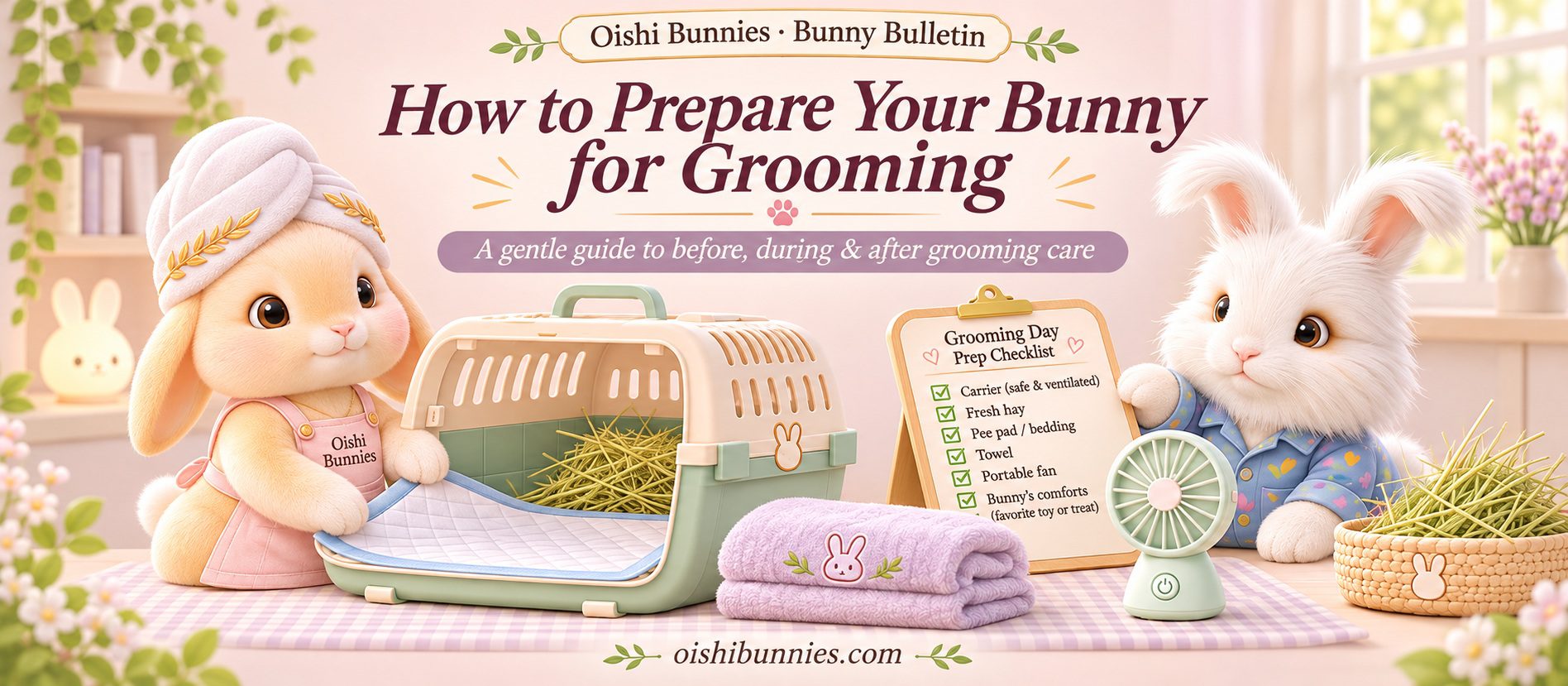
Before Grooming: How to Prepare Your Bunny for Grooming at Home
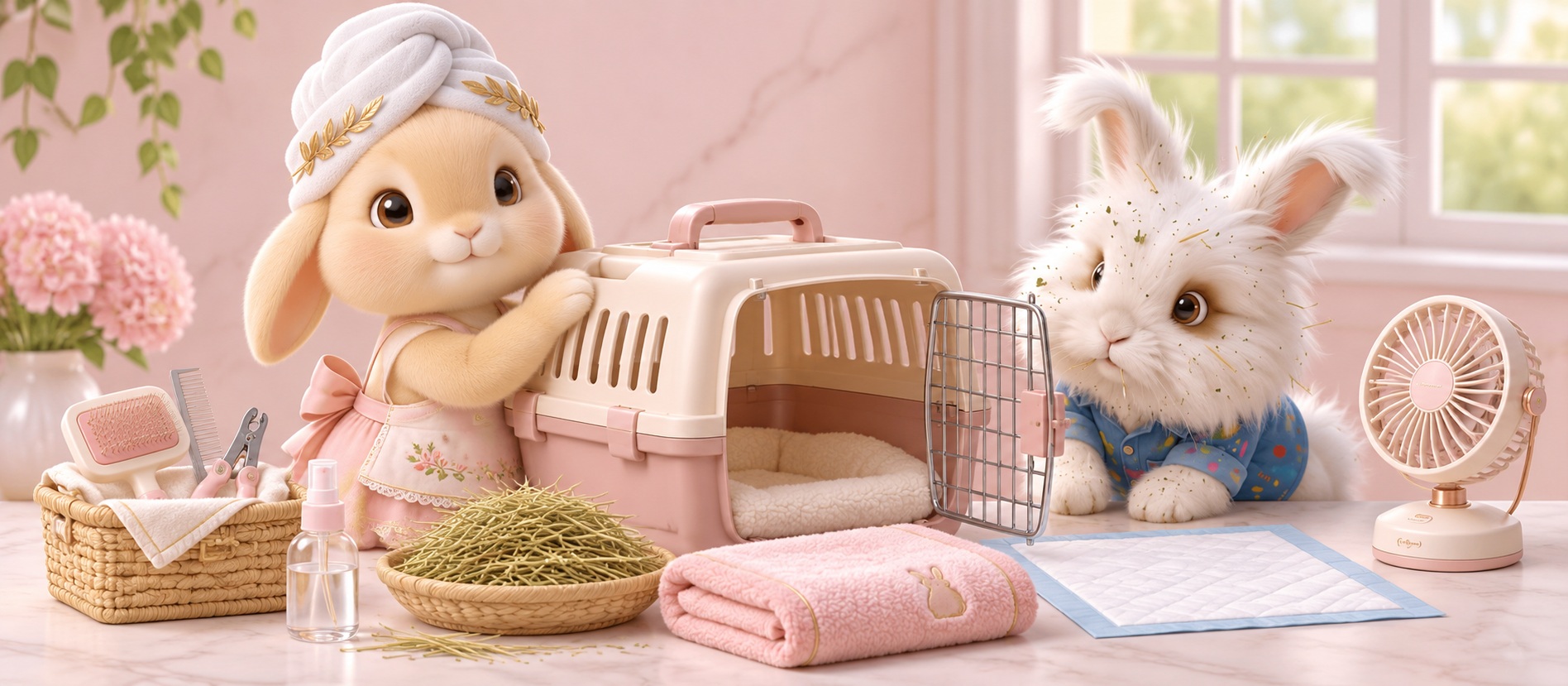
Learning how to prepare your bunny for grooming begins with a few simple steps at home. A consistent feeding routine, familiar carrier, basic health assessment and clear communication with your groomer can help reduce avoidable stress. These rabbit grooming preparation tips are useful whether your bunny is attending its first appointment or returning for routine coat maintenance.
Keep Meals and Hydration Normal Before Rabbit Grooming
Never fast your rabbit before a routine grooming appointment.
Rabbits are hindgut fermenters that depend on a fibre-rich diet to support normal gastrointestinal function. Withholding food unnecessarily can disrupt their usual eating pattern and compromise their welfare.
As part of your pre and post grooming care for rabbits, maintain access to unlimited grass hay, fresh water and your rabbit’s usual meals. There is no need to withhold breakfast or change feeding times before grooming.
Avoid introducing unfamiliar foods or treats immediately before the appointment. Keeping your bunny’s diet consistent is one of the simplest grooming day tips for rabbits.
Introduce the Rabbit Carrier Before Grooming Day
If your rabbit only sees its carrier before a veterinary visit, the carrier may already predict an unpleasant experience. Familiarising your rabbit with its carrier before grooming day can help reduce transport-related anxiety.
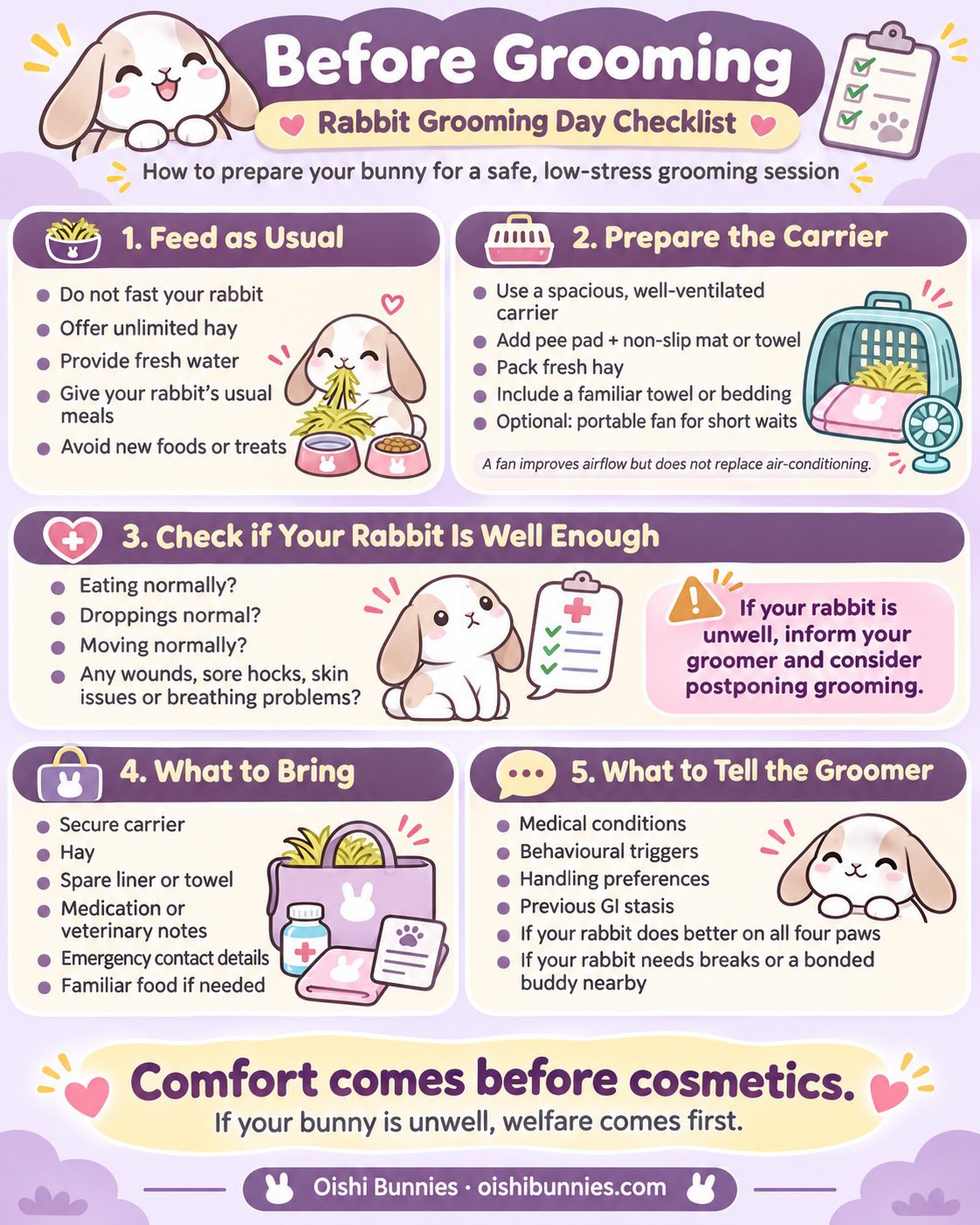
When preparing your rabbit for grooming, begin carrier familiarisation several days before the appointment:
- Leave the carrier open in a familiar, safe space where your rabbit can explore it at its own pace.
- Place fresh hay or a familiar, rabbit-safe object inside to make the carrier more inviting.
- Allow your rabbit to investigate and enter voluntarily, without chasing or forcing it inside.
- Reward calm exploration with a small portion of its usual food to help build a positive association.
Keep practice sessions short and positive. If your rabbit becomes frightened, allow it to retreat and try again later. Avoid stressful last-minute handling attempts that may make the journey more difficult. A familiar carrier is an important part of your rabbit grooming checklist.
Avoid Last-Minute Bathing or Grooming Products
There is no need to bathe your rabbit before a professional grooming appointment.
Routine bathing can cause significant stress and chilling, and wet fur can be difficult to dry thoroughly.
Avoid shampoos, perfumes, powders and unfamiliar grooming products. Do not attempt to cut tightly matted fur with scissors or force your bunny through a stressful grooming session before the appointment.
If your rabbit has urine staining, faecal soiling or heavily matted fur, inform your groomer in advance. Persistent soiling may also require veterinary investigation to identify the underlying cause. Good rabbit grooming preparation means recognising when professional assistance is safer than attempting a difficult task at home.
Check Whether Your Rabbit Is Fit for Grooming
One of the most important grooming day tips for rabbits is to assess their health before leaving home. Ask yourself:
- Is your rabbit eating normally?
- Are droppings normal in quantity and appearance?
- Is your rabbit moving and behaving as usual?
- Are there any new wounds, skin problems or signs of illness?
Contact a rabbit-savvy veterinarian promptly if appetite or droppings decrease.
Complete refusal of food, marked lethargy, abdominal pain or breathing difficulty requires urgent veterinary attention.
Elective grooming should be postponed when a rabbit is unwell, unless a veterinarian has specifically advised that a necessary hygiene intervention can proceed. A rabbit grooming checklist should always prioritise medical safety over cosmetic grooming.
Share Important Information Before Your Rabbit Grooming Appointment
Let your groomer know in advance about relevant medical conditions, recent veterinary treatment, skin problems, severe matting or behavioural concerns. This allows the groomer to assess whether the appointment is appropriate and plan handling around your rabbit’s individual needs.
If your rabbit dislikes being lifted, becomes frightened during nail trimming or responds better to handling with all four paws supported, mention this before the session. Your groomer may be able to adjust the approach or recommend additional precautions. For rabbit grooming in Singapore, clear communication is especially useful when coordinating appointments, transport and any special care requirements.
During Transport: Safe Rabbit Transport for Grooming in Singapore
Understanding how to prepare your bunny for grooming includes planning a safe and comfortable journey. Proper rabbit grooming preparation does not end when you leave home. Transport conditions, carrier safety and temperature management can all affect your rabbit’s welfare before the appointment begins.
Safe rabbit transport in Singapore is especially important because high humidity and warm daytime temperatures increase the risk of overheating. Whether you are driving or booking a pet transport service for your rabbit grooming appointment, keeping your bunny cool, secure and comfortable should remain the priority.
Rabbits have limited ability to dissipate excess body heat. Heat stress may occur at temperatures above approximately 30°C, but risk varies with humidity, ventilation, sunlight and the individual rabbit’s condition. Dangerous overheating can also occur below this temperature, particularly in poorly ventilated or humid conditions.
Choose a Suitable Rabbit Carrier for Grooming Day

Use a sturdy, secure, well-ventilated carrier that allows your rabbit to lie comfortably and turn around. A top-opening carrier can make access easier during grooming, reducing the need to pull a reluctant rabbit through a narrow front opening.
Your rabbit grooming checklist should include the following carrier essentials before departure:
- Absorbent lining to manage urine.
- Non-slip bedding or a securely placed mat, with optional supportive cushioning.
- Fresh hay for the journey.
- A familiar, clean towel or safe bedding item.
Ensure loose fabrics cannot entangle the rabbit or become a chewing hazard. Any supportive cushions or rolled towels should be positioned securely without restricting movement or ventilation. A well-prepared carrier helps minimise unnecessary movement and supports safer rabbit transport to grooming appointments.
Keep Your Rabbit Cool During Transport
Temperature management is particularly important for rabbit grooming in Singapore. During car journeys, follow these precautions:
- Use air-conditioning to maintain a comfortable environment.
- Keep the carrier away from direct sunlight.
- Ensure ventilation without directing strong, cold airflow onto the rabbit.
- Secure the carrier against tipping, sliding or sudden movement.
- Never leave your rabbit unattended in a parked vehicle.
For additional cooling, a securely wrapped chilled or frozen water bottle may be placed where the rabbit can move away from it. Prevent direct contact with frozen surfaces and check that condensation does not soak the bedding.
A cooling aid is not a substitute for a properly cooled vehicle. Your rabbit’s environment must remain safe throughout the journey.
Recognise Heat Stress During Rabbit Transport
Even with careful rabbit grooming preparation, unexpected heat exposure can occur during transfers or delays. Concerning signs include rapid or laboured breathing, unusual weakness, drooling, poor coordination and collapse.
Open-mouth breathing in a rabbit is an emergency.
Move the rabbit into a cooler environment and seek urgent veterinary assistance. Do not continue to a routine grooming appointment if your rabbit is showing signs of heat stress.
Gentle cooling with cool—not ice-cold—water on the ears or body may be appropriate while arranging emergency care, but do not immerse the rabbit in icy water.
Grooming Day Tips for Rabbits: Keep Transport Quiet and Predictable
Travel smoothly and minimise sudden movements, loud noises and unnecessary handling. Predictable surroundings and a secure carrier can help reduce avoidable stress during the journey.
Book your pet transport in advance. If you’re using a pet transport service, choose a transporter familiar with rabbits and confirm that your bunny will travel in a secure carrier within a suitably cooled, well-ventilated vehicle. Arrange both the drop-off and return journeys ahead of time.
Share the estimated grooming completion time. Let your transporter know roughly when the appointment is expected to finish so the return journey can be coordinated. This helps minimise unnecessary waiting in an unfamiliar environment and allows your rabbit to return to its familiar surroundings sooner.
Grooming completion times are estimates rather than fixed deadlines. Some rabbits need additional breaks, adjustments in handling or shorter sessions. Remain contactable so collection arrangements can be updated without rushing your bunny’s grooming.
You may partially cover the carrier with a lightweight cloth if this helps your rabbit feel sheltered, provided adequate ventilation remains. In Singapore’s warm climate, avoid coverings that trap heat or obstruct airflow.
Never carry a rabbit loose in your arms outside a secure environment. A sudden fright can cause struggling, falls or serious musculoskeletal injuries. A properly secured carrier is a basic requirement for safe rabbit transport.
Safe Transport for Bonded Rabbits
Established bonded companions generally benefit from remaining together, including during transport, when this can be done safely.
However, tell your groomer about any recent chasing, mounting, biting or aggression. Rabbits with an unstable relationship may need separate carriers or individual arrangements.
Do not assume that two rabbits are safe to transport together simply because they share a household. Include bonded-rabbit arrangements in your rabbit grooming checklist and discuss them with your groomer before travelling.
After Grooming: Essential Rabbit Grooming Aftercare at Home
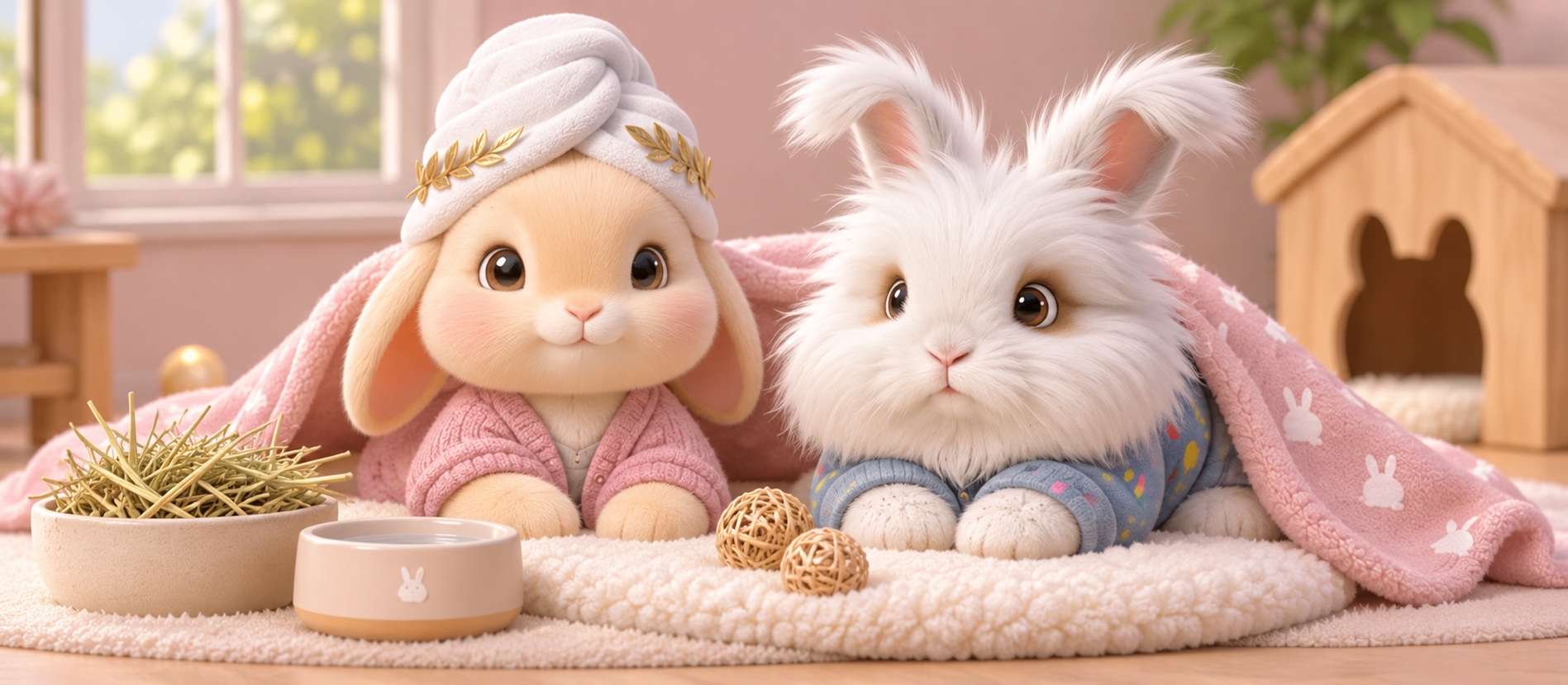
Rabbit grooming aftercare begins as soon as your bunny’s grooming session ends. Learning how to prepare your bunny for grooming involves more than getting ready for an appointment. It also means planning for safe transport home, familiar feeding routines and careful observation afterwards.
A rabbit may need quiet time after transport and handling. However, apparent tiredness should not automatically be attributed to stress. Good pre and post grooming care for rabbits includes recognising the difference between normal settling behaviour and possible signs of illness.
Arrange Prompt Collection After Rabbit Grooming
Once grooming is complete, please arrange to collect your rabbit as soon as reasonably possible.
Rabbits are prey animals that may find unfamiliar environments, sounds, scents and handling stressful. Waiting unnecessarily after grooming can prolong exposure to these stressors and delay a return to familiar surroundings.
Returning home allows your bunny to settle into its usual environment, move freely, access familiar food and water, rest in preferred hiding places and resume normal behaviour. These opportunities support rabbit welfare and make it easier for owners to monitor recovery after grooming.
Prompt collection is particularly helpful for rabbits that are anxious, elderly, sensitive to unfamiliar environments or managing health conditions. However, a short wait in an appropriately managed environment is not automatically harmful; the goal is to avoid unnecessary delays.
At Happy Hoppers, we encourage owners to remain contactable during grooming and plan collection around the estimated completion time. If you are running late, please let us know so suitable arrangements can be made for your bunny. For owners attending rabbit grooming in Singapore, arranging the return journey in advance can help reduce unnecessary waiting.
The goal isn’t to rush grooming. It’s to avoid unnecessary waiting once your rabbit is ready to return home.
Restore a Familiar Routine After Grooming
Restoring your bunny’s familiar routine is one of the simplest rabbit grooming aftercare tips. Return your rabbit to its usual indoor living space with access to:
- Unlimited fresh hay.
- Clean drinking water.
- Its normal diet.
- Familiar bedding, resting areas and hiding places.
- Appropriate companionship.
Allow your rabbit to exit the carrier voluntarily when safe.
Avoid unnecessary lifting, prolonged cuddling or additional grooming immediately after the session. Let your bunny settle without forcing interaction.
Rabbit Grooming Aftercare: Monitor Eating, Droppings and Behaviour
Monitoring appetite, droppings and behaviour is a crucial part of your rabbit grooming checklist. During the hours following grooming, check that your rabbit resumes its normal routine. Do not wait several hours to act if concerning symptoms are already present.
Pay attention to:
- Eating: Is your rabbit voluntarily eating hay and its usual food?
- Droppings: Are faecal pellets being produced in the usual quantity and size?
- Behaviour: Is your rabbit moving comfortably, responding normally and showing familiar behaviours?
- Posture: Is your rabbit sitting comfortably, rather than remaining hunched or showing signs of pain?
A rabbit that becomes unusually quiet or refuses a favourite food may be unwell, even if it appears otherwise calm. Do not assume that these changes are an expected consequence of a grooming appointment.
When Rabbit Grooming Aftercare Requires Veterinary Attention
Reduced appetite and reduced faecal output are early warning signs that should never be ignored.
Seek prompt veterinary advice if your rabbit is eating less or producing fewer droppings than usual.
Complete refusal of food, significant abdominal discomfort, marked lethargy or signs of breathing difficulty require urgent assessment.
Do not wait eight hours before asking for help.
Rabbits can deteriorate rapidly, and waiting for a fixed time threshold can delay necessary treatment. Even a detailed after-grooming checklist cannot replace prompt veterinary assessment when your bunny appears unwell.
Check Your Rabbit’s Skin and Coat After Grooming
Following grooming, take a gentle look at areas that were trimmed or deshedded. Skin and coat checks are particularly important for rabbits with previously matted fur, sore hocks or sensitive skin.
Report any unexpected bleeding, skin irritation, swelling or painful behaviour. Seek veterinary advice for significant injuries or persistent discomfort.
Rabbits with very short coats, shaved areas or naturally sparse fur may need additional protection from abrasive flooring and temperature extremes.
Hair regrowth differs between rabbits and can be affected by coat type, age, health and the extent of clipping.
Follow Individual Rabbit Grooming Aftercare Instructions
If your groomer identifies sore hocks, wounds, skin irritation or other health concerns, follow the specific recommendations provided and seek veterinary assessment when appropriate.
Any prescribed medication should be administered according to veterinary instructions.
Grooming products, topical creams and protective footwear should not be introduced or continued without appropriate guidance, especially when skin integrity is compromised.
Grooming observations can help owners notice problems, but they do not replace a veterinary diagnosis. Individualised aftercare is particularly important for rabbits with existing medical conditions or mobility limitations.
Preserve Bonded Rabbit Relationships After Grooming
Where safe, return bonded rabbits to a familiar shared environment and observe their interactions.
Some rabbits may respond differently to a companion after separation, transport or handling.
If chasing or aggression occurs, prevent injuries and seek appropriate rabbit-bonding advice.
Do not force rabbits together or allow a serious fight to continue. Maintaining safe companionship is another important consideration during post-grooming care.
Rabbit Grooming Checklist: Things to Bring to Your Appointment
Knowing how to prepare your bunny for grooming includes packing the right essentials before leaving home. A practical rabbit grooming checklist can help you avoid last-minute scrambling and make the grooming appointment more comfortable for your rabbit.
Whether you’re attending your bunny’s first grooming session or arranging professional rabbit grooming in Singapore, prepare a secure carrier, fresh hay, familiar bedding and relevant health information. The following grooming day packing checklist separates essential supplies from items needed only for individual circumstances.
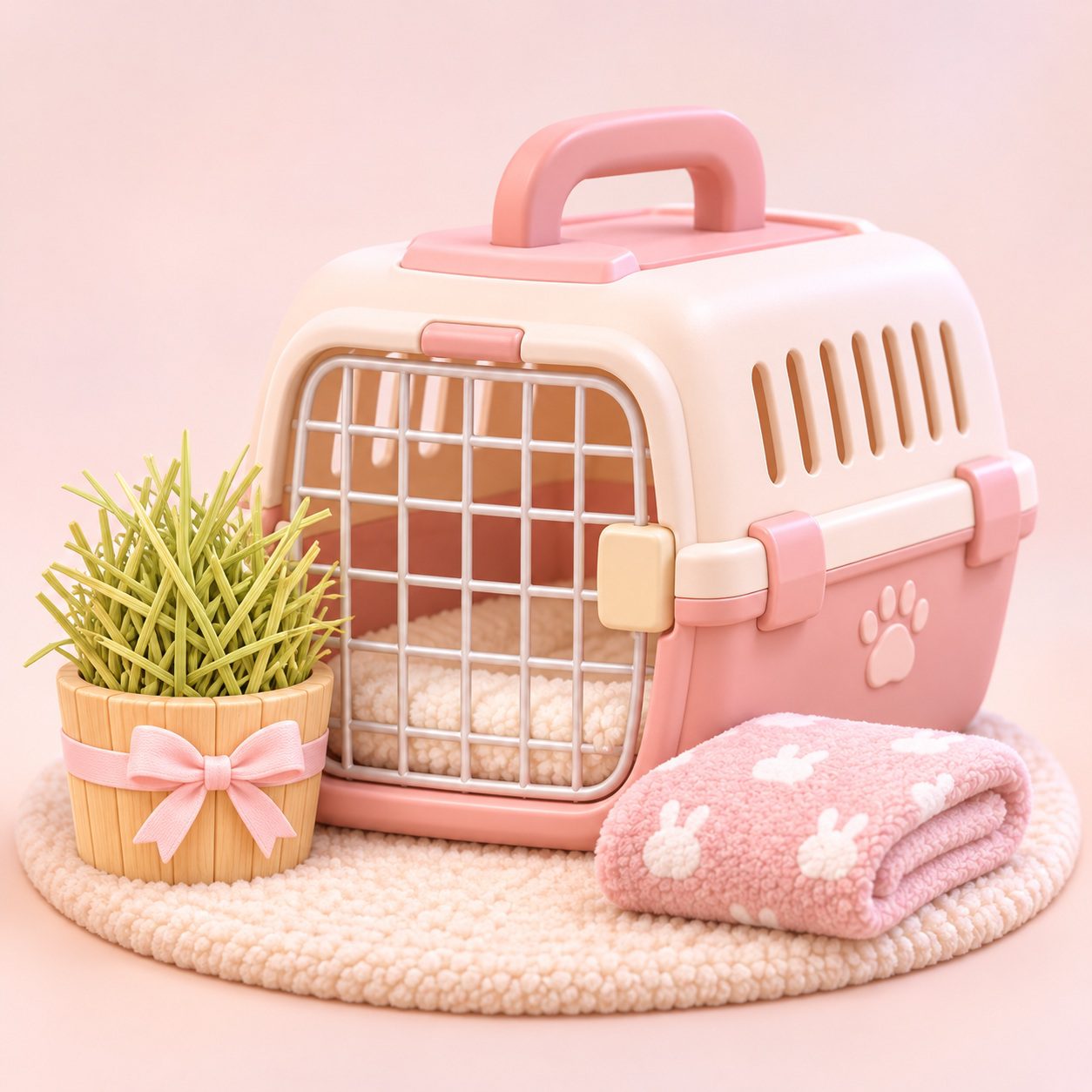
Secure Carrier & Fresh HaySecure, ventilated carrier: Fresh hay: |
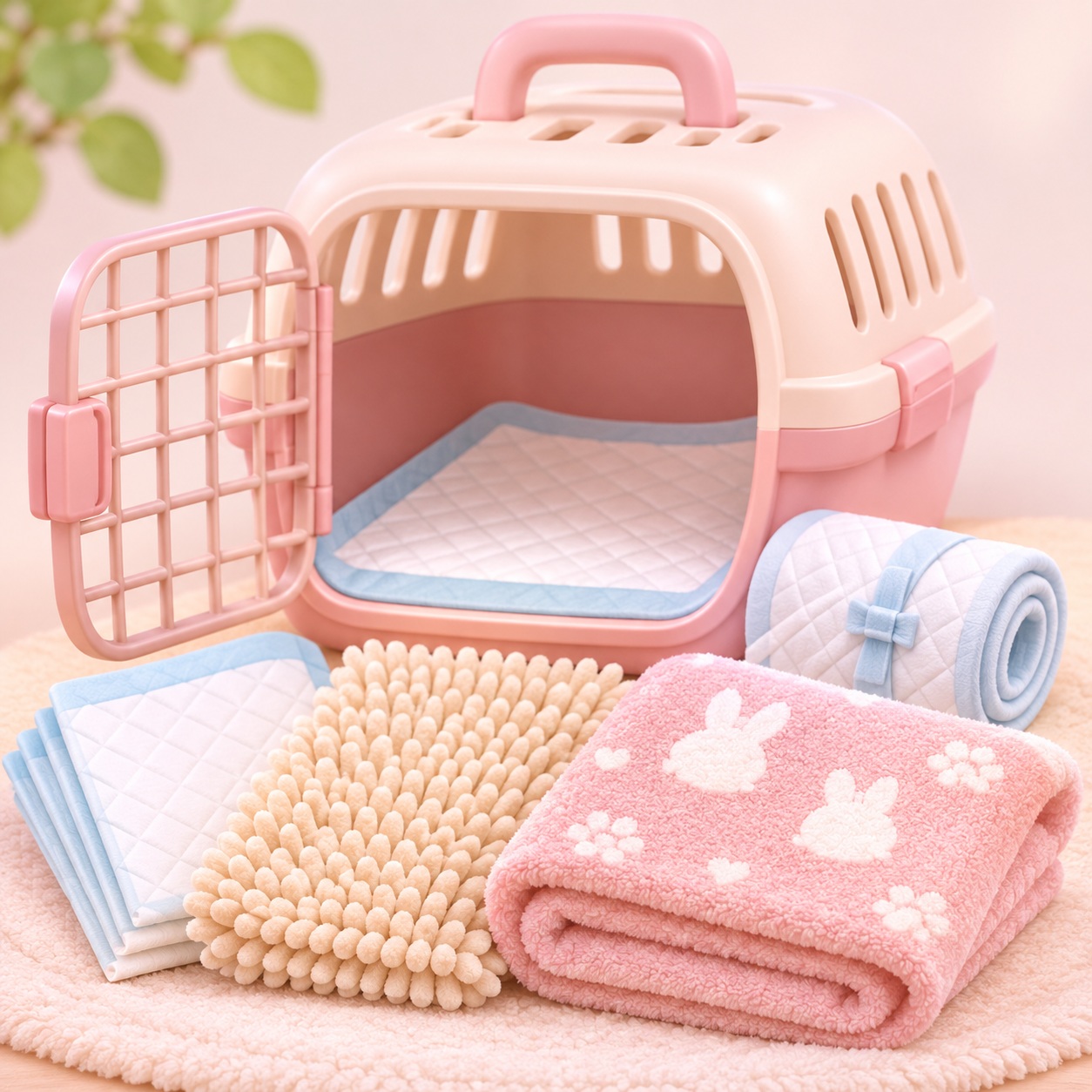
Bedding & Spare Carrier LinersAbsorbent lining and non-slip bedding: Familiar towel or bedding: Spare carrier lining: |
Medical & Contact DetailsVeterinary notes or medication details: Emergency contact information: Sharing accurate information is an important part of safe rabbit grooming preparation, particularly for older rabbits or those with medical needs. |
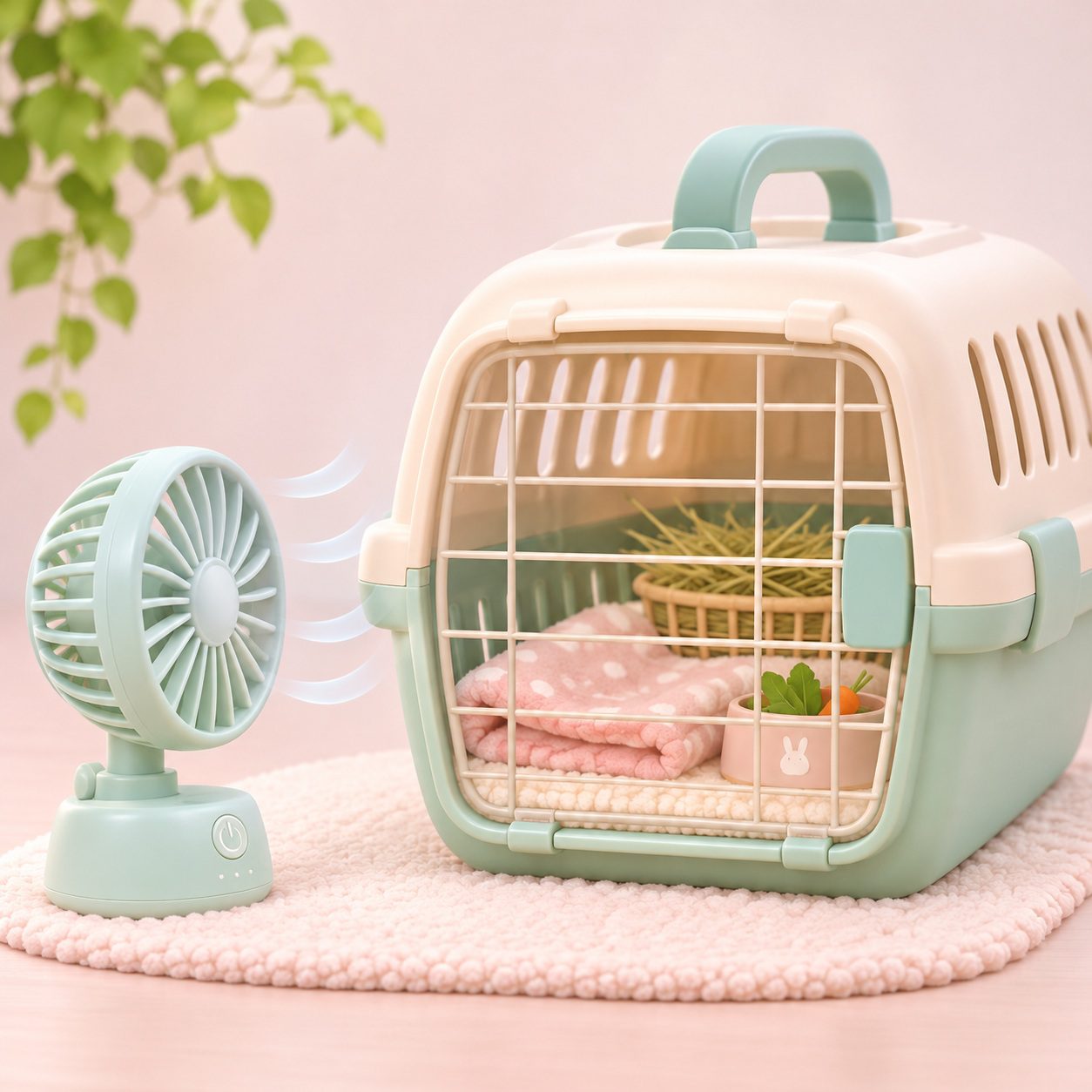
Portable Fan for Rabbit TransportA small, battery-operated fan may improve airflow around the carrier during short transfers or unavoidable waits. Position it securely outside the carrier, away from paws, ears and loose fur. Avoid strong direct airflow. A fan does not lower the surrounding air temperature and cannot prevent overheating in excessively hot or poorly ventilated environments. Prioritise air-conditioning and shade. In Singapore’s warm, humid climate, maintaining a comfortable temperature is an important grooming day safety precaution. |
Protective Footwear & MedicationProtective hock footwear: Topical products or medication: These grooming preparation items are particularly relevant for rabbits with sore hocks, skin conditions or ongoing veterinary treatment. |
Favourite Vegetables & FruitsBring a small portion of your rabbit’s familiar leafy vegetables, such as romaine lettuce, coriander or basil. These may encourage normal eating during grooming breaks and serve as rewards for cooperative handling. A tiny piece of familiar fruit may occasionally be offered if your rabbit already tolerates it. Avoid unfamiliar foods and excessive sugary treats. Familiar food can be useful during rabbit grooming appointments, but it does not replace unlimited access to fresh hay and the rabbit’s normal diet. |



Bringing a Bonded Rabbit Companion
If your bunny has an established bonded companion, discuss the grooming and transport arrangements with your groomer beforehand. Bonded rabbits may benefit from remaining together when it is safe to do so, but the carrier must provide adequate space and supervision. Rabbits displaying aggression or an unstable bond may require separate arrangements.
Our Rabbit Grooming Philosophy: Compassion Before Cosmetics
At Happy Hoppers, we believe professional rabbit grooming should support
comfort, hygiene and welfare—not simply produce an attractive haircut. Understanding how to prepare your bunny for grooming is an important part of this welfare-first approach.
Safe rabbit handling means recognising when a bunny needs a pause, changing handling positions where appropriate, keeping all four paws supported whenever practical and avoiding tonic immobility as a routine grooming technique.
Some rabbits benefit from shorter grooming sessions or additional breaks. Others may need veterinary attention before grooming can safely proceed. These individual considerations are especially important when developing an appropriate rabbit grooming preparation and aftercare plan.
For owners seeking rabbit grooming in Singapore, preparation should include safe transport, maintaining normal feeding routines, sharing relevant health information and recognising signs of distress. Good pre and post grooming care for rabbits begins before the appointment and continues after returning home.
A successful grooming session isn’t measured only by how tidy the coat looks. It is also measured by how safely and respectfully the rabbit was handled. At Happy Hoppers, rabbit welfare always takes priority over cosmetic perfection.
Your Rabbit Grooming Checklist: Before and After Grooming
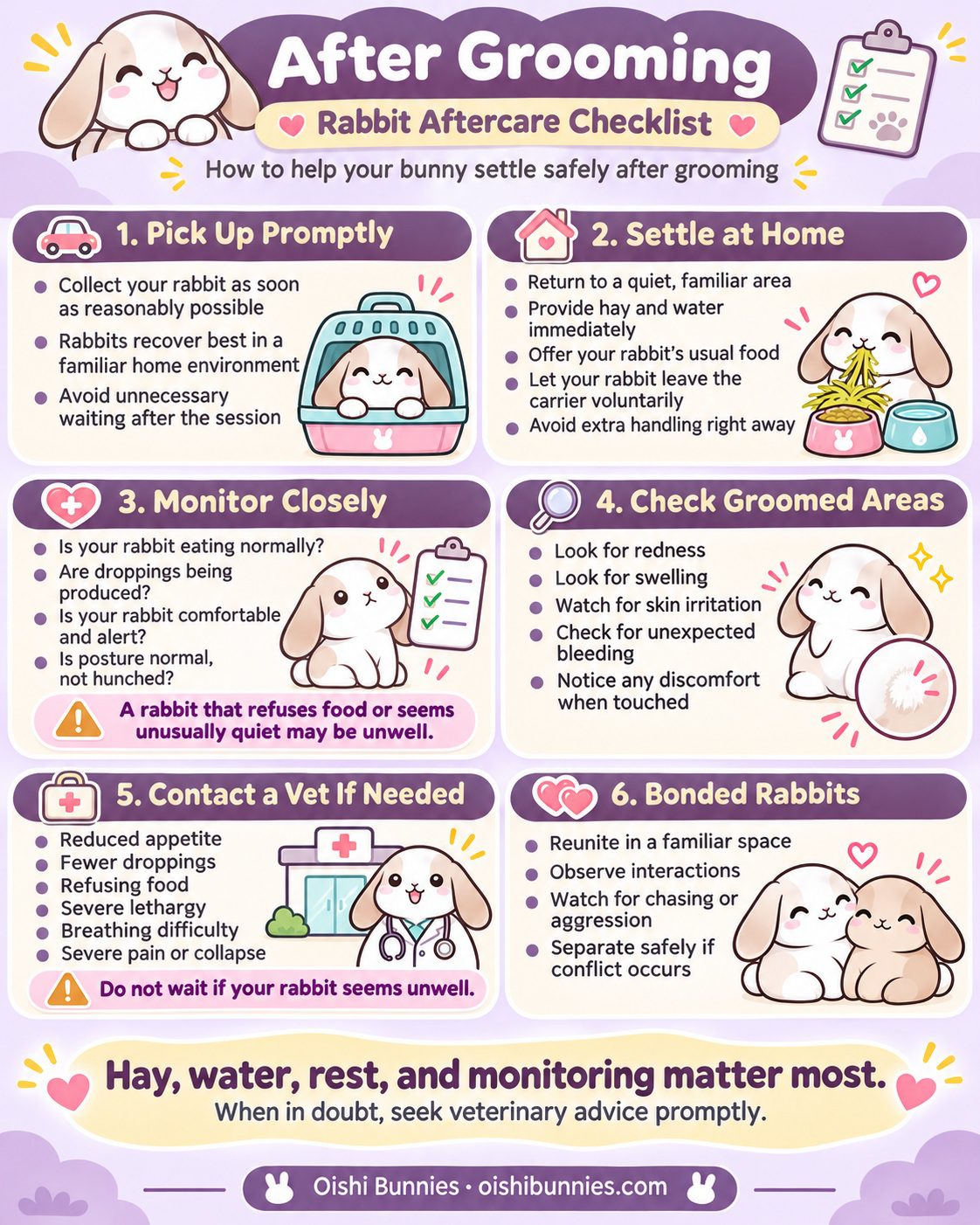
Now that you know how to prepare your bunny for grooming, save these two illustrated rabbit grooming checklists for your next appointment. The before-grooming guide covers preparation and essential supplies, while the after-grooming guide helps you monitor your bunny’s comfort and wellbeing at home. Select either image to view the full-size checklist.
Before Grooming ChecklistPrepare your bunny for a safe and comfortable grooming day. |
After Grooming ChecklistHelp your bunny settle at home and recognise warning signs. |