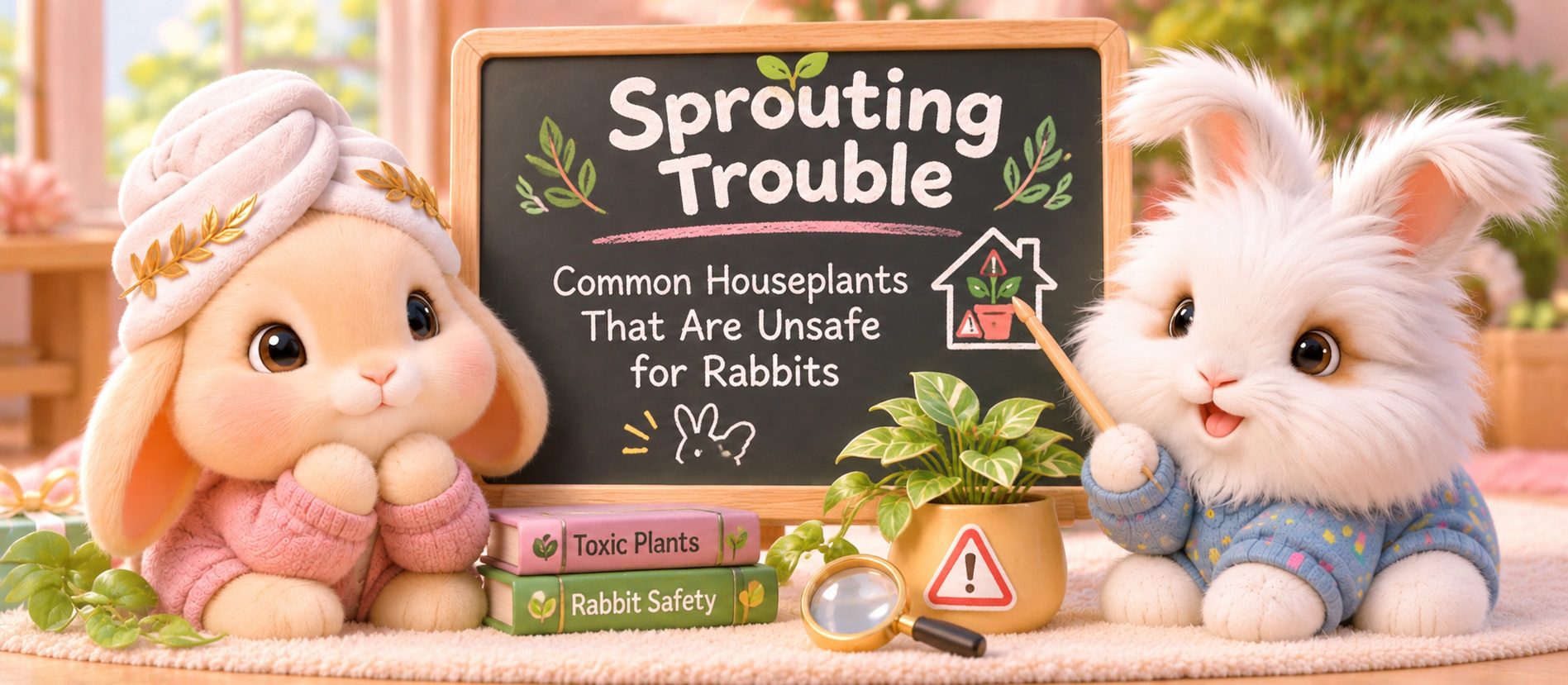
BUNNY BULLETIN · THE MODERN ART OF RABBIT CARE
Sprouting Trouble: Toxic Houseplants for Rabbits and Pets
Beautiful leaves, hidden chemistry, and the dangers lurking in your indoor jungle.
There is something lovely about bringing nature indoors. A trailing pothos brightens a bookshelf, a Monstera brings tropical charm to the living room, and a collection of leafy plants can turn even a small Singapore apartment into a miniature indoor jungle.
Unfortunately, our rabbits may appreciate that greenery for entirely different reasons.
To a curious bunny, a dangling leaf looks like something worth investigating, nibbling or enthusiastically dismantling. But some of the most popular indoor plants contain natural compounds capable of causing irritation, digestive disturbances or serious poisoning.
Knowing which toxic houseplants for rabbits to avoid is an essential part of creating a safe free-roaming home.
The problem is that many online lists of poisonous houseplants for rabbits combine information from dogs, cats and other animals without explaining the differences. A plant that causes kidney failure in cats may not produce the same effects in rabbits, while a species considered harmless to dogs may have little published evidence of safety in rabbits.
In this guide, we’ll explore common toxic houseplants for rabbits, the botanical chemistry behind their effects, warning signs of possible poisoning and practical ways to keep your indoor greenery without putting curious noses at risk.
Why Are Some Houseplants Toxic to Rabbits?
Plants cannot run away when something starts eating them. Instead, many species have evolved chemical and structural defences to discourage herbivores and insects.
Some contain microscopic crystals that irritate the mouth. Others produce compounds that interfere with digestion, cellular signalling or heart function.
The presence of a biologically active compound does not automatically make a plant dangerously poisonous.
Toxicity depends on several factors: the plant’s botanical identity, which parts are consumed, the amount ingested, the chemical constituents involved and the animal’s individual sensitivity.
Rabbits also have specialised digestive physiology. Their large caecum supports microbial fermentation, and their gastrointestinal function depends heavily on appropriate fibre intake and regular eating.
Consequently, oral pain or gastrointestinal discomfort following plant exposure can create additional problems if a rabbit stops eating.
There is another important limitation. Much of our understanding of toxic houseplants for pets comes from studies involving dogs, cats, livestock and laboratory animals. Rabbit-specific clinical evidence is comparatively limited for many ornamental species.
Throughout this article, we’ll distinguish between plants with documented rabbit poisoning concerns and those considered hazardous because of their known toxicological properties in other animals.
GROUP 01
PLANT TOXICOLOGY
Calcium Oxalates
Tiny Crystals, Painful Consequences
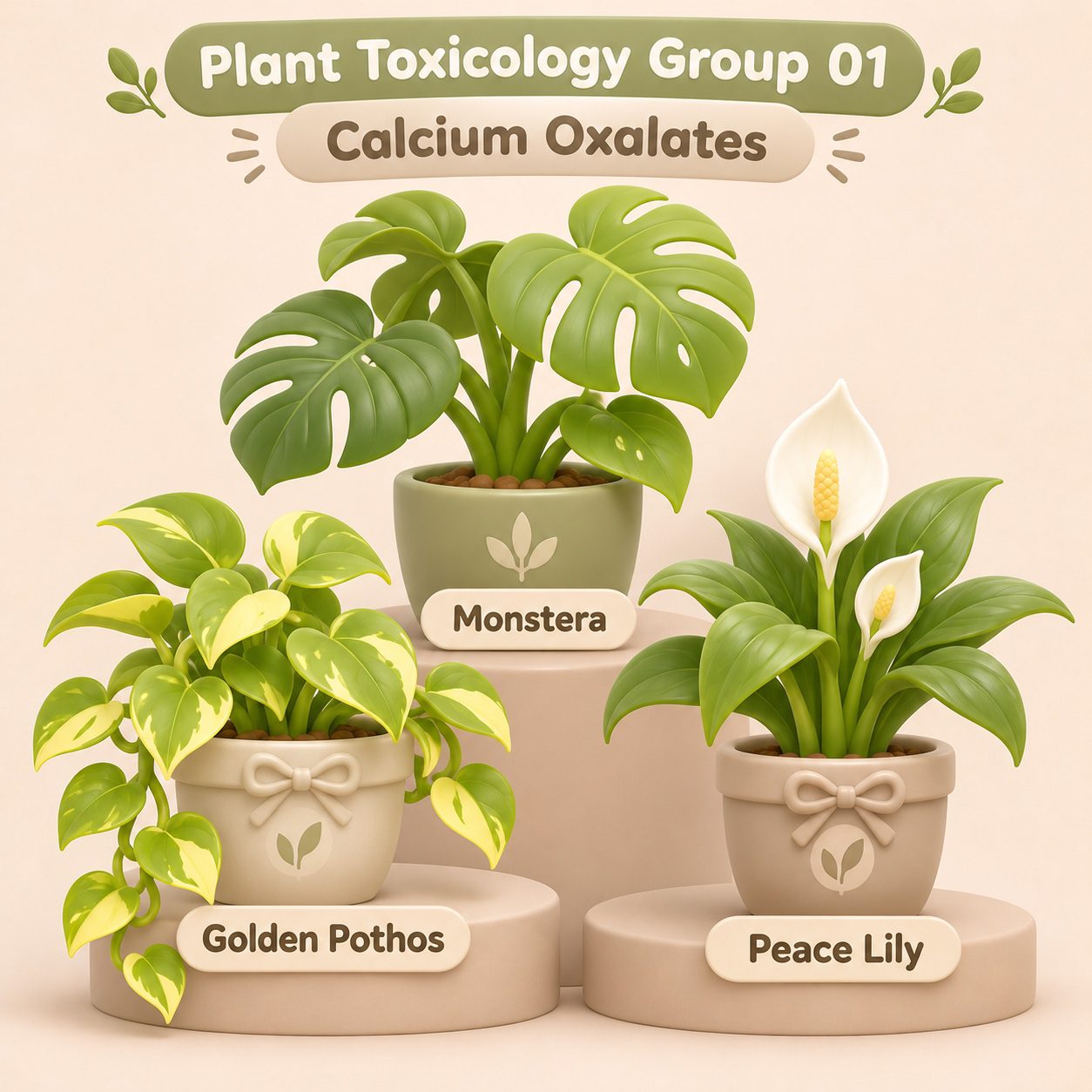
Among the most frequently encountered plants toxic to rabbits are ornamental species containing insoluble calcium oxalate crystals.
These plants are particularly common in the Araceae family, which includes several favourites among indoor gardeners.
How Do Calcium Oxalate Crystals Work?
These plants contain specialised cells called idioblasts, which hold bundles of needle-shaped calcium oxalate crystals known as raphides.
When a rabbit bites into the leaf, the plant tissue may release these microscopic needles, which can penetrate and irritate the delicate tissues of the mouth and throat.
The effect can resemble countless tiny pinpricks, often accompanied by local inflammation. Other substances within the plant may contribute to the irritation.
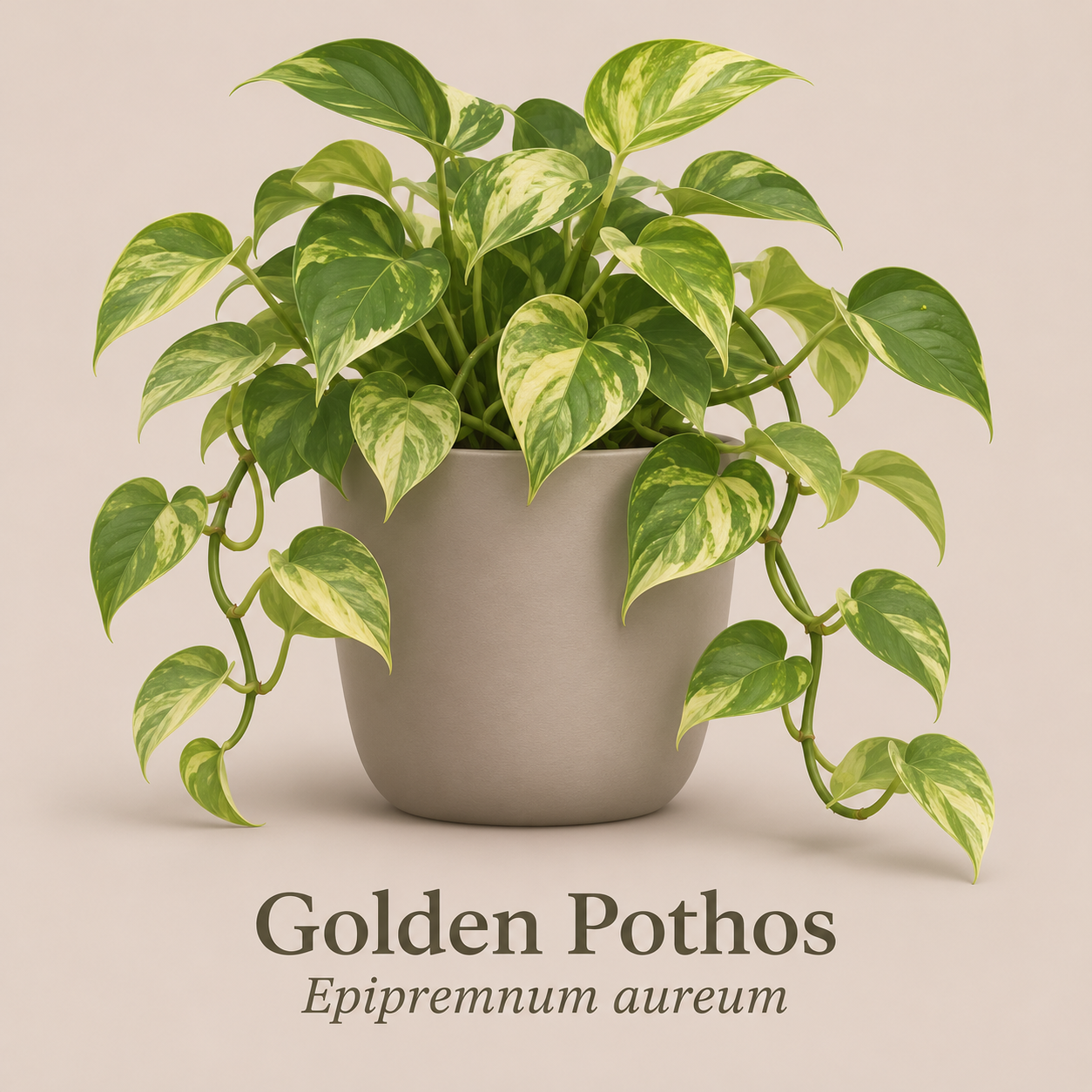
Golden Pothos / Devil’s Ivy — Epipremnum aureum
Golden pothos is a popular trailing houseplant recognised by its heart-shaped leaves, often patterned with green and golden-yellow variegation.
Its trailing vines make it particularly accessible to curious rabbits, especially when leaves extend from shelves or hanging planters.
Pothos contains insoluble calcium oxalate crystals that can cause painful oral irritation when chewed. Affected rabbits may drool, show discomfort while eating or become reluctant to consume hay.
Keep the entire plant, including fallen leaves and trailing stems, inaccessible to rabbits.
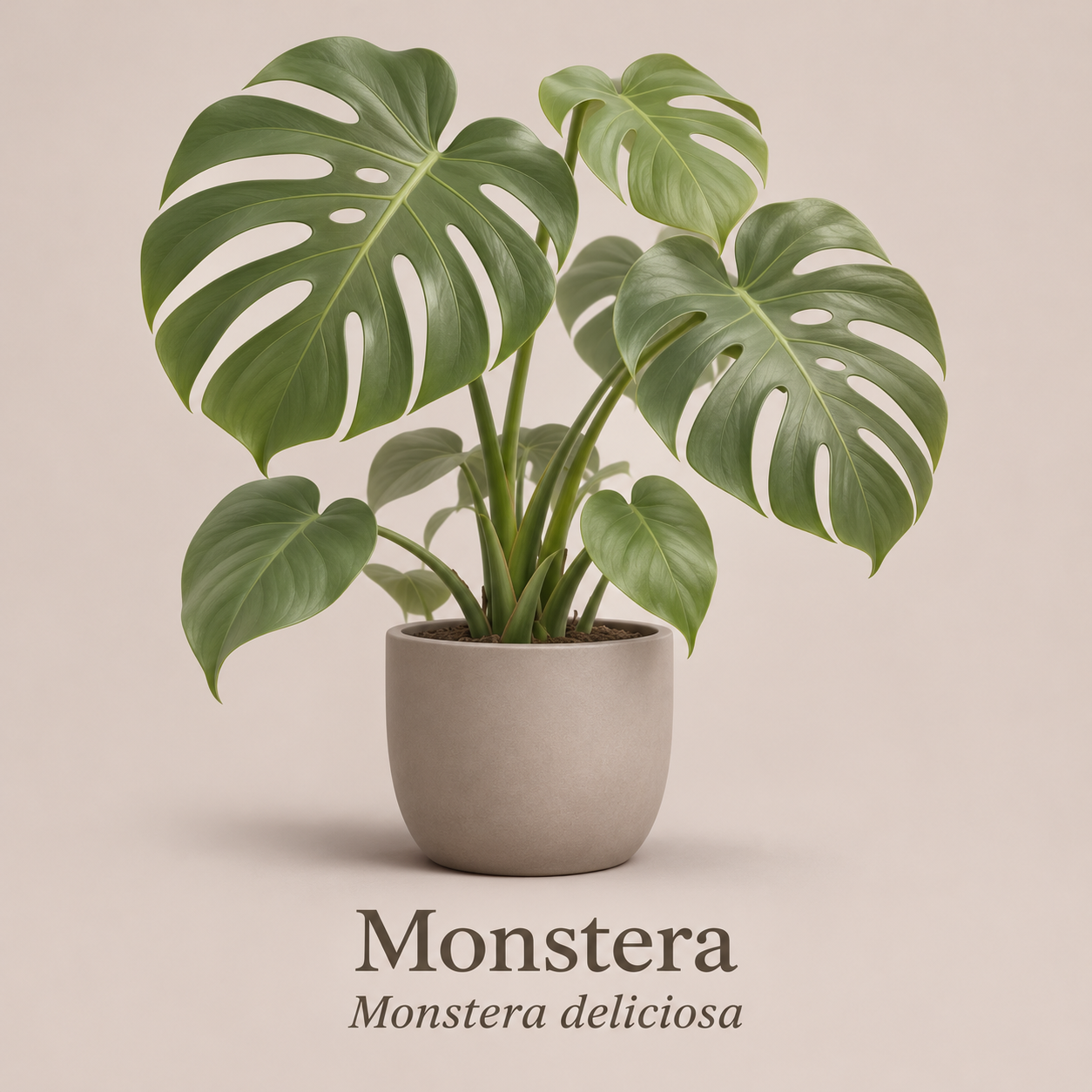
Monstera / Swiss Cheese Plant — Monstera deliciosa
Monstera is easily recognised by its large glossy leaves, which develop characteristic splits and openings as the plant matures.
Its dramatic foliage makes it a favourite indoor ornamental, but the leaves and stems contain insoluble calcium oxalate crystals.
Chewing these tissues may produce oral irritation and discomfort. In rabbits, pain that interferes with normal eating is an additional welfare concern.
Large Monstera plants should be kept outside rabbit-accessible areas, particularly when their lower leaves grow close to floor level.
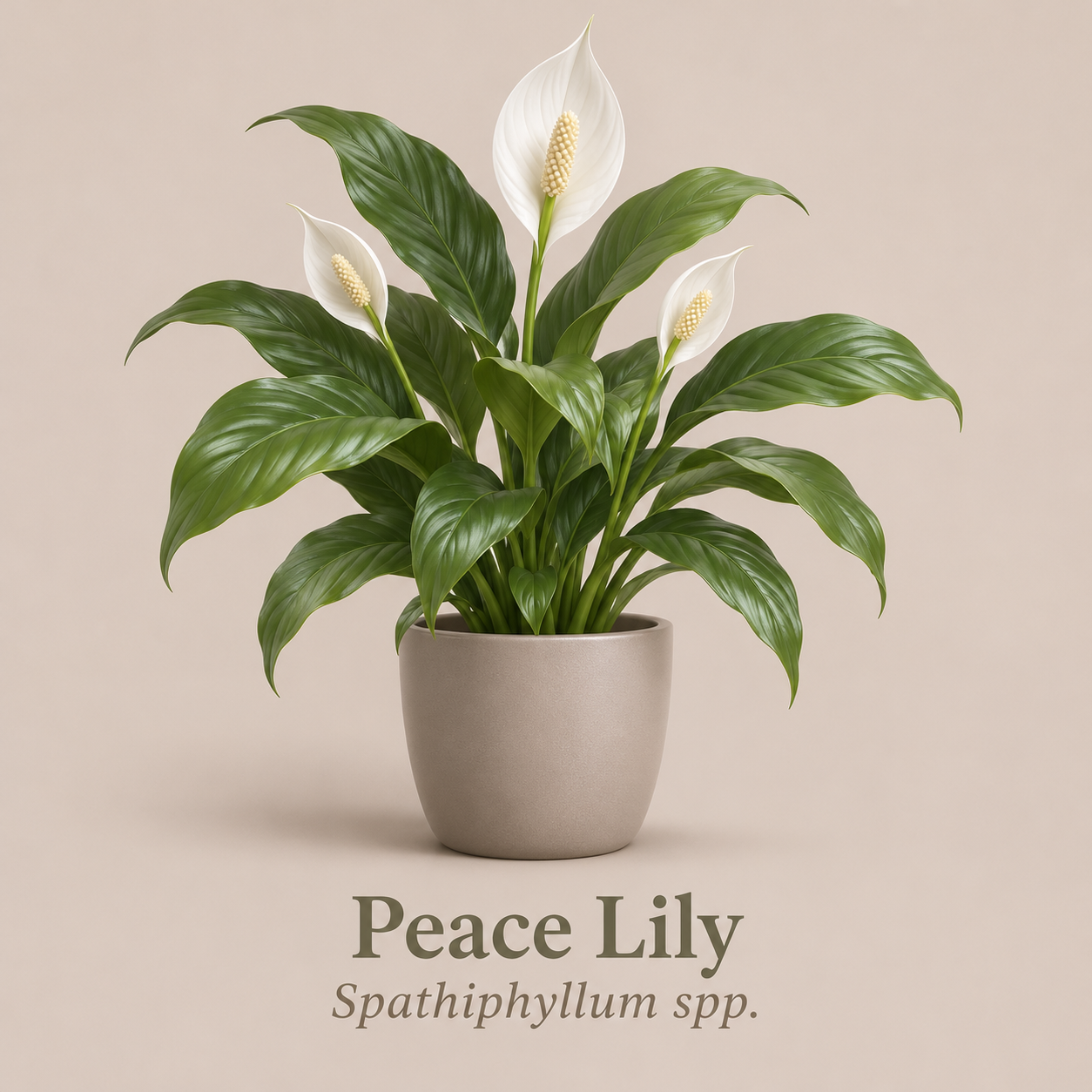
Peace Lily — Spathiphyllum spp.
Peace lilies are recognised by their glossy green leaves and elegant white spathes surrounding a central flowering structure called the spadix. Despite their name, peace lilies are not true lilies.
Their principal recognised toxicity mechanism involves insoluble calcium oxalate crystals rather than the kidney-damaging mechanism associated with true lily poisoning in cats.
If a rabbit chews a peace lily, oral discomfort, reduced appetite and other signs of irritation may occur. Peace lilies belong outside areas where rabbits can reach the foliage or fallen plant material.
What Happens if a Rabbit Eats Pothos or Monstera?
The ASPCA Animal Poison Control Center specifically identifies insoluble calcium oxalate plants as a recognised poisoning concern in rabbits.
Possible effects include oral irritation, painful chewing, reduced appetite, gastrointestinal discomfort and lethargy. Rarely, significant swelling in the back of the mouth may interfere with breathing.
Many recognised exposures primarily cause local irritation rather than severe systemic poisoning, although clinical severity varies.
For rabbits, the resulting refusal to eat can become a serious secondary concern. Pothos, philodendrons, Monstera and peace lilies should therefore remain inaccessible to rabbits.
Important distinction: Insoluble calcium oxalate poisoning is different from soluble oxalate poisoning. Soluble oxalates can be absorbed and, in sufficiently large amounts, may disrupt calcium balance and contribute to kidney injury. These two mechanisms should not be confused.
GROUP 02
PLANT TOXICOLOGY
Saponins
The Soap-Like Chemicals in Ornamental Plants
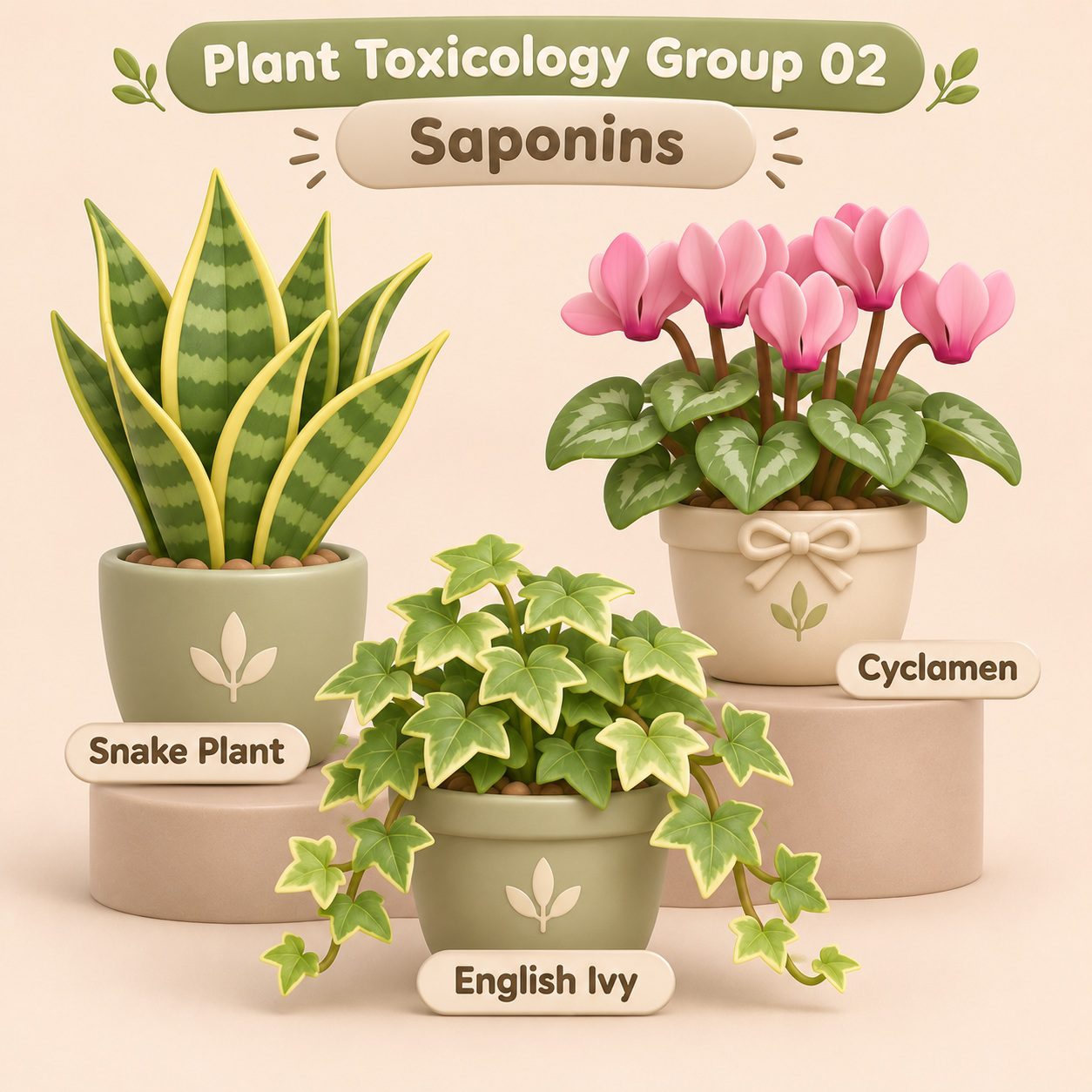
Saponins are naturally occurring plant compounds known for their soap-like properties. They are found across numerous botanical families and may serve defensive functions against microorganisms and herbivores.
Some saponins can irritate gastrointestinal tissues or interact with cellular membranes. However, their biological activity varies considerably. Not every saponin-containing plant is poisonous, and the presence of saponins alone does not establish a dangerous dose for rabbits.
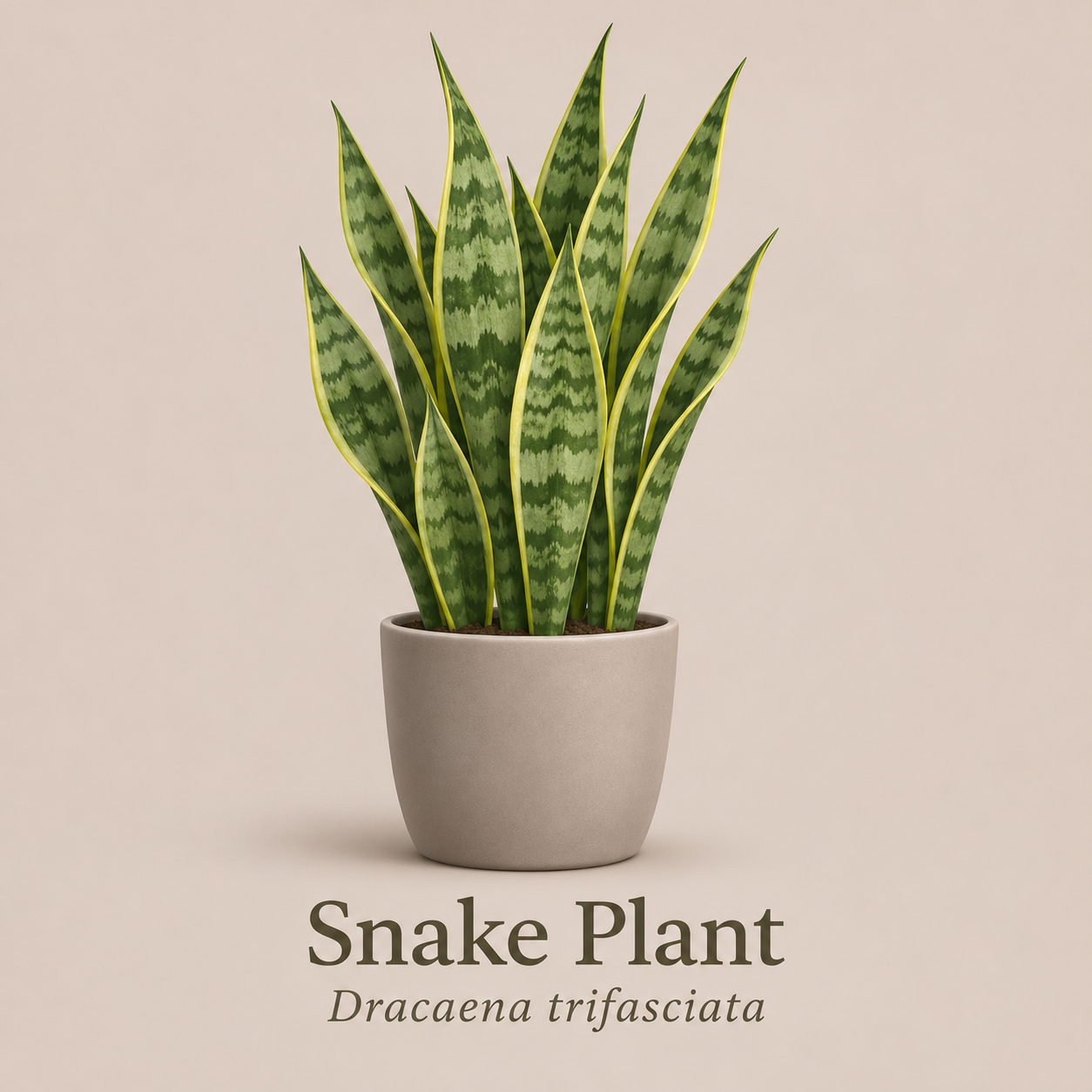
Snake Plant — Dracaena trifasciata
Previously classified as Sansevieria trifasciata, the snake plant is a popular indoor ornamental with stiff, upright leaves. Snake plants contain saponins and are classified as toxic to dogs and cats by the ASPCA.
Rabbit poisoning data are limited, so assigning a precise severity category would be misleading. Nevertheless, snake plants should be kept away from rabbits rather than offered as something to nibble.
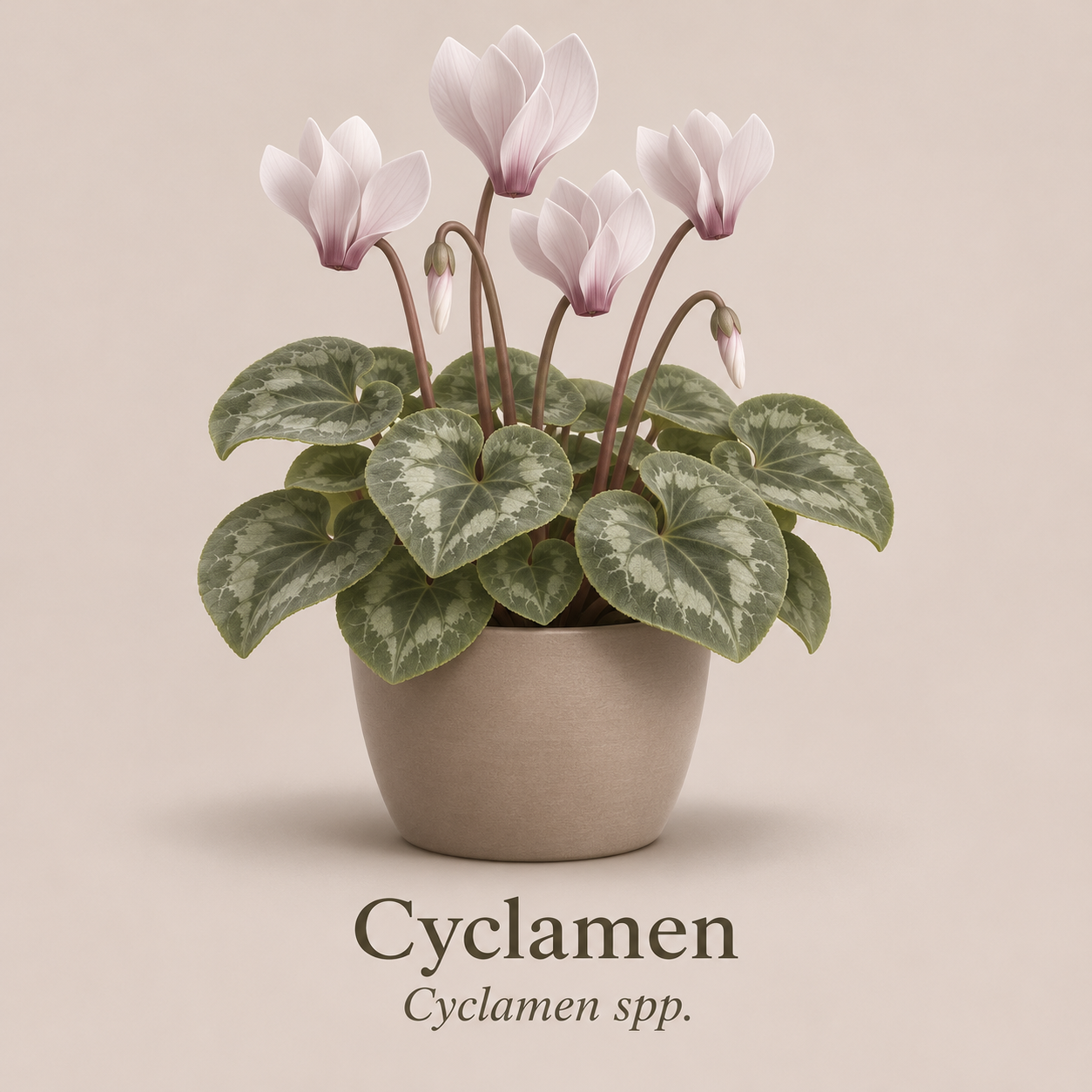
Cyclamen — Cyclamen Species
Cyclamen is a flowering ornamental with distinctive swept-back petals and rounded, often patterned leaves.
Its underground tubers contain triterpenoid saponins, including compounds associated with gastrointestinal irritation and potentially more serious systemic effects.
Veterinary toxicology reports involving other animal species indicate that significant ingestion may produce severe poisoning. The extent to which those findings can be directly applied to rabbits is uncertain, but the chemical properties of cyclamen justify strict avoidance.
Because the underground storage organs are particularly concerning, rabbits should not have access to cyclamen plants or their potting containers.
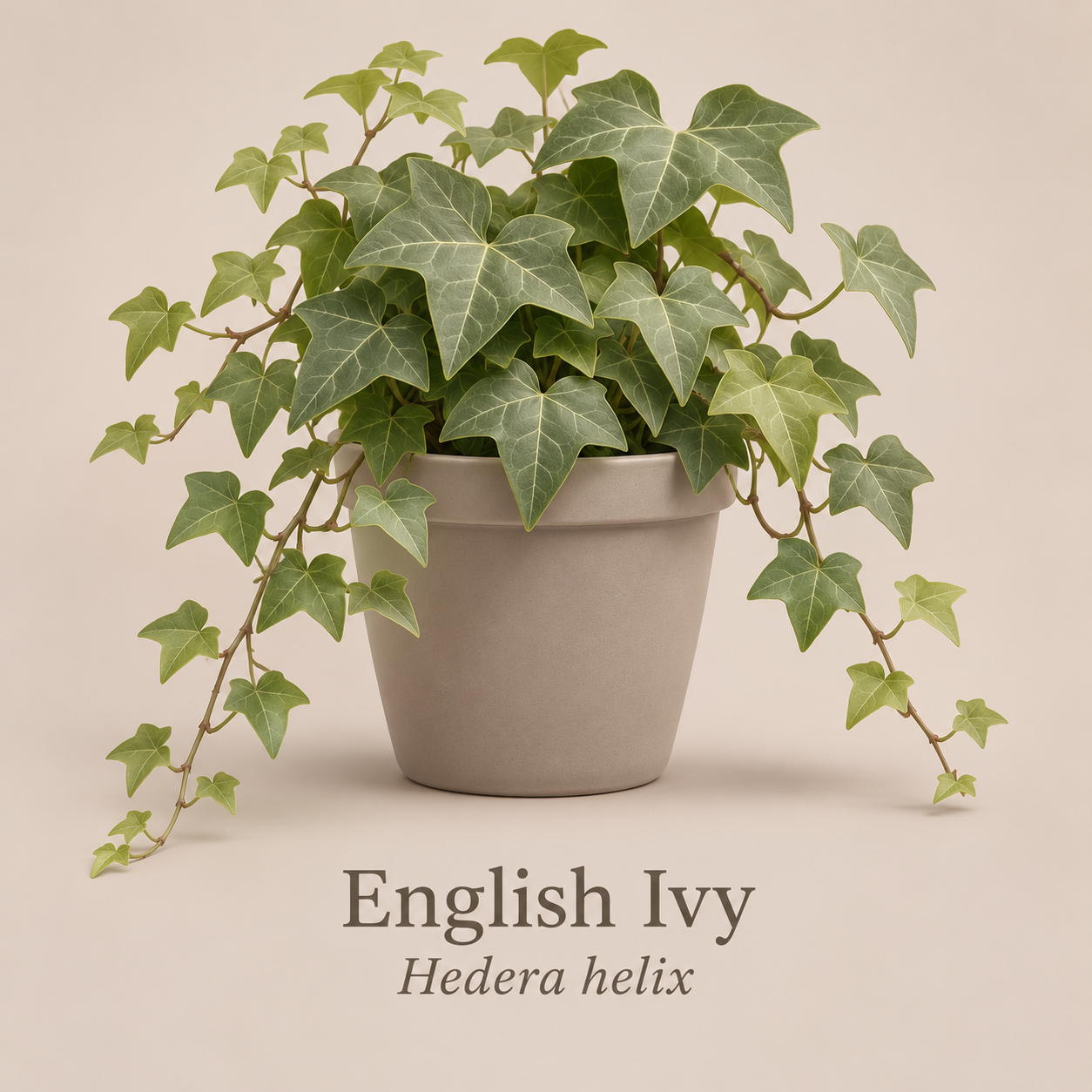
English Ivy — Hedera helix
English ivy is widely grown as a trailing or climbing ornamental, recognised by its distinctive lobed leaves. It contains saponins, including hederin-related compounds.
Unlike many ornamental plants for which rabbit-specific evidence is scarce, ivy is explicitly identified by the RSPCA as a potential poisoning hazard for rabbits.
Reported concerns include gastrointestinal disturbances, reduced appetite, lethargy and potentially serious illness. English ivy should not be accessible in rabbit living areas, including fallen leaves and trailing vines.
Are All Saponin-Containing Plants Dangerous?
No. Saponins represent a chemically diverse family of compounds, and their biological effects vary significantly. Some edible plants also contain naturally occurring saponins without being inherently poisonous when consumed appropriately.
It would therefore be scientifically inaccurate to classify every saponin-containing plant as a toxic houseplant for rabbits. The correct approach is to evaluate the specific botanical species, chemical composition and available veterinary evidence.
GROUP 03
PLANT TOXICOLOGY
Cardiac Glycosides
When Plant Chemistry Affects the Heart
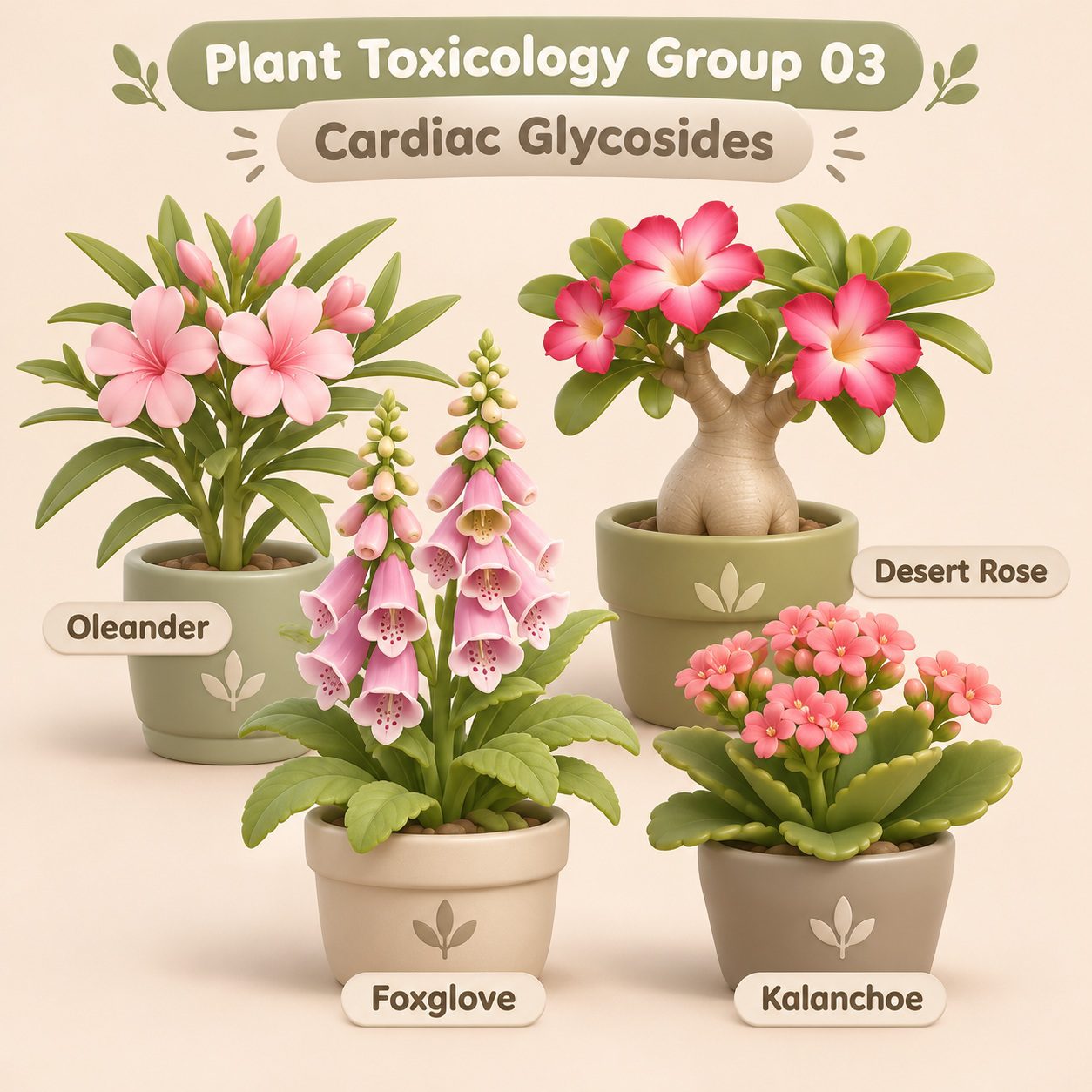
Some of the more dangerous ornamental plants contain compounds known as cardiac glycosides. Unlike calcium oxalates, which primarily cause local tissue irritation, cardiac glycosides may affect the body’s electrical signalling and heart function.
These compounds can interfere with sodium-potassium ATPase, an enzyme essential for maintaining normal electrical and chemical gradients across cell membranes. Disruption of this enzyme can alter cardiac activity and potentially produce dangerous heart rhythm disturbances.
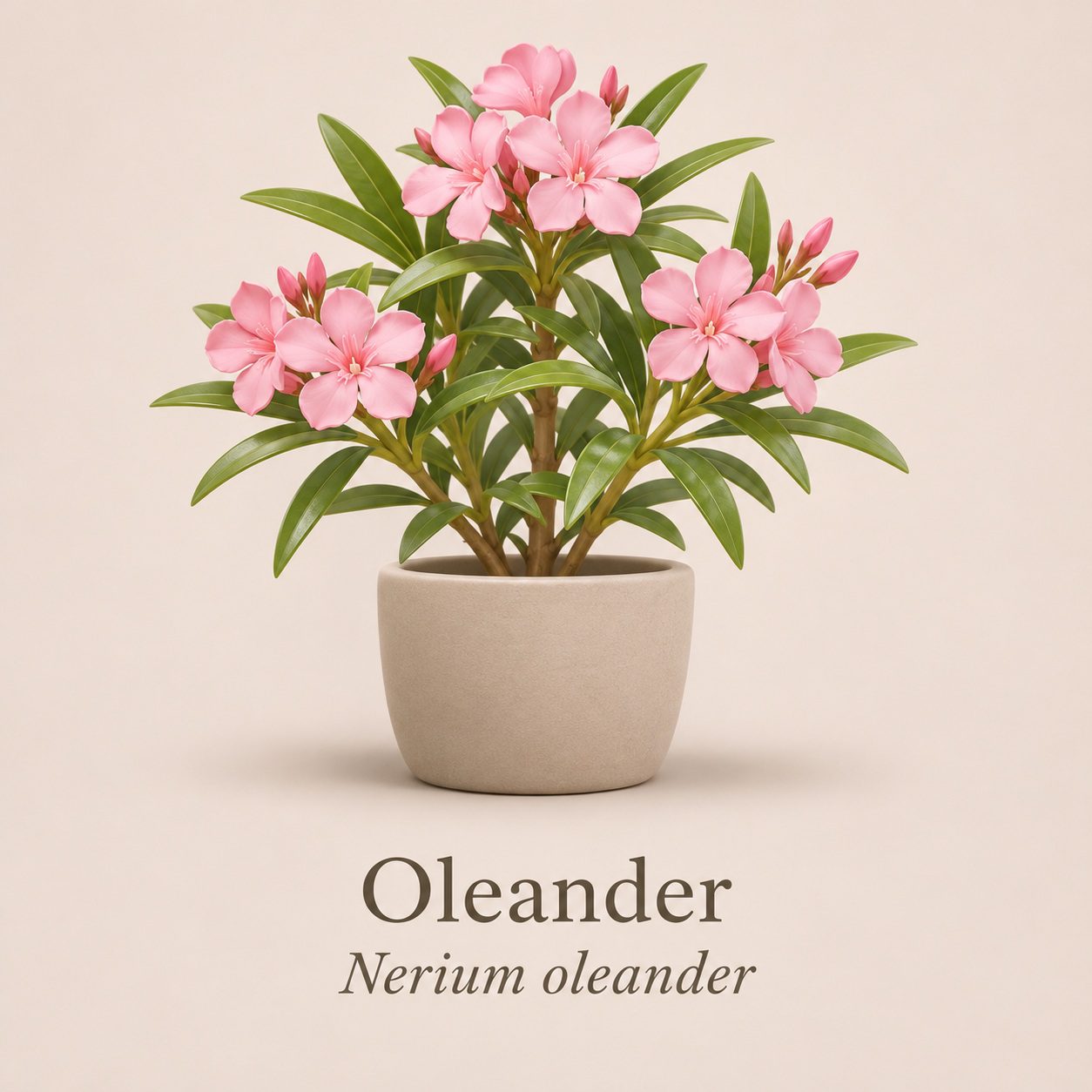
Oleander — Nerium oleander
Oleander is a flowering shrub commonly found in gardens, roadside landscaping and tropical residential areas. Its leaves, stems and flowers contain potent cardiac glycosides, including oleandrin. Poisoning is well documented in multiple animal species and can be life-threatening.
Although rabbit-specific poisoning thresholds are not well established, oleander should be considered a serious potential hazard. Even fallen leaves should be kept away from rabbit-accessible areas.
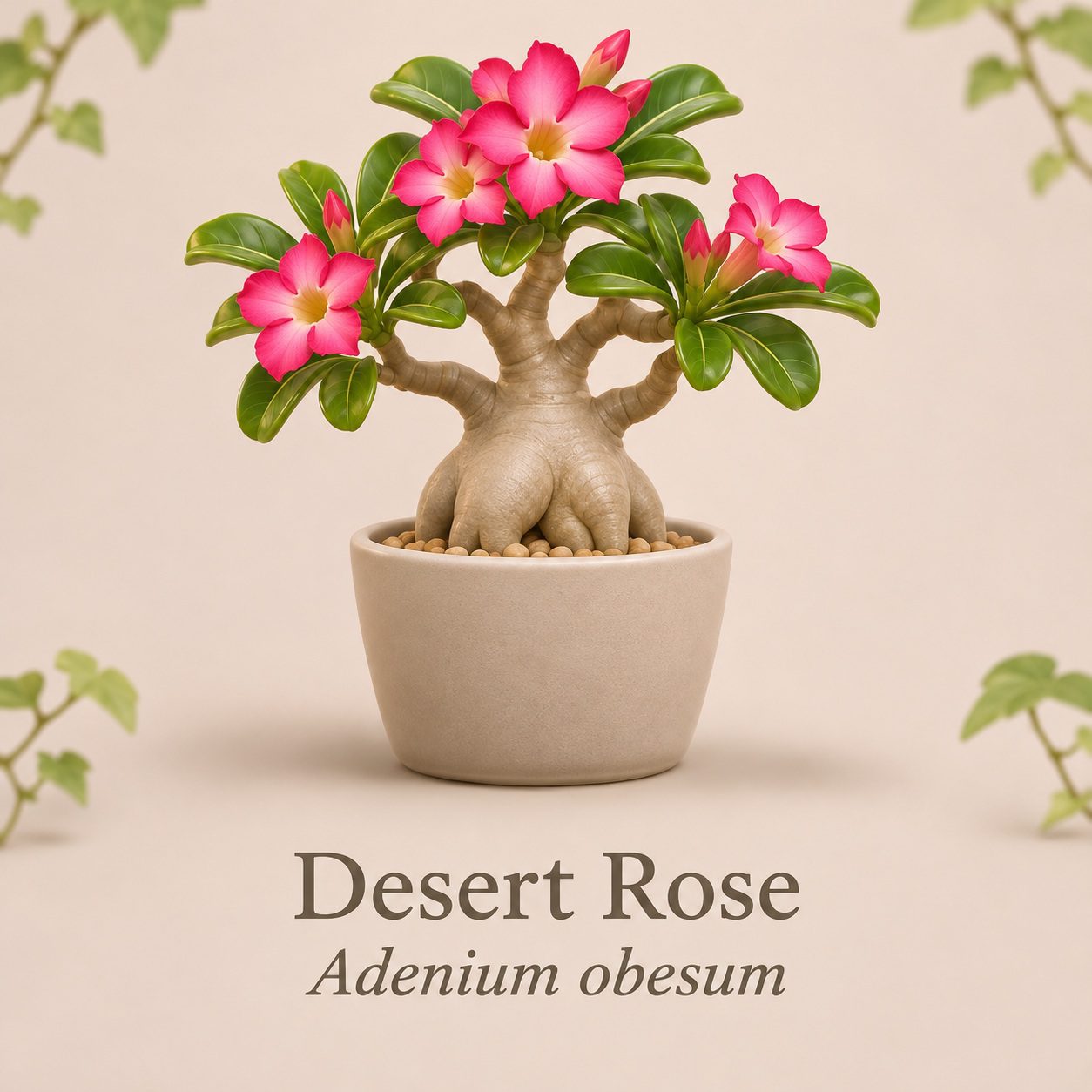
Desert Rose — Adenium obesum
Desert rose is popular in Singapore and other tropical regions because of its swollen trunk, sculptural appearance and colourful flowers.
The plant contains cardiac glycosides, including compounds with effects on cellular sodium-potassium transport. Its attractive flowers may encourage curious pets to investigate the plant, while damaged stems can release plant sap.
Although detailed rabbit-specific exposure data are limited, its established toxicological properties warrant strict avoidance.
Foxglove — Digitalis Species
Foxgloves are flowering ornamentals recognised by their tall spikes of tubular, bell-shaped flowers. They contain powerful cardiac glycosides, including compounds related to the digitalis family.
These chemicals can alter cardiac electrical activity and cause potentially serious poisoning. Foxgloves are generally more common in outdoor gardens than tropical indoor settings, but potted specimens or cut flowers may occasionally be brought into homes. They should remain inaccessible to rabbits.
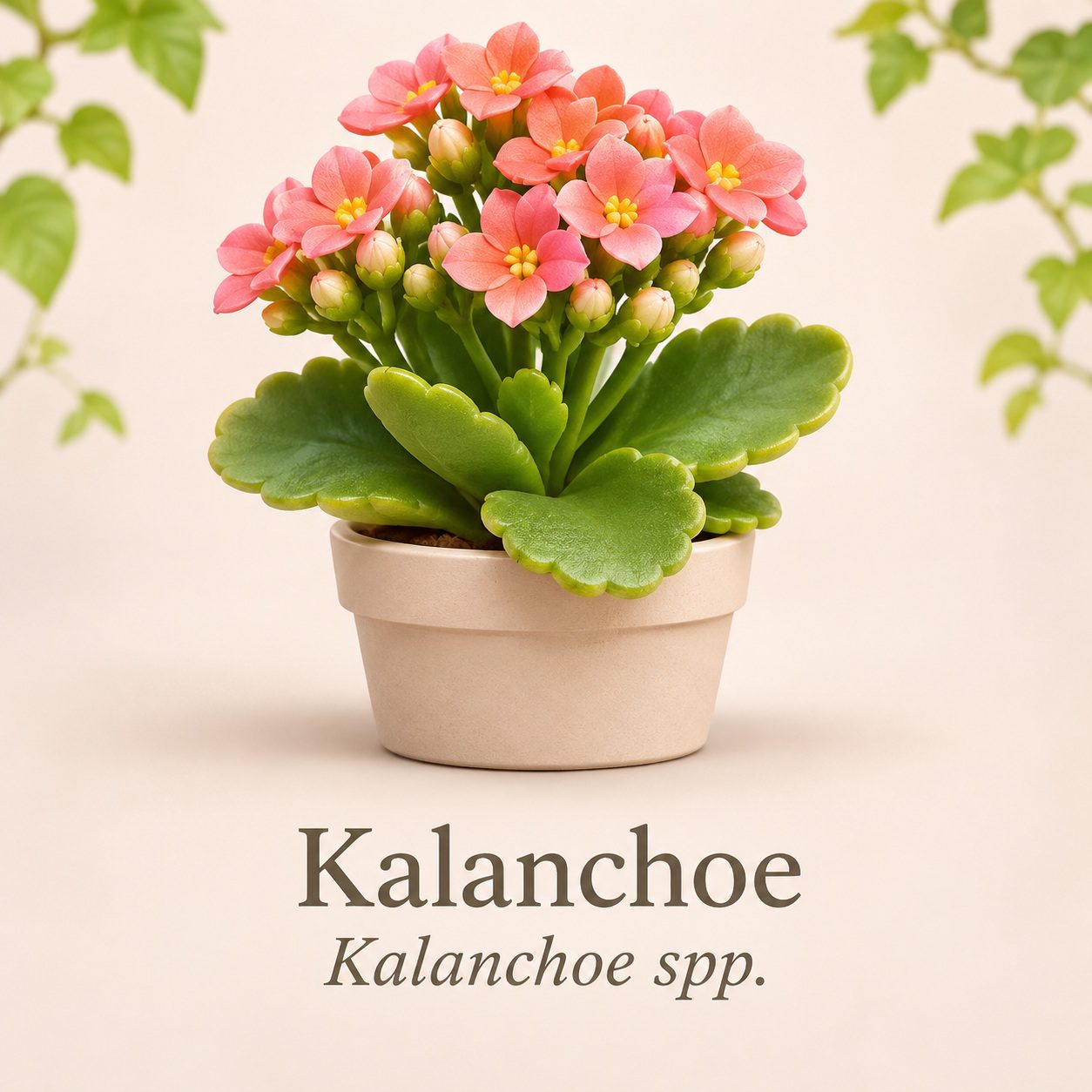
Kalanchoe — Kalanchoe Species
Kalanchoes are popular ornamental succulents, often sold as compact flowering pot plants. Some species contain bufadienolides, a subclass of compounds with cardiac glycoside activity.
Unlike many ornamental plants whose toxicity is inferred mainly from dogs and cats, certain Kalanchoe species have been investigated in experimental rabbit toxicity studies.
However, species identification matters. Different Kalanchoe species may contain different compounds and concentrations.
It would be inaccurate to assume that every species produces identical toxicity. For household safety, Kalanchoe plants should not be accessible to rabbits.
What Are the Symptoms of Cardiac Glycoside Poisoning?
Potential signs of serious poisoning include:
- Weakness or unusual lethargy.
- Reduced appetite.
- Gastrointestinal disturbances.
- Abnormal heart rate or rhythm.
- Poor coordination or neurological abnormalities.
- Breathing difficulties.
- Collapse in severe cases.
These symptoms are not specific to cardiac glycoside poisoning, and they may not appear immediately.
Veterinary warning: Suspected ingestion of oleander, desert rose, foxglove or a potentially cardiotoxic Kalanchoe requires urgent veterinary advice, even if the rabbit initially appears well.
GROUP 04
PLANT TOXICOLOGY
Other Toxic Compounds
Beyond Oxalates, Saponins & Cardiac Glycosides
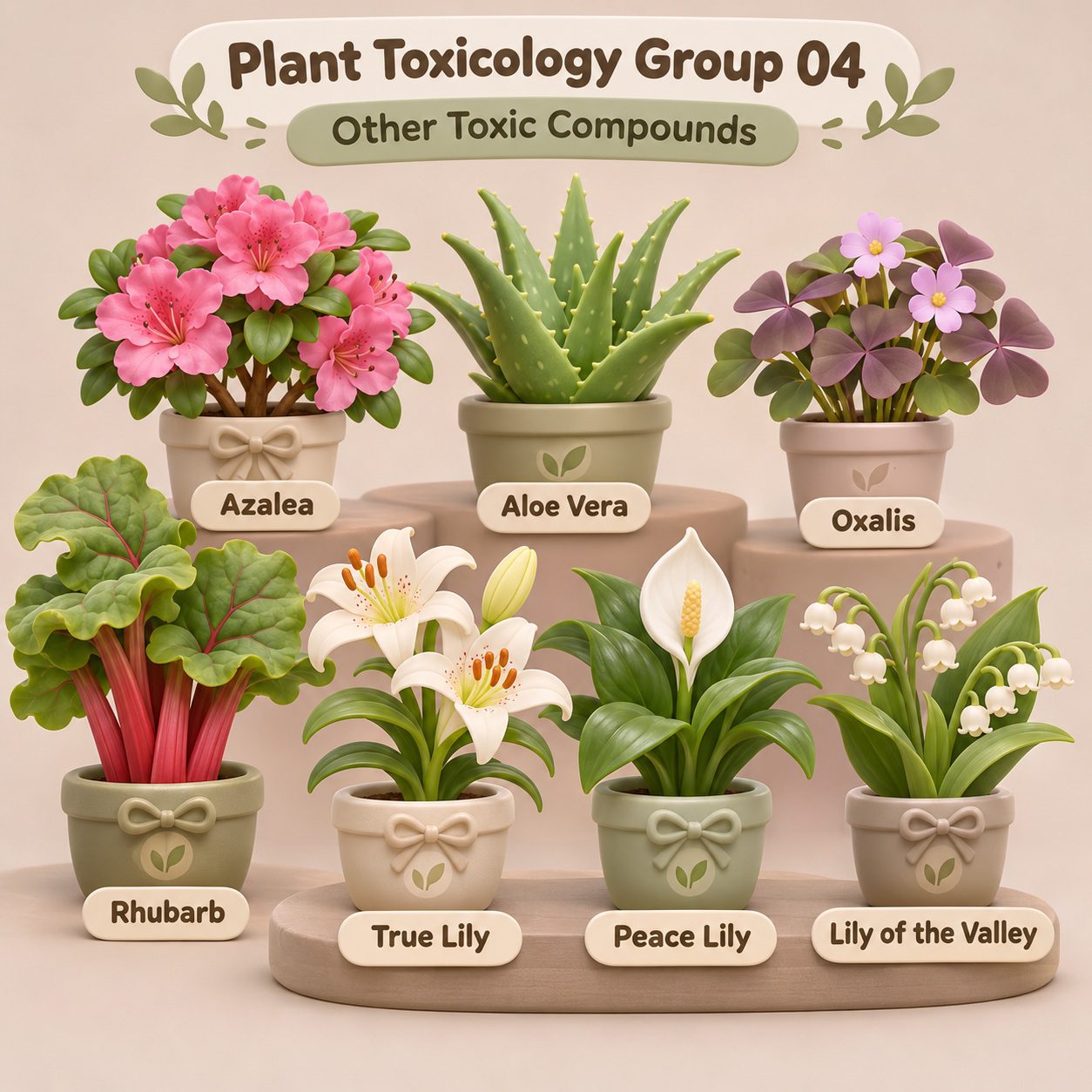
Not every poisonous ornamental belongs neatly to the calcium oxalate, saponin or cardiac glycoside groups.
Several additional plants contain different chemicals that can affect the nervous system, gastrointestinal tract or other physiological processes.
These plants toxic to rabbits deserve attention because their mechanisms differ from those already discussed.
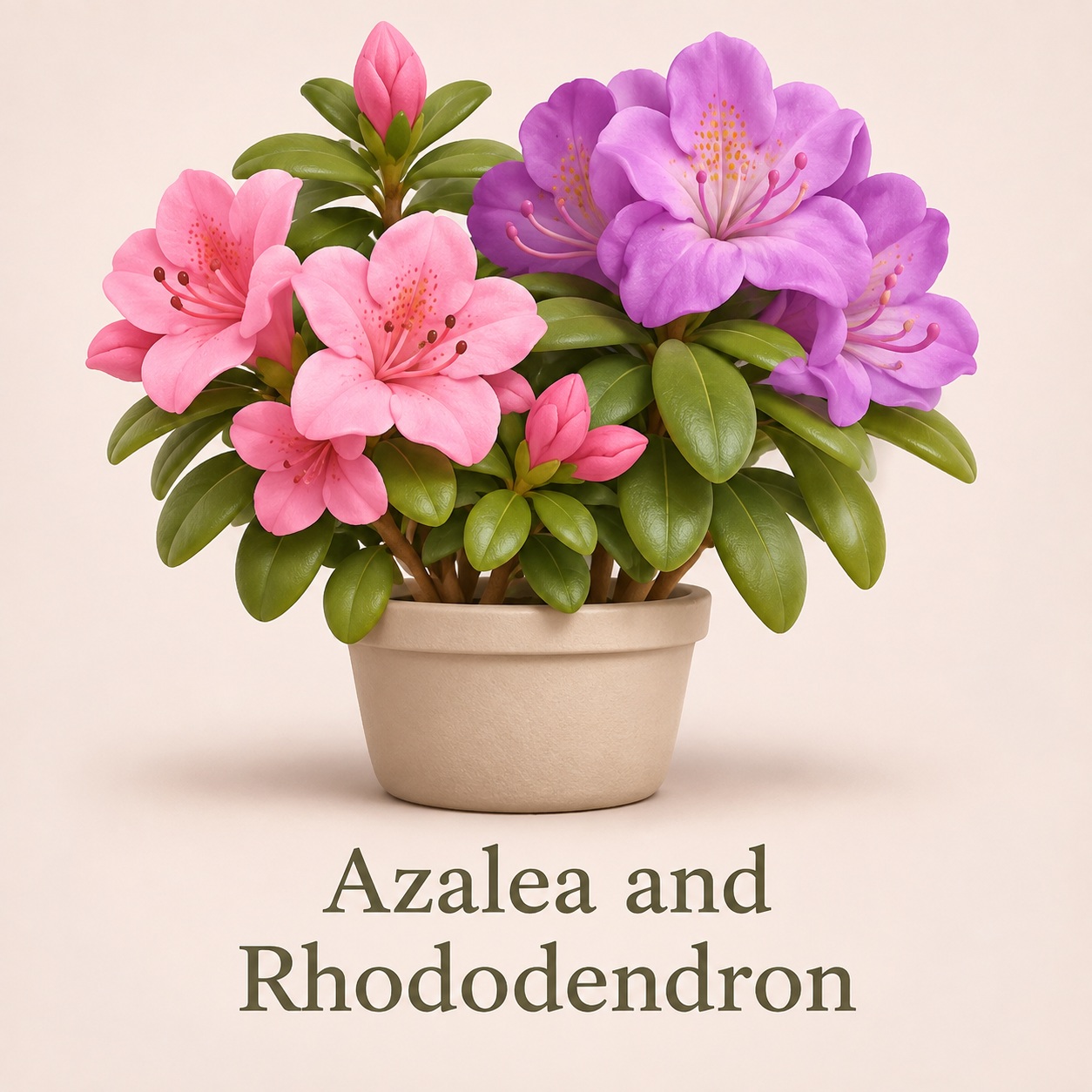
Azalea and Rhododendron — Rhododendron Species
Azaleas and rhododendrons are flowering ornamentals known for their colourful blooms. They contain grayanotoxins, compounds capable of interfering with voltage-gated sodium channels.
These channels are essential for normal electrical signalling in nerves and muscles. Grayanotoxin poisoning is documented in several animal species and may involve gastrointestinal, cardiovascular and neurological disturbances.
Detailed rabbit-specific clinical data remain limited. Nevertheless, the known toxicological properties of these plants justify excluding them from rabbit-accessible environments.
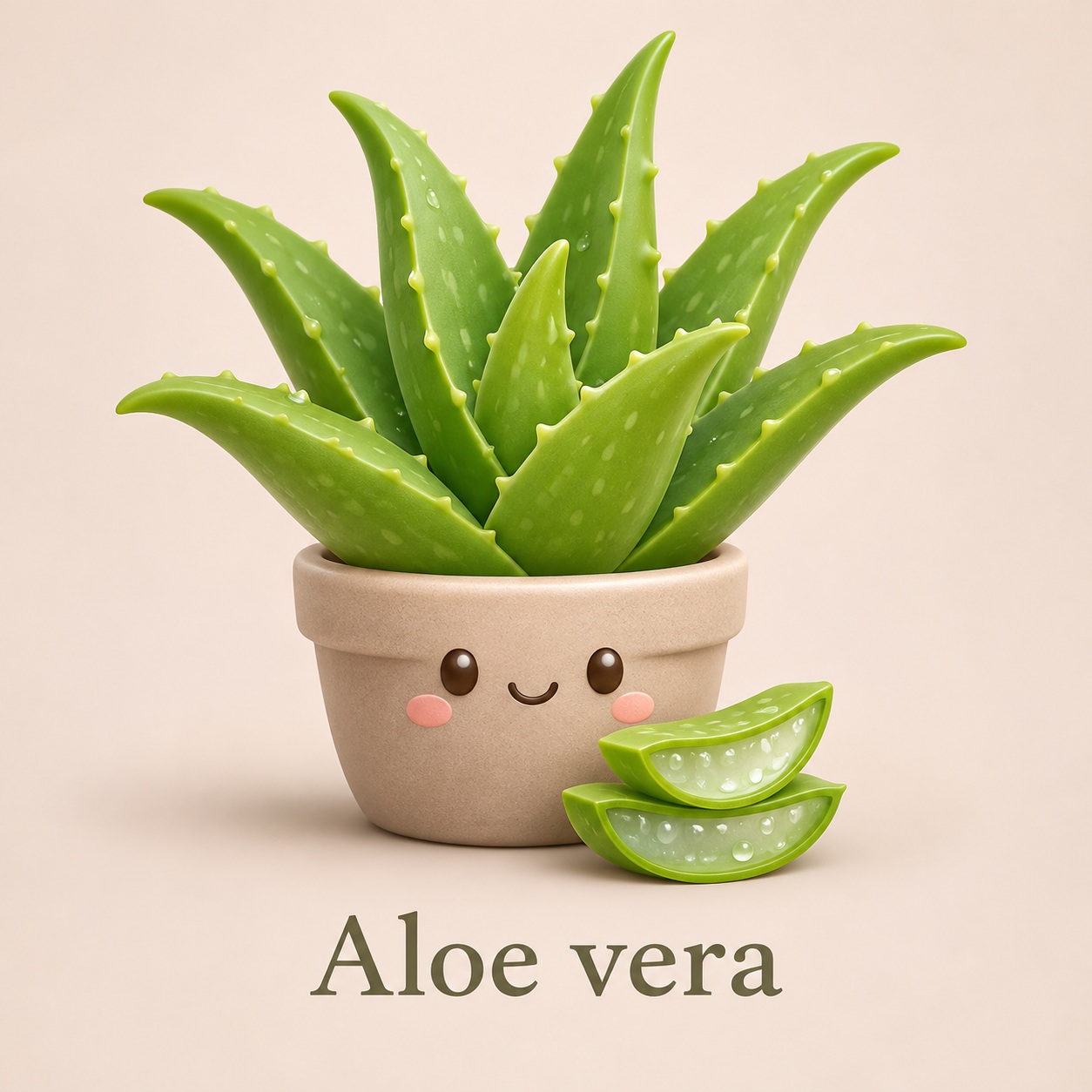
Aloe Vera
Aloe vera is widely known for its cosmetic and topical applications. However, its leaves contain chemically different components. The clear inner gel differs from the yellowish latex found beneath the outer leaf surface.
Aloe latex contains anthraquinone-related compounds, including substances associated with gastrointestinal irritation and laxative effects. This distinction matters because the safety of a processed topical preparation cannot be assumed to apply to ingestion of the raw plant. Aloe vera should not be deliberately offered as rabbit forage.
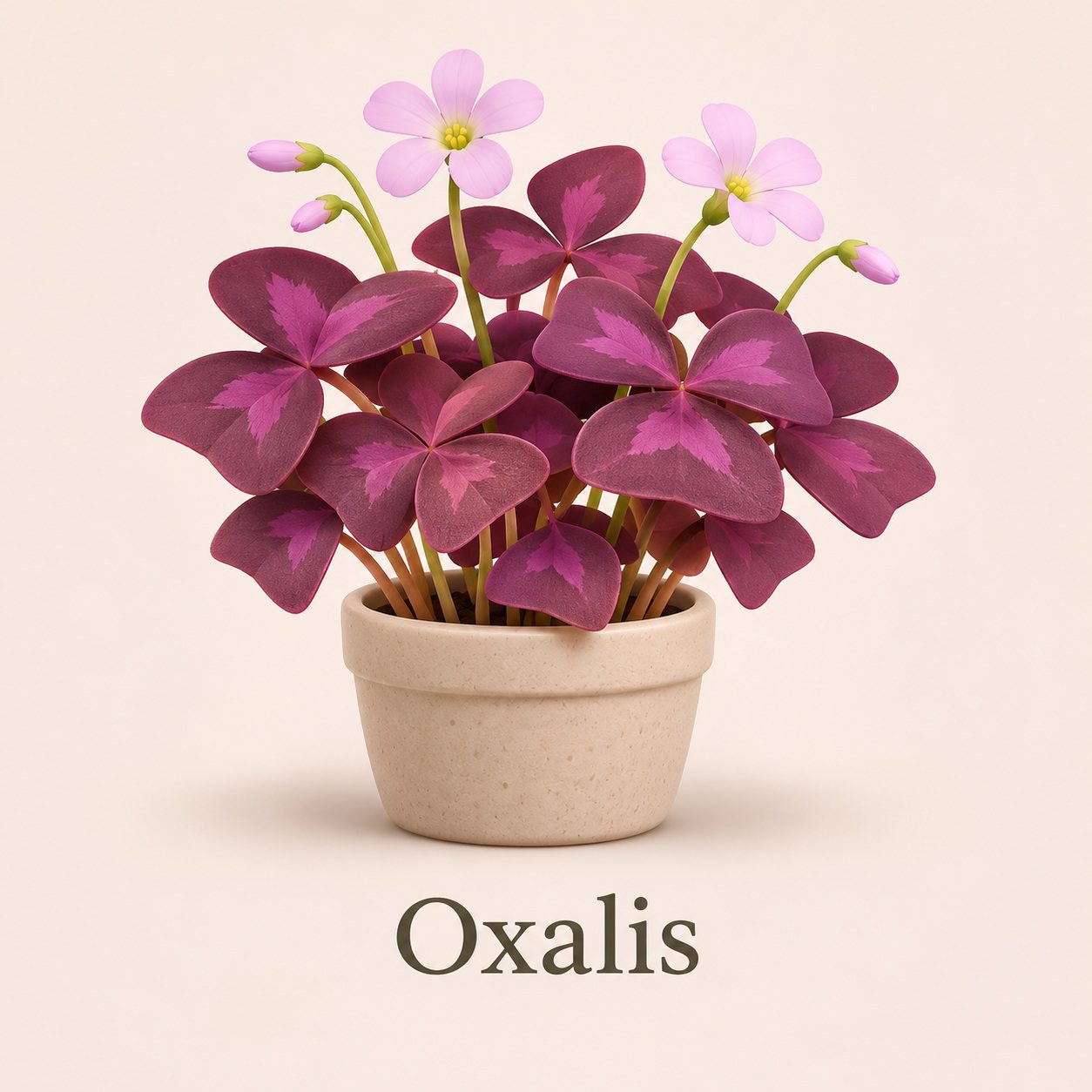
Soluble Oxalate Plants — Oxalis and Other Species
Some plants contain soluble oxalates, which differ from the insoluble calcium oxalate crystals discussed in Group 01.
Soluble oxalates can bind calcium and, following sufficiently large exposures, may contribute to disturbances in calcium balance and kidney injury. Certain Oxalis species contain soluble oxalates.
Rhubarb leaves are another recognised source of oxalate-related poisoning concerns, although rhubarb is a culinary garden plant rather than a typical indoor ornamental.
The severity of poisoning depends on plant identity, chemical composition, quantity consumed and the animal’s physiology. We should therefore avoid grouping every oxalate-containing plant into the same toxicity category.
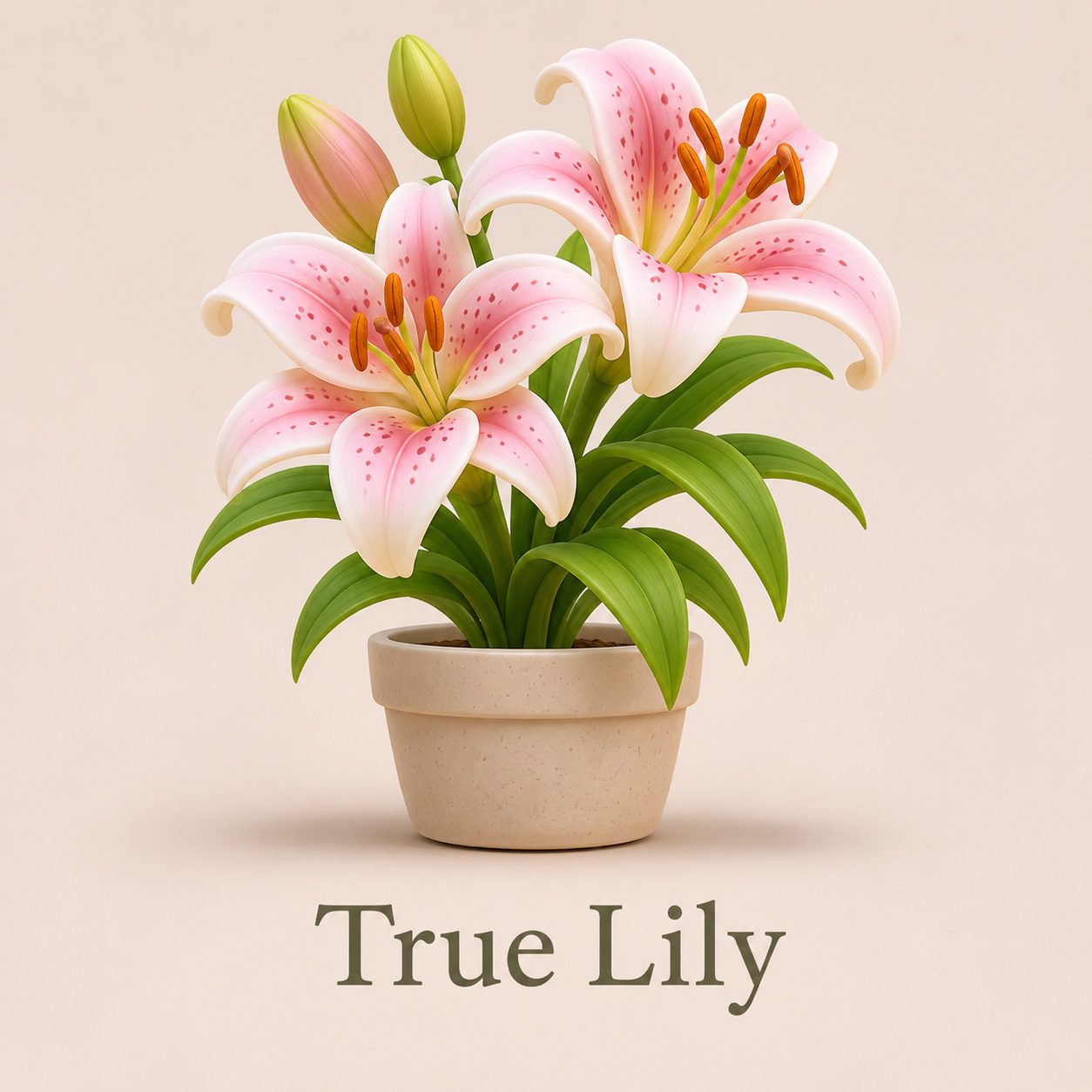
True Lilies, Peace Lilies and Lily of the Valley: Why Names Can Mislead
The term lily is used for several unrelated plants. True lilies (Lilium species) and daylilies (Hemerocallis species) are particularly dangerous to cats because ingestion can cause severe acute kidney injury.
That well-established feline toxicity mechanism should not automatically be attributed to rabbits. Peace lilies (Spathiphyllum) and calla lilies (Zantedeschia) are different plants whose recognised toxicological concerns primarily involve insoluble calcium oxalate crystals.
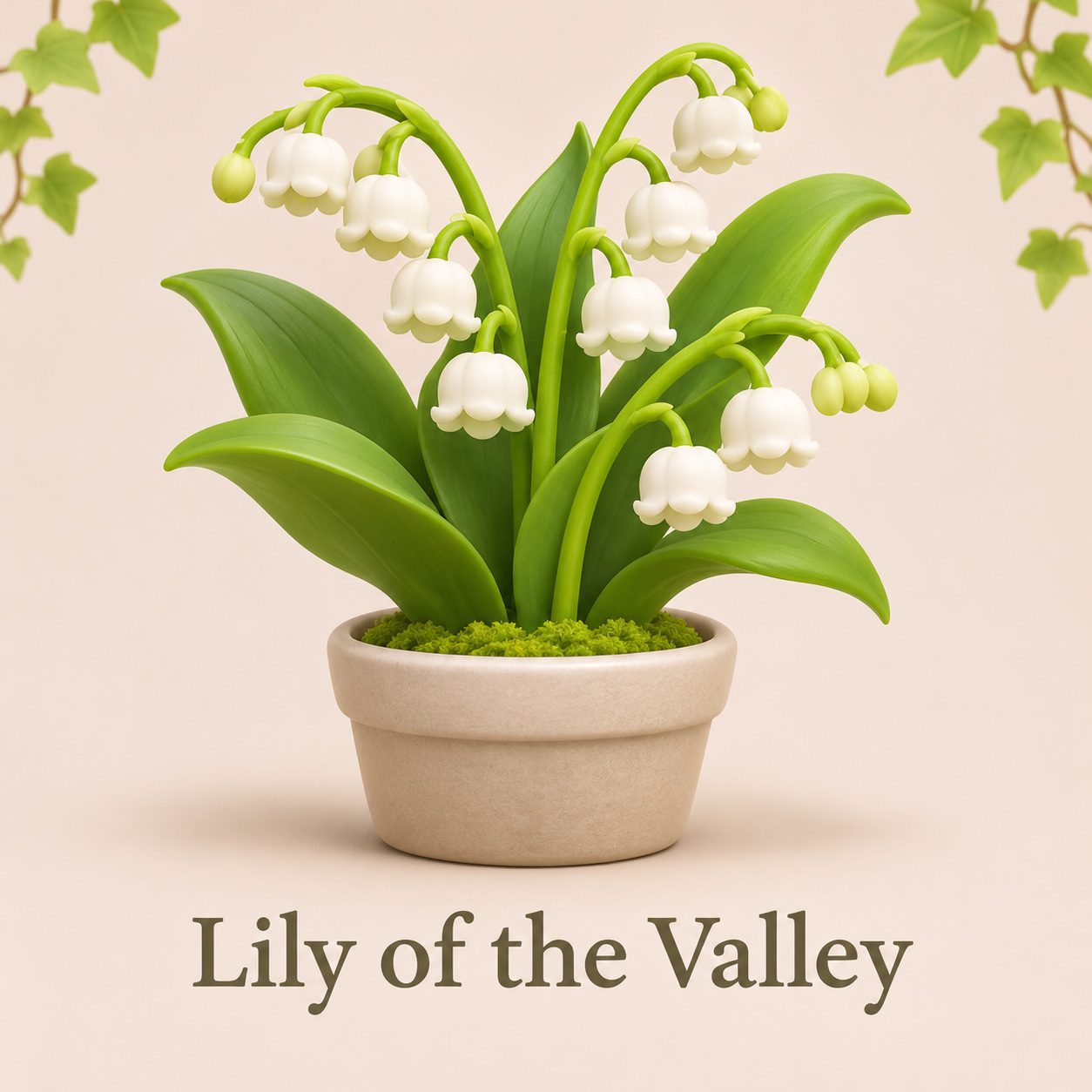
Lily of the valley (Convallaria majalis) contains cardiac glycosides and therefore belongs mechanistically with the cardiotoxic plants in Group 03, despite its common name.
The botanical name matters more than the common name. Accurate plant identification is essential when evaluating toxic houseplants for rabbits.
Rabbit Poisoning Symptoms: What Should You Watch For?
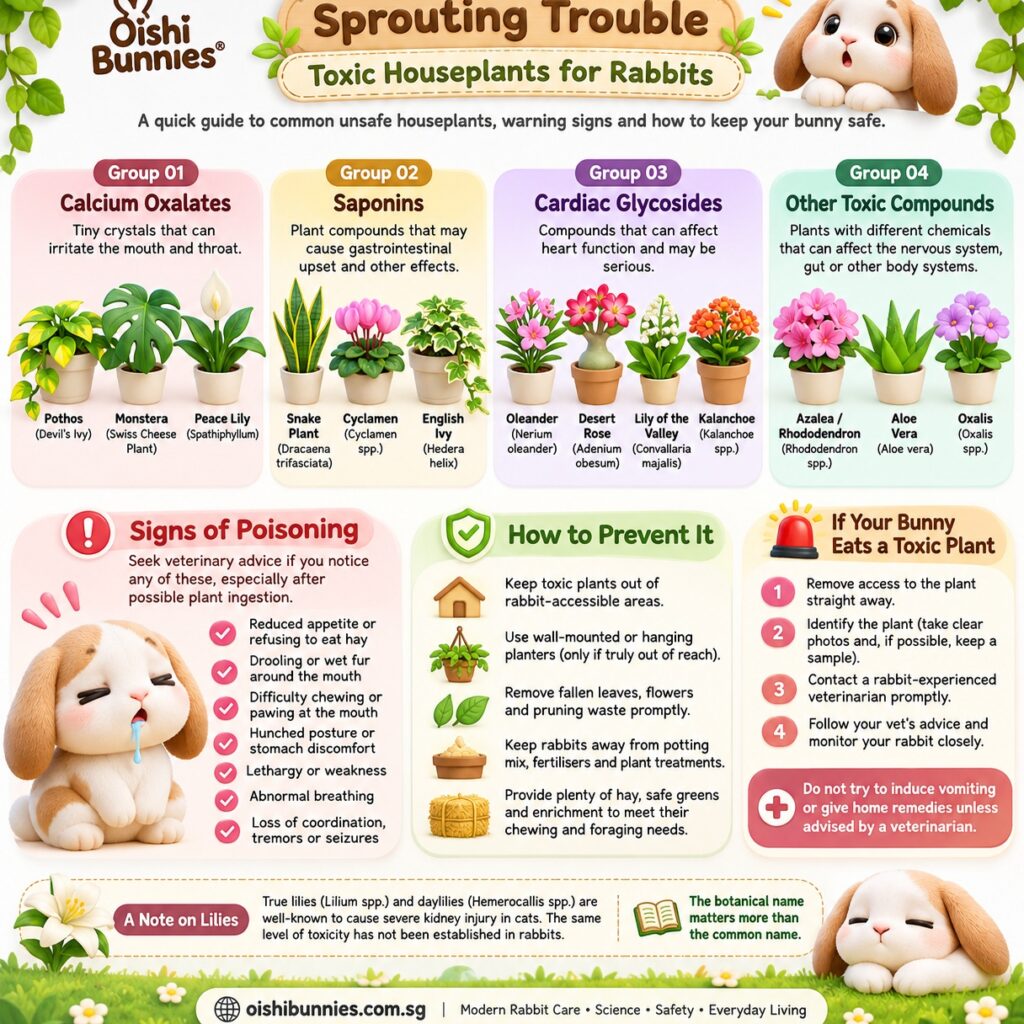
Recognising rabbit poisoning symptoms early is important, particularly when a rabbit may have chewed an unfamiliar ornamental plant. However, exposure to toxic houseplants for rabbits does not produce one universal set of clinical signs. Symptoms depend on the chemical involved, the quantity consumed and the animal’s individual response.
For example, a rabbit that chews a calcium oxalate-containing leaf, such as pothos or peace lily, may experience oral irritation, while exposure to a plant containing cardiac glycosides may cause systemic effects. Different plants toxic to rabbits can therefore produce very different patterns of illness.
Common Rabbit Poisoning Symptoms and Warning Signs
If your rabbit has had access to potentially poisonous houseplants for rabbits, watch for changes in eating, behaviour, movement and breathing. Possible warning signs include:
- Sudden reduction in appetite or refusal to eat hay.
- Drooling or wet fur around the mouth.
- Difficulty chewing or unusual mouth movements.
- Pawing at the mouth.
- Hunched posture or signs of abdominal discomfort.
- Reduced faecal output.
- Unusual lethargy or weakness.
- Loss of coordination, tremors or seizures.
- Abnormal breathing or respiratory distress.
- Collapse in severe cases.
These symptoms are not unique to plant poisoning. Dental disease, gastrointestinal disorders and other serious illnesses can produce similar signs. A rabbit may also appear normal immediately after ingesting a hazardous plant, even when veterinary evaluation is warranted.
The absence of obvious rabbit poisoning symptoms does not confirm that an exposure is harmless. Some plant compounds act locally, while others may cause delayed or more widespread effects. The identity of the plant is often more useful for assessing risk than waiting for clinical signs to develop.
Never wait for rabbit poisoning symptoms to develop before seeking veterinary advice following suspected exposure to a hazardous plant. Early identification and professional guidance are particularly important when ingestion involves known toxic houseplants for rabbits.
Can Rabbits Vomit After Eating Poisonous Plants?
No. Rabbits cannot vomit under normal circumstances because of their gastrointestinal anatomy. This is an important distinction when assessing possible poisoning from houseplants.
Many online pet-poisoning guides include vomiting as a common symptom because they primarily address dogs and cats. Vomiting should therefore not appear on a rabbit-specific poisoning symptom checklist, including guidance about poisonous houseplants for rabbits.
The inability to vomit also means that inducing vomiting is neither an appropriate nor achievable home treatment for rabbits. Suspected plant poisoning requires species-appropriate veterinary advice rather than methods recommended for other pets.
What Should You Do If Your Rabbit Eats a Toxic Houseplant?
When a rabbit has consumed an unknown or potentially toxic plant, prompt veterinary advice is more useful than attempting home remedies. If your rabbit has eaten one of the toxic houseplants for rabbits discussed in this guide, the immediate priority is to prevent further exposure and obtain professional guidance.
The following steps explain how to respond to suspected plant ingestion, whether your rabbit is showing obvious symptoms or still appears well.
Step 1: Remove Access to the Plant
Gently move your rabbit away from the plant and prevent further ingestion. This applies to both confirmed plants toxic to rabbits and unidentified houseplants whose safety has not been established.
If loose plant material is clearly visible at the front of the mouth and can be removed without force, carefully remove it.
Do not reach deeply into the mouth or struggle with the rabbit.
Step 2: Identify the Plant
Take clear photographs showing the leaves, stems, flowers and overall plant. Many common indoor ornamentals have similar appearances, yet their toxic compounds and associated risks may differ considerably.
If possible, locate the botanical name on the original plant label. Accurate identification helps distinguish poisonous houseplants for rabbits from species with different or poorly documented toxicological profiles.
Retain a sample for veterinary identification if this can be done safely.
Do not delay seeking help simply because you cannot identify the plant immediately.
Step 3: Contact a Rabbit-Experienced Veterinarian
Explain which plant may have been eaten, the approximate amount consumed, when the exposure occurred and whether your rabbit is showing any rabbit poisoning symptoms, such as drooling, refusal to eat, reduced faecal output or unusual weakness.
If the plant identity or quantity is uncertain, explain that clearly. Mention any pesticides, fertilisers or other treatments that may have been applied to the plant.
Some exposures require urgent evaluation even before symptoms appear. This is especially important with plants containing potentially serious systemic toxins, including certain cardiac glycosides.
Step 4: Avoid Unapproved Home Treatments
Do not attempt to induce vomiting, force water into the mouth or administer activated charcoal, milk, oils, medications or other supposed antidotes unless specifically directed by a veterinarian. Home remedies circulating online are not reliable treatments for exposure to toxic houseplants for rabbits.
Rabbits cannot vomit, and inappropriate oral treatments may create additional risks.
Forceful administration of fluids to a distressed or compromised rabbit can also increase the risk of aspiration.
Step 5: Follow Veterinary Instructions
Monitor appetite, faecal output, posture, breathing and activity while arranging veterinary care. These observations may help the veterinarian evaluate possible rabbit poisoning symptoms and changes in your rabbit’s condition.
Keep the rabbit in a quiet, secure environment and minimise unnecessary handling.
A rabbit who appears comfortable may still need examination or observation. Follow the veterinarian’s recommendations rather than assuming that the absence of immediate symptoms rules out poisoning.
Suspected ingestion of toxic houseplants for rabbits should not be managed solely by waiting to see whether symptoms appear. Prompt plant identification, prevention of further exposure and veterinary advice offer a safer response.
How to Protect Free-Roaming Rabbits From Toxic Houseplants
A home with rabbits does not need to be completely devoid of ornamental greenery. However, understanding which toxic houseplants for rabbits should be kept out of reach is essential, particularly when rabbits have the freedom to explore their surroundings.
Preventing access to hazardous plants is more reliable than expecting rabbits to recognise which leaves are unsafe. Even when considering rabbit safe indoor plants, it is important to distinguish between ornamental plants considered non-toxic and plants that are genuinely suitable for rabbit consumption.
Keep Potentially Toxic Plants Genuinely Inaccessible
Where possible, keep hazardous ornamentals in rooms that rabbits cannot enter. Common poisonous houseplants for rabbits, including certain popular tropical and flowering ornamentals, should never be placed within easy chewing distance.
Wall-mounted planters, hanging baskets and elevated shelves may help, but only when the rabbit cannot reach the plant or access fallen material.
A shelf that appears inaccessible may become reachable when a rabbit discovers a nearby chair or storage box. When evaluating plants toxic to rabbits, consider the entire environment rather than simply measuring the height of a plant stand.
Watch for Fallen Leaves and Trailing Vines
Trailing plants can grow longer over time. A pothos or ivy vine that was safely out of reach a few weeks ago may eventually extend into a rabbit’s territory.
Older leaves may fall to the floor, while damaged stems and pruning waste can accidentally enter rabbit-accessible areas. These overlooked fragments can create exposure risks even when the main plant is positioned well above floor level.
Check the environment regularly and remove plant debris promptly. Preventing accidental ingestion of toxic houseplants for rabbits includes inspecting the floor, furniture and areas beneath hanging planters.
Remember That Potting Materials Can Also Be Hazardous
The plant itself is not the only concern. Even indoor plants that are not known to be poisonous may be surrounded by materials unsuitable for curious rabbits.
Fertilisers, pesticides, treated foliage, decorative stones and certain potting materials may introduce additional risks. A plant’s non-toxic classification does not establish that its soil, chemical treatments or decorative accessories are safe.
Avoid allowing rabbits to investigate plant pots or consume potting mixtures. When selecting rabbit safe indoor plants, evaluate the entire planting arrangement rather than the foliage alone.
Provide Appropriate Chewing and Foraging Alternatives
Rabbits are naturally motivated to chew, forage and investigate their surroundings. Exploring unfamiliar plants is an expression of normal rabbit behaviour, not evidence that a rabbit instinctively knows which species are safe.
Unlimited access to suitable grass hay, safe chewing materials, tunnels and enrichment opportunities can help satisfy these behaviours. Providing appropriate rabbit-safe forage offers a more suitable outlet for natural chewing and exploration than ornamental foliage.
However, providing enrichment does not guarantee that a rabbit will ignore accessible ornamental plants. Neither a full hay rack nor an interesting collection of chew toys can reliably prevent a curious rabbit from investigating plants toxic to rabbits.
Physical prevention remains essential. If exposure is suspected, do not wait for rabbit poisoning symptoms such as drooling, reduced appetite, fewer droppings or lethargy to appear before seeking veterinary advice. The urgency depends on the plant species and the circumstances of ingestion.
For more household safety guidance, read our companion article, Bunny-Proofing Your Home: The Art of Creating a Safe Sanctuary. It complements this guide to toxic houseplants for rabbits by exploring practical ways to create a safer environment for free-roaming companions.
Are Real Christmas Trees Safe for Rabbits?
The festive season brings Christmas trees, sparkling decorations and, for curious rabbits, an entirely new collection of things to investigate with their teeth. For free-roaming rabbits, a decorated tree can introduce unexpected household hazards.
But are real Christmas trees safe for rabbits, or could a little festive nibbling lead to trouble?
The answer is more nuanced than a simple yes or no. Common Christmas-tree species such as pine, fir and spruce are not generally regarded as highly toxic to rabbits. The Rabbit Welfare Association & Fund (RWAF) notes that the toxicity of pine resins has sometimes been overstated, and that chewing untreated Christmas-tree material does not necessarily cause poisoning.
However, the same guidance advises against allowing rabbits access to Christmas trees. Understanding Christmas tree safety for rabbits means looking beyond plant toxicity to chemical treatments, physical hazards and normal rabbit chewing behaviour.
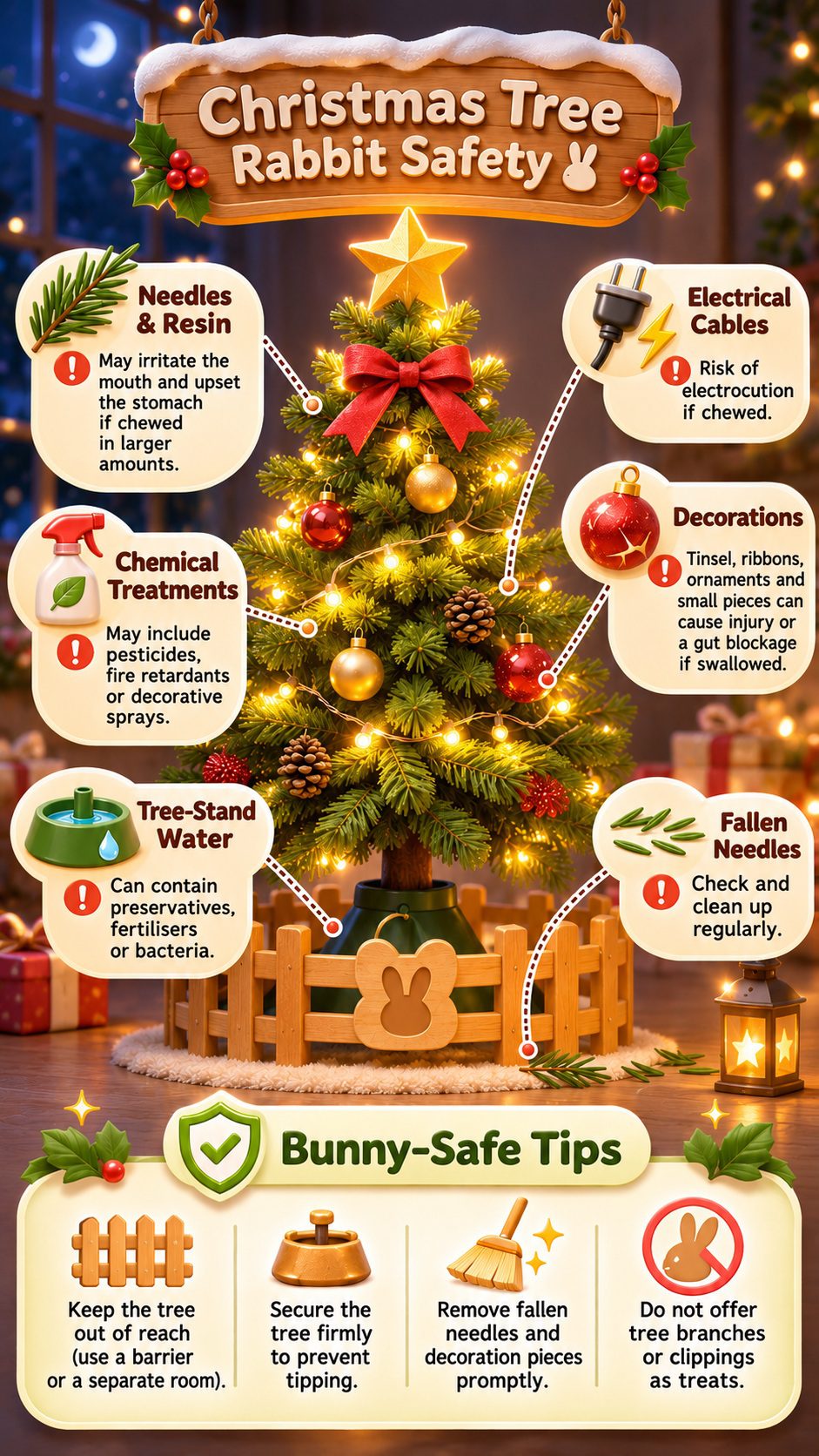
What Makes Real Christmas Trees Potentially Hazardous to Rabbits?
Needles, resin and excessive chewing. Although ordinary pine, fir and spruce needles are not considered highly poisonous, they are not suitable substitutes for hay. Needles can be stiff or sharp, and substantial ingestion of unfamiliar plant material may cause gastrointestinal upset. Rabbits should not be encouraged to graze on Christmas-tree branches simply because the tree is not considered highly toxic.
Chemical treatments. Commercial Christmas trees may have been treated with pesticides, fire retardants, artificial snow or decorative sprays. The absence of visible residue does not establish that a tree is untreated. When the treatment history is unknown, it is safer to prevent access completely.
Tree-stand water. The reservoir beneath a real Christmas tree may contain preservatives, fertilisers, accumulated debris or bacterial contamination. It should be securely covered and kept inaccessible, even when filled with plain water. This is an easily overlooked part of bunny-proofing a Christmas tree.
Decorations and electrical cables. Christmas lights introduce an electrical hazard for rabbits that chew wires. Tinsel, ribbons, ornament hooks, broken decorations and small plastic pieces can also cause injuries or gastrointestinal obstruction if swallowed. A tree that can topple over presents an additional physical hazard.
Not Every Evergreen Is a Safe Christmas Tree
Accurate botanical identification matters here, too. Yew (Taxus species) is a highly poisonous evergreen containing taxine alkaloids that can cause dangerous disturbances of cardiac function.
Yew should never be treated as interchangeable with common pine, fir or spruce Christmas trees. Its foliage and other plant parts present a serious poisoning risk, and suspected ingestion warrants immediate veterinary attention. Identifying the exact evergreen species is therefore an important part of Christmas tree safety for rabbits.
How to Bunny-Proof Your Christmas Tree
- Place the tree in a room that rabbits cannot enter, or surround it with a secure barrier that prevents contact with branches and cables.
- Secure the Christmas tree firmly to prevent tipping, especially in homes with free-roaming rabbits.
- Collect fallen needles, branches and decoration fragments promptly.
- Keep tree-stand water completely inaccessible.
- Keep electrical wires, ribbons, tinsel and hanging ornaments away from curious teeth.
- Never offer Christmas-tree clippings as rabbit treats, especially when the species or treatment history is uncertain.
What if Your Rabbit Has Already Chewed the Christmas Tree?
If your rabbit has nibbled a small amount from a confirmed, untreated pine, fir or spruce tree, severe poisoning is not necessarily expected. However, remove further access, identify the tree species and check whether any chemical treatments were used. Whether Christmas trees are poisonous to rabbits depends partly on accurate species identification and the circumstances of exposure.
Seek veterinary advice promptly if the tree was treated, the species is uncertain, a substantial amount was consumed or your rabbit develops reduced appetite, fewer droppings, drooling, discomfort or unusual behaviour. Suspected yew ingestion requires immediate veterinary attention, even before symptoms appear.
The festive takeaway: A real Christmas tree does not have to disappear from a rabbit household, but it should remain securely out of reach. A plant that is not highly poisonous is not automatically safe for unrestricted chewing. The safest approach is to prevent your rabbit from accessing the tree, its fallen needles and its decorations. Let your bunny enjoy the Christmas magic from a safe distance. The tree is a decoration, not a seasonal salad bar.

Frequently Asked Questions About Toxic Houseplants for Rabbits
What Are the Most Common Toxic Houseplants for Rabbits?
Is Monstera Toxic to Rabbits?
What Should I Do if My Rabbit Eats Pothos?
Are All Houseplants Poisonous to Rabbits?
Which Rabbit Safe Indoor Plants Can I Grow?
How Quickly Do Rabbit Poisoning Symptoms Appear?
Are Toxic Houseplants for Pets Equally Dangerous to Rabbits, Cats and Dogs?
Why Accurate Botanical Identification Matters
Online toxic plant lists can be useful starting points, but they are not substitutes for reliable veterinary references or accurate botanical identification.
Common names can refer to unrelated plants with different chemical constituents.
The term lily, for example, may describe a true lily, peace lily, calla lily or lily of the valley.
Their recognised toxicity mechanisms are not interchangeable.
Likewise, a plant considered non-toxic to dogs or cats should not automatically be classified as safe rabbit forage.
When evaluating toxic houseplants for rabbits, the most reliable approach is to consider the precise species, the part consumed, the amount involved and the available evidence.
Where rabbit-specific research is limited, uncertainty should be acknowledged rather than replaced with exaggerated claims.
A Beautiful Home Should Also Be a Rabbit-Safe Home
A home filled with greenery can be lovely for people, but rabbits experience that same environment through a very different set of instincts. Understanding toxic houseplants for rabbits helps us create indoor spaces that are beautiful without compromising their safety.
They investigate with their noses, mouths and teeth. A leaf hanging just above floor level may be irresistible, regardless of how expensive or exotic the plant happens to be. Rabbits cannot be expected to distinguish harmless greenery from plants toxic to rabbits.
Fortunately, creating a rabbit-safe home does not require treating every plant as an enemy. Nor does it mean that every ornamental plant is automatically poisonous.
It requires accurate botanical identification, an understanding of plant toxicity, thoughtful placement and an appreciation of normal rabbit behaviour. Choosing rabbit-safe indoor plants also means recognising the difference between a plant considered non-toxic and one that is suitable for rabbits to eat.
Some poisonous houseplants for rabbits are known to present serious hazards. Others mainly cause local irritation. Still others have insufficient rabbit-specific evidence to justify confident safety claims. Because rabbit poisoning symptoms vary according to the plant and toxin involved, preventing exposure remains more reliable than waiting for signs of illness.
Understanding these differences allows us to replace fear with informed prevention, while keeping our homes welcoming to both rabbits and the people who love them.
Knowing which toxic houseplants for rabbits to avoid is not about fearing every green leaf. It is about giving our rabbits the freedom to explore without exposing them to unnecessary danger.
Because the best response to plant poisoning will always be making sure the curious little gardener never gets access to the wrong leaf in the first place.
Love your indoor jungle. Just don’t let your bunny turn it into an experimental salad bar.
Science-Backed Advocacy
The Modern Art of Rabbit Care
This spotlight is just one chapter in our larger curriculum. Dive into our complete guide to evolve your guardianship, debunk old-school myths, and curate a sanctuary your companion deserves.
Explore the Full Masterpiece ✨
Living Content Notice
The Modern Art of Rabbit Care is a work of passion and precision. This content may be updated from time to time as new scientific data emerges or whenever inspiration hits. We strive for a “masterpiece” level of accuracy, so check back often for the latest refinements.
Sprouting Trouble
Rabbits are naturally curious animals and may nibble on plants within their reach. It’s crucial to ensure that the plants in their environment are safe and non-toxic.
All house plants should be considered toxic. It is impossible to list them all so it is better and safer to assume most are toxic. This list is non exhaustive and we may add more to the list as we go along. Keep house plant pots out of reach and if possible, in rooms your rabbits don’t go into. If the leaves are about to wilt, snip and dispose them before your bunny can nip on them.
It’s essential to research any plant thoroughly before bringing it into your home if you have free roaming rabbits. Always place plants out of their reach to prevent accidental ingestion. (Learn more rabbit proofing tips here)
If you suspect your rabbit has ingested a toxic plant, contact your veterinarian immediately.
Want to contribute to the Masterpiece?
If you have a passion for rabbit advocacy, scientific writing, or raising awareness, we’d love to collaborate.
oishibunnies.com.sg • Singapore
References and Further Reading
- ASPCA Animal Poison Control Center (2024).
Rabbit Pet Parents: Beware of These Common Pet Toxins!
Rabbit-specific information about insoluble calcium oxalates and poisoning concerns.ASPCA — Read reference
- RSPCA.
Common Rabbit Poisons & Poisoning Symptoms.
Rabbit-specific guidance regarding poisonous plants and emergency care.RSPCA — Read reference
- RSPCA.
Rabbit Poisoning.
Prevention and potential household poisoning hazards.RSPCA — Read reference
- Merck Veterinary Manual.
Houseplants and Ornamentals Toxic to Animals.
Veterinary toxicological information about ornamental plants, their compounds and associated effects.Merck Veterinary Manual — Read reference
- Toxicity of House Plants to Pet Animals (2023).
Peer-reviewed literature review describing the toxicological mechanisms associated with common ornamental plant families.PubMed Central — Read research paper
- ASPCA.
Toxic and Non-Toxic Plants Database.
Species-specific plant classifications, primarily for dogs, cats and horses.ASPCA — View plant database