Designing Rabbit Habitat Zones: The Complete Guide to Foraging, Play, Sleep & Litter Areas

rabbit habitat litter training rabbit

Chapter 4.2 / Designing Zones

Designing Rabbit Habitat Zones for Foraging, Playing, Sleeping, and “Business”


A well-designed rabbit habitat is not defined by size alone, but by structure. Rabbits don’t perceive their space as a single, monotonous enclosure—they mentally map it into highly functional, distinct territories.

When we intentionally design these zones, we aren’t restricting their natural behaviors; we are actively supporting their deepest instincts.

“Think of it less as building a cage, and more like designing a small ecosystem with clear roles: eating, exploring, resting, and elimination.”

Why Structure Trumps Square Footage

In the wild, a rabbit’s habitat is a masterpiece of underground architecture. There are specific chambers for nesting, distinct bolt holes for escaping danger, and communal areas for socializing. When a domestic rabbit is placed in a giant, open room with zero landmarks, it can trigger environmental stress—often leading to territorial spraying or phantom digging.

By breaking a space down into intentional rabbit habitat zones, you provide your rabbit with a sense of predictability and security. They know exactly where they can safely lower their guard to sleep, and exactly where they are expected to work for their food.

The Four Essential Rabbit Habitat Zones

ZoneNatural InstinctDesign Blueprint
🌾 ForagingGathering, grazing, and actively working for food.Hay racks, snuffle mats, and hidden healthy munchies.
🤸 PlayingZoomies, binkies, digging, and sensory engagement.Tunnels, cardboard castles, and chewable willow toys.
💤 SleepingFeeling entirely safe from predators during deep sleep cycles.Dark hideaways, covered tunnels, and soft, chew-safe mats.
💩 “Business”Territorial marking and hygienic, routine elimination.A large, accessible litter tray backed by unlimited fresh hay.

Rabbit Habitat Zone 1

1. The Foraging Zone: “Work for your food”

The foraging zone is the behavioral core of the environment. In the wild, rabbits spend most of their waking hours grazing, moving, and searching for edible plants. A bowl-fed setup removes this entire layer of natural engagement, paving the way for boredom and passive behaviors.

🌾 The Hay Station: The Heart of Foraging

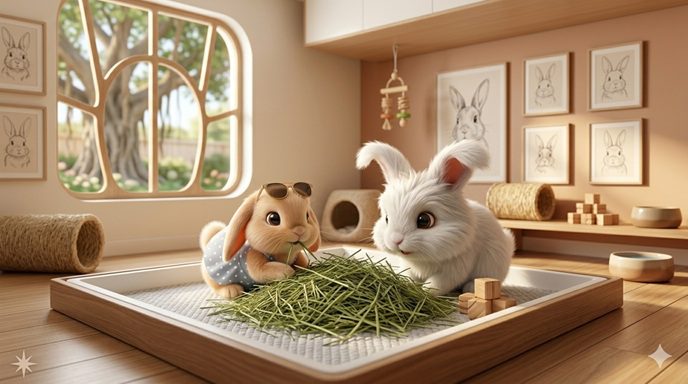
The Hay Station should be the primary anchor of this zone. A large, accessible hay rack or open hay pile placed near the litter area (or partially overlapping with it) is ideal.

This placement is not accidental—rabbits naturally graze while eliminating. Aligning hay access with this behavior reinforces both healthy digestion and immaculate litter training at the same time.

Rotate Hay Placement Occasionally:

  • ✔ Traditional hay racks
  • ✔ Loose floor hay piles
  • ✔ Cardboard hideouts filled with hay
  • ✔ Paper bags stuffed with forage

* Small changes keep curiosity active and prevent food from becoming a passive experience.

🥗 The Salad Bar: Daily Fresh Feeding Point

A heavy ceramic bowl works best for tip-proof stability. This is where daily portions of fresh greens and measured pellets are served.

The “Salad Bar” should be entirely predictable and consistent in location, helping rabbits build a confident routine and reducing food-guarding behaviors.

🧩 Puzzle Power: Making Food an Activity, Not a Delivery

Rabbits thrive when food requires physical and mental effort. Instead of presenting everything openly, introduce mild problem-solving to reintroduce searching, chewing, and manipulating behaviors that are essential for mental stimulation:

💼
Lunch Bags

Stuffed with fresh hay and herbs.

🧻
DIY Rolls

Toilet paper rolls folded with pellets inside.

🧶
Wicker Balls

Or foraging mats to hidden elements.

🧩
Puzzle Feeders

Interactive trays for small animals.

Rabbit Habitat Zone 2

2. The Play Zone:
“The Fun Park”

The play zone is where energy is released, confidence is built, and cage depression is actively prevented. Rabbits are highly intelligent and deeply responsive to novelty—without architectural variation, even the largest room eventually becomes visually “invisible” and boring to them.

The Golden Rule of Toys: A stimulating environment is not one that is constantly crowded with toys, but one where objects regularly disappear and reappear in entirely new forms and locations. Toy rotation is essential.

🪵

1. Chew Central: For the Furry Architect

Chewing isn’t dynamic destruction—it’s vital dental maintenance and structural expression. This area should always feel “available for demolition,” offering safe outlets for intense gnawing instincts:

✓ Applewood & willow twigs
✓ Woven seagrass mats
✓ Untreated shipping cartons

📦

2. Digging Box: The Burrowing Specialist

Digging is hardwired. Eradicating it from their environment entirely leads to redirected destructive carpet tearing. Build a safe alternative using a shallow storage bin filled with:

✓ Non-glossy packing paper
✓ Soft fleece for bunching
✓ Play sand (Supervised)

🏃‍♂️

3. Obstacle Course: Movement & IQ

Assemble a dynamic layout using low wooden platforms, stable safe ramps, and custom boxes with cut-through doorways. Scatter a light trail of healthy botanical herbs or single pellets across the path—this cleverly turns physical exercise into a rewarding puzzle of exploration.

🚇

4. Tunnel Network: Stealth Explorer

As burrow-dwelling animals, tunnels beautifully mimic the safety of subterranean warrens. Integrating long cardboard or crinkle tunnels significantly reduces spatial hesitation, encouraging confident, bold traversal across different zones of the room.

🧸

5. Secret Hack: Baby Toys are Bunny Toys

Many human infant-safe toys translate flawlessly into premium rabbit enrichment. Heavy-duty hard plastic keys, stackable nested sorting cups, and lightweight rattling balls introduce new acoustics and mechanics to keep their curious minds sharp.

Rabbit Habitat Zone 3

3. The Sleeping Zone: “The Cozy Safe Haven”

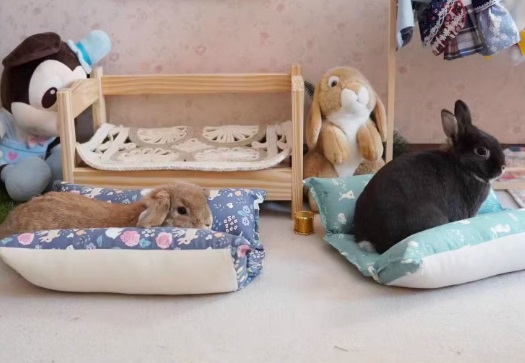
Sleep in rabbits is a state of vulnerability. A proper sleep zone is therefore not merely decorative—it is protective architecture designed to mirror the security of a natural burrow.

🏠 The Must-Have: A Secure Hideaway

Every rabbit should have at least one fully enclosed resting structure. Two exits are essential for every hide; this prevents trapping anxiety and gives rabbits psychological control over their escape routes.

Cardboard hide boxes
Wooden shelters
Covered hide tunnels

Sleeping Zone Diagram 1
Sleeping Zone Diagram 2
Sleeping Zone Diagram 3

☁️ Comfort Layer: Soft, Stable Surfaces

While rabbits do not require traditional bedding, surface comfort matters. Always avoid loose threads or looped fabrics that could snag delicate nails.

  • Vet bed
  • Fleece blankets
  • Low-pile bath mats

🤫 Placement: Silence & Stability

This zone should be quiet, low-traffic, and dimmer than other areas. It should not be combined with feeding or high-activity zones, as rest is most effective when the environment is predictable.

Respect the Rhythm: Rabbits are crepuscular—most active at dawn and dusk—and their deep rest periods should be respected. And yes, rabbits do dream! Subtle twitching of ears, nose, or paws during sleep is normal REM-like activity.


Rabbit Habitat zone 4

4. The “Big Business” Zone: “All your bunny’s deposits”

This is the litter and elimination zone—and one of the most critical systems in indoor rabbit habitat design. Rabbits are naturally inclined to choose consistent corners for toileting. Our job is not to force training, but to beautifully refine what already exists.

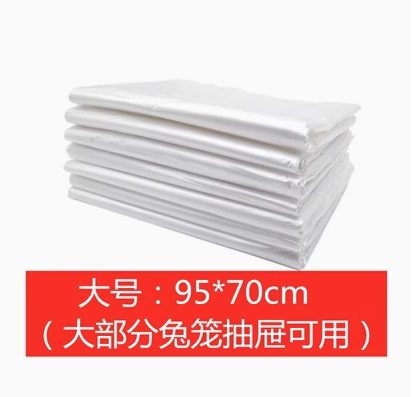
Litter Box Setup 2
Litter Box Setup 3
Litter Box Setup 4

📥The Right Litter Box: Large & Low

A proper litter box must offer easy entry, full body turning space, and room for optional lounging. Many rabbits will eat hay, rest, and toilet in the exact same space when it feels secure.

Best Formats:
• Large cat litter trays with low entry
• Shallow plastic storage bins

🥪 Layering System: The Structure of Success


🟢 TOP LAYER (THE BEHAVIORAL ANCHOR):

A generous pile of fresh hay. Rabbits are highly motivated to graze while eliminating, naturally reinforcing correct box use.


🟤 Bottom Layer:
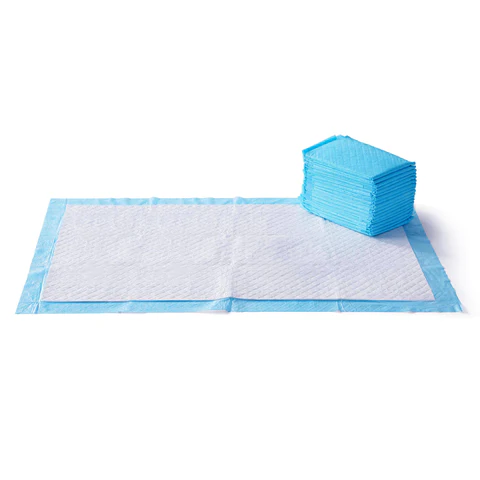
Absorbent, safe, non-clumping paper-based litter.
Avoid: Clay, pine/cedar shavings, or clumping substrates.

Ready to upgrade your bunny’s habitat? 🌾

Don’t let subpar substrate ruin your setup. Explore our curated selection of ultra-absorbent, non-clumping paper litters and premium, farm-fresh hay options designed to keep your rabbit’s “Big Business” zone pristine, odor-free, and perfectly inviting.

Shop the Essentials Collection