Early Rabbit Recognition: Familiarity Begins in the Nest
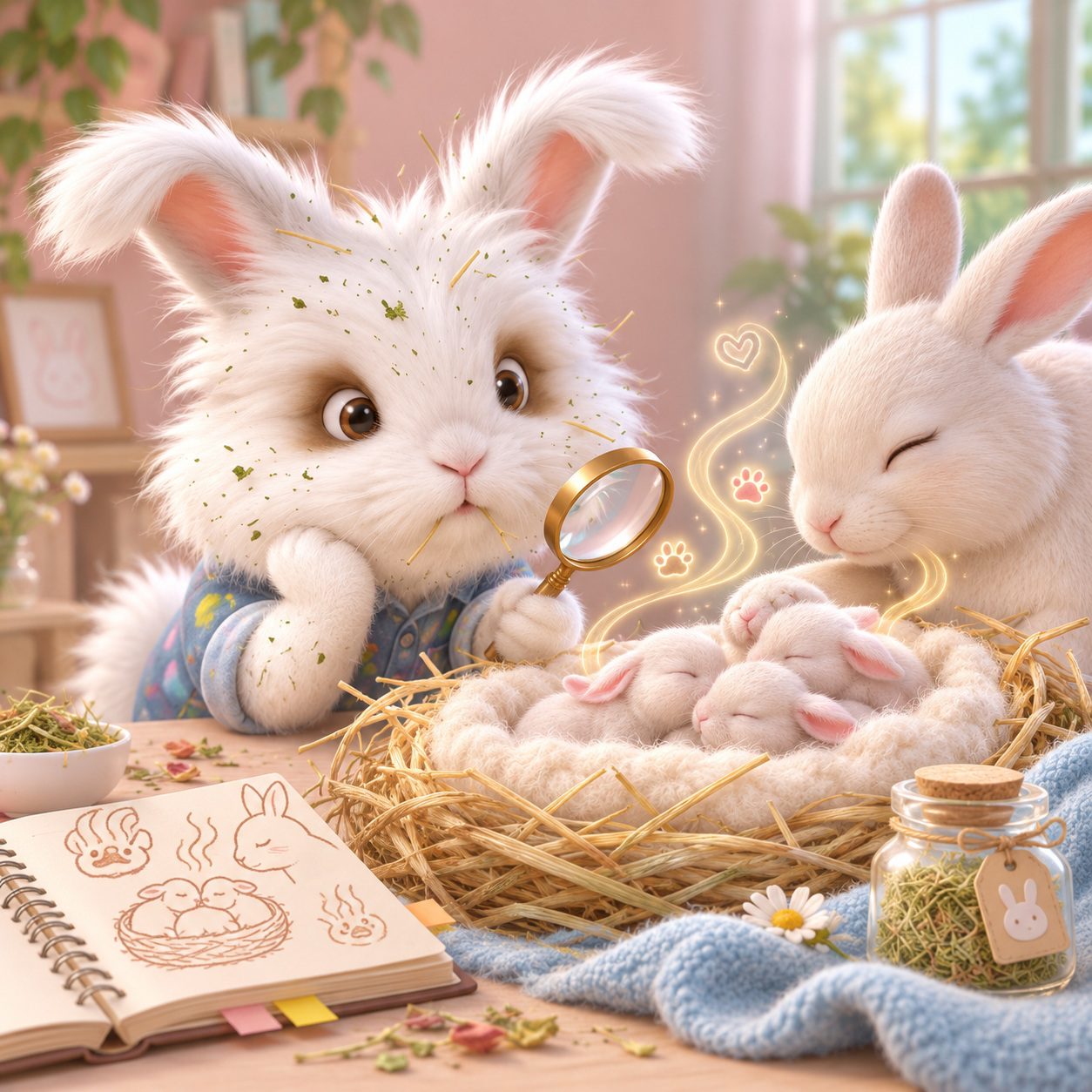
Early scent recognition and learning begins in the nest. Newborn rabbits are remarkably capable scent learners.
In Serra and Nowak’s 2008 study, kits preferred their own nest materials over unfamiliar nesting materials on both day one and day seven. When researchers controlled for temperature, one-day-old kits also preferred odours from their own mother’s hair and their own littermates. Without that control, attraction to warmth could mask their scent preferences.
This demonstrates early discrimination of familiar family odours. However, it does not tell us whether kits identify each sibling separately, recognise genetic relatedness independently of familiarity, or retain those memories into adulthood.
These findings help explain how rabbit memory begins developing in the nest, but they cannot answer the broader question of whether rabbits remember their biological parents after months or years of separation.
The testing situation matters. Val-Laillet and Nowak found a preference for the mother over an unfamiliar lactating doe on day seven when kits were tested beneath the females’ bellies.
Do Rabbit Mothers Recognise Their Own Babies?
Do rabbits remember their biological parents? Much of the early evidence comes from rabbit kits recognising their mothers, but the reverse question is equally interesting. When owners ask whether rabbits remember their mother, we also need to consider whether a mother can recognise her own offspring. The evidence for kits recognising maternal odours is clearer than the evidence for mothers recognising each kit individually.
Studies of rabbit recognition must distinguish between identifying a familiar odour, responding to offspring distress, and recognising a particular individual. These are related aspects of maternal behaviour, but they are not interchangeable.
Rabbit mothers have an unusual care pattern: nursing is generally concentrated into a brief daily visit, often around three to five minutes. Experiments also show that nursing duration and milk output respond to the number and age of kits. Brief contact should not be mistaken for inadequate care or poor memory.
Does can nurse unrelated kits. A controlled study of New Zealand White rabbits demonstrated nursing of unfamiliar litters and nursing in several different nest conditions. This shows that maternal care does not require a doe to nurse only her biological offspring. It does not establish that she cannot distinguish them. Acceptance and recognition are separate questions.
This is an important distinction in rabbit recognition research. Nursing an unfamiliar kit demonstrates maternal acceptance in that situation, but it cannot establish whether the doe recognises the kit as her own or as an unrelated individual.
Mothers also respond beyond the nursing visit. In Rödel and colleagues’ 2013 playback experiment, 60.6% of mothers rapidly returned to their breeding burrow after hearing kit distress calls; 40% investigated around the entrance. The response occurred both shortly after birth and later in the pre-weaning period. This supports maternal responsiveness to potential danger, but does not establish recognition of a particular kit’s voice.
Hormones help regulate maternal behaviour, but general findings from other mammals should not be presented as proof of rabbit-specific offspring recognition. For example, a 2023 rabbit experiment found that blocking brain oxytocin receptors did not disrupt the maternal behaviours measured. That finding leaves some questions open; it does not mean oxytocin has no role in rabbit reproduction or care.
These findings help explain maternal behaviour, but they cannot establish whether rabbits remember their mother after weaning or whether a doe retains individual memories of her offspring following a prolonged separation. Nursing behaviour, maternal responsiveness, and long-term family recognition must be examined separately.
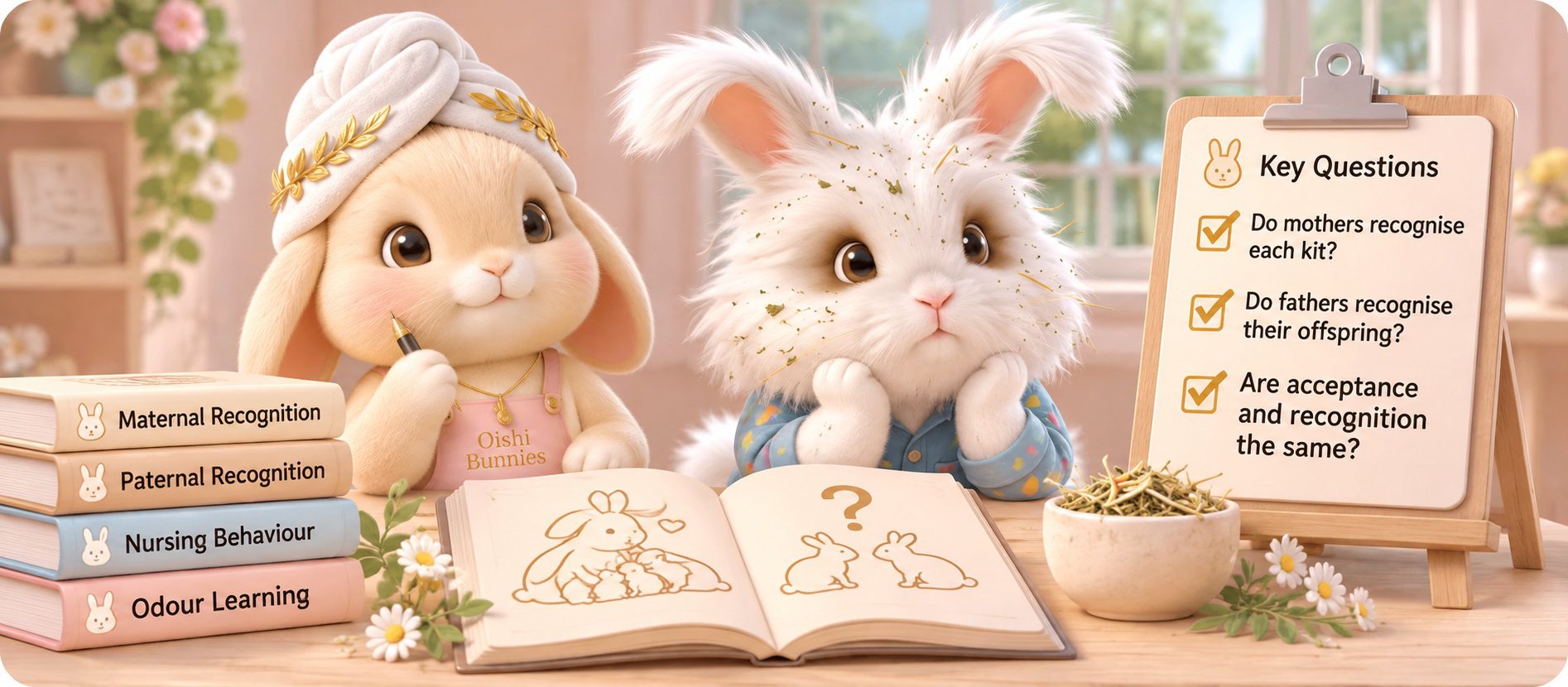
Do Rabbit Fathers Recognise Their Offspring?
Unlike maternal recognition, paternal recognition in domestic rabbits has received comparatively little direct experimental attention. This leaves another part of the question “Do rabbits remember their biological parents?” largely unanswered.
Male rabbits do not nurse their young, and their opportunities to become familiar with offspring depend on their social and housing circumstances. A biological father may encounter his offspring regularly, occasionally, or not at all.
We therefore cannot assume that a father recognises his offspring simply because they share genes, nor can we conclude that recognition is impossible.
The evidence reviewed does not establish whether paternal recognition develops through familiarity, whether previously separated fathers can recognise their offspring, or whether biological relatedness plays any independent role.
Future rabbit recognition studies would need to compare responses to familiar offspring, unfamiliar biological offspring, and unrelated rabbits. Without such comparisons, we cannot determine whether fathers distinguish their own young or simply respond to familiar individuals.
Being a biological parent and recognising an individual offspring are not necessarily the same thing.
Practical Guidance for Caregivers
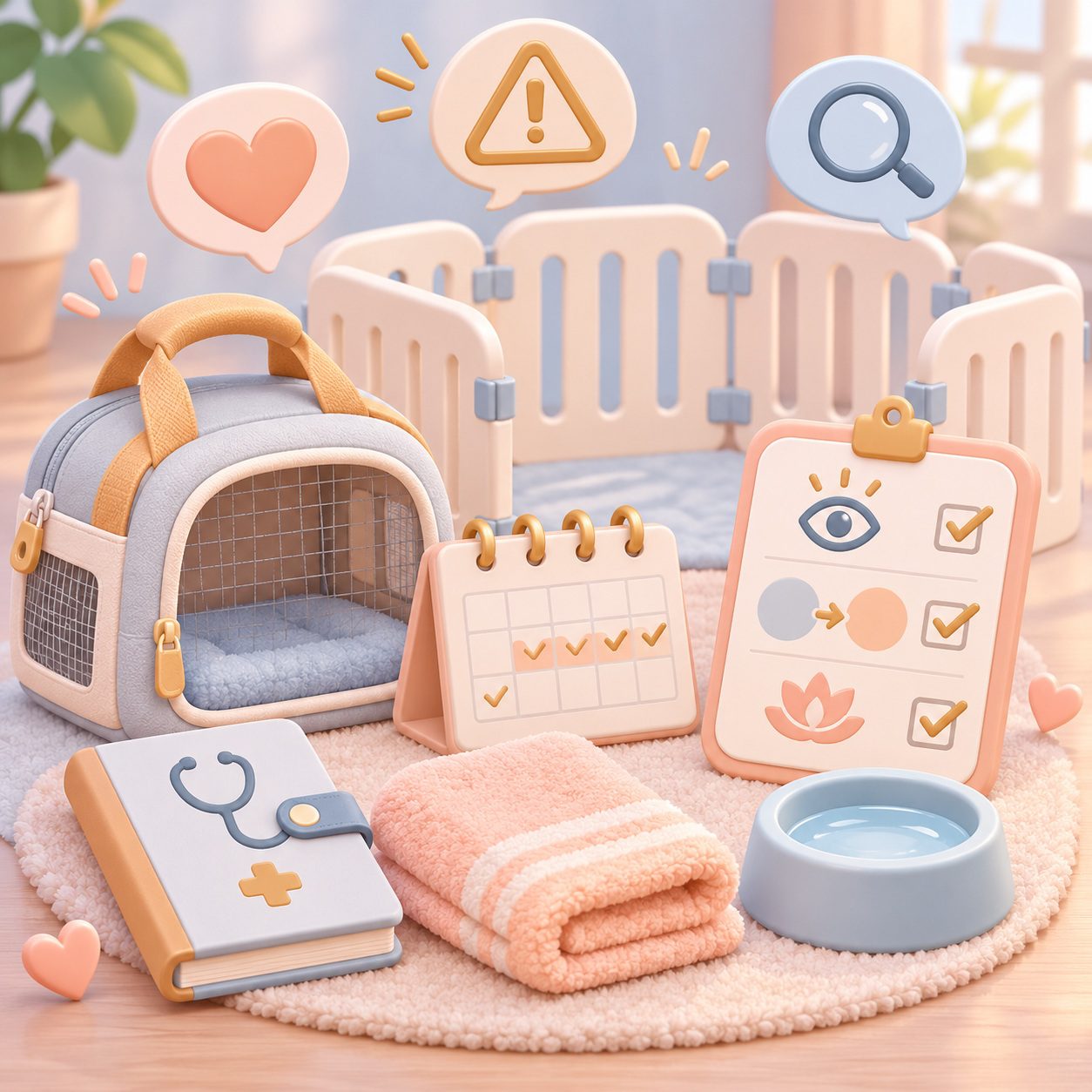
Do rabbits remember their biological parents after months or years of separation? Research into rabbit recognition helps us understand early scent learning, but it cannot yet establish whether individual family memories persist throughout adulthood. For caregivers considering a reunion, the priority should always be the rabbits’ present welfare.
For rabbits reunited after a substantial separation, use their current behaviour and relationship to guide introductions. Familiarity, biological relatedness, and social compatibility are not interchangeable.
- Do not assume relatives can safely share an enclosure immediately.
- Use gradual, supervised introductions in neutral territory when bonding is needed.
- Plan neutering and reproductive separation with a rabbit-savvy vet.
- Preserve established companionship during necessary separations where medically appropriate.
- Seek experienced help if introductions involve fighting or persistent distress.
Not every brief separation requires a complete restart. Guidance for previously bonded rabbits allows for careful reintroduction according to their circumstances and responses.
A peaceful reunion may suggest familiarity, but cannot prove recognition of kinship. A hostile reunion cannot prove forgetting. Owner and rescue observations can enrich our understanding when clearly labelled as observations rather than controlled evidence.
1. Start With Health, Not Familiarity
Before attempting a reunion, make sure both rabbits are healthy, appropriately neutered, and ready for social contact.
Pain, illness, hormonal behaviour, and unfamiliar environments can change how rabbits respond to one another. A rabbit that suddenly becomes aggressive towards a previously trusted companion may be experiencing discomfort rather than a loss of recognition.
If either rabbit has been living elsewhere, consider its health history and whether veterinary assessment or quarantine is necessary before introductions.
This is particularly important when assessing rabbit memory after separation. A change in behaviour may reflect a change in health, surroundings, or social circumstances rather than whether a familiar individual has been forgotten.
2. Let Them Become Familiar Without Physical Contact
For rabbits that have been separated for a substantial period, begin with secure, adjacent living areas where they can see and smell one another without being able to bite through the barrier.
Provide enough distance for both rabbits to retreat comfortably. When they remain relaxed, familiarisation may include exchanging bedding or other scent-bearing materials.
This does not prove that they recognise each other. It simply allows them to investigate one another without the immediate risk of physical confrontation.
When considering whether rabbits remember their biological parents, it is important not to interpret interest in a familiar scent as proof of long-term family recognition. Rabbit recognition studies must distinguish scent investigation from identification of a particular individual or biological relative.
3. Learn to Read the Difference Between Curiosity and Conflict
Not every interaction has the same meaning. Relaxed exploration, comfortable resting near one another, voluntary grooming, and normal eating are encouraging signs.
Persistent chasing, lunging, growling, biting, frantic circling, or one rabbit repeatedly attempting to escape deserve closer attention. Brief mounting or chasing can occur during introductions, but should never be allowed to escalate into fighting.
A rabbit sitting completely still is not necessarily comfortable. Look at its overall posture, movement, and willingness to interact, rather than interpreting stillness alone as acceptance.
Do not allow rabbits to fight it out. Serious fights can cause significant injuries, and a negative encounter may make future bonding more difficult.
Owners sometimes ask, do rabbits remember their siblings when they begin fighting after puberty? Aggression does not answer that question. A previously familiar sibling may still be recognised without being accepted as a companion.
4. Give Each Rabbit Space and Resources
Even compatible rabbits need opportunities to move away from one another.
Provide sufficient space, multiple hay and water stations, and hiding places with more than one exit to reduce competition and prevent one rabbit from trapping another.
For established companions, maintain familiar routines and avoid unnecessary environmental disruption. For rabbits undergoing new introductions, use neutral territory and increase shared time gradually according to their behaviour.
Do not use frightening situations, forced confinement, or unnecessary car journeys to make rabbits seek reassurance from one another. Stress-induced proximity is not reliable evidence of a healthy bond.
5. Protect Existing Bonds During Veterinary Visits
When medically appropriate, bonded companions should remain together during transport, veterinary visits, and recovery.
Returning from a clinic with unfamiliar smells or altered behaviour can sometimes complicate social interactions. Maintaining companionship may reduce this risk.
If medical treatment requires separation, follow the veterinarian’s guidance on when direct contact is safe. Allow the rabbits to maintain appropriate visual and olfactory contact where possible.
A short separation does not automatically destroy a bond, but a previously peaceful relationship should still be observed carefully when the rabbits reunite.
Whether rabbits remember their mother, siblings, or an unrelated bonded companion after separation remains a question about recognition. Their immediate need for a safe, stable relationship is a separate welfare consideration.
6. Never Use Family Relationships as a Substitute for Reproductive Management
Biological siblings, parents, and offspring can reproduce with one another. Do not assume that familiarity, shared ancestry, or having grown up together will prevent mating.
Arrange appropriate neutering with a rabbit-savvy veterinarian and separate sexually mature, fertile rabbits when necessary. Male rabbits may remain fertile for several weeks after castration; the RSPCA advises allowing up to six weeks.
Likewise, neutering can reduce hormone-driven conflict, but it cannot guarantee compatibility.
7. Keep a Simple Behaviour Record
If you are reintroducing rabbits, a short daily record can help you recognise changes that are easy to overlook.
Record how they respond to proximity, whether they eat normally, whether they voluntarily approach or avoid one another, and whether there are signs of mounting, chasing, grooming, or aggression.
This can be particularly useful for rescue rabbits with uncertain social histories. However, owner observations are not controlled tests of memory. They can help assess welfare and bonding progress without establishing whether the rabbits recognise biological kinship.
Such records can inform welfare decisions and provide useful observations for future rabbit recognition research. They cannot, by themselves, demonstrate long-term memory of individual family members.
Don’t confuse a successful reunion with a requirement to reunite. A rabbit does not need to be reunited with its biological parents or siblings simply because they are related. What matters is whether the proposed companionship is safe, stable, and beneficial to the individual rabbits.
A rabbit may form a rewarding relationship with an unrelated, compatible companion. Conversely, relatives that repeatedly fight may need different bonding arrangements.
The question “Do rabbits remember their biological parents?” deserves scientific investigation, but biological memory alone should not determine whether a reunion is attempted. Questions about rabbit memory, including whether rabbits remember their siblings after separation, should not outweigh their current welfare.
The goal is not to discover whether two rabbits remember being family. It is to determine whether they can safely and comfortably share a life together now.