
 Pro-Tip: Viewing on a phone? Select desktop mode or rotate to landscape for the best reading experience!
 Estimated Read Time: 10 Mins
Oishi Bunnies Herbal Atlas
Dandelion
Taraxacum officinale (Common Dandelion)
Welcome to the Oishi Bunnies Herbal Atlas. Here, we explore dandelion for rabbits as food, forage and sensory enrichment—bringing together its long culinary and herbal history, modern phytochemical research and something particularly valuable for this Atlas: evidence from studies that used actual rabbits.
A rabbit sees a bitter leafy snack. A gardener may see a weed. A traditional herbalist sees a plant with centuries of food and medicinal use. A pharmacologist sees sesquiterpene lactones, phenolic acids, flavonoids, inulin and other intriguing plant compounds. Dandelion sits unusually comfortably in all of these worlds.
There is also a botanical story hiding behind the name. The plant at the centre of this monograph is Taraxacum officinale, familiar from European herbalism and much Western botanical literature. Traditional Chinese Medicine has its own rich dandelion tradition surrounding 蒲公英 (Pu Gong Ying), but important medicinal sources include related species such as Taraxacum mongolicum (蒙古蒲公英). They share botanical ancestry and overlapping chemistry, but they are not automatically interchangeable evidence. We will untangle that distinction later in this guide.
Written by Cookie Yiyi, fosterer of 18 rehabilitated buns, guardian to 4 resident house rabbits, and passionate organic balcony gardener—the Atlas pairs careful research with years of lived sanctuary experience.
Educational Notice:
Herbal profiles are provided for botanical learning, responsible forage use and enrichment. Whole dandelion leaf, flower or root is not equivalent to a concentrated extract, tincture, fragrance oil or essential oil. Dandelion should never replace professional veterinary diagnosis, treatment, prescription medication or emergency care. If your rabbit is unwell, please seek appropriate veterinary care.
The Verdict
Yes.Correctly identified, clean dandelion leaves and flowers earn a place in the botanical rotation of most healthy adult rabbits.
Its strongest everyday role isn’t as a “treatment herb”—it’s leafy forage, botanical variety and sensory enrichment, while fresh dandelion also contributes moisture, nutrients and an interesting mixture of naturally occurring plant compounds.
Why it stands out:
Dandelion is more scientifically interesting than most rabbit herbs because controlled rabbit studies actually exist.
A 2025 study fed dandelion meal to 60 weaned Hycole rabbits and investigated growth performance, immune-related markers and gut microbiota. An earlier 2010 experiment looked specifically at Taraxacum officinale leaf and root in cholesterol-fed rabbits. These were experimental models—not clinical trials proving that a handful of dandelion treats disease in a companion rabbit—but they are genuine rabbit-specific data points, which is more than most herbs in this Atlas can claim.
Take extra care with:
rabbits with diagnosed urinary or kidney disease, recurrent bladder sludge or stones, chronic gastrointestinal disease, complicated medical conditions or a prescribed diet. Dandelion contains meaningful calcium and is classified as a higher-calcium and higher-oxalate green by some veterinary nutrition guidance, so these rabbits deserve an individual dietary assessment rather than a blanket feeding rule.
How much:
there is no scientifically established “ideal dose” of dandelion for companion rabbits. For a rabbit already accustomed to fresh greens, introduce a small leaf or piece first, observe appetite, droppings and normal hay consumption, then include dandelion sensibly within a varied botanical rotation if it is well tolerated.
The percentages used in experimental rabbit diets are research protocols—not household feeding instructions.
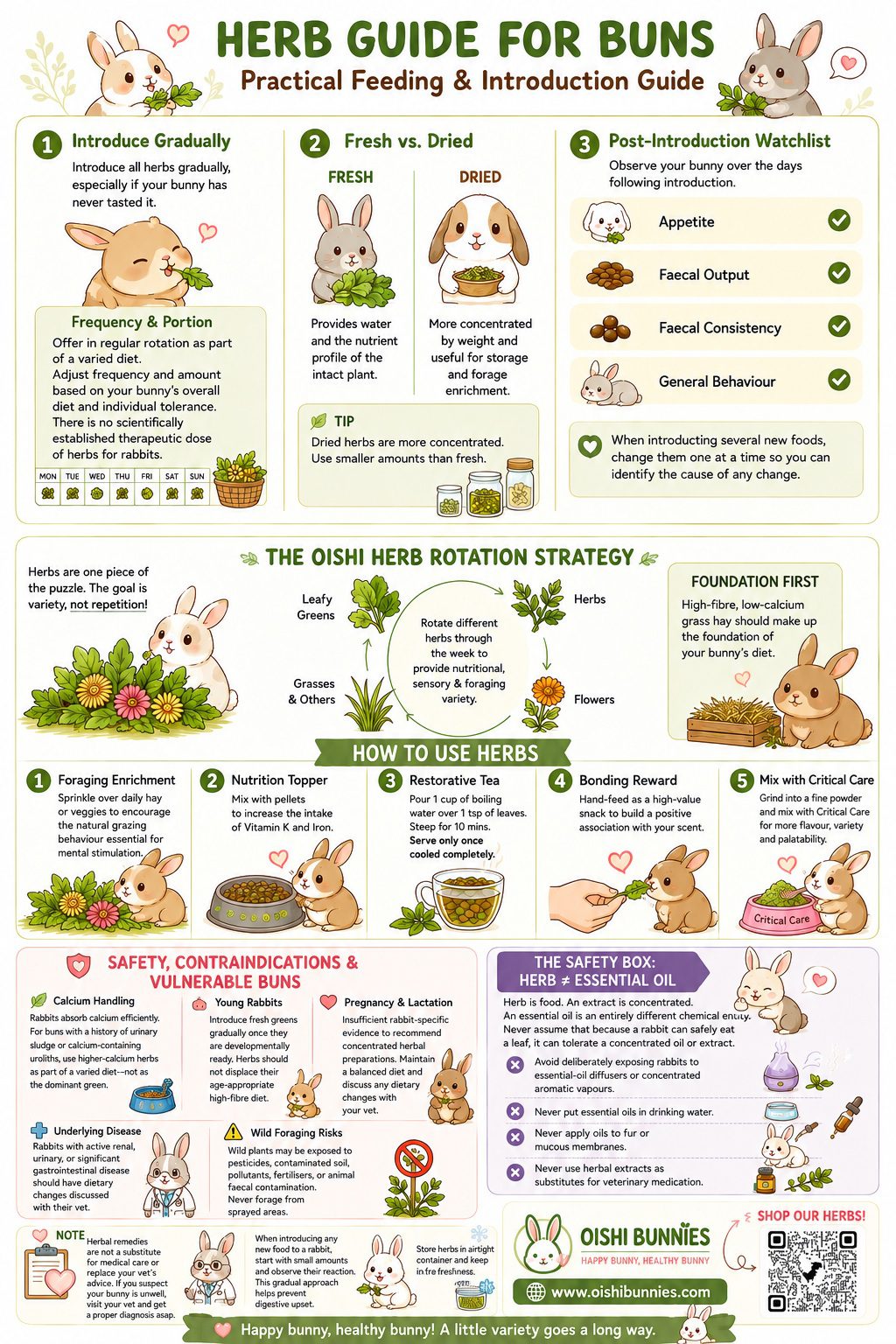
For the universal introduction steps—going slowly, fresh versus dried, the post-introduction watchlist, general vulnerable-bun guidance, herb rotation strategy and the essential-oil safety box—see the Oishi Herb Guide for Buns, which applies to every herb in this Atlas.
Our Verdict:
A worthwhile edible forage for most healthy rabbits when correctly identified, clean and introduced sensibly.
Think botanical variety, not prescription.
Herb at a Glance
| Primary botanical focus | Taraxacum officinale / common-dandelion complex |
| Family | Asteraceae — the daisy family |
| Common name | Dandelion / common dandelion |
| Life cycle | Perennial |
| Rabbit-edible parts | Leaves, flowers, flower stalks and clean root |
| Best everyday use | Fresh leafy forage or dried botanical rotation |
| Taste | Characteristically bitter; intensity varies with plant part, age and growing conditions |
| Notable constituents | Sesquiterpene lactones, phenolic acids, flavonoids, terpenoids, carotenoids and inulin |
| Rabbit-specific research | Yes — controlled rabbit studies have investigated dandelion materials |
| Evidence limitation | Mostly production and experimental-model studies rather than companion-rabbit clinical trials |
| Main feeding consideration | Dietary variety, mineral and oxalate context, and the individual rabbit’s health |
| Main sourcing consideration | Correct identification and freedom from pesticides, herbicides and environmental contamination |
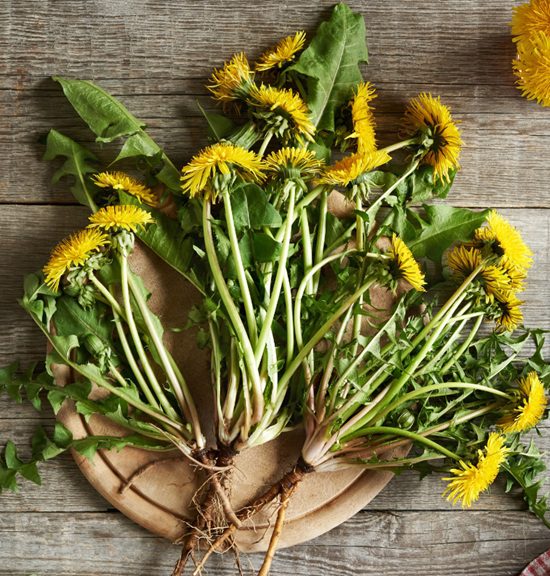
Taraxacum officinale
Common Dandelion
Why Offer Dandelion?
Botanical Variety
A rabbit’s diet shouldn’t be botanically monotonous. Hay is the nutritional foundation, but safe leafy plants and herbs bring different flavours, aromas, textures and plant compounds into the mix.
Dandelion earns its place easily—its bitter edge and irregular leaves offer a genuinely different sensory experience.
Foraging & Behavioural Enrichment
Rabbits aren’t built to simply receive food from a bowl—they investigate it, sniffing, selecting, pulling and chewing their way through it. Scatter dandelion leaves and flowers through hay, place them in a forage tray, or mix them with other safe botanicals to encourage those natural feeding behaviours.
Nutrition & Hydration
Fresh dandelion is mostly water, with fibre, potassium, calcium, magnesium, carotenoids and other micronutrients along for the ride. As part of a leafy rotation, it can contribute to overall water intake while adding nutritional variety.
Interesting Plant Chemistry — With Actual Rabbit Research
Dandelion’s bitter sesquiterpene lactones sit alongside phenolic acids, flavonoids, terpenoids and other secondary metabolites that have drawn considerable pharmacological interest.
What sets dandelion apart is that some of that interest has actually been investigated in rabbits—not only in cell cultures, mice or historical human use. That gives us more to work with than extrapolation alone.
The simple case for dandelion:
it brings flavour, scent, texture, moisture, plant chemistry and natural foraging opportunities into a hay-first diet—without needing to be promoted as a cure.
Edible Anatomy
| Plant Part | Rabbit Guidance |
|---|---|
| Leaves | Yes. The most practical part for routine feeding. Dandelion leaves emerge from the basal rosette and are often deeply lobed, with many lobes pointing back towards the centre of the plant. Young leaves are generally more tender, while mature leaves become tougher and more bitter. Offer fresh within a leafy rotation or properly dried as forage. |
| Flowers | Yes. The familiar yellow “flower” is actually a composite flower head made up of many small florets. Fresh or properly dried flowers can be included in forage. They are not medicinally superior to the leaves—they simply offer a different texture, aroma and flavour. |
| Flower Stalks | Edible. True dandelion flower stalks are typically leafless, hollow and carry a single flower head. These are useful identification features as well as edible parts of the plant. |
| Root | Edible, but not necessary. Dandelion develops a substantial taproot containing inulin and other plant constituents. Roots harvested from soil require careful cleaning. Dried root also represents much more concentrated plant material by weight than fresh root and should not be treated as a dental chew simply because it is firm. |
| Milky Latex | Breaking a dandelion leaf or flower stalk may release white, milky latex. This is a normal botanical characteristic of the plant—not an invitation to collect, concentrate or use the sap as a home remedy. |
A useful identification clue:
the combination of a basal leaf rosette, hollow leafless flower stalk, single yellow flower head and milky latex helps distinguish true dandelion from several similar-looking yellow-flowered plants. No single feature should be used on its own—we’ll look at the important lookalikes later in this guide.
Dandelion-Specific Feeding Cautions
Calcium & Oxalates: More Nuanced Than a Food List
Dandelion greens carry meaningful calcium. North Carolina State University’s veterinary nutrition guidance places dandelion greens among the higher-calcium, higher-oxalate greens relative to other commonly fed leafy foods—which makes rotation sensible. It doesn’t mean every healthy rabbit needs to steer clear of it.
Rabbit calcium physiology is unusual.
Rabbits absorb dietary calcium efficiently and excrete a large share of the surplus through the kidneys and urine. Experimental dietary research shows that overall diet composition, food and water intake, and calcium exposure all influence urinary calcium and sediment formation.
So urinary health isn’t simply:
“This leaf contains calcium, therefore avoid it.”
And it isn’t the opposite claim either:
“Dandelion is a natural diuretic, therefore it flushes the bladder.”
For rabbits with urinary sludge, stones or kidney disease:
the useful question is not whether dandelion is simply “high calcium” or “diuretic.” What matters is the whole dietary and medical picture—hay, water intake, total mineral exposure, body condition, mobility, urinary function and the underlying diagnosis.
Meet the Plant
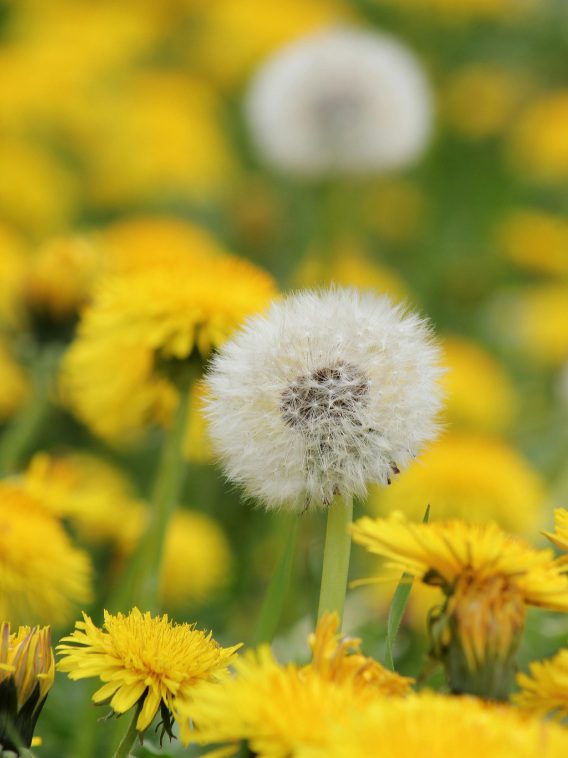
Dandelions belong to the enormous Asteraceae family, alongside daisies, sunflowers, chicory and lettuce. A typical plant grows from a central crown and substantial taproot rather than developing an ordinary leafy above-ground stem. The familiar yellow “flower” is actually a composite flower head made up of numerous individual florets. After flowering, it develops into the round seed head most of us know as a dandelion clock. Field identification checklist:
|
Taraxacum officinale — the familiar yellow flower head is actually composed of many individual florets |
Dandelion Taxonomy Is Genuinely Messy
“Dandelion” does not describe one genetically uniform plant. The Taraxacum officinale complex contains numerous closely related forms, and Taraxacum taxonomy can become surprisingly complicated. For rabbit guardians, the practical lesson is much simpler: identify the whole plant rather than becoming overly confident about a yellow flower seen in isolation.
Don’t Identify Dandelion by Flower Colour Alone
Plenty of members of the daisy family produce yellow flower heads, including several plants casually called “false dandelions.” A yellow flower alone is therefore not enough. Look at the combination of the basal rosette, leaf shape, leafless hollow flower stalk, single flower head, milky latex and later seed head. We will compare true dandelion with important lookalikes in the next section.
Botanical identification references: Michigan State University — Dandelion and NC State Extension — Common Dandelion.
T. officinale vs T. mongolicum
The plant at the centre of this monograph is Taraxacum officinale, the common dandelion familiar from European herbalism and much of the Western botanical and food literature.
Traditional Chinese Medicine has its own long-established dandelion tradition surrounding 蒲公英 — Taraxaci Herba. Chinese pharmacopoeial sources recognise several Taraxacum botanical sources, with Taraxacum mongolicum among the important species associated with this herbal tradition.
T. officinale and T. mongolicum are closely related members of the same genus and share many broad phytochemical classes, including phenolic acids, flavonoids and terpenoids. At the same time, each species has its own botanical identity, traditional history and research record. Naming the species used in a study therefore gives readers a clearer picture of where the evidence comes from.
| Feature | Taraxacum officinale | Taraxacum mongolicum |
|---|---|---|
| Relationship | A species within the Taraxacum genus and part of the common-dandelion complex. | A closely related species within the Taraxacum genus. |
| Common context | Common dandelion; widely represented in Western botanical, culinary and herbal literature. | An important botanical source associated with Chinese 蒲公英 (Pu Gong Ying / Taraxaci Herba). |
| Traditional herbal context | Prominent in European and Western herbal traditions, particularly as a bitter digestive and traditional diuretic herb. | Prominent within the Chinese herbal tradition of 蒲公英, where the herb has historically been used within a different medical framework. |
| Phytochemical profile | Reported constituents include phenolic acids, flavonoids, sesquiterpene lactones, terpenoids, sterols and other plant compounds. | Shares many of the same broad phytochemical families, including phenolic acids, flavonoids and terpenoids, with several overlapping compounds reported across the two species. |
| Rabbit research | Rabbit-specific research exists, including studies using T. officinale leaf, root and dandelion-containing diets. | Rabbit-specific experimental research also exists for T. mongolicum, using different preparations and study designs. |
Both species belong to the wider dandelion story. Their shared chemistry and related botanical history make comparison useful, while identifying the species used in individual studies keeps that research easy to follow.
Traditional knowledge follows the botanical source.
Nutritional & Phytochemical Profile
Fresh Dandelion Leaves
Fresh dandelion is a genuinely nutrient-dense leafy plant, not an empty “herbal treat.” Published food-composition data report meaningful fibre, potassium, calcium, magnesium, iron, carotenoids, vitamin K, vitamin C and other micronutrients.
Exact composition varies with plant genetics, soil, maturity, climate, plant part and processing, so food-composition figures are best treated as reference values rather than guaranteed chemistry for every leaf.
Fresh Leaves
Moisture + Micronutrients
Fresh leaves contribute water, fibre, potassium, calcium, magnesium, iron, carotenoids and vitamins alongside the plant’s characteristic secondary metabolites.
Dried Leaves
More Plant per Gram
Drying removes most of the water, so each gram represents considerably more plant material than the same weight of fresh leaves.
Root
Inulin-Rich Plant Part
The taproot has a different chemical profile from the leaves and is particularly associated with inulin and several terpenoid constituents.
The standard vitamin-and-mineral panel tells only part of the story. Dandelion also contains a diverse mixture of secondary plant metabolites that help explain its characteristic bitterness and its long-standing interest in botanical and pharmacological research.
Sesquiterpene Lactones
Sesquiterpene lactones are among the compounds behind dandelion’s signature bitterness. The “bitter herb” described through generations of herbal practice therefore has a real phytochemical basis.
Phenolic Acids
Reported phenolic acids include chicoric acid, chlorogenic acid, caffeic acid and related compounds, along with caftaric acid and other phenolic derivatives. Several of these compounds occur across more than one Taraxacum species.
Flavonoids
The wider Taraxacum literature reports flavonoids including luteolin and its derivatives, quercetin, rutin, apigenin and isoquercitrin. Above-ground plant parts are often particularly rich in this group of compounds.
Terpenoids & Sterols
Reported constituents include taraxasterol, psi-taraxasterol derivatives, β-sitosterol, stigmasterol and other triterpenoids and sterols. These compounds contribute to the broader phytochemical profile investigated in dandelion research.
Inulin & Other Carbohydrates
Dandelion root is particularly associated with inulin, a fructan carbohydrate that can act as a fermentable substrate. Whole root, concentrated root preparations and purified inulin represent different forms of exposure and are studied separately.
Fresh vs Dried: Same Plant, Less Water
Drying does not create new minerals or phytochemicals. It removes water, leaving more plant solids in every gram. Fresh dandelion therefore contributes considerably more moisture, while dried dandelion delivers a more concentrated amount of plant material by weight.
Traditional Use & Modern Scientific Understanding
Traditional herbal knowledge and modern science are not competing for the same job. Tradition gives us generations of observation, preparation and use; science gives us tools to identify the plant, examine its chemistry, measure biological effects and ask whether those effects have been reproduced in animals—including rabbits. Together, these layers give us a fuller picture of dandelion than either one alone.
European Herbal Tradition
In European herbal traditions, Taraxacum officinale has long sat comfortably between food and medicine. Young leaves have been eaten as spring greens, while leaves and roots became part of bitter digestive preparations, traditional diuretic use and seasonal spring tonics.
Modern phytochemistry gives some of those old observations useful context. Sesquiterpene lactones contribute to dandelion’s characteristic bitterness, while phenolic acids, flavonoids, terpenoids and other constituents have become subjects of modern pharmacological research.
Traditional Chinese Medicine
Chinese herbal medicine developed its own extensive dandelion tradition around 蒲公英, with historical materia medica documenting medicinal use for more than a millennium.
Chinese pharmacopoeial sources recognise several botanical sources for Taraxaci Herba, including Taraxacum mongolicum, Taraxacum borealisinense and other members of the genus.
Within the TCM framework, Pu Gong Ying is particularly associated with concepts commonly translated as “clearing heat and resolving toxicity”, together with traditional applications involving swellings, abscesses and inflammatory presentations. These terms belong to the Chinese medical framework and are best understood within that tradition.
Modern investigation of Taraxaci Herba has identified numerous flavonoids, phenolic acids, terpenoids and other constituents, while experimental research has examined anti-inflammatory, antioxidant, antimicrobial and other biological activities.
What Has Actually Been Studied in Rabbits?
This is where dandelion becomes particularly useful for the Atlas: unlike many herbs, there is genuine rabbit-specific experimental research to examine.
2010 — T. officinale Leaf & Root
Choi and colleagues studied 28 male New Zealand White rabbits divided among normal-diet and high-cholesterol groups, including groups receiving T. officinale leaf or root.
The researchers reported differences in lipid profiles and antioxidant-related measurements in the dandelion groups.
Study context: experimental hypercholesterolaemia model using T. officinale leaf and root.
2025 — Dandelion Meal in Weaned Rabbits
Yi and colleagues studied 60 weaned Hycole rabbits over 42 days. Experimental diets contained dandelion root-and-stem meal at 0.5%, 1%, 1.5% or 2%.
The study examined growth performance, antioxidant measurements, immune-related markers and cecal microbiota, with several differences reported across the higher-inclusion groups.
Study context: controlled feeding research in young production rabbits using dandelion as part of a formulated diet.
Where Tradition Meets Evidence
Dandelion shows how the different layers of plant knowledge can build on one another. Traditional practitioners recorded how the plant was prepared and used. Botanists identified the species. Chemists mapped its constituents. Pharmacologists investigated biological activity. Rabbit researchers then tested particular preparations under controlled conditions.
Each layer answers a different question. A traditional preparation, an isolated phytochemical, a concentrated extract, dandelion meal incorporated into an experimental diet and a rabbit eating fresh leaves are all different forms of exposure.
In the Herbal Atlas, we follow those layers in sequence: What did traditional practitioners observe? Which botanical species did they use? What compounds does the plant contain? What has modern research found? And what has actually been studied in rabbits?
Traditional knowledge gives us questions worth investigating; science helps us test, refine and sometimes challenge them.
Herb Profile
| Category | Assessment | What We Can Say |
|---|---|---|
| Botanical Identification | Strong | Distinctive rosette growth, deeply lobed leaves, hollow leafless flower stalks and yellow composite flower heads provide several useful identification features when the whole plant is assessed. |
| Traditional Herbal History | Well documented | Centuries of documented global use across European, Asian, and indigenous traditions as a food source and tonic. |
| Edibility / Food Use | Established food and forage use | Globally consumed by humans and livestock alike; exceptionally well-documented as a safe dietary forage. |
| Phytochemical Evidence | Substantial | Extensive laboratory analysis identifying sesquiterpene lactones, inulin, flavonoids, and antioxidants via PubMed/NCBI. |
| Rabbit-Specific Evidence | Direct, with limits | Rabbit research exists, including controlled feeding and experimental studies, but much of the available literature comes from agricultural or disease-model rabbits rather than companion-rabbit clinical research. |
Assessment principle: These assessments describe the quality, depth, and relevance of available evidence within each category. They are not assessments of overall safety or therapeutic effectiveness.
Dandelion is strongly supported as an identifiable edible botanical with well-characterised nutritional properties. Rabbit-specific research exists, including controlled feeding trials evaluating gut microbiota and immune parameters, but much of it comes from agricultural production models. Its place in companion rabbit care is primarily nutritional and enrichment-based, focusing on dietary diversity and natural foraging behavior.
Growing Dandelion in Singapore
Dandelion is fundamentally a temperate-climate plant, while Singapore is hot, humid and tropical year-round. That does not make it impossible to grow here—it simply needs more attention than a typical tropical leafy green, particularly when it comes to heat, drainage, airflow and plant hygiene.
Getting Started
- Seed: Start with traceable seed from a reputable horticultural source. Because the name “dandelion” is applied loosely to several yellow-flowered plants, confirm what you have actually grown before feeding it.
- Container: Choose a reasonably deep pot rather than a shallow tray. Dandelion develops a substantial taproot and benefits from room to grow downwards.
- Growing medium: Use clean, reputable media intended for edible crops. Avoid soil of unknown provenance or products containing pesticides or other chemicals unsuitable for food plants.
- Placement: Keep rabbit-forage pots away from ornamental plants routinely treated with pesticides, fungicides or other garden chemicals.
Heat, Water & Airflow
- Light: Bright light with gentler morning sun is a sensible starting point. Watch intense afternoon heat, especially on exposed concrete balconies where reflected heat can build quickly.
- Watering: Keep moisture reasonably consistent, but avoid keeping the root zone permanently wet.
- Drainage: Good drainage matters in Singapore’s climate. Prolonged waterlogging increases the likelihood of root and fungal problems.
- Airflow: Give plants enough space for leaves to dry after watering or rain. Crowded, constantly damp foliage is much more vulnerable to mould and disease.
Rabbit-Garden Biosecurity
- Animal contamination: Protect edible plants from rodents, cats, birds and other animals that may leave faeces or contaminate soil and water.
- Water: Use potable water as the default for crops intended for rabbits. Avoid dirty standing water and prevent splash-back from contaminated surfaces.
- Tools & footwear: Garden tools, hands and shoes can move soil, faecal material and microbes between areas. Keep rabbit-food growing areas as clean as practical.
- Chemicals: If a treatment is not appropriate for edible crops, do not use it on plants intended for rabbit consumption.
Harvesting for Rabbits
Choose healthy leaves and flowers and discard anything that is slimy, mouldy, heavily diseased, contaminated with faeces, chemically exposed or otherwise questionable. Wash appropriately before fresh feeding.
If dehydrating dandelion, dry the plant material thoroughly before storage and keep it in a clean, dry container. Musty herbs belong in the bin, not the bunny bowl.
The Singapore gardener’s takeaway: dandelion can be grown here, but our climate makes drainage, airflow and heat management particularly important. Growing your own also gives you greater control over plant identity, water quality, soil cleanliness and chemical exposure.
For the wider microbial and environmental picture—including contaminated soil and water, animal faeces, splash-back, pest exclusion, equipment hygiene and harvesting practices—see the Oishi Bunnies Safe Gardening & Biosecurity for Rabbits guide.
The Oishi Bunnies Bottom Line
After caring for rabbits through the easy days and the difficult ones, we have learnt that good care does not always look the same.
For a healthy rabbit, herbs can be part of the simple pleasures of everyday life — different scents to investigate, leaves to forage through, new flavours to taste and a little more botanical variety alongside a hay-based diet. Many of these same plants also carry long histories of traditional medicinal use, with fascinating chemistry that modern science continues to investigate.
We believe there is room to respect both traditional herbal knowledge and modern science without asking either to be something it is not. Traditional use does not automatically prove that a herb will treat disease, while limited scientific evidence does not necessarily mean that generations of observation have nothing useful to teach us. Sometimes research supports an old idea, sometimes it changes our understanding, and sometimes the answer simply remains uncertain.
That uncertainty becomes especially important when caring for a rabbit who is elderly, chronically ill or approaching the end of life. There may come a time when surgery is no longer suitable, treatment options have become limited, or the burden of further intervention may outweigh what it can realistically give the rabbit.
In those moments, care does not stop simply because cure is no longer possible.
The priorities may change towards comfort, pain relief, appetite, hydration, familiar foods, companionship, mobility, rest and the small things that tell us a rabbit is still finding pleasure in their day. Herbal and botanical support may sometimes have a place within that bigger picture. At other times, a particular herb may offer little benefit or may be inappropriate because of the rabbit’s condition or medications. The individual rabbit matters more than the reputation of any herb.
For us, palliative care is not about trying everything simply because something might help. Nor is it about dismissing a supportive option simply because it comes from traditional herbal practice. It is about choosing thoughtfully, watching the rabbit in front of us, working with veterinary care where it is needed, and continually asking whether what we are doing is adding comfort and quality to that rabbit’s life.
Sometimes medicine is about curing. Sometimes it is about managing a condition for years. And sometimes our responsibility is simply to make the days that remain comfortable, familiar, interesting and filled with as many good moments as possible.
Respect the tradition. Understand the plant. Follow the evidence. But above all, look at the rabbit in front of you — because their comfort, dignity and quality of life are what ultimately matter.
Forage & Botanical Alternatives
For guardians who cannot reliably grow or forage dandelion, commercially prepared dried herb can provide a convenient alternative—provided the source is reputable and the product is intended for animal consumption.
Organic Dandelion LeavesCarefully dried, pure organic dandelion leaves ready for daily foraging bowls. Designed to fit into a varied enrichment approach without turning ordinary food into a medical claim. |
Dandelion WrigglersAn engaging, rabbit-focused botanical treat crafted to stimulate natural foraging behaviours and add delightful textural variety to your bun’s daily routine. |
Baked Bunnana Chips with DANDELIONGently baked snacks combining wholesome ingredients with botanical ingredients such as dandelion leaves for added flavour, aroma and sensory variety. |
Shopee Forage CollectionShop our complete line of rabbit-focused botanical products, healthy munchies, and lifestyle treats directly through our official Shopee storefront. |
Dandelion FAQ
Can rabbits eat dandelion?
Yes. Correctly identified, clean dandelion can form part of the leafy and botanical rotation of most healthy adult rabbits.
The leaves, yellow flower heads, flower stalks and clean root are edible. Leaves are the most practical part for routine feeding, while root is generally offered less often.
Is fresh or dried dandelion better?
Neither is universally better. Fresh dandelion contributes moisture and fits naturally into a leafy-green rotation. Dried dandelion is convenient for hay enrichment and forage blends. Because drying removes most of the plant’s water, gram for gram dried dandelion represents considerably more plant material than fresh leaves.
Is dandelion high in calcium or oxalates?
Dandelion greens contain meaningful calcium, and some veterinary dietary resources also place them among higher-oxalate leafy foods.
For healthy rabbits, botanical rotation is more useful than judging the whole diet by one plant. Rabbits with diagnosed urinary, kidney or stone problems need the wider diet and medical history considered together.
Does dandelion help with bladder sludge?
Dandelion has a long traditional reputation as a diuretic herb, but ordinary dietary use has not been established as a treatment for bladder sludge in rabbits. Urinary sediment and stones involve the wider picture of calcium intake, hay, hydration, mobility, urinary function and underlying disease.
Has dandelion actually been studied in rabbits?
Yes. Rabbit studies have examined Taraxacum officinale leaf and root in an experimental cholesterol model, while controlled feeding studies have also investigated dandelion-containing diets in weaned rabbits.
These studies give us useful rabbit-specific data on areas such as lipid metabolism, antioxidant measurements, immune-related markers and gut microbiota. Their preparations and experimental conditions are described in the research section above.
How much dandelion can I feed?
There is no scientifically established optimal daily amount for companion rabbits. Start unfamiliar dandelion in a small quantity, watch how your rabbit tolerates it, and include it within a varied leafy or dried-forage rotation rather than building the diet around one plant.
Can young rabbits eat dandelion?
Dandelion does not require a special rule of its own, but dietary changes in young and recently weaned rabbits deserve more care. Fresh-food introduction should take account of the rabbit’s age, weaning history and existing diet.
Is Chinese 蒲公英 the same as Taraxacum officinale?
Not always. 蒲公英 (Pu Gong Ying / Taraxaci Herba) is associated with several Taraxacum botanical sources in Chinese herbal medicine, including T. mongolicum. T. officinale is a closely related species and the primary botanical focus of this monograph.
What about dandelion tea or essential oil?
An infusion is a different preparation from eating the whole plant, because the compounds extracted depend on the plant part, amount, temperature and steeping time. Plain water should remain the rabbit’s primary drink.
Essential oils are highly concentrated preparations and should not be treated as equivalent to whole dandelion forage.
Can I pick dandelions from parks or roadsides?
Only when you are confident about both plant identity and site safety. Public lawns, parks and roadsides may be exposed to herbicides, pesticides, animal waste, contaminated soil or traffic pollution. If the site’s history is unknown, leave the plant where it is.
References & Further Reading
These botanical databases, pharmacopoeial sources, food-composition records, scientific reviews, rabbit studies and veterinary references support the botanical, nutritional, traditional and rabbit-specific discussions throughout this dandelion profile.
Botanical Identity & Traditional Use
- Royal Botanic Gardens, Kew — Plants of the World Online:
Taraxacum officinale F.H.Wigg.
Kew currently treats this name as a synonym within Taraxacum sect. Taraxacum, reflecting the unusually complex taxonomy of the common-dandelion group. - Chinese Academy of Sciences — iPlant:
Taraxacum mongolicum Hand.-Mazz. — 蒙古蒲公英
.
Chinese botanical record covering taxonomy, morphology and distribution. - Chinese Academy of Sciences — iPlant:
Taraxacum officinale F.H.Wigg.
.
Chinese botanical record for the common or Western dandelion. - Chinese Pharmacopoeia Commission — 2020 Edition:
蒲公英 / Taraxaci Herba
.
The 2020 monograph identifies Taraxacum mongolicum, Taraxacum borealisinense and several other members of the genus as botanical sources of the medicinal material. - National Medical Products Administration — 2025 Chinese Pharmacopoeia:
Pharmacopoeia of the People’s Republic of China, 2025 edition
.
Current edition of the Chinese Pharmacopoeia, effective from 1 October 2025. - Traditional Use, Botany & Phytochemistry Review:
Wu, J., Sun, J., Liu, M., Zhang, X., Kong, L., Ma, L., Jiang, S., Liu, X., & Ma, W. (2024).
Botany, Traditional Use, Phytochemistry, Pharmacology and Quality Control of Taraxaci herba: Comprehensive Review
.
Pharmaceuticals, 17(9), 1113.
Nutrition & Food Composition
- U.S. Department of Agriculture — FoodData Central:
Dandelion greens, raw — FDC ID 169226
.
Food-composition reference for fresh dandelion greens, including water, fibre, protein, calcium, potassium, magnesium, iron, carotenoids, vitamin C and vitamin K.
Phytochemistry & Modern Reviews
- Foundational Phytochemical Review:
Schütz, K., Carle, R., & Schieber, A. (2006).
Taraxacum — a review on its phytochemical and pharmacological profile
.
Journal of Ethnopharmacology, 107(3), 313–323. - Current Systematic Review:
Cui, M., Wang, X., Yu, T., Liu, X., & Zhang, X. (2026).
Unveiling the genus Taraxacum: From folk medicine to chemodiversity-driven pharmacological and toxicological outcomes — A systematic review
.
Journal of Ethnopharmacology, 360, 121231.
Rabbit-Specific Research
- Controlled Dandelion Feeding Study:
Yi, X., Tang, X., Sui, Y., et al. (2025).
Adding dandelion to rabbit diets: enhancing growth performance and meat quality by altering immune competence and gut microbiota
.
Microbiology Spectrum, 13(8), e00646-25. - Leaf & Root — Cholesterol-Fed Rabbit Model:
Choi, U.K., Lee, O.H., Yim, J.H., et al. (2010).
Hypolipidemic and antioxidant effects of dandelion (Taraxacum officinale) root and leaf on cholesterol-fed rabbits
.
International Journal of Molecular Sciences, 11(1), 67–78. - Dandelion Extract in Weaned Rabbits:
Sun, Y., Zhang, Y., Mgeni, M.S., et al. (2025).
Effects of Akebia and Dandelion on Growth Performance, Inflammation, and Gut Microbiota in Weaned Rabbits
.
Rabbit Nutrition & Urinary Physiology
- Rabbit Calcium Metabolism & Urinary Sludge:
Clauss, M., Burger, B., Liesegang, A., et al. (2012).
Influence of diet on calcium metabolism, tissue calcification and urinary sludge in rabbits (Oryctolagus cuniculus)
.
Journal of Animal Physiology and Animal Nutrition, 96(5), 798–807. - North Carolina State University Veterinary Hospital:
Caring for Your Pet Rabbit
.
Companion-rabbit dietary guidance including comparative calcium and oxalate classifications for commonly fed greens. - Animal & Veterinary Service, Singapore:
Caring for a Rabbit
.
Singapore companion-rabbit guidance covering a grass-hay-based diet, fresh leafy vegetables, clean water and behavioural enrichment. Updated 11 June 2026.
Identification & Lookalikes
- Dandelion vs False Dandelion:
Cortés, N., Mora, C., Muñoz, K., et al. (2014).
Microscopical descriptions and chemical analysis by HPTLC of Taraxacum officinale in comparison to Hypochaeris radicata: a solution for mis-identification
.
Revista Brasileira de Farmacognosia, 24(4), 381–388.
How these sources are used: Botanical and pharmacopoeial references establish plant identity and traditional context. Food-composition and phytochemical literature describe what is present in the plant. Rabbit studies show what has been investigated directly in rabbits, while veterinary and welfare guidance places those findings within the wider context of everyday companion-rabbit nutrition.
Our Approach to Herbs and Disclaimer
We write the Herbal Atlas because we believe herbal knowledge is worth taking seriously — humans have found value in these plants for centuries, rabbits naturally interact with a remarkably diverse botanical diet, and modern research keeps giving us better ways to understand what these plants contain and what they may do. This section pairs that respect for herbalism with a few practical ground rules.
- Educational use, not a prescription.
This profile is for botanical learning and enrichment — it isn’t veterinary advice, a diagnosis, or a treatment protocol. Use it to make an informed feeding decision, not to replace a vet visit. - Whole herb ≠ medicine.
Edible herbs can carry genuinely active phytochemicals and interesting nutritional properties, but feeding a whole herb is a different act from administering a standardised medicinal preparation. Dietary herbs can complement a healthy rabbit’s diet; they don’t substitute for veterinary treatment of a sick one. - Hay comes first.
Unlimited grass hay and clean water are the foundation of a rabbit’s diet. Herbs are a complementary, rotational addition — flavour, variety and enrichment on top of that foundation, not a replacement for it. - Every rabbit is different.
Age, digestive health and medical history all vary. Introduce anything new gradually, in small amounts, and watch appetite, droppings and general behaviour over the next 24–48 hours. - Concentrates and extracts are their own category.
A dried herb and a standardised extract are chemically different exposures, and neither should be confused with essential oils. Never diffuse or administer concentrated aromatic oils to rabbits, orally or topically. - Extra care for vulnerable rabbits.
Kits, frail seniors, pregnant or nursing does, rabbits taking medication, and rabbits with significant chronic disease may tolerate dietary changes differently. Introduce new herbs more cautiously and check with a rabbit-experienced veterinarian when the rabbit’s condition or medication makes food choices clinically relevant. - Sourcing matters as much as the herb itself.
Identify plants correctly, source cleanly, and discard anything spoiled, mouldy or of uncertain origin. No herb is safe if it’s the wrong herb — or a bad batch. - When in doubt, see a vet.
If your rabbit is unwell, professional veterinary care always comes first — no dietary remedy is a substitute for prompt treatment.
Our evidence promise:
This Atlas reflects our best current reading of the evidence, and we update it as better research comes along.