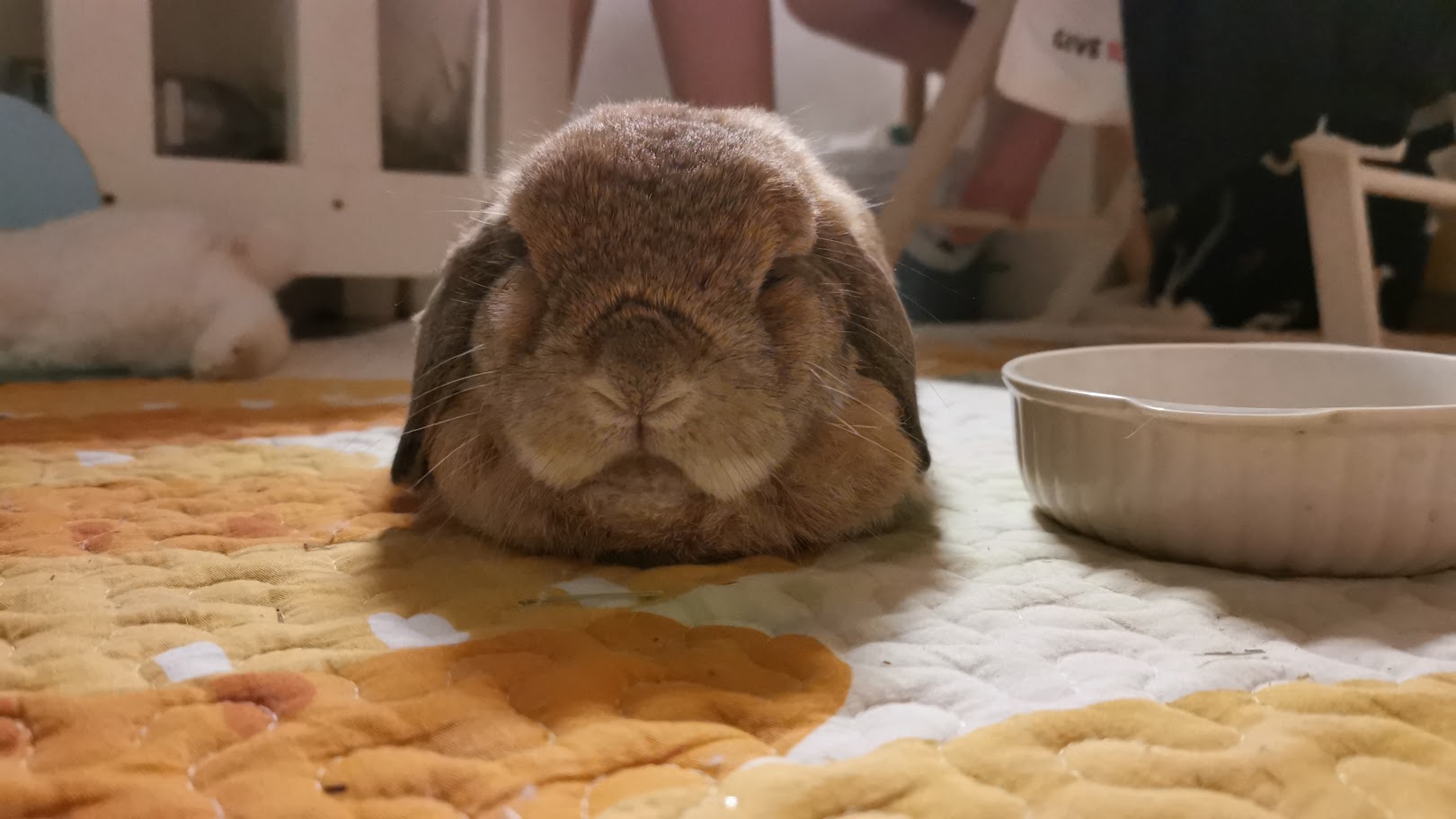
The Loaf
When your bunny tucks all their paws underneath them and turns into a perfect, fluffy rectangle, they have achieved “loaf mode.” This is the bunny version of switching to power-saving mode. They are comfortable, content, and just… baking.
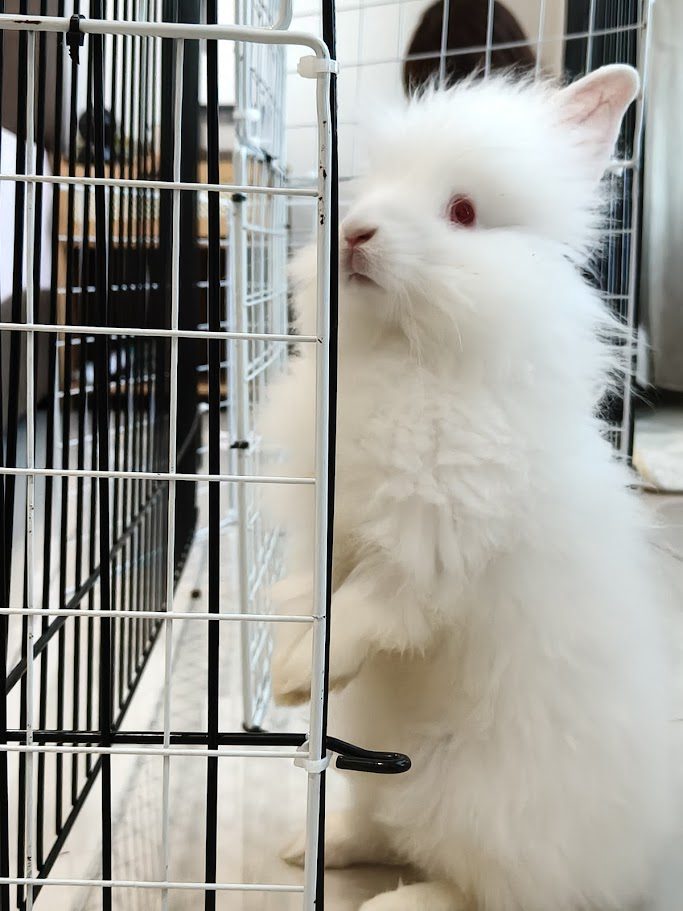
The Periscope: Curious Rabbit Body Language
Your bunny rises onto their hind legs, nose twitching like a tiny, furry submarine captain scanning the horizon. This inquisitive piece of rabbit body language seems to ask, “Hmm, what’s going on up there? Is someone preparing a snack? I must investigate!”
Periscoping gives your bunny a higher viewpoint as they investigate their surroundings. This rabbit behaviour can reflect curiosity or watchfulness, so notice what caught their attention and whether the rest of their body looks relaxed or tense. Let your little lookout rise and settle at their own pace.
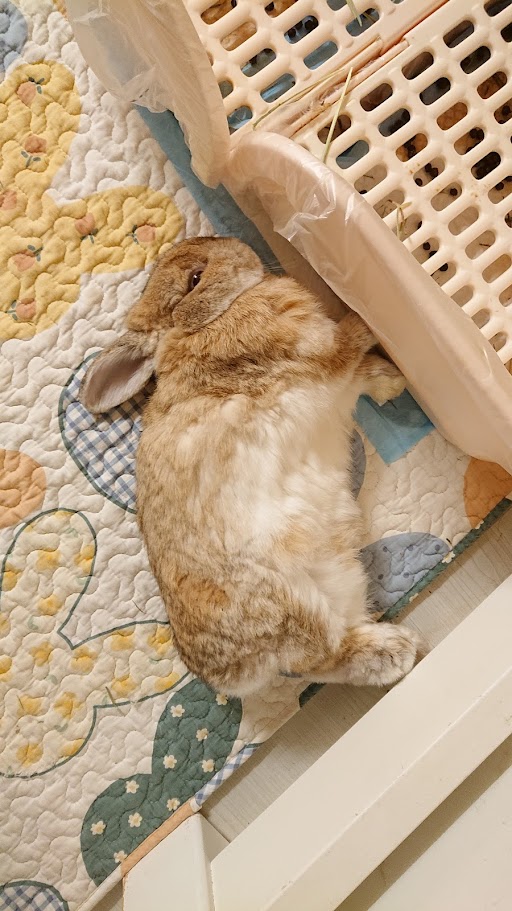
The Flop: Rabbit Body Language at Rest
One second your bun is sitting there; the next, they’ve rolled onto their side like a furry pancake clocking off for the afternoon. A relaxed flop is one of the most charming expressions of rabbit body language—the bunny equivalent of sighing, “Ahhh, time to melt into the floor.”
This little ritual can reveal plenty of rabbit personality: some bunnies settle gently, while others make bedtime a theatrical event. As with all rabbit behaviour, read the whole scene. Notice the loose posture and comfortable settling that accompany the flop, rather than interpreting a single position on its own.
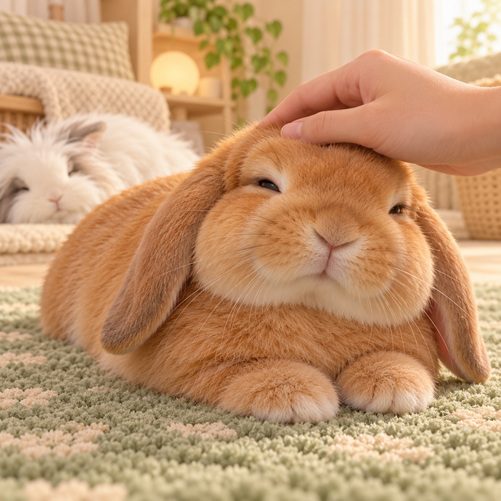
Tooth Purring
A soft, gentle chattering of the teeth while your bunny relaxes during petting is often called “tooth purring.” Think of it as their quiet little review: “This is the life. More pets, please!”
Read the whole rabbit: Loud or persistent grinding can signal pain. Don’t judge by sound alone—look at their posture, appetite and usual behaviour. Grinding alongside a hunched posture, reduced eating or unusual withdrawal needs prompt veterinary advice.
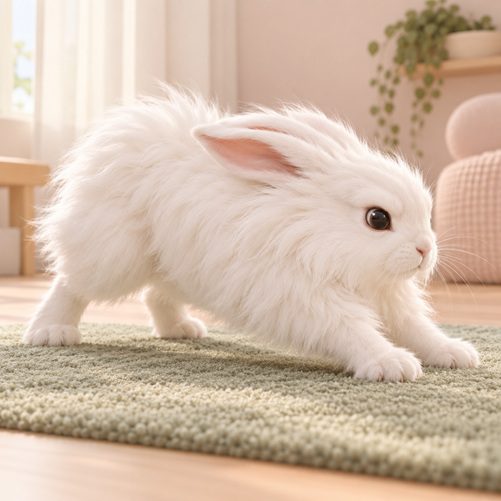
Lunging
A quick forward lunge, sometimes accompanied by a grunt, delivers a fairly clear message: “Back off! You have entered my personal bubble without permission.”
Your bunny may feel frightened or protective of their space. Pause, give them room and let them choose whether to approach again. Trust-building works better when nobody has to defend the doorway.
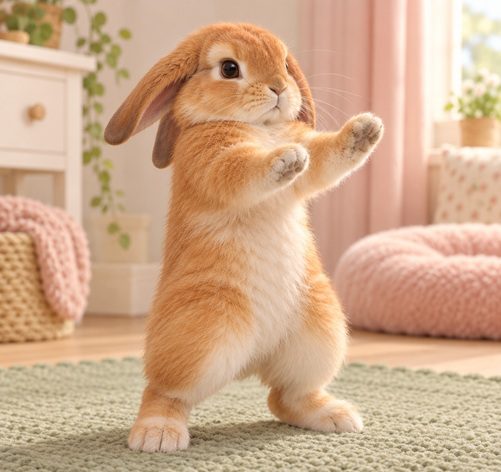
Boxing
Your bunny rises onto their hind legs and raises or bats their front paws like a tiny, furry boxer. In a defensive encounter, the message is: “I feel threatened! Stay back! I’m prepared to throw paws if I have to!”
Respect that request for space. Stop reaching towards them, avoid cornering them and allow a clear retreat. Those raised paws are a boundary, not an invitation to spar.
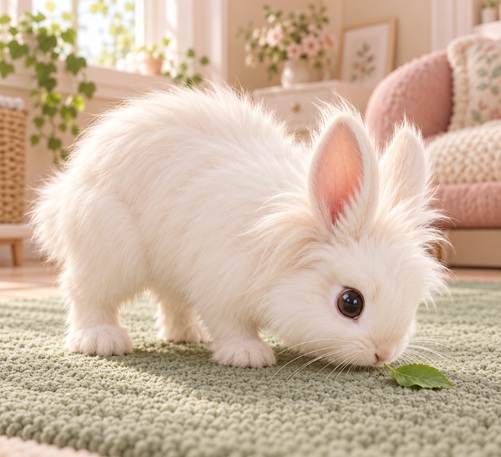
The Sniff Scan
Nose down, whiskers forward—the tiny, furry detective is on duty. Your bunny investigates the floor, nearby objects and unfamiliar scents, gathering information one sniff at a time.
That intense ground-sniffing might be a search for a dropped morsel or a careful inspection of something new. Think of it as reading the room, bunny-style: “Someone has been here. And they may have brought snacks.”
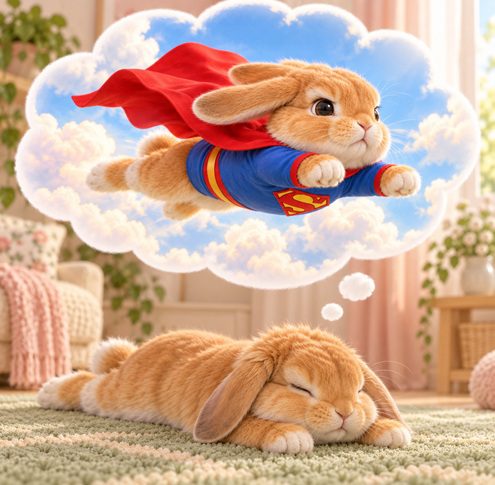
The Sploot / Superman
Belly down, back legs stretched behind, and absolutely no appointments to keep. When paired with a loose body and relaxed expression, this stretched-out pose is classic bunny downtime.
Translation: “The vibe is immaculate. I am one with the floor. Do not disturb.”
In Bunnini’s imagination, she’s soaring through the clouds. Here on the rug, her greatest superpower is doing absolutely nothing.
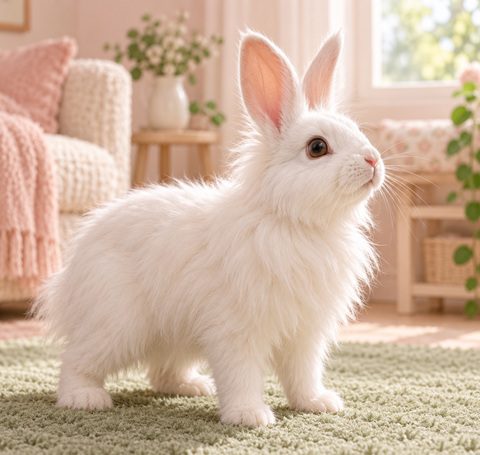
Ears Forward
Those ears turn towards something interesting like a pair of furry satellite dishes. Your bunny is paying attention: “What was that? A rustle? A visitor? Someone opening the snack cupboard?”
Read the rest of their body to distinguish relaxed curiosity from cautious alertness. With lop-eared rabbits like Bunnini, ear movements may be less obvious, so watch their eyes, head position and posture too.
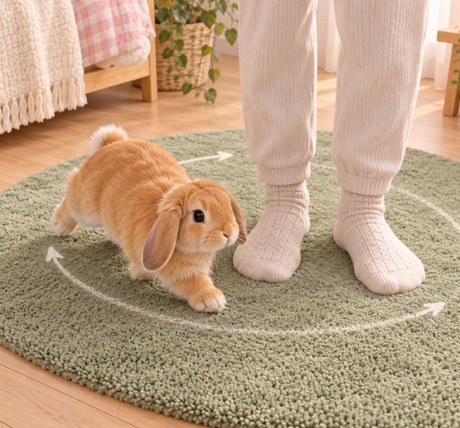
Circling & Honking
Your bunny circles your feet while making soft little honks or buzzing sounds. This can be courtship behaviour, particularly in unneutered rabbits, but circling and honking can also accompany excitement or a request for food and attention.
The translation depends on the occasion: “You’re rather wonderful,” or perhaps, “You’re holding my dinner. Please explain the delay.”
Pause before stepping when your bunny is weaving around your ankles, and give them room to finish their little orbit.
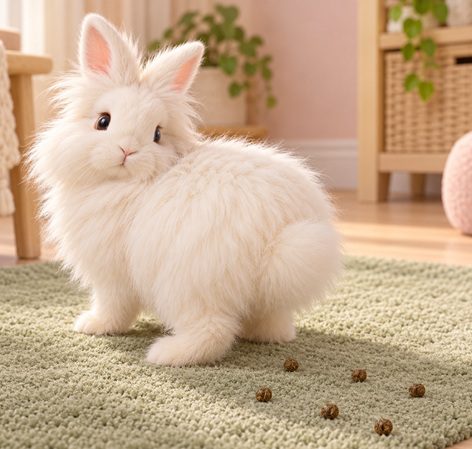
Scattered Poops
“I was here!” A few scattered dry droppings can serve as scent markers—bunny business cards left around an important patch of territory.
This doesn’t automatically mean litter training has failed. However, a sudden change in toilet habits also deserves a look at litter-box access, stress, mobility and health. Soft, sticky droppings are a different issue from normal dry territorial pellets.
Hunching: A Possible Pain Signal
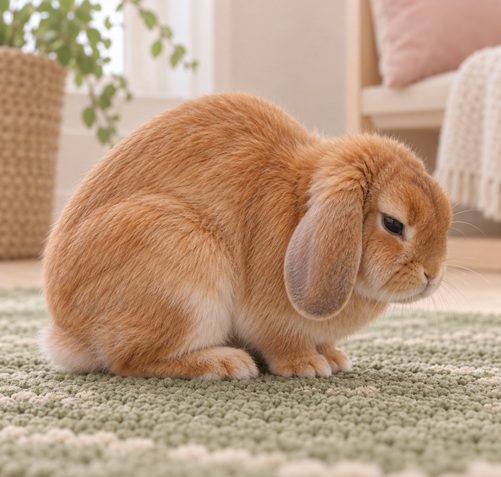
A persistently tense, hunched posture—especially with narrowed eyes, reluctance to move or tooth grinding—can signal pain. Unlike a relaxed loaf, the rabbit may look withdrawn and uncomfortable.
The posture alone cannot tell you where the pain is coming from. Gut problems are one possibility, but dental, urinary and other painful conditions can also change how a rabbit sits.
When to seek help: If your rabbit is hunched and eating less, passing fewer droppings or behaving unusually quietly, contact a rabbit-savvy vet urgently. If they stop eating or passing droppings, seek immediate veterinary help—don’t wait overnight.
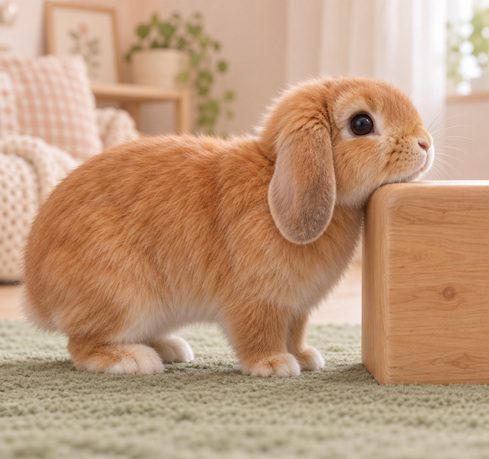
Chinning
Rubbing the underside of the chin against furniture, toys or your belongings leaves scent from glands beneath the chin. It’s a normal way of marking familiar territory.
In bunny terms: “Mine. Also mine. I’ll take this one too.” Your rabbit is adding invisible name labels to the household inventory.
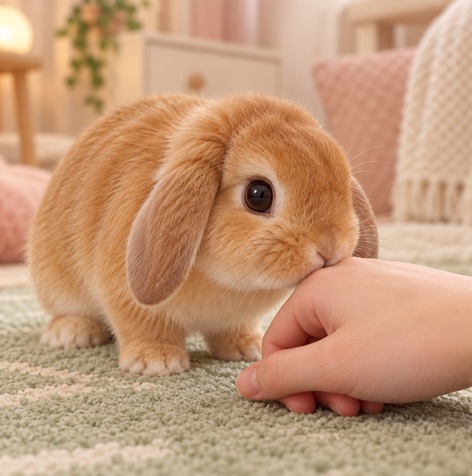
The Nudge / Boop
A purposeful poke with a little nose can mean: “Hello, I’m here,” “More attention, please,” or “Excuse me, you’re blocking my route.”
Watch what happens next. A bunny who lowers their head and stays close may be requesting grooming; one who pushes past may simply need you to move your rather inconvenient human furniture.
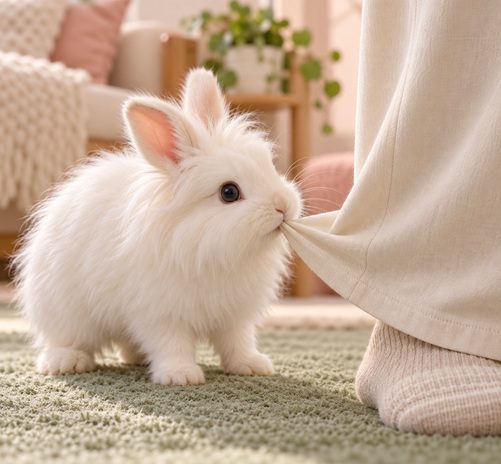
The Nip
A brief, pinchy nip can be a more insistent message: “Pay attention,” “Move over,” or “Please stop doing that.” Even a small nip can hurt.
Pause and consider the situation rather than punishing your bunny. Fear, discomfort and unwanted handling can also lead to biting. New or escalating biting deserves a closer look at both their environment and health.
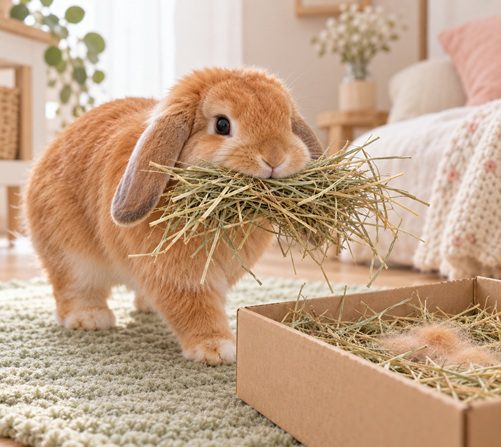
Nesting
A mouthful of hay, determined rearranging and sometimes fur pulling: your bunny has a serious construction project underway. Nest-building is driven by powerful maternal and hormonal instincts.
It can happen during pregnancy or a false pregnancy, so a nest alone doesn’t confirm that babies are coming. Give her a quiet space, monitor eating and droppings, and ask your rabbit-savvy vet for advice if pregnancy is possible or the behaviour is recurring.
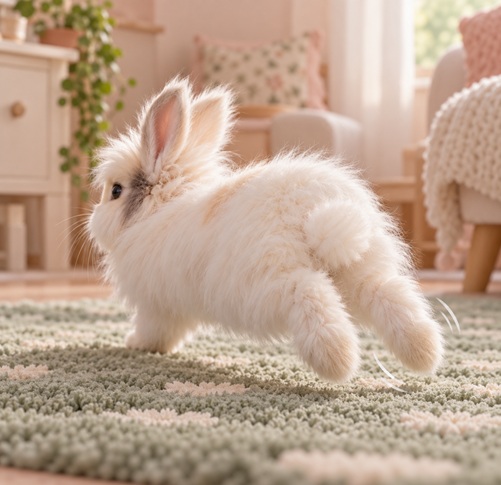
The Foot Flick / Kick-Up
Your bunny hops away and flicks their back feet behind them with what looks like considerable sass. After an unwelcome interruption, it can read like: “This conversation is over.”
Context matters: hind-leg movements are also part of ordinary hopping and playful activity. When your bunny is leaving an interaction, respect the exit and give them a little space.