 Pro-Tip: Viewing on a mobile device? Switch your browser to Desktop Mode or
rotate to Landscape Layout for the ultimate masterclass reading layout. Estimated Reading Time: 13 mins
The Modern Art of Rabbit Care by Oishi Bunnies
Fancy Rabbit Water Bowls & Dispensers
A Guide to Gravity Bowls, Fountains & More
Comfortable drinking, dependable water access, and a setup that fits your bunny.
Two Jobs. Plenty of Bunny Opinions.
A rabbit water setup has two jobs. It should make fresh water comfortable to drink, and it should make it easy for you to check that the supply is accessible, safe, clean and working.
Sounds simple, until you meet a rabbit who flips the bowl, drags it across the floor, or somehow adds three strands of hay the second you’ve washed it. Then there’s the bunny who creates “bubble tea”—with poop pearls and a splash of pee. That batch goes straight down the drain, followed by a proper bowl wash.
There’s plenty to choose from: heavy ceramic crocks, stainless-steel dishes, gravity-fed bowls, electric fountains, small reservoir cups and the familiar sipper bottle. The cat, dog and bird aisles offer even more possibilities.
The useful question is how each design fits your rabbit and your home. A large reservoir might solve constant top-ups. A mounted bowl might solve tipping. A different rim might make drinking more comfortable. A fountain might appeal to one particular bunny, though it also adds parts you’ll have to clean.
The best rabbit water bowl or dispenser is one your bunny can use comfortably and reliably—and one you can keep clean.
 Bunnini: “Fresh water. No toppings, please.”
Pee-Casso: “So my bubble tea menu has been cancelled?”
Quick Answer: Start with Comfortable, Dependable Water Access
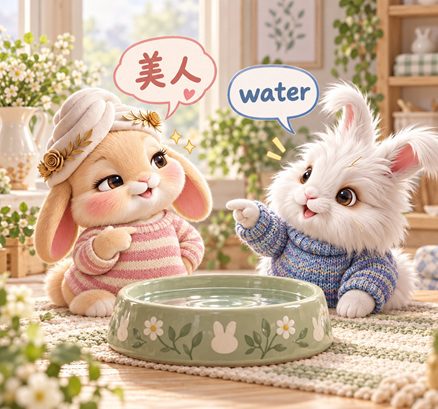
For many healthy pet rabbits, a stable open bowl is a practical first choice. Rabbit research backs a preference for open dishes and shows they can allow faster drinking than nipple drinkers.[1]
A gravity-fed bowl can add extra capacity while keeping an open drinking surface. A fountain can be trialled as another drinking option, as long as its electrical parts are out of reach and your rabbit uses it comfortably.
Keep a familiar, working water source available whenever you introduce something new.
Check water at least twice daily, replace it daily and clean the drinking vessel daily. Automatic refilling or circulation doesn’t replace any of those jobs.[3,4]
For rabbits with persistently wet chins, large dewlaps, or particular health and mobility problems, the best setup may look different. Watch the whole rabbit instead of choosing purely from a general recommendation.
🐰 Bunnini: “Does it hold water, stay put and come apart for cleaning?”
🐰 Pee-Casso: “I was assessing its potential as a boat.”
🐰 Bunnini: “That would explain the floor.”
Gravity Rabbit Water Bowl: A Little Help with the Top-Ups
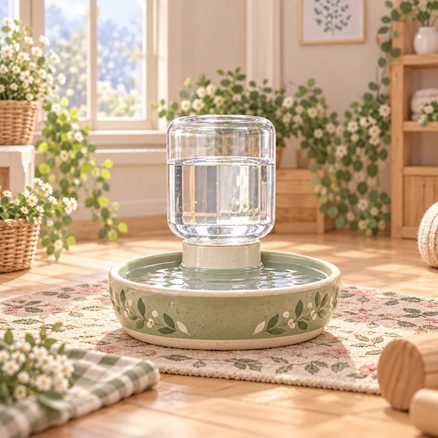
A gravity rabbit water bowl combines an open drinking basin with a reserve tank above it. As your bunny drinks and the water level falls, the reservoir releases more water into the basin. Think of it as a bowl with its own refill assistant.
In common inverted-reservoir designs, air entering the tank and the position of the outlet help control the flow. Some models also use valves or other dispensing parts.
Your rabbit drinks from the basin, just as they would from an ordinary bowl. The system replenishes the water rather than circulating it, and many designs work without electricity. It can add reserve capacity to your rabbit water setup while keeping an open drinking surface.
Where Extra Capacity Helps Your Rabbit Water Setup
If a small bowl regularly runs low between checks, a larger reserve can save repeated trips to the tap. It may also provide a useful additional drinking station for a bonded pair. Reliable access to clean water remains the aim of everyday rabbit hydration care.
With no pump needed in many models, there’s no motor to maintain or pump cable to keep away from curious teeth. When comparing pet bowls for rabbits, comfortable access, a stable base and easy cleaning matter more than an impressive tank size.
What the Refill Assistant Can’t Do
It can add water. It cannot remove the hay strand, floating fur or mysterious contribution your bunny has left behind. Like any open rabbit water bowl, the basin still needs debris clearing and regular washing.
The dispensing system needs attention too. A poor seal, damaged reservoir, blocked outlet or faulty valve can stop the refill—or release more water than intended. In designs that depend on a sealed tank, damage can allow the reservoir to drain unexpectedly.
Even simple models can leak or become blocked, and some contain movable valves or other components. A full tank is useful only when water reaches the drinking basin.
Before It Goes in Your Basket
When shopping for rabbit supplies, look closely at the drinking area and the parts you’ll be washing:
- An easy reach: can your rabbit reach the water comfortably without squeezing around the tank or stretching over the rim?
- A steady base: could it slide or tip once the reservoir is partly empty?
- Room for a brush: can you scrub inside the tank and reach its corners? A wide opening can make this much easier.
- Accessible dispensing parts: can you remove and inspect the outlet, valve and seals as instructed, and obtain replacements if needed?
Give Your Gravity Rabbit Water Bowl a Test Run
Assemble and fill the dispenser according to its instructions. Remove a little water from the basin and watch whether it refills correctly. Check for persistent overflow or leaks around the base.
Repeat this quick check after washing and reassembly. A seal sitting slightly out of place can change how the dispenser works. Keep a separate, functioning water source available while your bunny tries the new rabbit water setup.
More Water in Reserve, Same Daily Care
A tank may hold several days’ worth of water, but its capacity doesn’t tell you how long that water should stay there. Extra storage helps with top-ups; daily rabbit hydration care still includes checking cleanliness and access.
Replace the water daily and wash the drinking bowl daily. For a simple gravity unit, cleaning the reservoir and dispensing parts during the same daily change is a practical routine where the manufacturer’s instructions allow.
Give the neck, outlet and seals attention too. They’re all part of the water’s journey to your bunny, even if they’re less obvious than the basin.
Cleaning the Inside: Bring the Right Brushes
A gravity dispenser can be more fiddly to clean than an ordinary rabbit water bowl. Narrow necks, curved shoulders and small outlets may leave places your usual sponge simply cannot reach.
A sticky or slippery film can develop on the inside. This may be biofilm—a layer of microorganisms and the material they produce attached to a surface. Bacteria can grow in the system even when the water looks clear, and algae may also develop, especially where light reaches the water.
A quick rinse or another top-up won’t reliably remove attached buildup. Alongside your other rabbit supplies, keep cleaning tools that can physically reach and scrub the water-contact surfaces:
- A bottle brush that reaches the reservoir’s base, shoulders and corners.
- Small detail or tube brushes for the outlet and accessible dispensing channels.
- A dedicated soft brush or sponge for the basin and removable seals.
Follow the manufacturer’s dismantling and washing instructions. Use tools that won’t scratch the surfaces, rinse away detergent thoroughly, and clean and dry the brushes after use.
Before buying, ask: “Can my brush reach everywhere the water goes?” When comparing pet bowls for rabbits, cleaning access deserves as much attention as appearance. If persistent buildup sits somewhere you cannot reach, a simpler, wider-opening dispenser may make daily care much easier.
Our practical take: a gravity rabbit water bowl can be a useful helper when extra capacity solves a real problem. Choose one your rabbit can drink from comfortably and that you can take apart and clean without a daily wrestling match.
🐰 Pee-Casso: “It refills itself. Does it tidy up after me?”
🐰 Bunnini: “That position is still held by Cookie Yiyi.”
Hybrid Reservoir Cups: A Compact Rabbit Water Setup
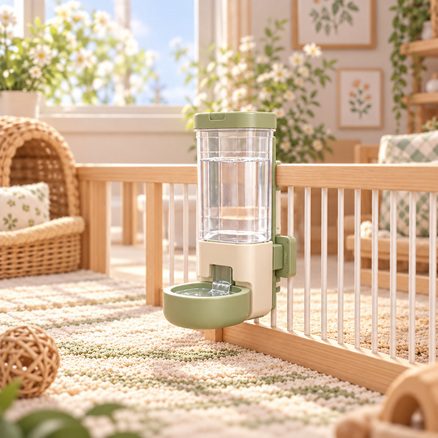
Some small-pet drinkers look like bottles but deliver water into a little cup underneath. Among rabbit supplies, you may see them described as reservoir cups, “sink” drinkers or sink bottles. The idea is a compact water reserve with a small drinking basin, often attached to a pen panel.
But look closely at how the water arrives. Some cups refill automatically as the level falls. Others use a valve that needs contact or activation before more water is released.
That small design difference changes the drinking experience. A “sink bottle” label alone doesn’t tell you whether your bunny can simply approach and drink, as they would from an ordinary open rabbit water bowl.
A Little Cup Needs a Proper Access Check
Start with the water your rabbit can actually reach. Is it continuously available in the cup? Does your bunny need to operate anything? Is there enough room to drink comfortably around the housing and rim? These checks matter for rabbit hydration, whatever the dispenser looks like.
A secure mount can help keep this rabbit water setup in place, but the height still needs to suit your bunny. Watch them approach and drink without stretching, climbing or balancing awkwardly. Inspect exposed plastic edges and fittings for chewing, too.
Comparing Pet Bowls for Rabbits? Check the Mechanism Too
- Water delivery: does the cup refill passively, or does a valve need activation?
- Cup size and position: can your bunny reach the water comfortably?
- Attachment: does the dispenser stay securely mounted without loose or damaged fittings?
- Cleaning access: can you reach the reservoir, cup, outlet and removable valve parts with suitable brushes?
Let Your Bunny Test the Design
Claims about reduced neck strain or increased drinking need evidence for the particular product. A compact design may suit your home, but that doesn’t automatically make it more comfortable than a familiar rabbit water bowl.
Offer it alongside a familiar, working water source and watch for reliable drinking. Check that the cup replenishes correctly, including after cleaning and reassembly. Consistent access matters more for rabbit hydration than novelty.
Small Cup, Plenty of Cleaning Corners
Hybrid drinkers share the cleaning challenges of gravity dispensers, sometimes with even smaller openings to work around. The reservoir may look clear while the cup collects hay, fur or food debris. Like any rabbit water bowl, the drinking surface still needs daily attention.
A thin, sticky or slippery layer can develop inside the reservoir, around the outlet or beneath removable parts. This may be biofilm—microorganisms and the material they produce attached to a surface. Bacteria can grow even when the water looks clear, and algae may develop where light reaches the water.
Clean the whole water pathway, not just the visible cup. Follow the manufacturer’s dismantling instructions and gently scrub every accessible water-contact nook, opening and channel. Keep suitable cleaning tools alongside your other rabbit supplies:
- Use a bottle brush that reaches the reservoir’s base and corners.
- Use small detail or tube brushes for accessible dispensing holes and channels.
- Wash the cup, removable seals and valve components as instructed.
- Avoid forcing brushes into delicate mechanisms or scratching surfaces. Rinse thoroughly, then reassemble and test the flow.
Replace the water and wash the drinking cup daily, cleaning sooner if it becomes dirty. Include the reservoir and dispensing parts in your routine according to the product’s instructions. Clean and dry your brushes after use.
A quick rinse won’t reliably remove attached buildup. If a water-contact area repeatedly collects film but cannot be reached for cleaning, consider a simpler rabbit water setup.
Our practical take: when choosing pet bowls for rabbits, a hybrid reservoir cup may be a handy compact option if your bunny can use it comfortably and every water-contact part is manageable to clean. Give the little valve as much attention as the big tank.
🐰 Pee-Casso: “A tiny sink. Very fancy.”
🐰 Bunnini: “Check whether the cleaning brush fits before admiring the décor.”
Fountain Bowls: A Rabbit Water Setup with a Little Movement
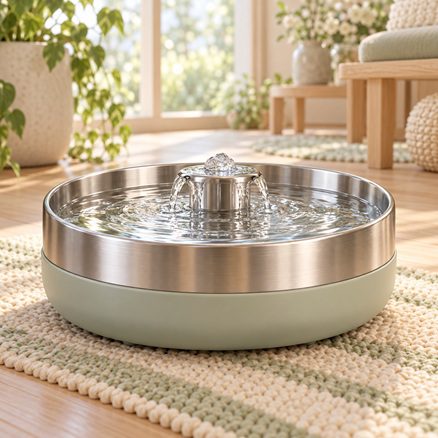
A pet fountain adds a little movement to your rabbit water setup. An electrical pump draws water from a reservoir and sends it bubbling into a pool, flowing over a tray or falling from a spout.
Many models include filters, although their materials and functions vary. Most fountains recirculate the same stored water, so the flowing stream still needs regular water changes and cleaning.
For a bunny who enjoys that particular drinking surface, a fountain may earn a place alongside the familiar rabbit water bowl. The question is whether your rabbit comfortably uses it—and whether its maintenance fits your routine.
What a Fountain Can Offer
Some rabbits may show interest in moving water or prefer the basin a fountain provides. When comparing pet bowls for rabbits, a suitable fountain is another drinking option to assess for comfortable access.
Filters may capture suspended debris and, depending on the filter medium, reduce certain tastes or odours. These are useful possible functions, but they don’t tell us how much a particular rabbit will drink.
Rabbit Hydration: Does Moving Water Encourage More Drinking?
The rabbit-specific comparative research discussed in this article looks at open dishes and nipple drinkers. It doesn’t establish that household pet fountains consistently increase water intake in rabbits.
Veterinary practice guidance sometimes suggests trying fountains alongside bowls and drippers. That gives owners another rabbit hydration option to explore, rather than demonstrating that fountains work better.
A Look at Cat Research
In a controlled crossover trial, 14 cats completed comparisons of still, circulating and free-falling water systems. Average water intake and several urinary measures did not differ significantly, although three cats showed individual preferences. This offers context, but it cannot establish what happens in rabbits.
Let your bunny’s actual drinking guide the decision. Interest in a bubbling stream is a good starting point; reliable drinking is what you’re looking for.
Flowing, Filtered and Still in Need of Washing
Circulation moves water around. Filtration may remove selected debris or substances. Neither automatically sterilises the water or cleans the surfaces inside the fountain.
A clear-looking pool can still have buildup in the pump, channels or reservoir. Moving water also isn’t guaranteed to stay cooler: room conditions, fountain design and the pump all influence its temperature.
Enjoy the gentle bubbling, but keep the usual water changes and cleaning on the calendar, just as you would for an ordinary rabbit water bowl.
Shopping for Rabbit Supplies? Look Beyond the Pretty Spout
- Comfortable access: a stable base, manageable rim and drinking surface your bunny can reach without stretching toward a high spout.
- An accessible pool: a broad basin is a sensible design to trial, although it isn’t a proven superior fountain shape for rabbits.
- Splash, vibration and sound: watch your rabbit’s response. A fountain that sounds quiet to you may still be something your bunny avoids.
- Water when the pump stops: check whether the basin still holds reachable water when the unit is switched off.
Keep a separate rabbit water bowl available, even if the fountain retains water when switched off.
Keep the Electrical Parts Beyond Curious Teeth
For a powered rabbit water setup, route cables, adapters and connectors completely beyond rabbit access. Singapore’s AVS guidance advises covering and hiding exposed wiring because rabbits chew.[9]
Plastic sleeves can reduce exposure, but don’t treat them as chew-proof. Check the whole route, including behind furniture and anywhere a rabbit could reach by climbing or stretching.
Cordless or battery-powered models can reduce exposed wiring during use. They still have battery housings, charging connections and components to inspect, so check the actual design carefully.
If you suspect a live-cord bite, isolate the power safely before touching the rabbit or damaged equipment and seek urgent veterinary advice. Electrical injuries can affect the mouth, heart and breathing, and some complications may be delayed.[10]
Cordless Still Needs Charging
A rechargeable fountain needs enough battery power to operate its pump. Check the charge indicator during your daily water checks and recharge before the battery runs flat. A full reservoir doesn’t tell you whether the pump has power.
Follow the manufacturer’s charging instructions and use the specified charger. Keep charging cables and connectors beyond your rabbit’s reach, and provide the familiar bowl while any drinking equipment is unavailable.
Some cordless fountains run intermittently or use a sensor rather than flowing continuously. Check that your model delivers water as intended and that the drinking surface remains accessible between cycles. After charging, confirm that the fountain works properly.
Clean the Pump, Not Just the Pool
Switch the fountain off and disconnect its power supply before dismantling it. Follow its instructions for handling rechargeable units and keeping electrical components dry.
Wash the reservoir, basin, channels and accessible joints. Like gravity dispensers and hybrid cups, fountains can develop a thin, sticky or slippery film on water-contact surfaces. Bacteria can grow in the system, and algae may develop where light reaches the water.
The pump may need its cover and impeller removed for cleaning. Manufacturer guidance includes brushing these parts with soap and warm water, then rinsing thoroughly.[11] Small detail brushes can help reach accessible corners and channels without damaging them.
Follow the model’s filter replacement instructions. When budgeting for rabbit supplies, include any replacement filters and parts your fountain needs. Don’t wash a disposable filter for reuse unless the manufacturer specifically allows it, or assume every filter can be maintained in the same way.
Inspect daily and replace the water daily. Clean the drinking surface daily where it can be removed safely. Follow the full-system maintenance schedule and clean sooner if you notice debris, slime, odour or reduced flow.
A weekly deep-clean may suit some products and homes, but there’s no universal interval. If hidden areas repeatedly collect buildup or routine cleaning becomes difficult, a simpler rabbit water setup may be easier to maintain.
Our practical take: among the different pet bowls for rabbits, a fountain can be an optional drinking station for a bunny who uses it comfortably. Choose it for the access and preference it offers, and make room in your rabbit hydration routine for cleaning, power checks and charging.
🐰 Pee-Casso: “My water has a bubbling feature.”
🐰 Bunnini: “And Cookie Yiyi has a charging reminder.”
Bottles & Sipper Drinkers: When the Familiar Option Helps
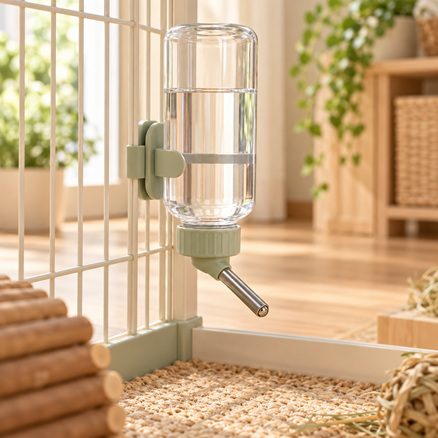
The familiar sipper bottle delivers water through a tube, nipple or ball-bearing mechanism. Its enclosed reservoir helps keep the main water supply away from bedding, although the drinking tip still needs regular cleaning.
For a rabbit who already knows how to use one, a bottle may provide welcome familiarity during a change of home or drinking setup. Some rabbits may also benefit from an option that reduces persistent wetting around the chin or dewlap.[3,12]
The important question is whether your bunny can comfortably obtain water from it. A full bottle doesn’t necessarily mean a working water supply.
Check the Tip, Not Just the Water Level
Bottles can leak, develop air blocks or stop dispensing. After filling and mounting, test the drinking tip according to the manufacturer’s instructions to confirm that water comes through.
Repeat your checks at least twice daily, and inspect for leaks, contamination and damage. A falling water level may reflect a leak rather than drinking, so check the floor or bedding underneath too.
A Comfortable Reach and a Familiar Choice
Secure the bottle at a position your rabbit can use without an awkward stretch. Watch them drink rather than choosing the height simply because it looks tidy on the pen.
If you’re introducing a bowl or another dispenser, keep the familiar bottle available until you have seen reliable drinking from the new option. Your bunny doesn’t need a surprise equipment swap with their morning hay.
For persistent wetness around the chin or dewlap, consider the individual rabbit’s needs. A different drinking arrangement may help, but ongoing drooling or irritated skin also deserves veterinary attention.
An Enclosed Bottle Still Needs Cleaning
Replace the water and clean the bottle daily. Follow the manufacturer’s instructions for dismantling and washing the reservoir, cap and drinking mechanism.
Use suitable brushes for accessible surfaces and channels, rinse thoroughly, then reassemble and test the flow. Avoid forcing tools into parts that aren’t designed to come apart.
Our practical take: a bottle can be useful when your rabbit reliably uses it or needs an individually chosen alternative. For an otherwise healthy bunny who prefers bowls, a second clean bowl may be a more useful backup than a bottle they never touch.
🐰 Pee-Casso: “The bottle is full. Inspection complete?”
🐰 Bunnini: “Only after you check that the water comes out.”
Other Pet Bowls: Finding a Design That Fits Your Bunny
The rabbit aisle isn’t the only place to look. Some bowls designed for birds, dogs or other pets may suit your bunny too. Look at how the bowl works in your space: can your rabbit reach it comfortably, does it stay put, and can you remove it easily for washing?
Mounted Bowls, Coop Cups & Bracket Holders
For a bunny who keeps rearranging the water station, a securely mounted bowl can help keep things in place. Some coop cups and bracket-held dishes made for other pets can work when fitted securely at a suitable height.
The main advantage is stability. A mount doesn’t automatically improve drinking posture or keep the chin dry, so watch how your rabbit actually uses the bowl.
- Choose a bowl that removes easily for daily washing.
- Check that the rim is smooth and the fittings stay secure.
- Look for sharp protrusions, loose parts or reachable pieces your bunny could chew.
Raised and Tilted Bowls: Small Adjustments, Individual Fit
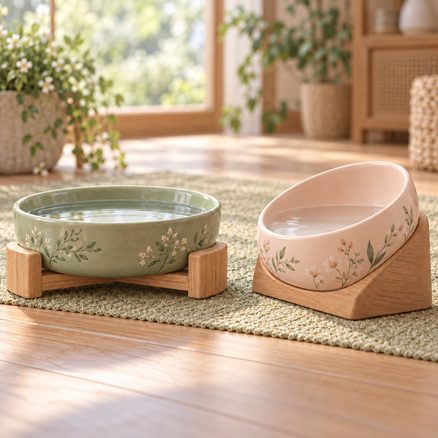
A modest change in rim height or angle may make drinking easier for an individual rabbit. There’s no established universal raised-bowl height or tilt angle, though, so let your bunny’s comfortable reach guide the choice.
For a senior or arthritic bunny, look at the whole sequence: approaching the bowl, finding steady footing, standing comfortably and reaching the water. A tall stand can introduce an obstacle rather than solve one.
Choose an adjustment because it visibly improves access. An “ergonomic” label alone doesn’t establish reduced neck strain or a benefit for rabbits.
With a tilted bowl, check its stability and usable water capacity too. The water needs to stay below the lowest part of the rim without spilling, while remaining easy for your rabbit to reach.
Travel and Collapsible Bowls
A portable bowl can be handy for supervised outings or vet trips. Set it on a stable surface and make sure it cannot slide or fold while your bunny drinks.
Inspect silicone and plastic for chewing, and remove damaged items. Offer water during safe, stationary breaks as appropriate. A loose open dish can spill during transit and leave your rabbit sitting in a soggy carrier.
Think of a travel bowl as a temporary arrangement. Its portability doesn’t necessarily make it the most dependable everyday water station at home.
Our practical take: match the design to the job. A mount may help with tipping, a small height adjustment may improve an individual bunny’s access, and a portable bowl may help on a trip. Comfortable drinking and straightforward cleaning remain the essentials.
🐰 Pee-Casso: “I’d like the bowl with a little throne.”
🐰 Bunnini: “Only if you can comfortably reach your royal water.”
Fancy or Simple, Make It Work for Your Bunny
For many homes, begin with a stable open bowl. If tipping is the main problem, examine the base and consider a low, secure holder. If capacity is the problem, add another drinking station or assess a gravity dispenser that’s easy to clean.
If you want to trial a fountain, offer it alongside the familiar bowl and observe whether it earns a place in the routine. Keep its electrical parts beyond reach and be realistic about the maintenance it needs.
For persistent wet chins or health-related access difficulties, choose with the individual rabbit and your vet in mind.
The best apparatus is one your rabbit uses comfortably, that keeps water available, and that you can maintain consistently.
Fancy plumbing is optional. Dependable water is the job.
Keep the Comparison Guide Handy
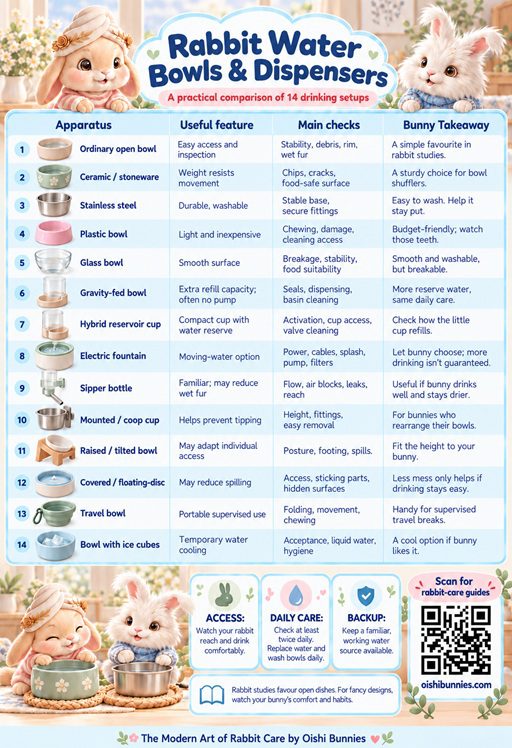
Download our rabbit water bowl comparison guide for a handy overview of 14 drinking setups, their useful features and the checks that matter.
Save it for your next shopping trip or print a copy for your bunny-care notes—because a thoughtful setup starts with understanding the bunny who uses it.
 Scientific Transparency & Care Disclaimer
 Scientific Transparency & Care Disclaimer
Educative Intent: The data provided within The Modern Art of Rabbit Care and the Oishi Bunnies platform is grounded in extensive rescue, rehabilitation, and organic nutrition experience. While we prioritize strict medical and scientific accuracy, this content is engineered for educational purposes only and does not constitute official veterinary advice, clinical diagnosis, or prescribed medical treatment.
Sanctuary Safety & Ergonomics: Husbandry guidelines—including hydration metrics, environmental setups, and anatomical positioning adjustments—are highly dependent on your specific household ecosystem and individual animal profiles. Always monitor your rabbit’s clinical responses closely during any transition phase.
Anatomy-Aware Handling: Always consult an experienced, rabbit-savvy medical professional before modifying current care protocols or executing dynamic environmental shifts. Oishi Bunnies advocates for transparency and empirical knowledge; however, we cannot assume liability for actions executed without professional veterinary oversight.