1. The Great Deception: Trust vs. Trance
To the untrained eye, a tranced rabbit can look “zen”. They remain still and may stop struggling, making it easy to mistake immobility for relaxation. But a quiet bunny doesn’t come with subtitles.
Safe rabbit handling means looking at how that stillness happened. Consider the position, the support provided, and the rabbit’s behaviour before, during, and after handling. Eyes, nose movements, limbs, and paws offer useful clues—but they need to be read together.
Trancing: Tonic Immobility
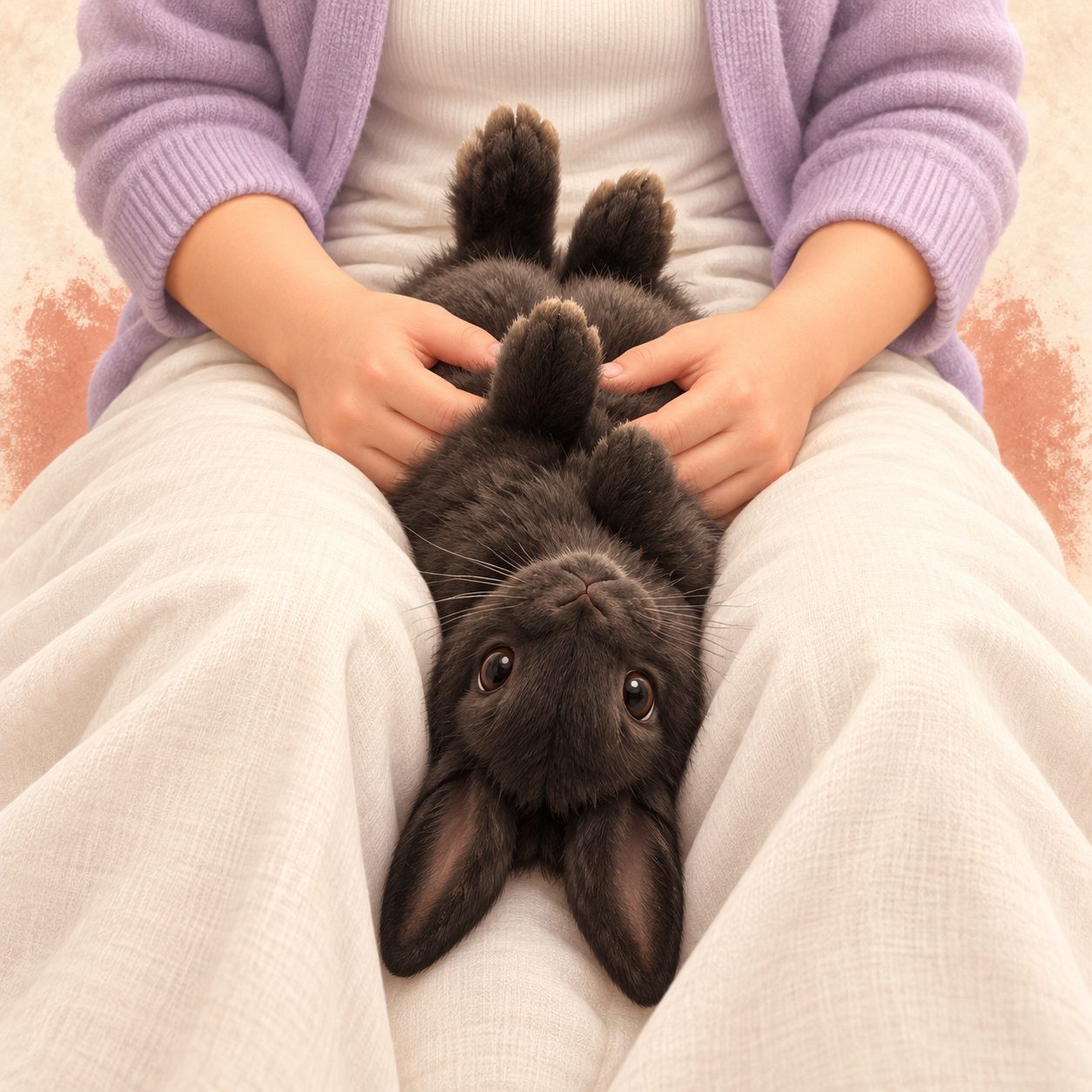
Tonic immobility in rabbits is a temporary state of reduced movement and responsiveness that can be induced through positioning and restraint. Commonly called rabbit trancing, it is generally understood as a defensive response in prey animals.
The rabbit can still feel pain. Remaining motionless does not establish that they are comfortable, and deliberately inducing tonic immobility is not recommended for routine grooming.
What might you observe?
- Eyes: Widened eyes can accompany fear during positioning or restraint. A “glassy” appearance or visible third eyelid is not a dependable way to identify tonic immobility.
- Nose: Movement may change or pause, but a still nose alone does not diagnose a trance.
- Limbs: Spontaneous movement is reduced. Reduced muscle tone has been described, but “completely limp like a dead weight” is not a reliable rule.
- Paws: Paw position varies. Tightly tucked or splayed paws cannot, by themselves, distinguish tonic immobility from other states.
True Relaxation
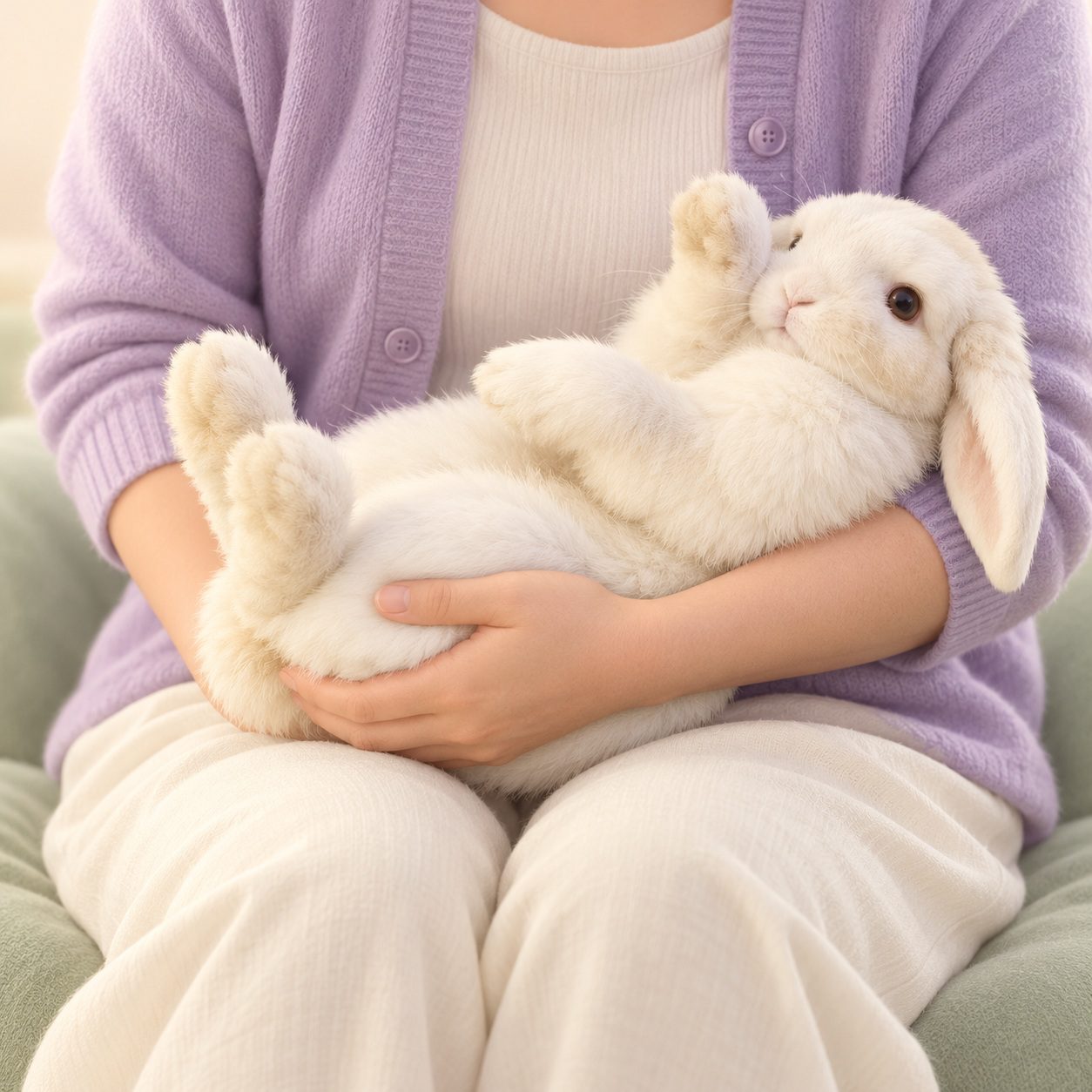
A comfortable rabbit may settle quietly while retaining spontaneous movement and the ability to adjust their position. During handling, assess their responses throughout rather than relying on a single expression or pose.
The resting signs below are most useful when observed in a rabbit who is free to choose their posture. They should not be treated as a test that proves a particular hold is comfortable.
What might you observe?
- Eyes: Eyes may be open or partially closed, alongside a comfortable overall posture.
- Nose: Twitching may slow or pause during rest. A relaxed rabbit does not have to maintain a steady nose twitch.
- Limbs: The body appears comfortable rather than braced, with spontaneous adjustments when needed.
- Paws: During voluntary resting, legs may be tucked into a loaf or extended in a “superman” stretch.
Context makes the difference
Tucked paws can accompany a comfortable loaf, but a tense rabbit may also crouch with their feet beneath them. Partially closed eyes can accompany rest, but eye position alone cannot tell us whether handling is comfortable.
For low-stress rabbit grooming, look for changes from the bunny’s usual behaviour. Bracing, repeated escape attempts, struggling, or changes in breathing and responsiveness are reasons to pause and reassess the handling.
The verdict: comfort matters more than stillness
Don’t judge a grooming session by how motionless the bunny stays. Safe rabbit handling combines appropriate body support, minimal necessary restraint, and a willingness to adjust or stop when the rabbit needs it.
2. Why Head-Down Restraint Puts Rabbit Welfare at Risk
Access to a rabbit’s belly should never come at the expense of their comfort and safety. During grooming, a bunny depends on the handler to support their body, protect their breathing, and recognise when the position needs to change.
Holding a rabbit with the body tilted head-down deserves particular caution. And if positioning is being used to induce a trance, we need to ask whose needs it serves. A rabbit becoming easier to groom does not mean the experience has become easier for the rabbit.
Protect their breathing: body position matters
A rabbit’s diaphragm helps draw air into the lungs. When the body is tilted head-down, gravity acting on the abdominal contents can shift the diaphragm towards the chest and reduce the resting volume of air in the lungs.
Experimental rabbit research has demonstrated this reduction in resting lung volume. Although it does not establish a safe grooming angle, it gives us a sound reason to avoid unnecessary head-down restraint—especially when a rabbit already has breathing difficulties.
Choose a supported position that allows comfortable breathing. Keep the nose unobstructed, avoid squeezing the body, and watch the rabbit throughout the task.
Protect their experience: a trance is not pain relief
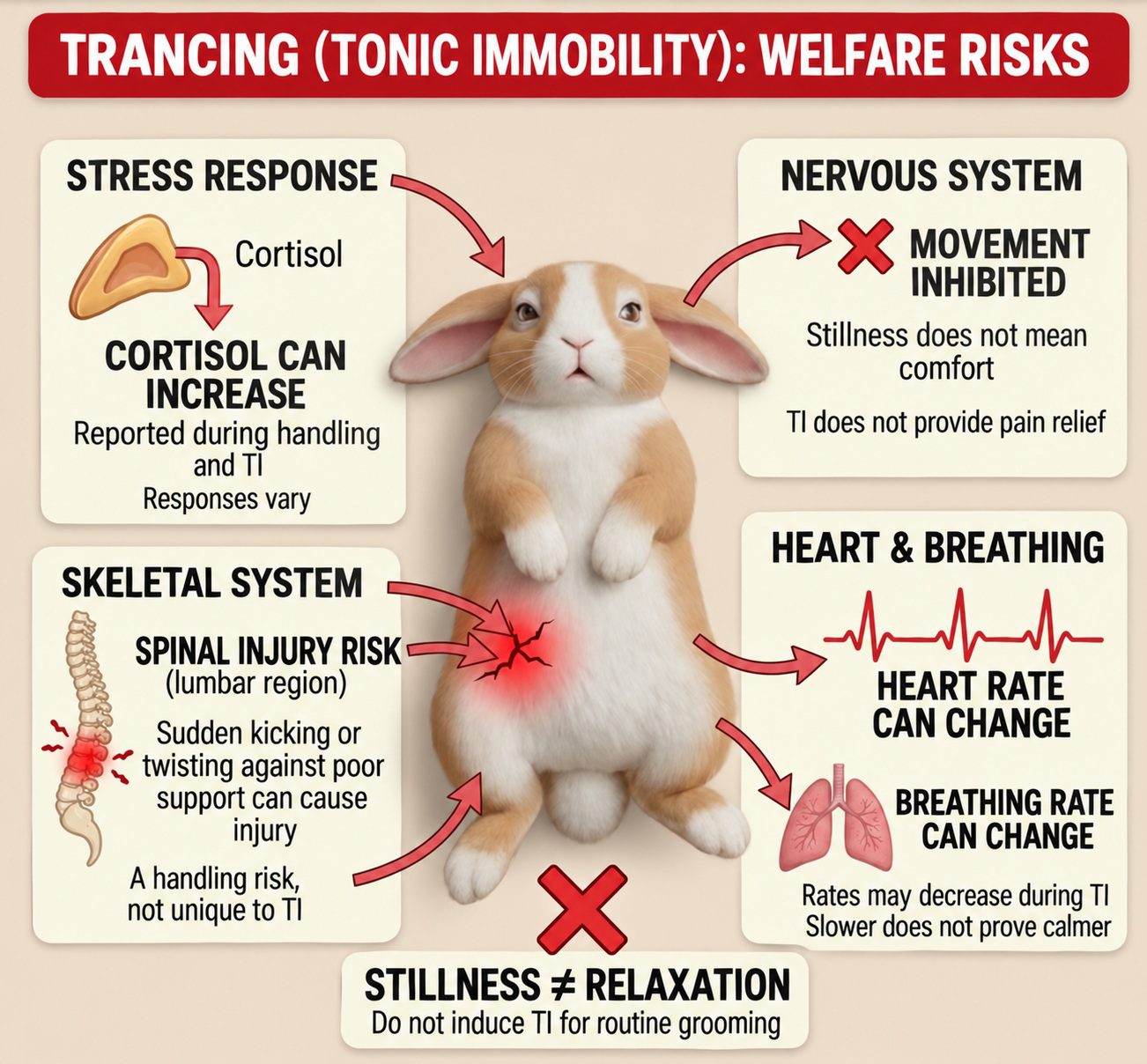
Tonic immobility in rabbits suppresses movement. It does not make a painful procedure painless, and it does not give us permission to continue simply because the bunny has stopped resisting.
Research has documented stress-related responses, including increased cortisol, around induced tonic immobility. Heart and breathing rates can also change. Even when those rates fall, they do not establish that the rabbit feels comfortable.
Do not deliberately induce a trance to finish a groom. If necessary care cannot be completed with appropriate support and manageable restraint, stop and seek a rabbit-savvy veterinary plan.
Protect their spine: support before access
Rabbits have powerful hind legs and a spine vulnerable to injury during inadequate restraint. A sudden kick or twist against poor support can cause a lumbar fracture or dislocation.
Never rely on a rabbit remaining motionless to keep them safe. Support the chest and hindquarters together, prevent the body from dangling, and keep handling close to a secure surface.
If the rabbit struggles, maintain support while safely returning them to secure footing. The answer to an increasingly frightened bunny is a change of plan—not an increasingly forceful grip.
What safe rabbit handling should prioritise
- Stable footing: Start routine brushing with all four feet supported on a non-slip surface wherever practical.
- Full body support: Support the chest and hindquarters during necessary lifting and repositioning.
- Minimal restraint: Use only what is necessary for the task, and pause when the rabbit needs it.
- Individual care: Adapt handling to the rabbit’s health and responses. A fixed angle cannot replace observation and good judgement.
Stop immediately for signs of an emergency
Open-mouth or visibly difficult breathing, collapse, or sudden loss of hind-leg movement requires urgent veterinary attention. Stop grooming, minimise handling, and contact the clinic for transport instructions.
“A finished groom is never more important than the rabbit going through it.”
3. Supported Positioning: Protect Their Breathing and Body
A rabbit should never have to struggle for support while someone works on their coat. Good handling gives the bunny a stable base, keeps their nose clear, and allows the groomer to respond before discomfort escalates.
Safe rabbit handling starts with support—not a prescribed angle. When lifting or repositioning is necessary, support the chest and hindquarters together. Keep the rabbit close to your body and avoid leaving their weight hanging from the front end.
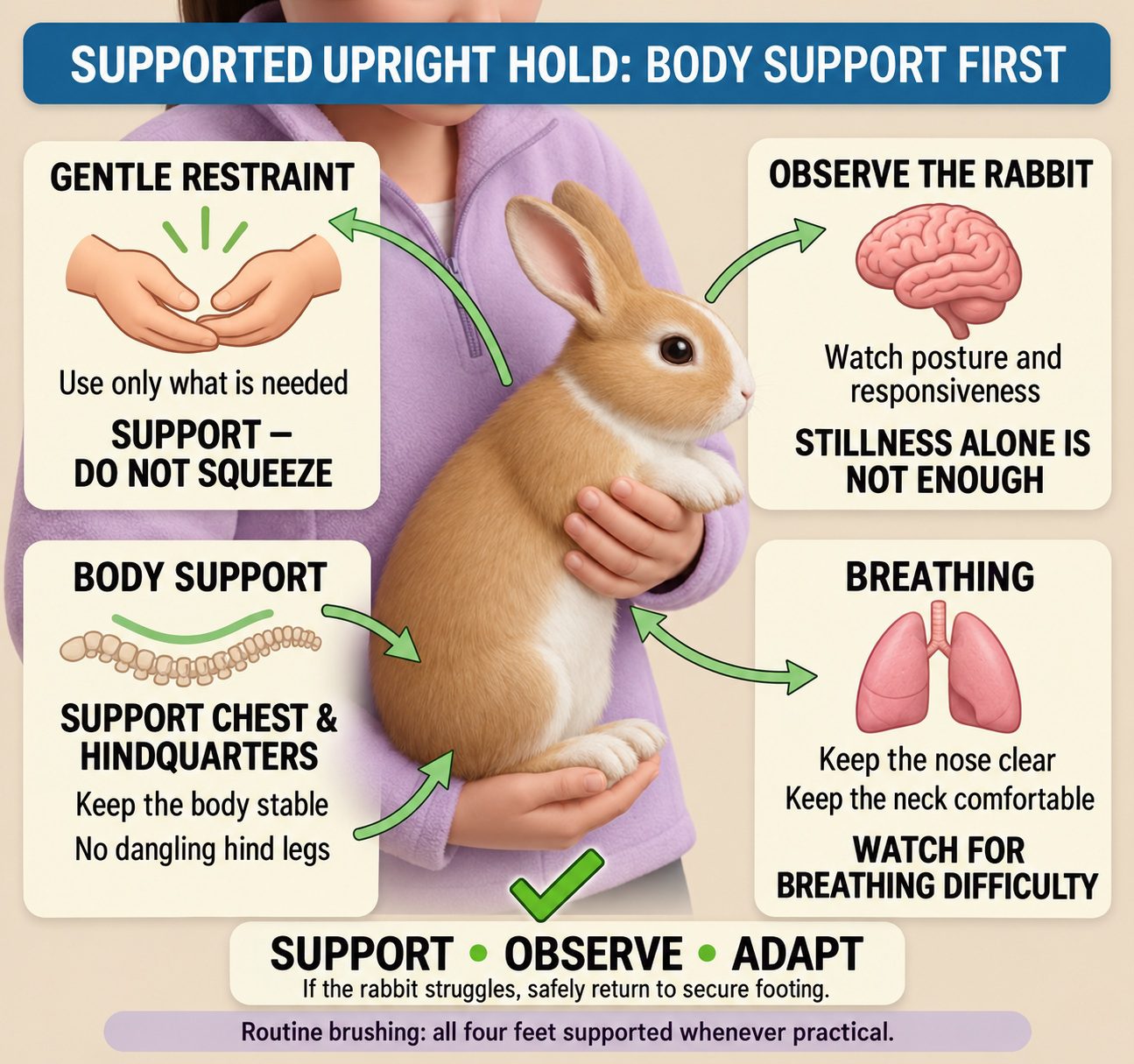
Keep the nose clear and the neck comfortable
Rabbits breathe through their nose. Keep fabric, hands, and the handler’s clothing away from the nostrils. Avoid forcing the chin towards the chest or stretching the head backwards to gain access to an awkward area.
Position the rabbit so you can observe their breathing throughout. If access requires an uncomfortable head or neck position, change the approach. The grooming task must adapt to the rabbit.
Support the chest and hindquarters together
During a necessary lift, one hand supports the chest while the other supports the bottom and hindquarters. Bring the rabbit close to your body, maintaining secure support without squeezing.
For routine brushing, work with all four feet on a non-slip surface wherever practical. Stable footing reduces the need to hold the bunny in place and gives them room to make normal postural adjustments.
Observe the rabbit—not just the hold
A supported upright hold can provide access for necessary care, but support is only part of the assessment. Watch the rabbit’s posture, breathing, responsiveness, and attempts to move.
If the bunny becomes tense or struggles, keep them supported while safely returning them to secure footing. Reassess the task, allow a break, or stop. Holding on more firmly is not a substitute for listening.
Our welfare standard: support, observe, and adapt
Do not deliberately induce tonic immobility for grooming. An inclined position does not prevent a trance, and stillness does not replace an assessment of comfort.
Use the least restraint needed for necessary care. If the task cannot be completed safely, arrange help from a rabbit-savvy veterinary team. Protecting the bunny takes priority over finishing the groom.
“The right position is one that supports the rabbit—and the right handler knows when to change it.”
4. Anatomy-Aware Rabbit Handling: Choose the Support Your Bunny Needs
Good rabbit grooming requires more than knowing a collection of holds. It requires knowing which position serves the rabbit, how to provide support, and when to change the plan.
Start with the least restraint needed. Keep all four feet supported for routine brushing wherever practical. When a task requires repositioning, support the body throughout and return the bunny to secure footing as soon as that access is no longer needed.
The examples below illustrate different handling situations. They are not positions every rabbit must tolerate. The rabbit’s health, body support, breathing, and behaviour must guide every decision.
1. Upright Support — On All Fours

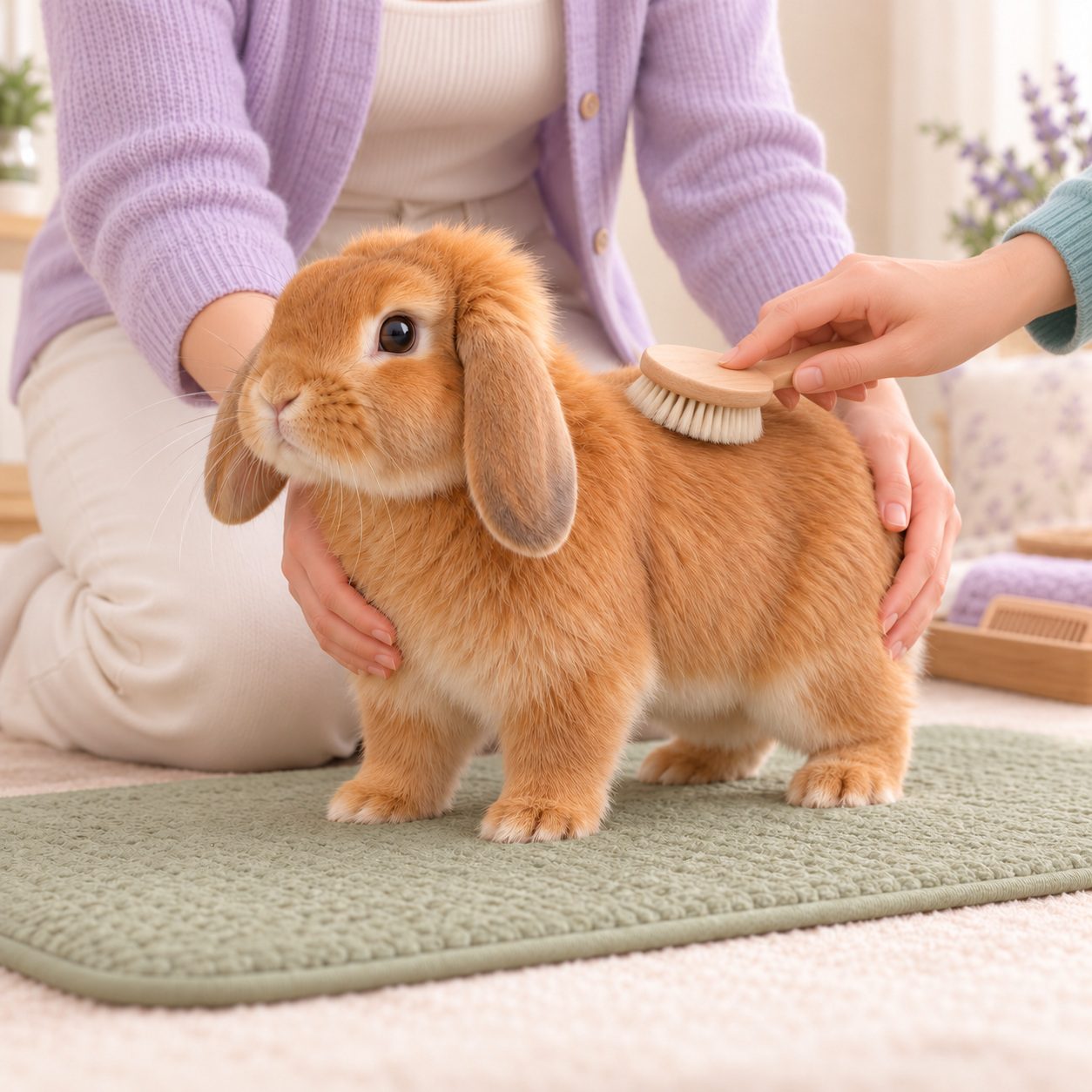
Goal: Stable footing with minimal restraint.
Useful for: Routine brushing, top-coat care, and introducing the grooming session.
How to support the rabbit
Work on a non-slip mat at floor level or on a low, secure surface. Use gentle contact around the shoulders and hindquarters when needed to guide movement. Keep the rabbit’s feet beneath them and avoid pressing the body down to prevent movement.
Welfare priority: Give the bunny time to settle and adjust their stance. Start with manageable tasks rather than immediately demanding access to sensitive areas.
2. Upright Cradle

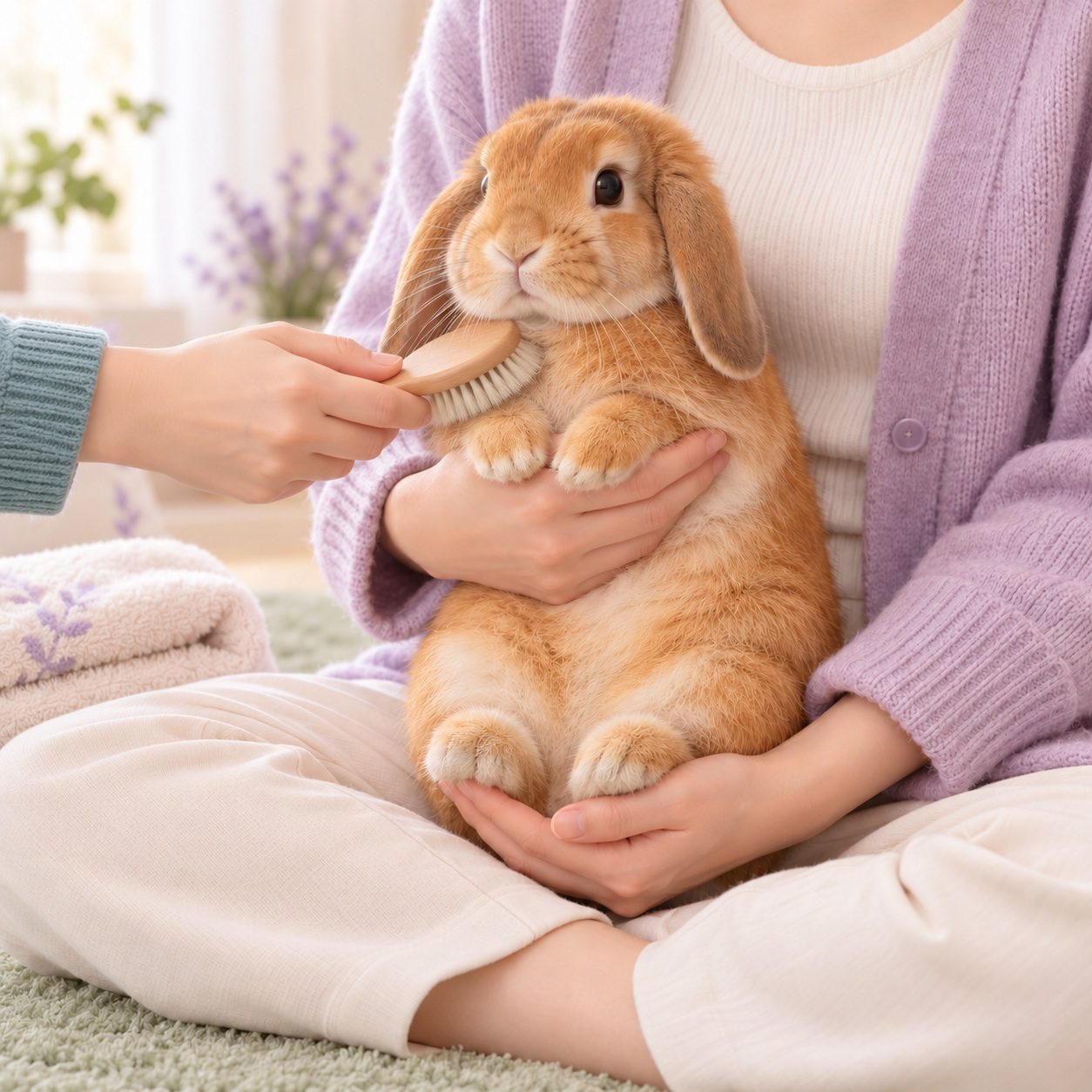
Goal: Supported access for a brief inspection.
Useful for: Necessary checks around the chin, chest, or front paws when a grounded position does not provide access.
How to support the rabbit
Keep the rabbit close to the handler’s body, supporting the chest and cupping the hindquarters. The bottom support must carry the hind end; do not suspend the rabbit by the front legs or armpits.
Welfare priority: When the task needs both hands, use an experienced second handler. One person maintains support and watches the bunny while the other completes the brief task.
3. Upright on Two — Chest-to-Chest

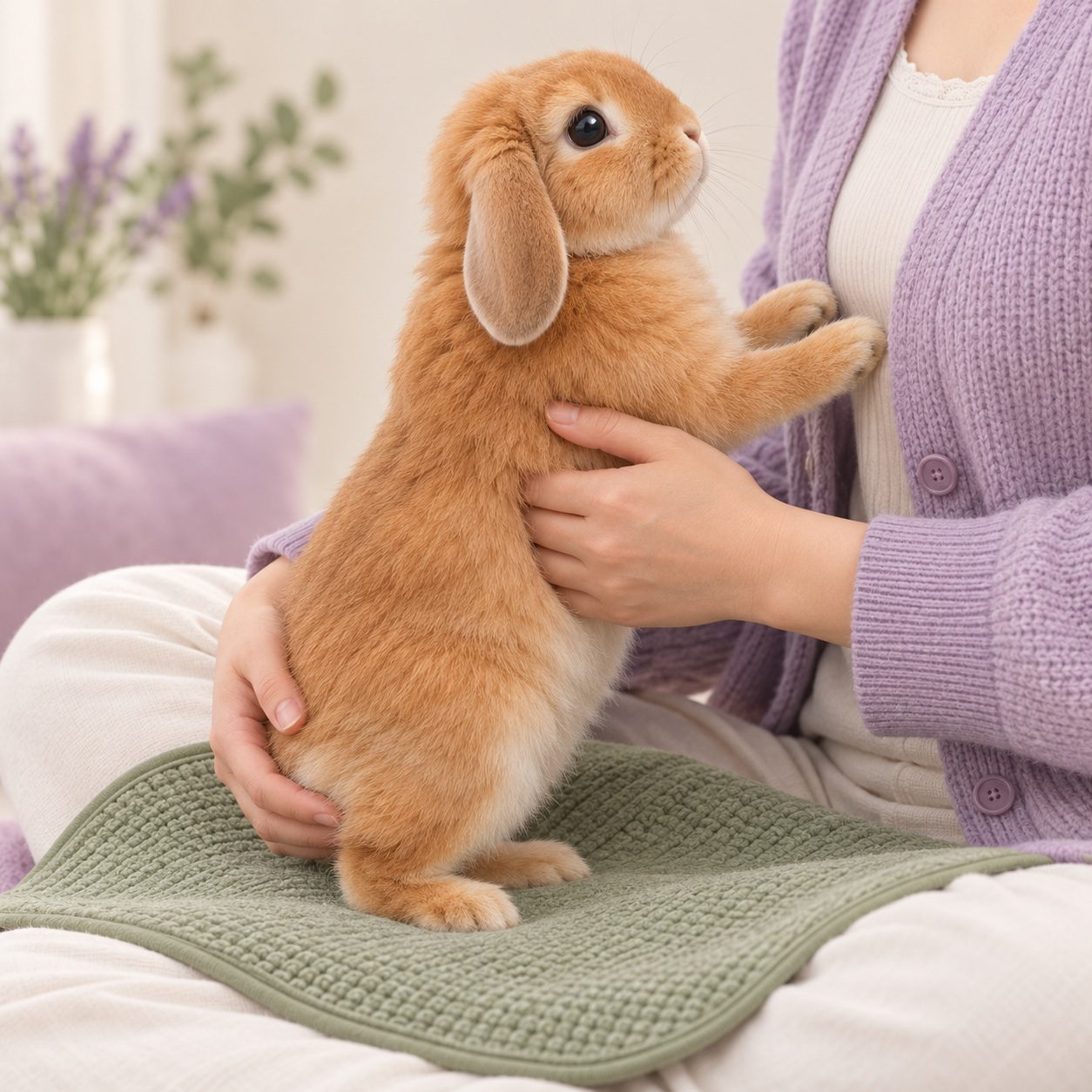
Goal: Brief access while keeping the hind end supported.
Useful for: Checking areas around the chest and underarms.
How to support the rabbit
Keep the hind feet or bottom supported on a secure lap or surface while gently supporting the chest. Avoid pulling the forelegs upwards or stretching the body to expose more skin.
Welfare priority: Keep the head and neck comfortable. Do not lift or hold the chin to stop the bunny moving forward. If the rabbit leans away or struggles, return them to all fours and reassess.
4. Football Carry — Close Forearm Support

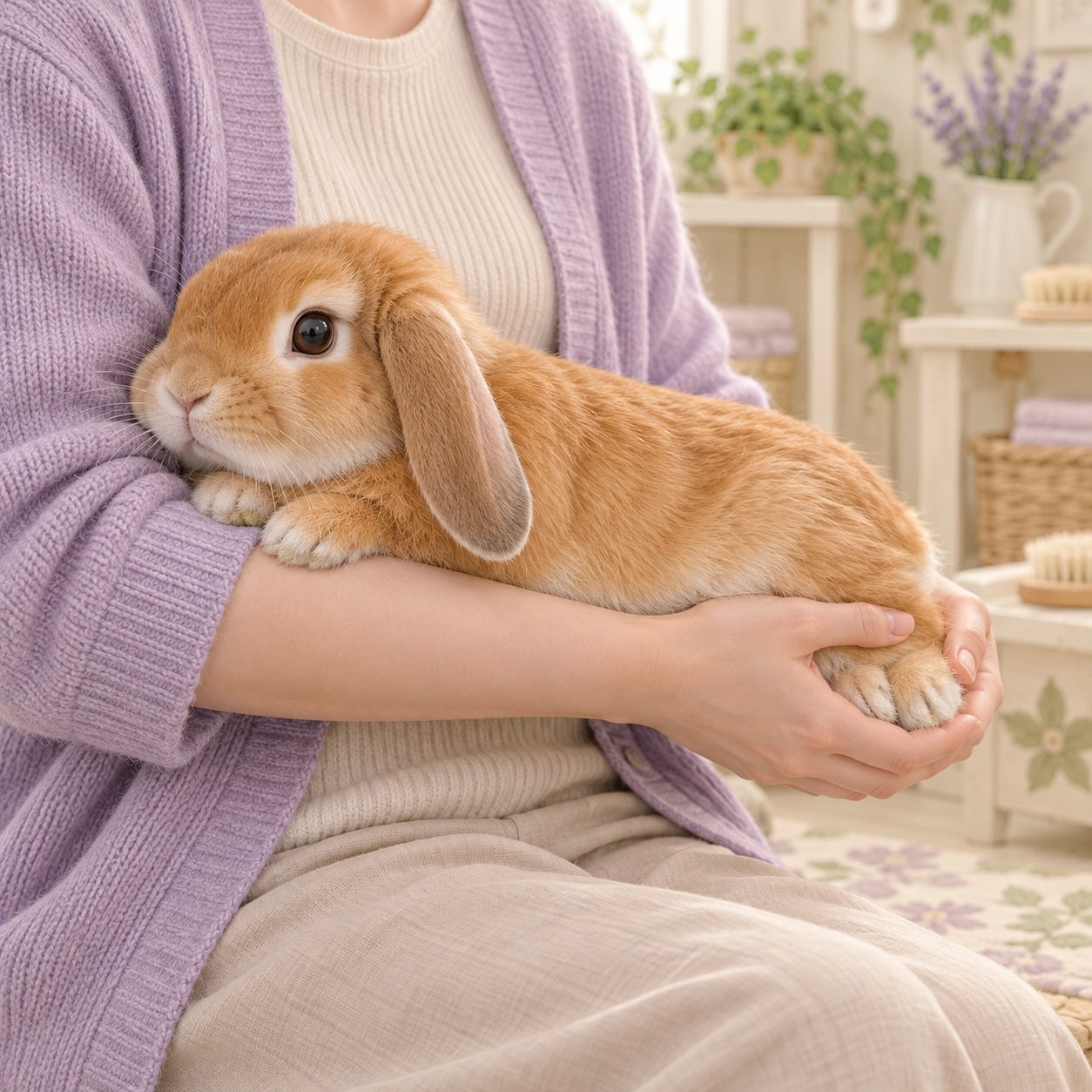
Goal: Secure support close to the handler.
Useful for: Brief necessary carrying or repositioning by a competent handler.
How to support the rabbit
Use the forearm to support the body and the other hand to stabilise the back and hindquarters. Keep the rabbit close without squeezing. If the head rests near the elbow, leave the nostrils unobstructed and do not force the face into clothing.
Welfare priority: Observe how the rabbit responds to close support. For grooming that requires tools, provide a stable working position and assistance rather than trying to carry, restrain, and groom at once.
5. Supported Recline

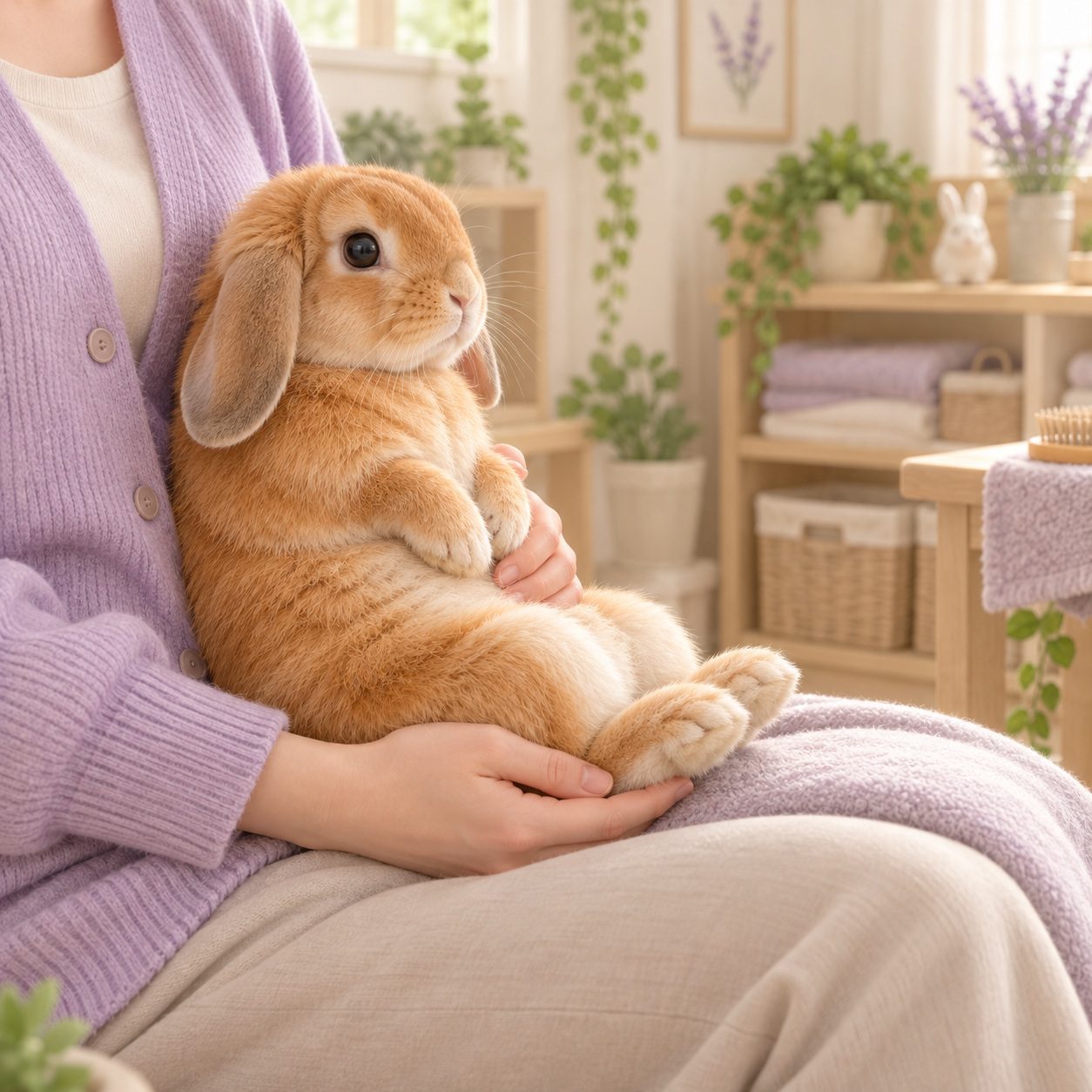
Goal: Maintain body support during necessary repositioning.
Key consideration: An incline does not prevent tonic immobility.
What matters in these examples
The lap or arm must support the body rather than leaving the head, back, or hindquarters hanging. Do not force the neck into position or pull the rabbit backwards to obtain access.
Welfare priority: Choose grounded or supported upright access first. Do not use reclining to induce stillness. If a necessary examination requires a position the rabbit cannot tolerate, seek a veterinary handling plan.
6. Supported Cradle — Underside Access
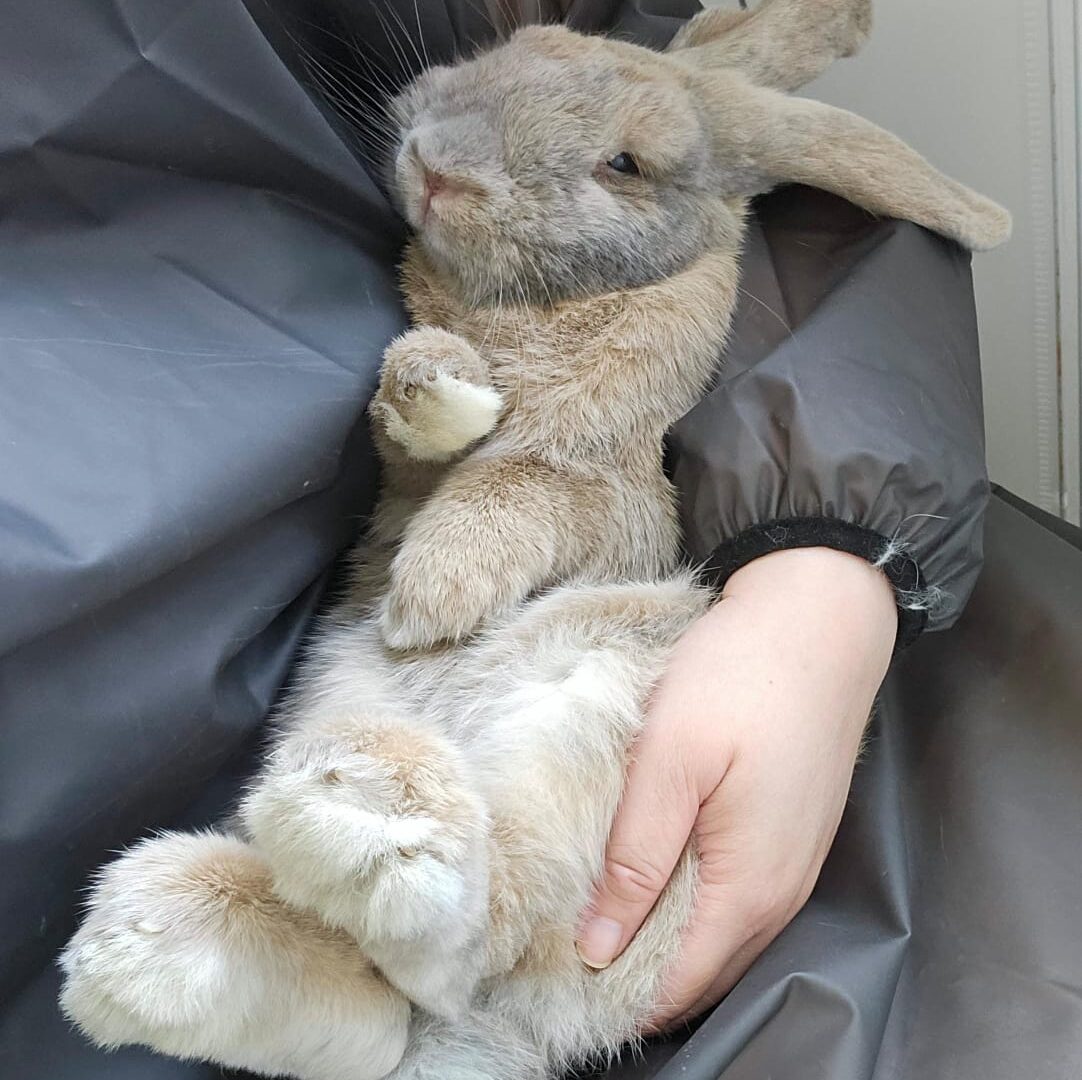
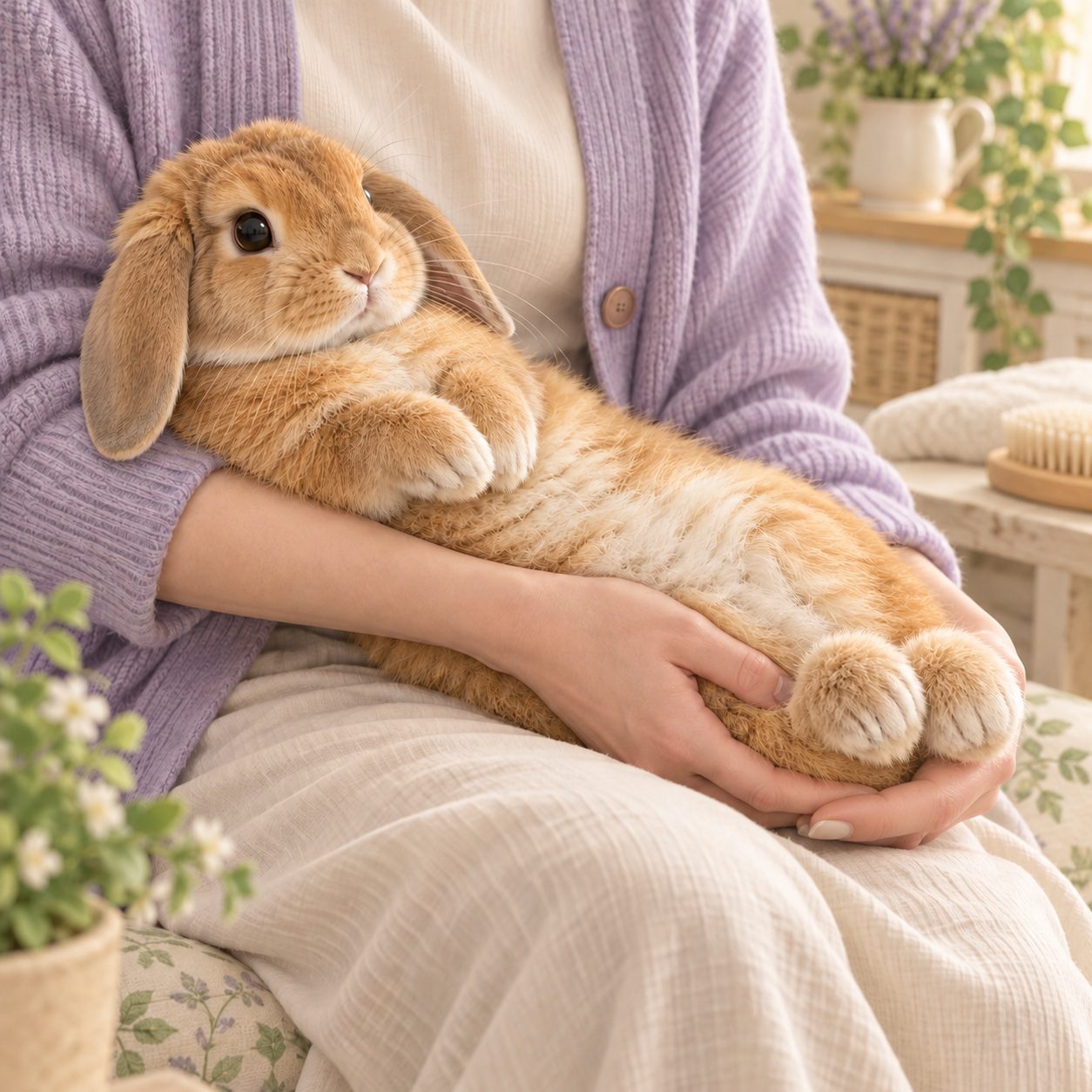
Goal: Maintain body support during necessary underside inspection.
Key consideration: Access must never take priority over the rabbit’s response.
What matters in these examples
Support the back and hindquarters without twisting or forcing the body into a fixed shape. Keep the nose clear and observe breathing, posture, and responsiveness throughout. An experienced second handler can help maintain support during a brief necessary check.
Welfare priority: Do not hold a rabbit belly-up to make them stop resisting. If access requires escalating restraint, return to secure footing and change the plan. Tight belly mats, painful skin, or wounds warrant veterinary assessment.
Nose twitching is not a trance test. Do not wait for the nose to stop moving before reassessing a hold. Watch the whole rabbit.
7. Bunny Burrito — Gentle Towel Support

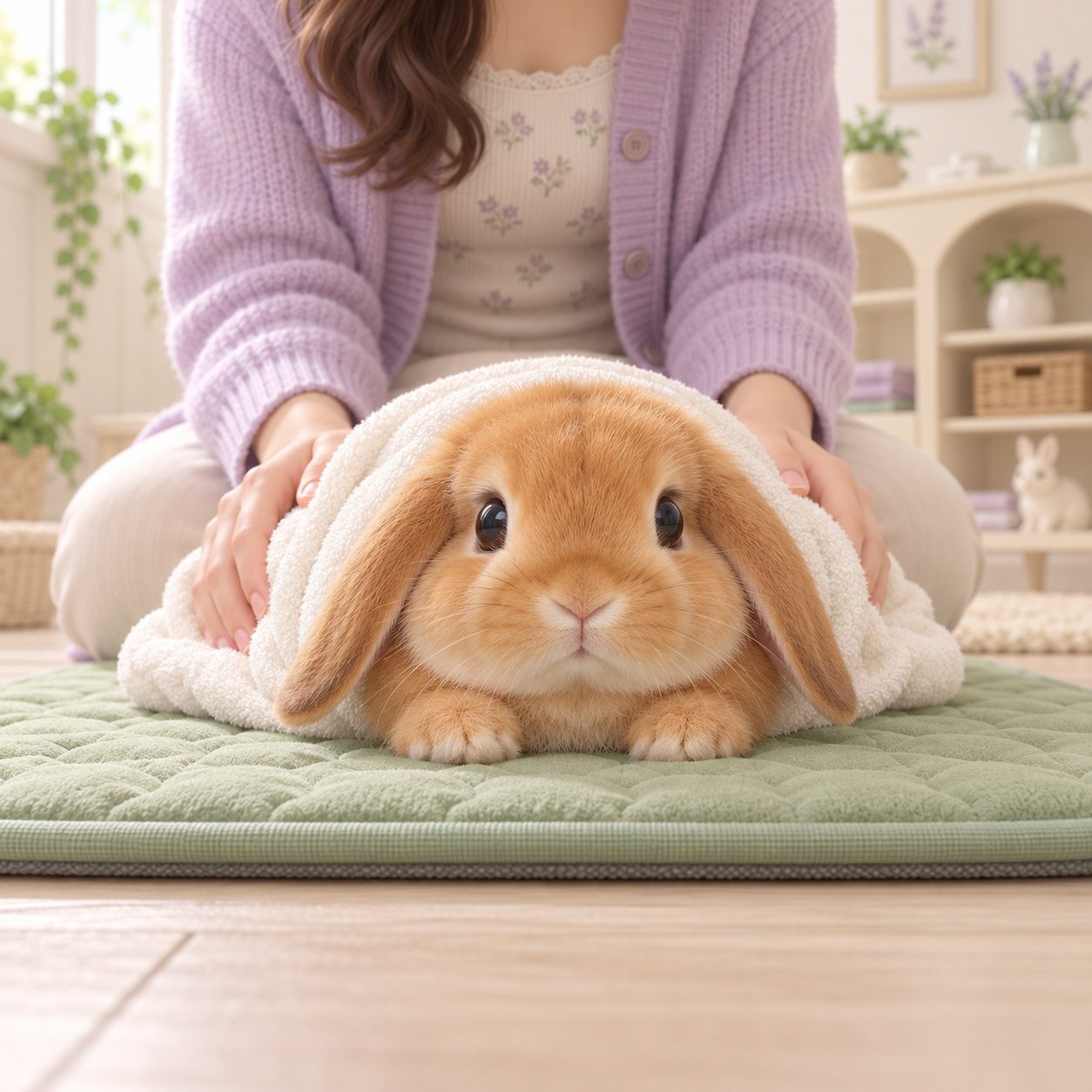
Goal: Gentle containment for a brief necessary task.
Useful for: Selected care tasks or prescribed medication when a veterinary team has demonstrated the technique.
How to support the rabbit
Keep the rabbit supported on a stable surface. Arrange the towel to contain unnecessary movement without squeezing the chest or belly. Leave the face and nostrils clear, and expose only the area needed for the task.
Welfare priority: A towel is a support tool, not permission to overpower a distressed rabbit. If the bunny struggles or breathing changes, stop the task and safely reassess the wrap. Do not keep tightening it to force completion.