
SMALL FEET · EVERYDAY COMFORT
Sore Hocks in Rabbits: Causes, Signs and Care
Small feet carry a surprising amount of rabbit. When their protective fur and skin are under repeated pressure, even ordinary standing and resting can become uncomfortable.
Pododermatitis in rabbits, commonly called sore hocks, is inflammation and damage to the skin underneath the feet. Managing it means reducing pressure and dampness, checking for pain or infection, and following a rabbit-treating vet’s care plan.
By Cookie Yiyi, founder of Oishi Bunnies. Practical care guidance informed by rabbit rescue and grooming experience, with veterinary references below.
What Is Pododermatitis in Rabbits?
Pododermatitis affects the skin on the underside of the feet, often near the rear heel area. Despite the name “sore hocks,” it does not necessarily start in the ankle joint. Front feet can be affected too.
Rabbits rely on fur to cushion their feet rather than the thick paw pads found in cats and dogs. Pressure, friction, and moisture can damage that protection.
When skin becomes damaged or breaks down, infection may follow. Rabbit sore-hock care therefore needs to address both the affected feet and the conditions placing pressure on them.

Pododermatitis in Rabbits: 10 Risk Factors for Sore Hocks
Several factors often work together to cause sore hocks in rabbits. Pressure, friction, dampness, and changes in mobility can all contribute. Understanding these risks helps you make practical changes for rabbit sore hock prevention.
A floor that suits one rabbit may need extra cushioning or cleaning for another, particularly a Rex rabbit or a bunny with limited mobility. Good rabbit welfare means adapting the environment to the individual, rather than assuming one setup suits every pair of feet.
1. Hard, Rough, or Slippery Flooring
Wire floors and abrasive surfaces can damage the feet. Bare hard flooring also offers little cushioning; slippery tiles can make comfortable movement harder. Check the surfaces your rabbit uses for resting, feeding, and everyday movement.
2. Too Little Cushioning
A rabbit needs comfortable resting and walking surfaces. Choose stable, non-slip padding with a soft top layer; remove materials your rabbit chews or swallows. Suitable cushioning is an important part of rabbit sore hock prevention, particularly for vulnerable feet.
3. Soiled Bedding and Litter
Urine and accumulated waste can irritate skin. Spot-clean wet areas promptly rather than waiting for the next full clean. A soft resting surface still needs regular attention if it becomes damp or soiled.
4. Excess Body Weight
Extra weight can increase pressure on the feet and contribute to pododermatitis in rabbits. Ask your vet to assess body condition and plan gradual changes; do not restrict hay to encourage weight loss.
5. Overgrown Nails
Overgrown nails can affect how the toes and feet meet the ground. Keep them at an appropriate length without cutting the quick. Nail maintenance supports comfortable footing, but it does not replace assessment of an existing foot lesion.
6. Reduced Movement
Long periods in one position can concentrate pressure. Provide accessible space to move, and investigate pain or illness if your rabbit becomes less active. For rabbits already receiving treatment, follow the vet’s advice about suitable activity.
7. Arthritis and Mobility Changes
Joint pain may change posture and make reaching a litter tray difficult. When planning rabbit sore hock treatment, your vet may also need to address underlying pain or mobility problems. A soft floor helps, but it cannot resolve those problems on its own.
8. Repeated Stamping on Hard Surfaces
Repeated impact can contribute to foot trauma. Consider what is making your rabbit thump, as well as the surface beneath them. Addressing sources of alarm or disturbance also supports their everyday comfort.
9. Limb or Spinal Abnormalities
Splay leg, weakness, paralysis, or other changes in posture can create uneven pressure. These rabbits may need an individual nursing and flooring plan, with veterinary guidance on comfortable positioning and accessible daily care.
10. Persistent Environmental Dampness
Leaking drinkers and damp resting corners keep the feet wet. Check beneath mats and bedding, where moisture can remain hidden. Keeping contact surfaces dry helps reduce one of the factors contributing to sore hocks in rabbits.
Signs of Sore Hocks to Watch For
Watch for changes in both the feet and your rabbit’s everyday behaviour. A bunny may alter how they stand or move before you notice a wound.
- Fur changes: Thinning fur or a new bare patch under a foot deserves a closer look, especially if it is growing or irritated.
- Colour changes: Increasing redness or inflamed-looking skin.
- Texture changes: Thickened skin, cracking, crusts, or scabs. Avoid picking at them.
- Posture changes: Repeated weight shifting or avoiding pressure on a foot.
- Reduced activity: Reluctance to walk, hop, or move as usual.
- Litter changes: Accidents or reluctance to enter the tray. Pain is one possible cause; urinary disease and other problems also need consideration.
- Touch sensitivity: Pulling away, grunting, or nipping during handling can indicate discomfort.
- Broken skin or discharge: Wounds, bleeding, swelling, or pus need prompt veterinary assessment.
Pododermatitis in Rabbits: When Veterinary Care Is Needed
Arrange a vet check for new or worsening sore hocks in rabbits. Seek urgent advice for significant pain, bleeding, swelling, discharge, inability to bear weight, or reduced eating or droppings. Do not wait for a grooming appointment to assess a painful foot.

Why Early Care for Sore Hocks Matters
- Deeper infection: Damaged skin can allow infection into underlying tissues; severe cases may involve tendons, joints, or bone.
- Persistent pain: Discomfort can restrict movement and interfere with normal feeding. Recognising these changes is an important part of protecting rabbit welfare.
- Challenging recovery: Advanced disease can need prolonged treatment or surgery. Amputation may be considered in some severe cases; it is not the inevitable outcome of sore hocks.
What Rabbit Sore Hock Treatment May Involve
Your vet will assess the feet and possible contributing problems. Treatment for pododermatitis in rabbits may include pain relief, a wound-care and dressing plan, antibiotics where indicated, and changes to bedding or mobility support.
Deep or persistent lesions may need imaging or further tests. The aim is to treat the affected tissue while reducing the pressure and irritation that caused the problem. Environmental adjustments also support ongoing rabbit sore hock prevention.
MAKE THE APPOINTMENT COUNT
Sore Hocks in Rabbits: What to Ask Your Vet
A useful plan for rabbit sore hock treatment should tell you what to do at home, what improvement might look like, and when to ask for help. These questions can make the instructions easier to follow once you are back home with bunny.
- What is happening beneath the surface? Is the skin intact, is infection suspected, and are further tests or imaging needed?
- Could another problem be contributing? Ask about body condition, nail length, arthritis, posture, and difficulty moving or using the litter tray.
- What exactly should I apply or give? Confirm the product or medication, amount, frequency, duration, and what to do if a dose is missed or the treatment is licked off.
- Does my rabbit need a dressing or protective footwear? If so, ask for a fitting demonstration, an inspection schedule, and clear instructions about changes or removal.
- How should I adapt the floor and litter tray? Show photographs of the actual setup, including resting areas, walking routes, and the surface inside the tray. Ask which changes would best support comfort and reduce recurring pressure.
- When is the recheck, and what means we should return sooner? Ask which changes in the wound, comfort, appetite, droppings, or movement need prompt attention.
Preventing Sore Hocks: Everyday Environmental Adjustments
Start with the surface beneath your bunny, then look at hygiene, nails, movement, and any underlying pain. Products can support a care plan; they cannot replace one.
Soft, Stable Flooring
Provide cushioning, grip, and a clean, dry surface. Cover foam so it cannot be chewed, inspect it regularly, and replace damaged materials. Memory foam is one possible material, not an essential treatment for every Rex rabbit.
Careful Nail and Coat Maintenance
Appropriate nail length supports comfortable foot placement. Preserve the fur cushioning the soles; do not shave it away. Ask for advice about mats or urine-soiled fur rather than pulling or cutting close to sore skin.
A Dry, Clean Environment
Use absorbent bedding and change wet patches promptly. Check the surface your rabbit actually sits on, including beneath fleece and around water bowls.
Easy Litter-Tray Access
A low entrance can help rabbits with painful feet or stiff joints. Choose a stable tray with a comfortable surface; avoid wire or hard grates that concentrate pressure.
Recovery Shoes: An Individual Decision
Zen Sole-Mates or other protective footwear may be considered as part of a vet-directed plan. Fit, moisture, rubbing, and your rabbit’s movement need checking. Shoes do not provide permanent protection or replace suitable flooring, wound care, or treatment.
LOOK BENEATH THE BUNNY
Pododermatitis in Rabbits: Choosing Suitable Flooring
When managing pododermatitis in rabbits, “soft” is a starting point, rather than the whole shopping list. Suitable rabbit flooring also needs grip, a dry contact surface, and a cleaning routine you can maintain.
The best arrangement for sore hocks in rabbits depends on movement, toileting habits, and the tendency to chew. Think about the whole living area, including the routes between favourite resting spots, hay, water, and the litter tray.
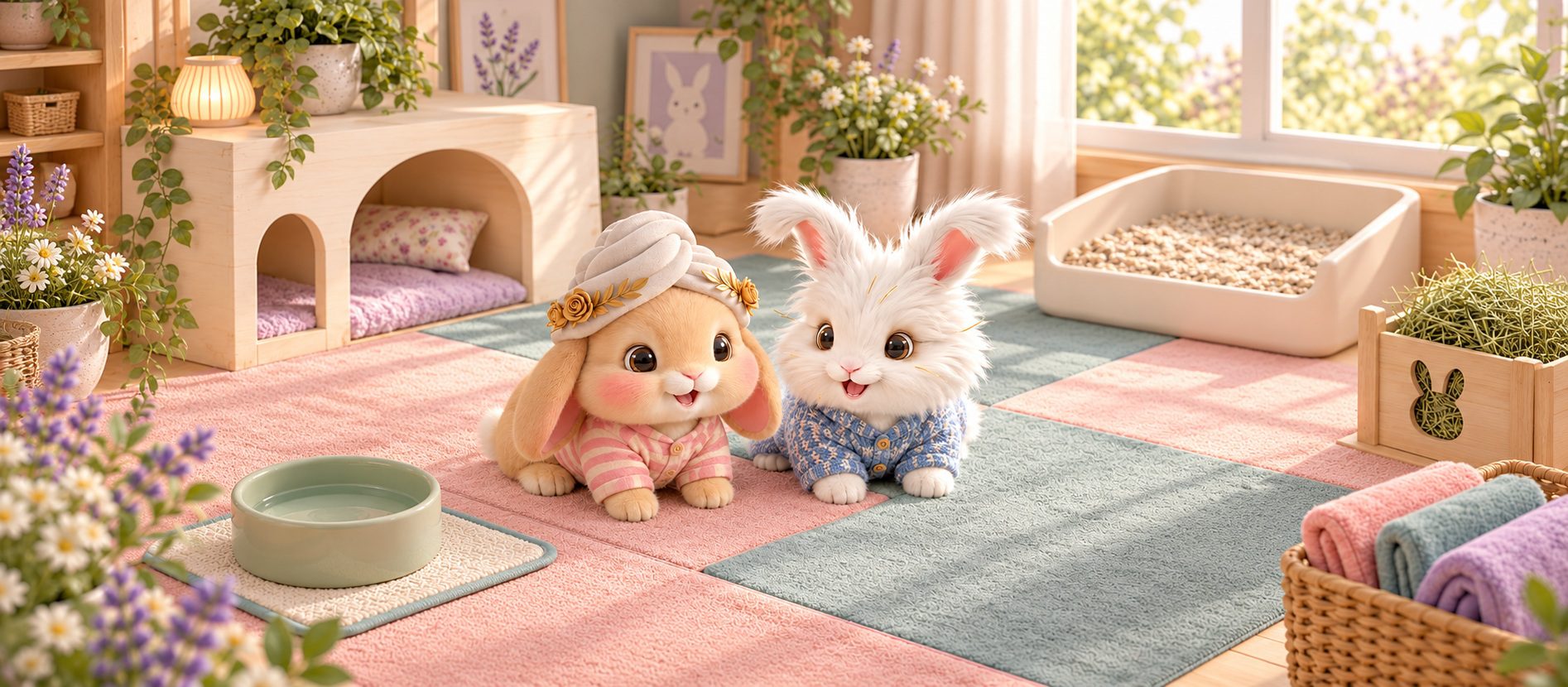
1. Cushioning Without Instability
For rabbit sore hock prevention, provide a cushioned surface that stays reasonably flat beneath your bunny. Watch how they stand and move: a loose, bunched, or very unstable surface may make getting around difficult. Ask your vet for guidance if weakness or painful feet affect their footing.
2. Grip Along Everyday Routes
Check the route between the resting area, hay, water, and litter tray. Secure mats so they do not slide, curl, or leave awkward gaps. Comfortable rabbit flooring should support everyday movement, not just naps. A lovely bed is less useful if bunny must cross slippery tiles to reach dinner.
3. A Dry Contact Surface
Check the layer touching your rabbit’s feet and the material beneath it. Absorbent bedding or underlayers still need changing when wet. A waterproof backing may protect your floor while leaving moisture trapped above it. Keeping the contact surface dry is an important part of caring for sore feet.
4. Cleaning You Can Keep Up With
Choose a setup that lets you remove soiled sections promptly. Keep spare washable layers or replacement bedding ready, and allow cleaned materials to dry before reuse. Check beneath bowls and favourite resting spots as well as the obvious toilet corner. A manageable cleaning routine helps keep the setup comfortable day after day.
As part of rabbit sore hock treatment, discuss the proposed flooring with your vet. Changes should support the dressing, footwear, and movement plan they have recommended. The aim is better rabbit welfare: comfortable rest, easier movement, and less exposure to the pressure and dampness contributing to sore feet.
SMALL CHECKS · USEFUL CLUES
Pododermatitis in Rabbits: Your Daily Care Checklist
A brief routine can help you monitor sore hocks in rabbits without turning every visit into a foot inspection. Daily observations support rabbit welfare and help you discuss changes with your vet. When managing pododermatitis in rabbits, follow the individual care plan for handling, wound checks, dressings, and medication.
- Check appetite and droppings. Note whether your rabbit is eating and producing droppings as usual. Reduced eating or fewer droppings need prompt veterinary advice, even if the feet appear unchanged.
- Watch ordinary movement. Look for new limping, hesitation, weight shifting, or difficulty reaching hay, water, and the litter tray. Changes in comfort matter when assessing how your rabbit is responding to care.
- Remove damp or soiled bedding. Keeping resting surfaces clean and dry is part of rabbit sore hock prevention. Check the top surface and underneath it, including areas around water bowls and favourite resting places.
- Inspect the flooring. Straighten bunched layers and check for slipping mats, curled edges, exposed foam, or loose fibres. Make sure comfortable routes remain available between your rabbit’s everyday essentials.
- Follow the prescribed treatment schedule. Rabbit sore hock treatment should follow your vet’s instructions. Give medication and inspect or change dressings and footwear exactly as directed. Record anything that makes the plan difficult to follow.
- Keep a short record of changes. Note comfort, movement, and any wound changes observed during the agreed checks. Bring the record to rechecks rather than relying on memory.
The Journey to Comfortable Feet
Healing sore hocks takes observation, regular reassessment, and consistent care. Sirius’s video is part of our own experience, rather than proof that a particular product will work for every bunny.
Keep a simple record of appetite, droppings, movement, and the affected area. Photos taken in similar light can help you discuss changes with your vet; avoid repeatedly handling painful feet just to get a picture.
Continue the agreed care plan after the surface looks better, and attend the recommended rechecks. Recurrence is possible if pressure, dampness, or an underlying mobility problem remains.
Sore Hocks in Rabbits: Frequently Asked Questions
Can indoor rabbits develop sore hocks?
Yes. Living indoors does not remove the risk of pododermatitis. Hard or abrasive surfaces, damp bedding, excess body weight, and reduced mobility can still place pressure on the feet. Check the areas your rabbit actually uses throughout the day, rather than only their sleeping spot.
Are Rex rabbits more susceptible to sore hocks?
Yes. Rex rabbits have less protective fur cushioning on their feet, making them more susceptible. This does not mean every Rex rabbit will develop sores. Suitable flooring, dry bedding, appropriate body condition, and attention to mobility remain important parts of prevention.
Do recovery shoes replace padded flooring?
No. Protective footwear may be part of an individual treatment plan, but your rabbit still needs suitable resting and walking surfaces. Ask your vet whether footwear is appropriate, how it should fit, and how often it needs inspection or changing.
How long do sore hocks take to heal?
There is no reliable timetable for every rabbit. Recovery depends on the depth of the lesion, infection, ongoing pressure, mobility, and response to treatment. Advanced or recurring cases can need prolonged management. Ask your vet what progress to expect before the next recheck, rather than judging recovery by appearance alone.
Can sore hocks return after treatment?
Yes. Recurrence is possible, particularly when pressure, dampness, or an underlying mobility problem remains. Keep the agreed environmental adjustments in place and follow your vet’s recheck advice, even when the skin looks better.
EXPERIENCE · OBSERVATION · COMPASSION
A Note from Cookie Yiyi
Oishi Bunnies brings practical rescue, fostering, and grooming experience to everyday rabbit care. Our role is to help caregivers notice changes and make thoughtful home adjustments; diagnosis and treatment belong with a vet who treats rabbits.
For sore hocks, the useful questions are often wonderfully ordinary: Is the floor comfortable? Is the bedding dry? Has bunny’s movement changed? Small observations can help you seek care before a problem becomes harder to manage.