
The Modern Art of Rabbit Care
THE HYDRATION EQUATION
The Hydration Equation: Anatomy-Aware Ergonomics (Bowl vs Bottle)
 Estimated Read Time: 4 mins
Many rabbit owners use gravity bottles because they are widely sold with commercial cages. However, when evaluating the practical bowl vs bottle debate, many veterinary and rabbit welfare organisations recommend an open rabbit water bowl as the primary drinking method for healthy domestic rabbits.
When it comes to keeping your bunny optimally fluid-balanced, mastering the biological hydration equation matters just as much as what is in the dish. From a biomechanical standpoint, providing a ground-level dish supports your rabbit’s natural drinking stance and long-term well-being.
When it comes to keeping your bunny optimally fluid-balanced, understanding this biological hydration equation matters just as much as what is in the dish. From a biomechanical standpoint, providing a heavy, accessible dish supports your rabbit’s daily well-being and natural drinking stance.
The Hydration Showdown: Bowl vs. Bottle
 Ground-Level Bowl
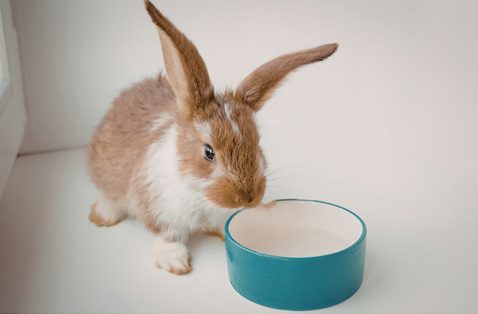
In the wild, European rabbits (Oryctolagus cuniculus) evolved drinking primarily from ground-level water sources like puddles, streams, and dew on vegetation. Because of this, their musculoskeletal structure is naturally optimized for downward cervical extension (bending the neck downward).
When a rabbit drinks from a bowl, their tongue rapidly laps water into the mouth, while coordinated tongue and jaw movements allow efficient swallowing—a process consistent with their natural drinking behaviour.
Natural Drinking Posture
Gravity Bottle
 Gravity Bottle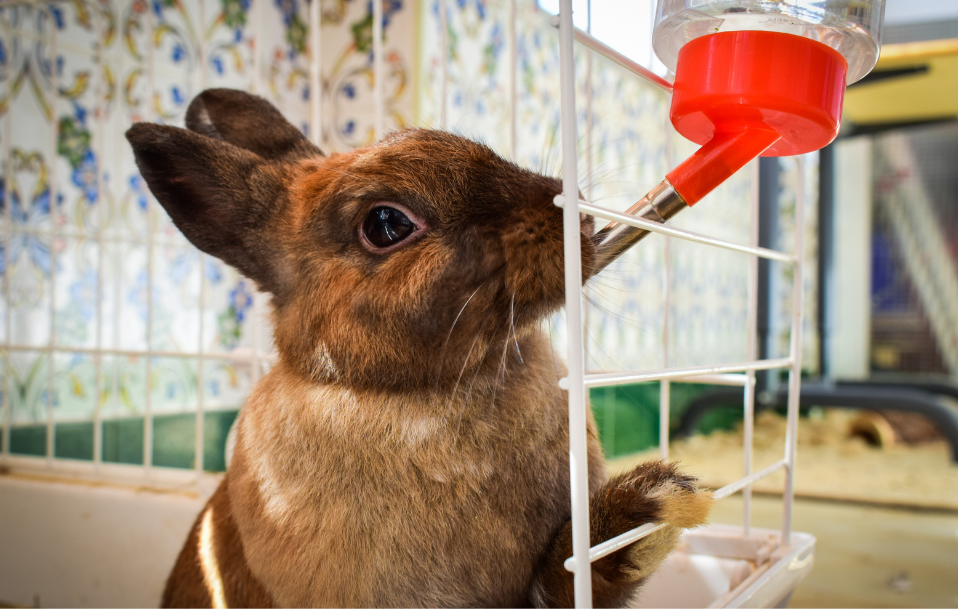
From a biomechanical perspective, gravity bottles require a less natural drinking posture than open bowls. To obtain water from a ball-valve bottle, a rabbit must lift their head, extend their neck, and tilt their spine upward. This introduces several physiological considerations:
The Physiological Payoff of Optimal Hydration
Evidence in rabbit welfare literature consistently shows that rabbits offered bowls generally drink more water, spend less time obtaining it, and show a clear preference for bowls over bottles. Leading rabbit welfare organisations, including the House Rabbit Society and the Rabbit Welfare Association & Fund (RWAF), recommend open water bowls because they encourage more natural drinking behaviour and are associated with greater water consumption.
In rabbit medicine, maximizing fluid intake is an excellent preventative care strategy. Adequate hydration helps reduce dehydration as one contributing factor associated with Gastrointestinal (GI) Stasis. Dehydration can dry intestinal contents, making them more difficult to move through the digestive tract.
| Drinking Method | Postural Ergonomics | Flow Rate / Volume | Health Implications |
|---|---|---|---|
| Water Bowl | Natural Alignment Head down, neutral spine | High Effortless lapping | Supports gut motility & reduces urinary calcium concentration |
| Gravity Bottle | Altered Posture Upturned neck extension | Low Drop-by-drop restriction | May discourage optimal fluid intake |
Should Rabbit Water Bowls Be Elevated?
As elevated pet feeders grow in popularity for cats and dogs, many rabbit owners wonder if elevating a rabbit’s water bowl offers similar benefits. Furthermore, many commercial hay feeders now come with built-in, raised bowl holders to save space and reduce mess.
Are Elevated Bowls Harmful?
Not necessarily. A bowl raised just a few centimetres on a low stand is unlikely to cause distress to a healthy rabbit, provided the rabbit can still drink with minimal neck elevation.
However, there is no established welfare or medical benefit to elevating a water bowl for a healthy rabbit. Because rabbits are anatomically designed to drink from the ground, raising the bowl unnecessarily alters their drinking posture without any scientific evidence that it improves comfort or hydration.
What About Combined Hay Feeders?
These setups are highly popular because they keep the enclosure tidy. They are generally acceptable if the bowl remains low enough that the rabbit does not have to noticeably lift or extend its neck to drink.
If the built-in bowl sits at chest height or higher, it forces a posture similar to a gravity bottle. In those cases, placing a separate heavy ceramic bowl directly on the floor is the better choice.
Clinical Exceptions: When a Bowl (or Ground-Level Placement) Isn’t Best
While open, ground-level water bowls are appropriate for most healthy rabbits, individual medical conditions or temporary veterinary recommendations may make alternative watering methods or modified heights more suitable. Not every rabbit can use a standard open floor bowl safely. Important exceptions include:
- Advanced Osteoarthritis: Older rabbits with severe spinal or chronic joint disease who experience pain or stiffness when bending their necks all the way to the floor can benefit from a slightly elevated bowl.
- Post-Surgical Recovery: Rabbits recovering from certain facial, oral, or spinal surgeries where surgical sites must be kept strictly clean and dry may temporarily require a bottle or highly modified dish.
- Severe Neurological or Spinal Diseases: Rabbits suffering from chronic cervical conditions or conditions like severe head tilt (E. cuniculi or otitis media) who may struggle with orientation and balance, risking accidental aspiration. Adapted bowl placement or alternative watering methods may be recommended depending on the rabbit’s neurological deficits.
- Targeted Veterinary Directives: Any specific scenario where a veterinarian recommends temporary or long-term alternative watering setups to monitor exact fluid volume or accommodate a physical disability.

The Golden Rule: Always follow your veterinarian’s advice if your rabbit has special medical needs. For a typical, healthy bunny, however, the open floor bowl remains the preferred option.
Action Plan: Safe Transition – Introducing Rabbit Water Bowl
If you are ready to upgrade your healthy rabbit’s hydration station, opt for a heavy, flat-bottomed ceramic bowl that cannot be easily flipped or tossed. Open bowls should be washed and refilled with fresh water at least once daily, or more frequently if contaminated with hay, food, or droppings. This simple step preserves the hygienic benefit that many owners look for when setting up their enclosures.
Step-by-Step Bottle-to-Rabbit Water Bowl Transition
Because sudden environmental changes can cause stress, transitioning should always be done gradually:
What to Do If You Suspect Dehydration in Rabbits
If your rabbit is showing mild signs of decreased fluid intake but is still active and willing to swallow, you can offer fresh, water-soaked leafy greens to introduce extra moisture into their diet.
 Emergency Protocol
 If your rabbit has stopped eating (anorexia), stopped producing droppings, appears severely lethargic, or is unable or unwilling to drink, this is a life-threatening medical emergency. This classic combination requires immediate intervention. Immediate assessment by an experienced medical professional is essential for subcutaneous or intravenous (IV) fluid therapy to protect their gastrointestinal system. You can locate immediate care using this Rabbit-Savvy Vet Directory for Singapore & Malaysia.


Keep This Guide Handy!
Want a quick, print-ready reference sheet for your fridge or bunny binder? Download our official Hydration Equation Cheat Sheet, or dive into more expert lapine care resources!
 Download Free Cheat Sheet
 Explore More Care Guides
 Shop with a Purpose at The Buntique

Every single organic treat, premium botanical herb blend, and curated lifestyle item you purchase directly funds the critical medical rehabilitation, rescue operations, and rehoming efforts at Oishi Bunnies. Spoil your beloved companions with elite, bunny-safe nutrition while actively gifting a second chance at life to vulnerable shelter and foster rabbits.
Scientific Transparency & Care Disclaimer
 Scientific Transparency & Care Disclaimer
Educative Intent: The data provided within The Modern Art of Rabbit Care and the Oishi Bunnies platform is grounded in extensive rescue, rehabilitation, and organic nutrition experience. While we prioritize strict medical and scientific accuracy, this content is engineered for educational purposes only and does not constitute official veterinary advice, clinical diagnosis, or prescribed medical treatment.
Sanctuary Safety & Ergonomics: Husbandry guidelines—including hydration metrics, environmental setups, and anatomical positioning adjustments—are highly dependent on your specific household ecosystem and individual animal profiles. Always monitor your rabbit’s clinical responses closely during any transition phase.
Anatomy-Aware Handling: Always consult an experienced, rabbit-savvy medical professional before modifying current care protocols or executing dynamic environmental shifts. Oishi Bunnies advocates for transparency and empirical knowledge; however, we cannot assume liability for actions executed without professional veterinary oversight.