 Pro-Tip: Viewing on a mobile device? Switch your browser to Desktop Mode or
rotate to Landscape Layout for the ultimate masterclass reading layout. ⏱️Estimated Reading Time: 9-10 mins
The Hydration Equation: Drinking Water Plus Food Moisture
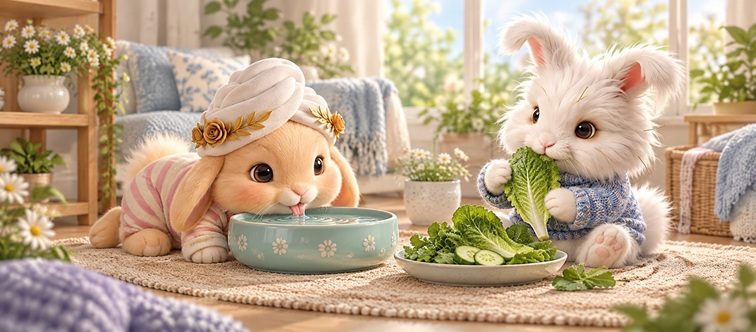
We spend ages choosing hay, inspecting greens, and negotiating pellet portions. Water gets a quick refill and very little applause.
But hydration has two sides: the
water your rabbit drinks
and the
water contained in their food.
That matters. A rabbit munching moisture-rich greens may drink less from the bowl than one on a mostly dry diet. A lower bowl intake does not automatically mean a lower total water intake.
Rabbit research by Tschudin and colleagues
found that dry diets increased drinking-water intake, while including fresh food could increase total water intake overall.
Think of the equation this way:
Total water intake = drinking water + water in food
Your rabbit’s usual diet and drinking pattern give you useful context when something changes.
Drinking & Daily Care
The Hydration Showdown: Bowl vs Bottle
 Open Water Bowl
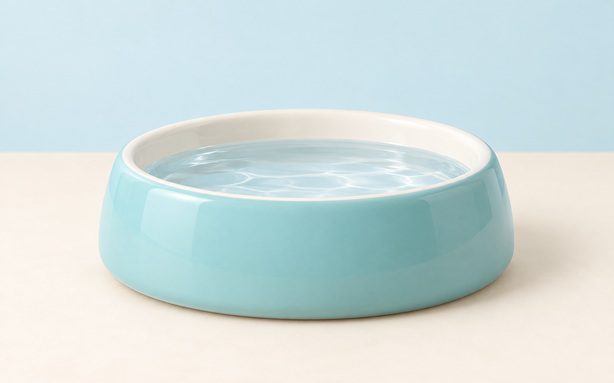
Water is directly available at the surface, allowing your rabbit to lap from the bowl. Choose a stable design with a rim and placement your bunny can reach comfortably.
Water Bottle
 Water Bottle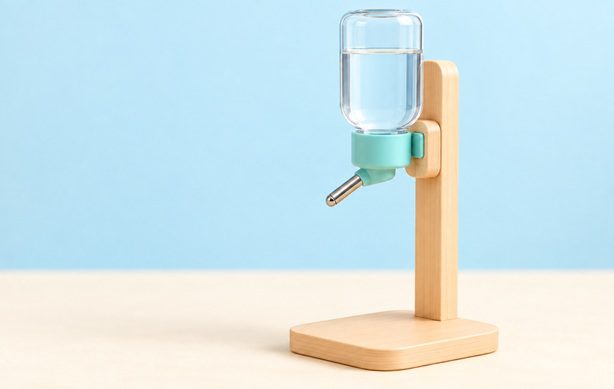
Your rabbit obtains water by operating a nipple or ball-valve mechanism. If you provide a bottle, mount it within comfortable reach and check that your bunny can use it reliably.
Bowl vs Bottle at a Glance
| Consideration | Open Water Bowl | Nipple or Ball-Valve Bottle |
|---|---|---|
| Research findings | Preferred by all 12 rabbits in the small choice study; faster drinking in the filmed rabbits. | Slower drinking and longer drinking bouts in the filmed rabbits. |
| Reliability | Can spill or be overturned. | Can leak, clog, or stop releasing water. |
| Cleanliness | Hay, fur, food, and litter can enter the water. | The reservoir and spout still need cleaning. |
| Skin contact | May repeatedly wet the chin or dewlap in some rabbits. | May help reduce water contact with the skin in affected rabbits. |
| Daily checks | Water level, contamination, stability, and access. | Water level, flow, leaks, secure mounting, and actual use. |
This comparison combines rabbit drinking research with practical water-access guidance and
veterinary advice on wet dewlap.
Match the setup to your rabbit:
persistent skin wetness deserves individual attention. Review the drinking arrangement and seek veterinary advice, since dental drooling can also cause a wet chin or dewlap.
The Hydration Equation: Daily Observation
Rabbit Water Intake: How Much Water Does a Rabbit Need?
Rabbit water intake varies, so no single drinking quota fits every bunny. The hydration equation includes both drinking water and moisture from food.
The MSD Veterinary Manual reports consumption of approximately 120 mL/kg/day in metabolic studies. That’s a reference figure, not an instruction that every pet rabbit must drink that volume directly from a rabbit water bowl. Food moisture and individual circumstances affect how much drinking water you observe.
Keep water freely available. Do not restrict it to match a calculation or syringe water simply to meet a numerical target.
Put Rabbit Water Intake in Context
Diet
Moisture-rich greens contribute water, so bowl intake should be considered alongside what your rabbit eats.
Daily Conditions
Note changes in weather, activity and routine when comparing drinking patterns.
Individual Health
Rabbits with medical conditions may need an individual monitoring or fluid plan from their vet.
If drinking rises or falls substantially without an obvious explanation, record the change and contact your vet. A change from your rabbit’s established pattern can matter more than crossing a single number.
Monitoring Rabbit Water Intake at Home
For several days, use a consistent observation period and note:
- Water offered, refilled and remaining.
- Obvious spills or bottle leaks.
- Fresh-food intake.
- Appetite, droppings, urine output and behaviour.
Water missing from a container is not necessarily water swallowed. Spillage and evaporation affect the measurement. This matters when comparing bowl vs bottle use at home.
For bonded rabbits sharing water, the total doesn’t show how much each rabbit drinks. Observe them individually without separating them just to get tidier figures.
A simple record gives your vet useful context if something changes.
Troubleshooting Your Rabbit Water Bowl or Bottle
| What You Notice | A Practical Next Step |
|---|---|
| Bowl repeatedly tips | Try a broader, heavier or securely attached bowl. |
| Hay constantly enters the water | Adjust placement and check more frequently. |
| Bottle remains unexpectedly full | Test flow and observe whether your rabbit obtains water. |
| Rabbit ignores the new bowl | Preserve the familiar source and review access. |
| Chin or dewlap remains wet | Review the setup and seek advice about skin and dental health. |
| Rabbit struggles to reach | Discuss accessible placement and support with your vet. |
| Drinking changes noticeably | Record the change and seek advice if unexplained. |
Rabbit Dehydration and Other Signs That Deserve Attention
Home observations can alert you to illness, but they can’t reliably measure rabbit dehydration.
Watch for reduced appetite, fewer droppings, altered urine output, unusual quietness or weakness. These signs have several possible causes and should be considered together.
Cloudy or Red Urine
Normal rabbit urine can vary in colour and can be cloudy because of calcium carbonate. Appearance alone can’t establish dehydration or tell pigment from blood.
Seek advice for straining, discomfort, suspected blood or persistent thick, pasty urine.
Gums and the Skin-Tent Test
Dry or tacky gums can contribute to a clinical assessment, but a home gum or skin check can’t confirm or exclude rabbit dehydration. Veterinary assessment considers the rabbit’s overall condition and multiple examination findings.
Do not force the mouth open or rely on a reassuring skin test when your rabbit otherwise appears unwell.
Contact your rabbit-savvy vet promptly if your rabbit stops eating, develops a marked reduction in appetite, or produces substantially fewer or no droppings. Do not wait for all the warning signs to appear together.
Collapse, severe weakness, breathing difficulty or obvious distress require urgent attention.


 Explore More Care Guides
 Shop with a Purpose at The Buntique

Every single organic treat, premium botanical herb blend, and curated lifestyle item you purchase directly funds the critical medical rehabilitation, rescue operations, and rehoming efforts at Oishi Bunnies. Spoil your beloved companions with elite, bunny-safe nutrition while actively gifting a second chance at life to vulnerable shelter and foster rabbits.
Scientific Transparency & Care Disclaimer
 Scientific Transparency & Care Disclaimer
Educative Intent: The data provided within The Modern Art of Rabbit Care and the Oishi Bunnies platform is grounded in extensive rescue, rehabilitation, and organic nutrition experience. While we prioritize strict medical and scientific accuracy, this content is engineered for educational purposes only and does not constitute official veterinary advice, clinical diagnosis, or prescribed medical treatment.
Sanctuary Safety & Ergonomics: Husbandry guidelines—including hydration metrics, environmental setups, and anatomical positioning adjustments—are highly dependent on your specific household ecosystem and individual animal profiles. Always monitor your rabbit’s clinical responses closely during any transition phase.
Anatomy-Aware Handling: Always consult an experienced, rabbit-savvy medical professional before modifying current care protocols or executing dynamic environmental shifts. Oishi Bunnies advocates for transparency and empirical knowledge; however, we cannot assume liability for actions executed without professional veterinary oversight.