
 Pro-Tip: Viewing on a phone? Select desktop mode or rotate to landscape for the best reading experience!
 Estimated Read Time: 6-7 Mins
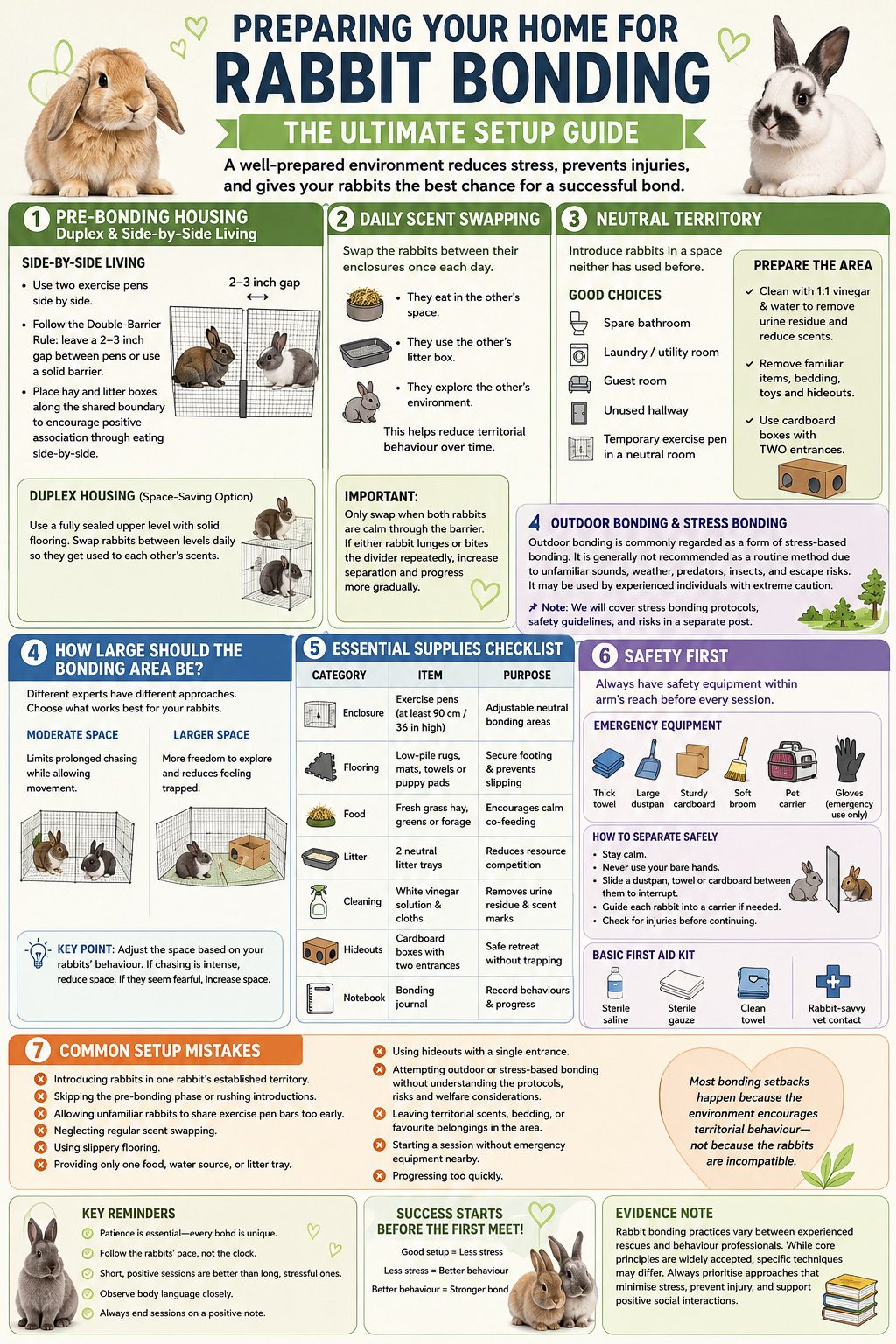
2. Daily Scent Swapping
Rather than swapping individual bowls or litter trays, simply swap the rabbits themselves between their enclosures once each day.
 Eat from the other’s feeding area
 Use the other’s litter tray
 Sleep in the other’s resting area
 Explore the other’s living space
Over time, both rabbits become accustomed to sharing scents, helping reduce territorial responses before face-to-face bonding begins. Even on days when formal bonding sessions cannot take place, daily swapping continues the bonding process.
 Pro Tip: When to Scent Swap
Scent swapping should only be performed when both rabbits remain calm through the barrier. If either rabbit repeatedly lunges, bites the divider, or shows persistent signs of stress, increase the separation distance and progress more gradually.
3. Defining & Preparing Neutral Territory
If one rabbit recognizes the area as familiar territory through scent or repeated use, they are far more likely to defend it aggressively.
 Suitable Neutral Areas
- Spare bathroom
- Laundry or utility room
- Guest bedroom
- Unused hallway
- Temporary exercise pen in an unfamiliar room
 Areas to Avoid
- Existing free-roam rooms
- Permanent rabbit rooms
- Areas containing either rabbit’s bedding or scent
- Outdoor environments
 Preparing the Area Before Every Bonding Session:
- Neutralize Surfaces: Clean hard surfaces using a 1:1 solution of white vinegar and water to remove urine residue and eliminate lingering scent marks.
- Clear Resident Items: Remove familiar blankets, tunnels, toys, hideouts, and beds belonging to either rabbit.
- Use Clean Gear: Always use freshly cleaned or completely neutral equipment whenever possible.
 Safe Hiding Places
Provide simple cardboard hideouts with at least two entrances. Avoid enclosed shelters with only one exit, as these can trap one rabbit during disagreements and severely escalate conflict
4. How Large Should the Rabbit Bonding Setup Be?
 Moderately Sized Enclosure
Limits prolonged chasing while still allowing rabbits to move away naturally during initial interactions.
 Larger Area (e.g., Georgia HRS Gentle Bonding)
Allows rabbits more freedom to explore and reduces the likelihood of feeling trapped.
 Shared Goals of Both Approaches
 Minimise stress
 Reduce territorial behaviour
 Encourage natural communication
 Keep safely supervised
Rather than focusing on one “perfect” size, choose an area that:
- Is genuinely neutral.
- Allows rabbits to move comfortably.
- Is easy to supervise closely.
- Can be adjusted based on the rabbits’ behaviour.
Adjusting Space Based on BehaviourIf repeated high-speed chasing occurs, temporarily reducing the available space may help. Conversely, if rabbits appear fearful or cornered, increasing the available area may encourage calmer interactions.
The rabbits’ behaviour—not a specific measurement—should guide your adjustments.
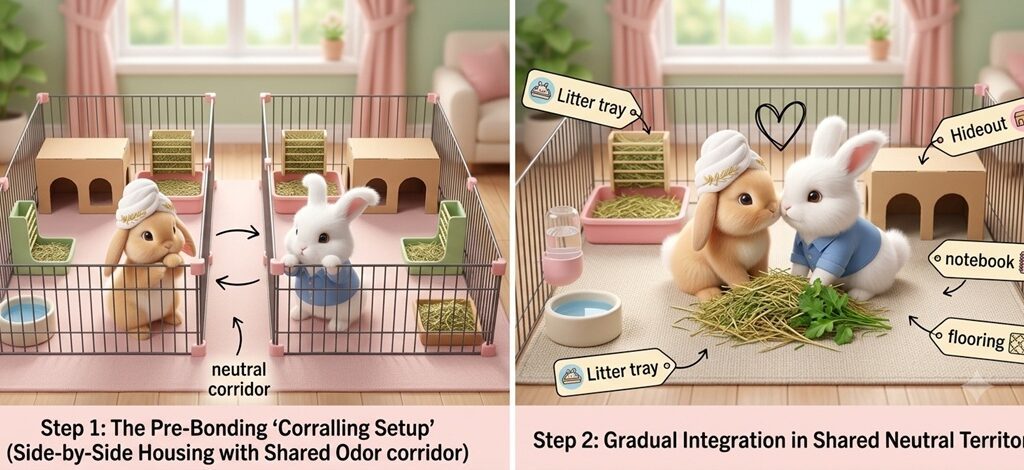
5. Essential Bonding Supplies Checklist

Preparing your rabbit bonding setup beforehand ensures you have essential supplies within reach.
Ensure all hideouts have two entrances. If you are handy, you can construct safe, multi-entrance retreats using cardboard—see our guide on DIY Rabbit Enrichment Toys for easy construction templates.
| Category | Item | Purpose |
|---|---|---|
 Enclosure Enclosure | Exercise pens at least 90 cm (36 in) high | Adjustable neutral bonding areas |
 Flooring Flooring | Low-pile rugs, exercise mats, towels or washable puppy pads | Secure footing and reduced slipping |
| Food | Fresh grass hay, leafy greens or forage | Encourage calm co-feeding |
| Litter | Two neutral litter trays | Reduce resource competition |
 Cleaning Cleaning | White vinegar solution and microfiber cloths | Remove urine residue and scent marks |
| Hideouts | Cardboard boxes with two entrances | Safe retreat without trapping |
 Notebook Notebook | Bonding journal | Record behaviours and progress |
6. Safety Equipment For Rabbit Bonding Setup
Even compatible rabbits may occasionally disagree. Preparing emergency equipment before every session allows you to intervene quickly and safely if needed.
 Important: Keep all safety equipment within arm’s reach outside the enclosure before introducing the rabbits.
 Recommended Safety Gear
 Thick towel Large dustpan Piece of sturdy cardboard Soft broom
 Pet carrier
 Thick leather gardening / bite-resistant gloves (emergency protection only)
 Safe Ways to Separate Rabbits
 Safe Ways to Separate Rabbits
If a fight escalates:
- Stay calm.
- Never place bare hands between fighting rabbits.
- Slide a dustpan, towel, or cardboard sheet between them to interrupt visual contact.
- Gently guide each rabbit into a separate carrier if necessary.
- Check both rabbits carefully for injuries before deciding when to resume bonding.
Basic Rabbit First Aid Kit
 Basic Rabbit First Aid Kit
Keep a simple first aid kit nearby containing:
- Sterile saline solution
- Sterile gauze
- Clean towel
- Contact details for your rabbit-savvy veterinarian
 Note: Any bite wound, puncture, or significant laceration should be examined by a veterinarian promptly, as rabbit bite injuries can easily become infected.
Common Setup Mistakes
Avoid these common setup mistakes that can increase territorial behaviour, stress, or the risk of injury:
Introducing rabbits inside one rabbit’s established territory.Skipping the pre-bonding phase or rushing introductions.Allowing unfamiliar rabbits to share exercise pen bars too early.Neglecting regular scent swapping during the pre-bonding phase.Using slippery flooring that reduces confidence and secure footing.Providing only one food bowl, water source, or litter tray during longer bonding sessions.Using hideouts with only a single entrance, allowing one rabbit to corner the other.Attempting outdoor or stress-based bonding without understanding the appropriate protocols, risks, and welfare considerations.Leaving territorial scents, bedding, or favourite belongings in the neutral bonding area.Beginning a bonding session without emergency equipment readily available.Progressing too quickly instead of allowing the rabbits to set the pace. Key Takeaway: Most bonding setbacks occur because the environment or bonding process encourages territorial behaviour—not because the rabbits are fundamentally incompatible. Careful preparation, patience, and gradual progression give rabbits the best opportunity to build trust and form a stable, lifelong bond.

Ready to Build Your Bonding Setup?
From non-slip play mats and two-entrance cardboard hideouts to organic forage mixes that make co-feeding a breeze, we’ve got everything your bunnies need for a safe introduction!
Shop Oishi Bunnies Gear
Want More Expert Bonding Advice?
Explore our Bunny Bulletin Knowledge Hub for in-depth rabbit care guides, step-by-step printable checklists, daily bonding logs, and stress-free introduction strategies!
Explore Bunny Bulletin