
 Pro-Tip: Viewing on a phone? Select desktop mode or rotate to landscape for the best reading experience!
 Estimated Read Time: 5 Mins
1. Positive Bonding Rabbit Behaviors to Celebrate
These green-light signals indicate that fear and territorial defensiveness are giving way to trust, mutual comfort, and social connection.
 Mutual Allogrooming
 Mutual Allogrooming
Licking the forehead, eyes, ears, or cheeks. Social grooming releases oxytocin, reduces tension, and cements pair bonds.

 Demonstrates acceptance, trust, and social comfort.
 Resting Together
Lying side-by-side, resting nose-to-tail, sharing a hide, or sleeping close to one another voluntarily.
 Proves companion is no longer seen as a threat.
 Flopping & Sprawling
Rolling onto the side, fully extending hind legs, or resting with partially closed eyes in close proximity.
 Clear signal of complete relaxation and security.
 Parallel Loafing
Tucking legs neatly beneath the body while sitting side-by-side quietly without avoidance or tension.
 Peaceful coexistence; often precedes grooming.
 Eating Together
Sharing hay piles, munching greens and treats calmly together, or drinking side-by-side without guard postures.
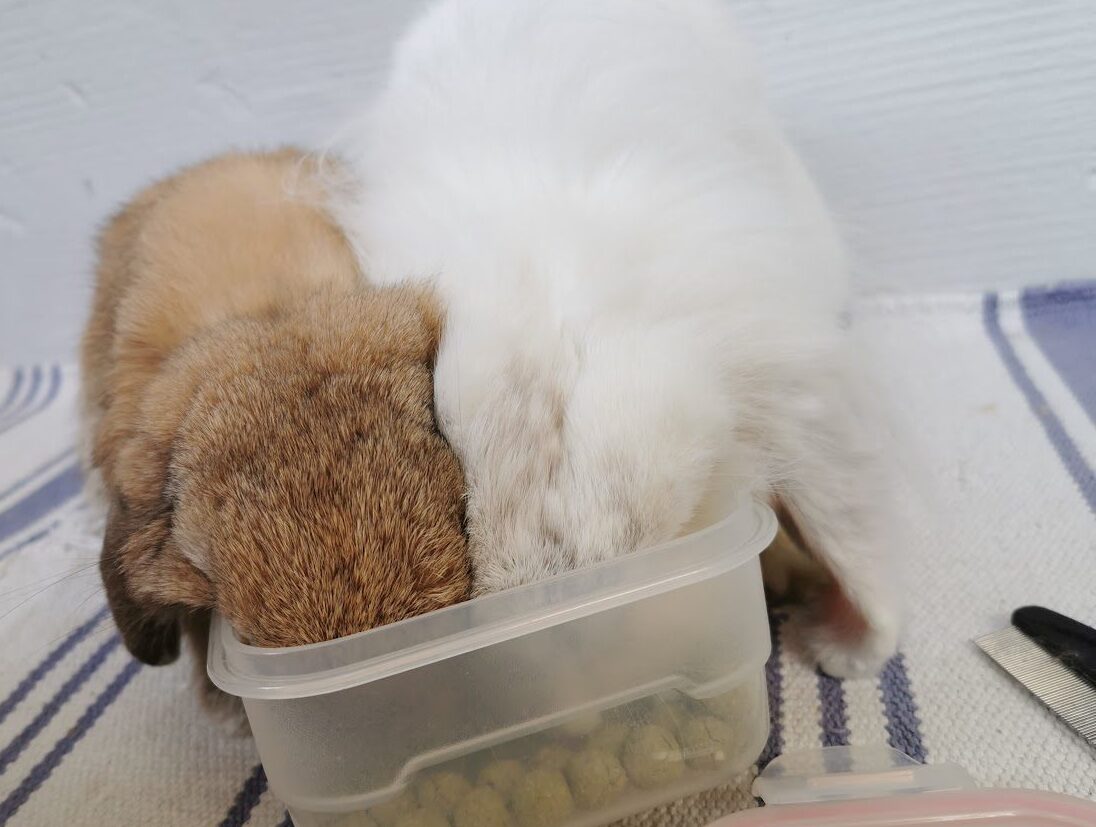 High security; rabbits are vulnerable while feeding.
 Sharing Resources
Using the same hay racks, water bowls, hides, and toys without resource guarding or displacement.
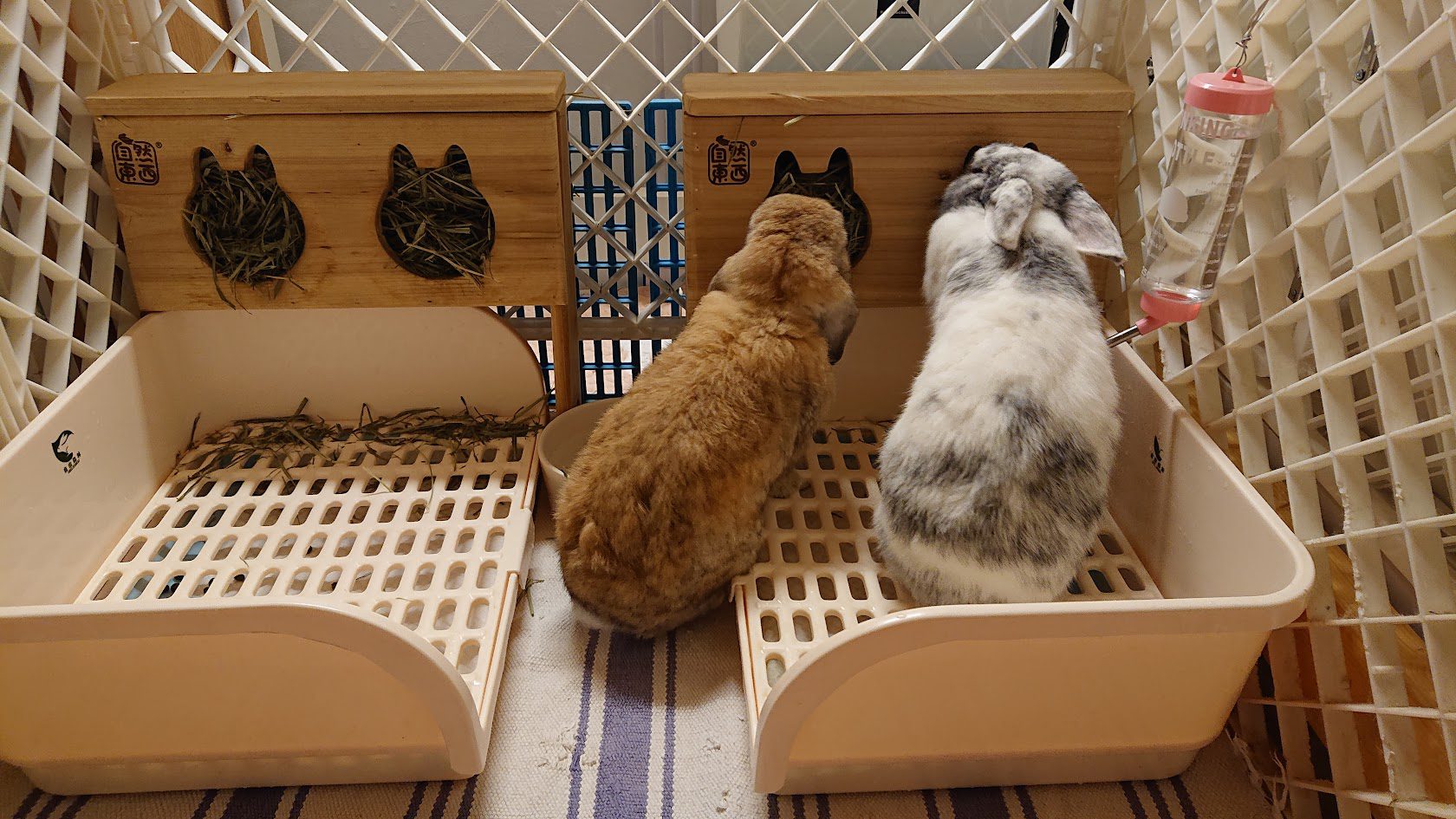 Strong indicator of growing social stability.
 Mirrored Behaviours
Synchronizing routines—grooming themselves, stretching, eating, or exploring at the exact same time.
 Reflects deep rhythm alignment & compatibility.
 Soft Nosing & Nuzzling
Gentle nudging beneath the chin or cheek without biting. Used for greetings, curiosity, or asking to be groomed.
 Calm communication accompanied by loose posture.
 Ignoring Each Other
Transitioning from constant vigilance to behaving completely normally within the shared space.
 The Milestone: Shift from cautious tolerance to lifelong companionship.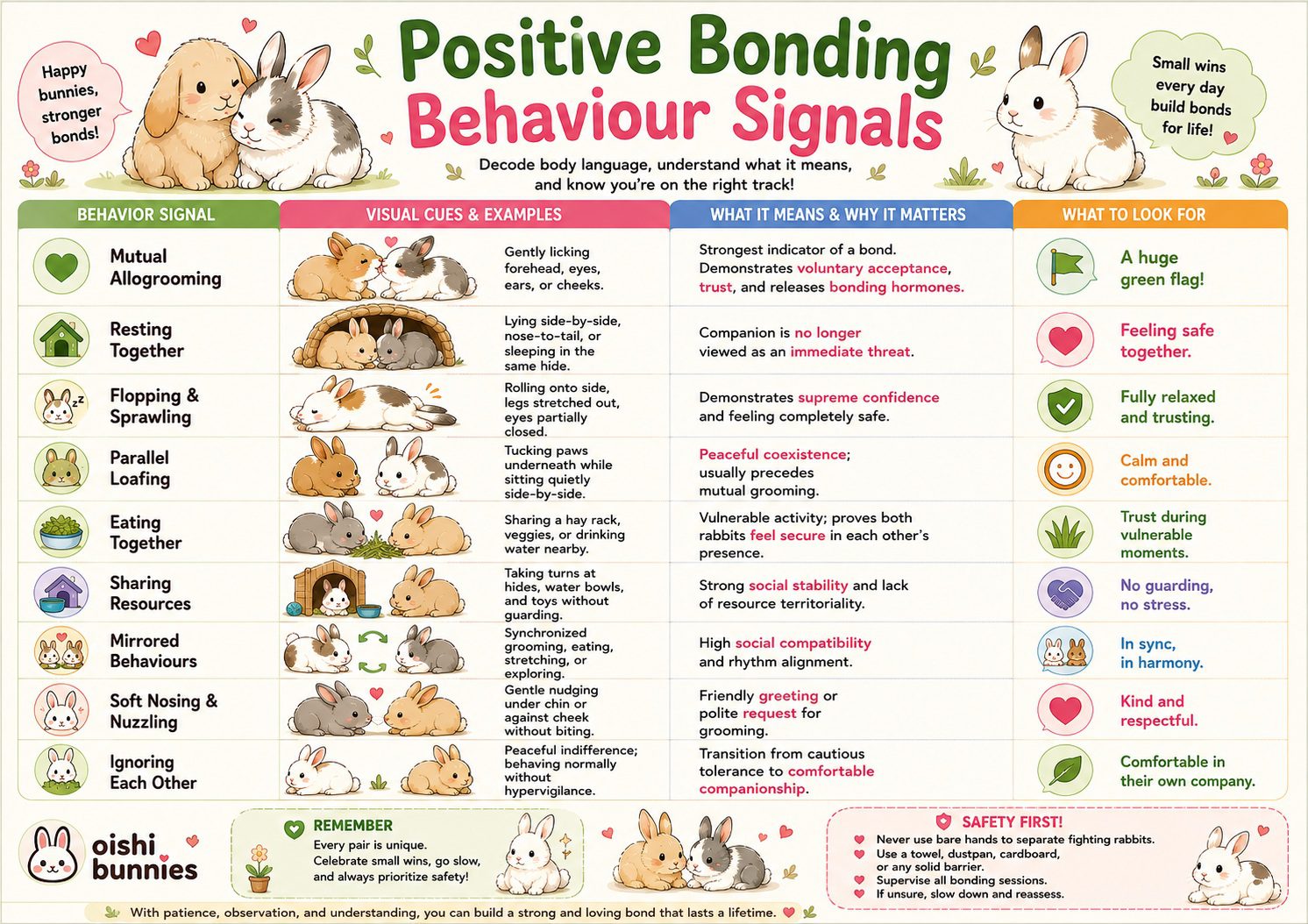
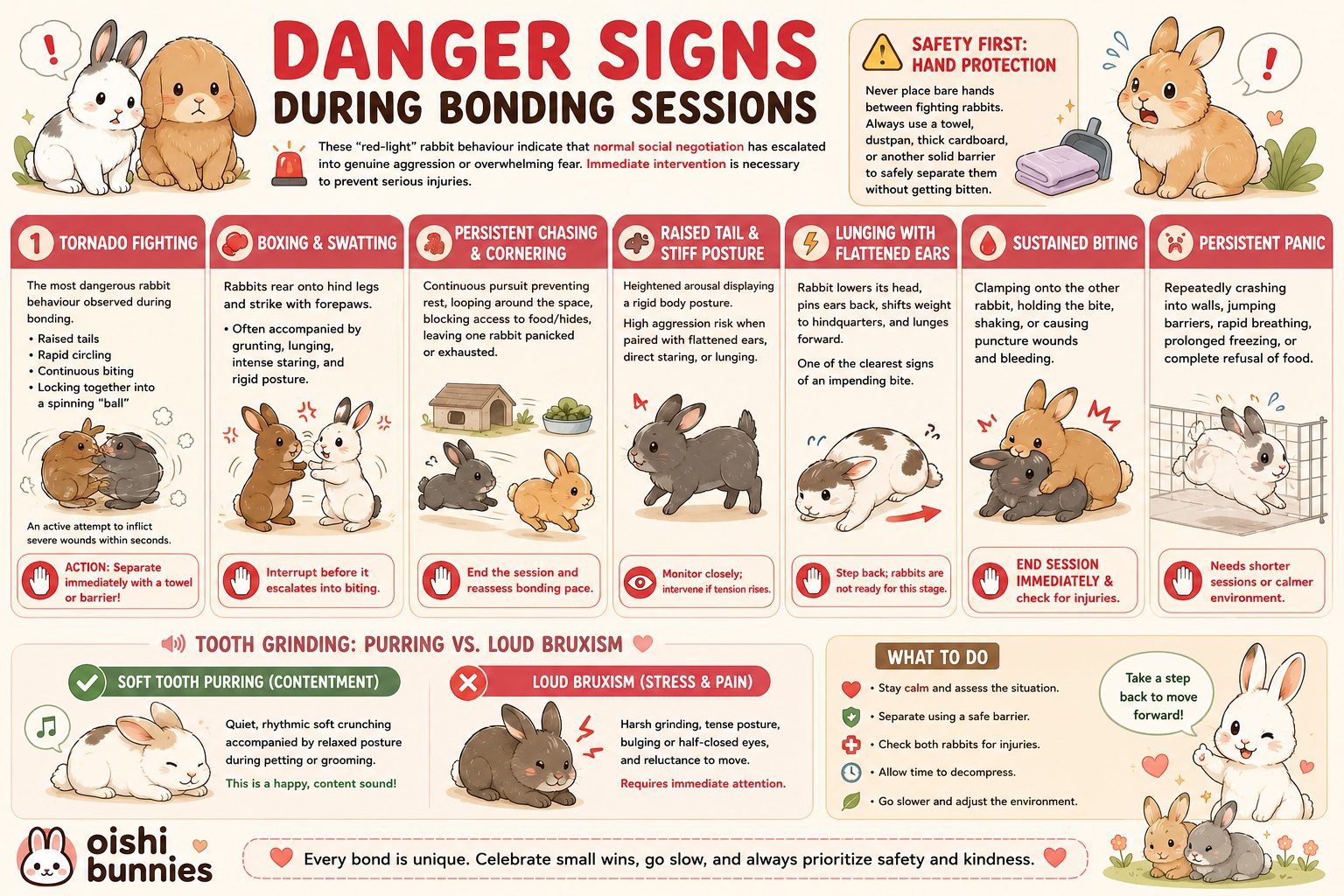
Quick Reference: When Should You Intervene?
A complete rabbit behavioral reference matrix for managing rabbit bonding sessions safely.
 Usually Allow
 Monitor Closely
 Stop Immediately
Conclusion: The Big Picture of Rabbit Bonding
No single rabbit behaviour determines whether a rabbit bond will succeed. Instead, evaluate the overall trend across multiple bonding sessions.
Healthy progress is characterised by:
 Healthy progress is characterised by:
Successful rabbit bonding is rarely completely conflict-free. Small disagreements, brief social negotiations, and occasional dominance-related behaviours are a normal part of rabbits learning to live together. The goal is not to eliminate these interactions, but to ensure they remain controlled, predictable, and become less frequent as trust develops.
By observing the whole rabbit—not just individual behaviours—you can better recognise when rabbits are building a healthy relationship and when intervention is needed to protect their welfare. Patience, careful observation, and respect for natural rabbit behaviour remain the foundations of safe, humane, and successful bonding.
Download Free Printable PDF Guides
 Download Free Printable PDF Guides
Keep these handy reference sheets nearby during your bonding sessions for quick observation and tracking!
Understanding Behaviours Overview & FAQ
 Understanding Behaviours Overview & FAQ
Essential overview & science-backed answers to bonding dilemmas.
Positive Bonding Behaviour Signals
A handy checklist of green-light signals to celebrate.
Danger Signs During Bonding
Red-flag warning behaviors that require immediate intervention.