 Pro-Tip: Viewing on a phone? Select desktop mode or rotate to landscape for the best reading experience!
 Estimated Read Time: 7 Mins
Oishi Bunnies Herbal Atlas
Mint for Rabbits
Spearmint and Peppermint & the Science Behind Mentha
Welcome to the Oishi Bunnies Herbal Atlas, our evidence-led Rabbit Herb Guide exploring the plants commonly offered as forage, enrichment, and leafy greens. In this Mint for Rabbits profile, we take a closer look at spearmint and peppermint, two familiar culinary mints with very different aromatic chemistry.
A rabbit sees a fragrant green leaf. A botanist sees an unusually hybrid-prone genus. A herbalist sees centuries of digestive use. A pharmacologist sees carvone, menthol, menthone, rosmarinic acid, and a rather interesting collection of volatile terpenes. That is why mint for rabbits deserves a little more explanation than simply asking whether mint is “safe.”
This Rabbit Herb Guide compares spearmint and peppermint through botany, nutrition, phytochemistry, rabbit-specific feeding research, practical forage use, and safety. The aim of the Herbal Atlas is not to turn herbs into medicines, but to understand what the plant contains, what has actually been studied, and what those findings mean for companion rabbits.
Created for Oishi Bunnies by Cookie Yiyi—rabbit rescuer, fosterer of rehabilitated buns, guardian to resident house rabbits, and passionate organic balcony gardener—the Oishi Bunnies Herbal Atlas combines careful scientific research with practical rabbit-care and gardening experience.
Educational Notice:
This Mint for Rabbits guide is provided for botanical learning, responsible forage use, and enrichment. Whole mint leaf is not peppermint essential oil, and neither spearmint nor peppermint should be used as a substitute for professional veterinary diagnosis, treatment, prescription medication, or emergency care.
Herb at a Glance
| Common name | Mint |
| Primary Atlas species | Spearmint — Mentha spicata L. |
| Also discussed | Peppermint — Mentha × piperita L. |
| Family | Lamiaceae |
| Commonly used parts | Leaves, tender stems, and flowers (fresh or dried) |
| Rabbit suitability | Excellent for forage rotation, sensory enrichment, and fresh leafy herb feeding when correctly identified and introduced gradually |
| Major volatiles | Spearmint is carvone-rich; peppermint is menthol/menthone-rich |
| Main practical notes | Whole mint leaf is not peppermint essential oil. Do not assume all plants called “mint” (such as pennyroyal) share the same safety profile |
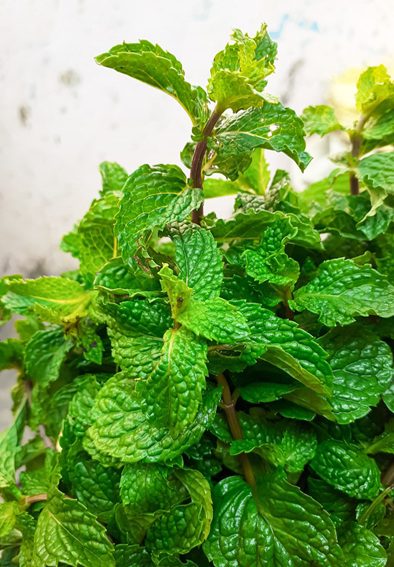
Mentha spicata (Spearmint)
Oishi Bunnies Herbal Atlas — Mint Evidence Profile
This Rabbit Herb Guide evidence profile examines what is actually known about mint for rabbits, with particular attention to spearmint and peppermint. The Oishi Bunnies Herbal Atlas separates botanical identification, food use, phytochemistry, traditional practice, and rabbit-specific evidence so that each type of claim can be judged on its own strength.
Rating principle: These ratings describe the quality, depth, and relevance of available evidence within each category. They are not ratings of overall safety, therapeutic effectiveness, or whether an herb is “good” or “bad” for rabbits.
| Category | Rating | Why Mint Earns This Rating |
|---|---|---|
| Botanical Identification | ★★★★★ | Mentha taxonomy and morphology are extensively documented. Spearmint and peppermint can be reliably identified botanically, although frequent hybridisation within the genus can make cultivar-level identification more complicated. |
| Traditional Herbal History | ★★★★★ | Mint has a long and well-documented culinary and herbal history, especially in relation to digestive complaints. In this Herbal Atlas, those traditional uses are documented as ethnobotanical history rather than treated as proof of therapeutic effects in rabbits. |
| Edibility / Food Use | ★★★★★ | Spearmint and peppermint have extensive established culinary use and are commonly consumed fresh or dried. For mint for rabbits, the relevant distinction is between ordinary culinary leaves used as forage and concentrated medicinal or essential-oil preparations. |
| Phytochemical Evidence | ★★★★★ | Volatile compounds, phenolic acids, flavonoids, and species-specific chemotypes are well characterised. This is especially important when comparing spearmint and peppermint: spearmint is commonly carvone-rich, while peppermint is more strongly associated with menthol and menthone. |
| Rabbit-Specific Evidence | ★★★☆☆ | Direct rabbit evidence does exist, including controlled dietary inclusion studies involving peppermint and broader rabbit herbal-feed research. However, the evidence for mint for rabbits is principally agricultural and nutritional rather than therapeutic research in companion rabbits, so the Oishi Bunnies Rabbit Herb Guide does not treat mint as a clinical gastrointestinal remedy. |
The Oishi Bunnies Read: The Oishi Bunnies Herbal Atlas recognises that mint’s traditional reputation for digestive support has genuine pharmacological foundations, particularly from experimental and human research involving peppermint oil and menthol. But whole leaves are not pharmaceutical extracts. For companion rabbits, spearmint and peppermint are best understood as aromatic culinary herbs that can contribute forage variety and sensory enrichment. In practical terms, this Mint for Rabbits profile places mint firmly within a varied leafy-herb rotation—not as a clinical cure for gastrointestinal stasis.
Meet the Plant — Spearmint and Peppermint
In this Oishi Bunnies Herbal Atlas profile on mint for rabbits, we focus mainly on two familiar culinary species: spearmint and peppermint. Mint belongs to the Lamiaceae family, and members of the genus Mentha—including Spearmint (Mentha spicata) and Peppermint (Mentha × piperita)—are vigorous herbaceous perennials recognised by their square stems, opposite leaves, serrated margins, and strongly aromatic foliage.
That familiar mint aroma comes from microscopic glandular trichomes on the leaf surface. When the foliage is crushed or chewed, these glands release volatile compounds. Spearmint is commonly rich in carvone, while peppermint is more strongly associated with menthol and menthone. These compounds contribute to the plants’ characteristic scent and also play ecological roles in plant defence. For rabbits that enjoy aromatic herbs, whole culinary mint can add scent, texture, and botanical variety to a forage rotation.
One reason a good Rabbit Herb Guide should distinguish spearmint and peppermint is that they are not chemically identical. Spearmint usually has bright green, lance-shaped to ovate leaves with serrated margins and a softer, sweeter aroma. Peppermint, an accepted hybrid of spearmint and watermint, often has darker green foliage and may show purplish stems, with a sharper cooling aroma linked to its higher menthol content.
For anyone researching mint for rabbits, correct plant identification matters. The genus Mentha hybridises readily, and different species and cultivars can vary significantly in volatile-oil composition. The Oishi Bunnies Herbal Atlas therefore focuses on clearly identified culinary mint rather than treating every plant called “mint” as interchangeable.
- Distinctive square or four-sided stems typical of many members of the Lamiaceae family
- Opposite pairs of leaves arranged along the stem
- Serrated or finely toothed leaf margins with visibly veined, textured foliage
- A strong aromatic release when the foliage is gently crushed
- Small tubular flowers that may appear purple, pink, lilac, or white depending on species and cultivar
The genus name Mentha is traditionally linked to the Greek mythological figure Minthe. In practical rabbit care, however, the important point is much less mythical: use correctly identified culinary species when choosing mint for rabbits.
The Oishi Bunnies Rabbit Herb Guide does not include Pennyroyal (Mentha pulegium) among recommended rabbit forage. Pennyroyal can contain substantial levels of pulegone, and concentrated pennyroyal preparations have well-documented hepatotoxicity. With well-characterised culinary spearmint and peppermint readily available, there is no practical reason to choose pennyroyal for a rabbit forage rotation.
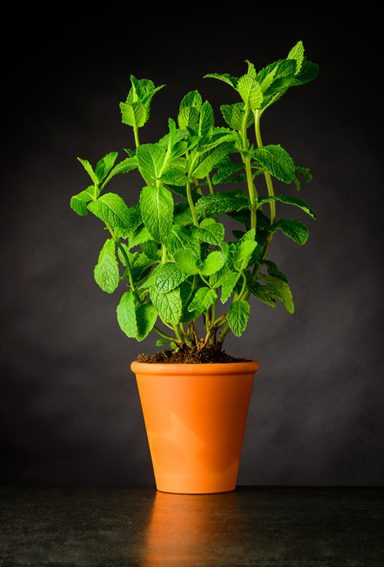
Mentha spicata — spearmint in the Oishi Bunnies Herbal Atlas
Botanical & Scientific Profile
Taxonomy: Mint belongs to the Lamiaceae (mint) family under the genus Mentha. Two primary species anchor both culinary use and pharmacognosy literature: Mentha spicata (spearmint) and Mentha × piperita (peppermint, a sterile natural hybrid of M. spicata and M. aquatica).
Though closely related, different mint species and cultivars are chemically distinct. Plant maturity, harvest time, drying methods, and whether the foliage is fed whole or processed into extracts dramatically alter the volatile oil and phenolic profile. Mint is best understood as a rich matrix of aromatic terpenes and antioxidants rather than a single functional herb.
Key Phytochemical Groups
Monoterpenes & Volatile OilsSpearmint’s essential oil is dominated by R-carvone, imparting a sweet, mild aroma, whereas peppermint is rich in menthol and menthone, providing a cooling sensation. These lipophilic terpenes have been studied for smooth-muscle antispasmodic and carminative actions on gastrointestinal tissues. | Rosmarinic Acid & Phenolic AcidsMint leaves contain substantial quantities of polyphenol antioxidants, chief among them rosmarinic acid, along with caffeic and chlorogenic acids. These water-soluble compounds demonstrate strong free-radical scavenging and mild anti-inflammatory properties in laboratory models. |
Flavonoids (Luteolin, Apigenin & Eriocitrin)Glycosidic flavonoids including luteolin, apigenin, and eriocitrin contribute significantly to mint’s total antioxidant capacity. Research indicates these compounds help protect cellular integrity and support oxidative stress defenses in mucosal linings. | Structural Fibre & ChlorophyllBeyond isolated secondary metabolites, whole mint foliage provides structural plant cell walls (indigestible and digestible fibre fractions) alongside green pigment chlorophyll. This makes fresh mint leaves a natural, gut-friendly forage option for hindgut fermenters. |
Why this matters: Mint’s pharmacological reputation—particularly for soothing smooth gastrointestinal muscle—stems largely from concentrated menthol extracts. However, feeding fresh whole leaves to a rabbit provides a mild, balanced matrix of terpenes, flavonoids, and fibre rather than a concentrated drug. Highly potent essential oils should never be fed, but fresh mint sprigs offer safe, aromatic enrichment with genuine biological benefits.
Nutritional Profile — Mint for Rabbits
In the Oishi Bunnies Herbal Atlas, mint for rabbits is best understood as an aromatic forage herb rather than a nutritional staple. Fresh culinary mint contributes moisture, plant fibre, minerals, and naturally occurring phytochemicals alongside its characteristic volatile compounds. For companion rabbits, spearmint and peppermint fit most naturally into a varied leafy-herb rotation.
Nutrition note: The numerical values below are based primarily on food-composition data for fresh spearmint (Mentha spicata). Peppermint and other Mentha species can differ somewhat in nutrient and phytochemical composition.
Water-Rich About 85% water, contributing dietary moisture alongside normal drinking water |
Concentrated Dry Matter Removing water concentrates fibre, minerals, and many plant constituents per gram |
Highly Concentrated Safety depends on exact composition and dose; not appropriate for DIY oral or topical administration |
Macronutrients & Fibre: Fresh spearmint is approximately 85% water and contains plant fibre, modest amounts of protein, minerals, and micronutrients. Its fibre contributes to overall plant-matter intake and botanical variety, although grass hay—not leafy mint—remains the dietary foundation associated with prolonged chewing, normal gastrointestinal function, and appropriate dental wear. In a practical Rabbit Herb Guide, mint should therefore complement hay rather than compete with it.
Calcium & Mineral Content: Fresh spearmint contains approximately 199–200 mg calcium and about 60 mg phosphorus per 100 g, giving a Ca:P ratio of roughly 3.3:1. That ratio can sound high when viewed in isolation, but portion size matters: a rabbit would not normally eat 100 g of mint as a serving. For healthy rabbits, mint for rabbits can be considered within the overall leafy-green rotation rather than judged from one mineral value alone. Rabbits with a history of urinary sludge, bladder stones, or other urinary disease should have total dietary calcium, hydration, hay, pellets, and overall green intake assessed together.
Fresh vs Dried: Dehydrating mint removes water and therefore concentrates dry matter, fibre, minerals, and many phytochemicals per gram of food. Drying can also alter volatile compounds depending on temperature, airflow, processing method, and storage conditions, so fresh and dried mint are not chemically identical. Dried mint should therefore be used in smaller amounts than the equivalent fresh herb. This principle applies to both spearmint and peppermint.
A critical distinction: The Oishi Bunnies Herbal Atlas treats whole herbs and concentrated preparations separately. Feeding whole fresh or dried culinary mint is fundamentally different from administering concentrated mint essential oils, tinctures, or extracts. Whole leaves contain water, fibre, minerals, phenolics, and relatively low concentrations of volatile compounds within the natural plant matrix. Essential oils are chemically concentrated preparations whose safety depends on their precise composition and dose. Standardised peppermint and spearmint oils have been evaluated for controlled use as animal-feed flavouring additives at very low concentrations, but those assessments cannot be translated into homemade oral dosing, drops in drinking water, or topical application. For routine rabbit care, stick to correctly identified whole culinary mint unless a rabbit-savvy veterinarian specifically advises otherwise.
Traditional Use & Modern Scientific Understanding
Traditional knowledge and modern science aren’t opposing systems—the Oishi Bunnies Herbal Atlas layers them without confusing them. Traditional herbal practice records accumulated observations about plants such as spearmint and peppermint, while modern pharmacognosy investigates their chemistry, biological mechanisms, preparation, dose, and safety under controlled conditions. For mint for rabbits, both perspectives are useful—but they answer different questions.
Traditional PracticeMint (genus Mentha) has a long history across Mediterranean, European, Middle Eastern, and Asian culinary and herbal traditions. Spearmint and peppermint preparations have historically been used in connection with digestive complaints, including indigestion, abdominal discomfort, flatulence, and nausea, as well as in aromatic preparations for respiratory complaints. These historical uses are valuable ethnobotanical evidence, but they do not by themselves establish therapeutic effects in rabbits. Traditional observations help generate questions for modern research; they are not substitutes for controlled, species-specific evidence. | Modern Phytochemistry & PharmacologyModern research provides a plausible pharmacological basis for some of mint’s traditional digestive uses. Peppermint oil has demonstrated antispasmodic effects on gastrointestinal smooth muscle in experimental systems. In a classic study using rabbit jejunum, peppermint oil inhibited spontaneous intestinal activity and reduced calcium currents in smooth-muscle cells, supporting a mechanism involving reduced calcium influx. Mint species also contain phenolic acids and flavonoids, including rosmarinic acid, and extracts of Mentha species have demonstrated antioxidant and anti-inflammatory activity in experimental models. These findings describe genuine plant pharmacology, but many come from essential oils, extracts, or isolated compounds at concentrations very different from those encountered when a rabbit eats ordinary fresh mint leaves. |
What Has Actually Been Studied in Rabbits?
Direct rabbit feeding research does exist. In a 2015 controlled study, 72 weaned New Zealand White rabbits were divided into six dietary groups of 12. One group received a diet containing 0.5% peppermint (Mentha piperita).
The peppermint group showed favourable results for several nutrient-digestibility measures compared with the control and some other treatment groups, and final body weight was reported to be 5.84% higher than the control group. Blood biochemical measurements across the experimental rabbits remained within normal ranges.
This gives the Oishi Bunnies Rabbit Herb Guide useful species-specific evidence that peppermint has been incorporated into rabbit diets under controlled conditions. But context matters: this was a livestock nutrition and growth-performance study—not a clinical trial testing mint for rabbits as a treatment for gas, gastrointestinal stasis, appetite loss, pain, or digestive disease.
What We Still Don’t Know
Clinical evidence specific to companion rabbits eating whole mint leaves remains limited. Mint’s traditional carminative reputation has a plausible pharmacological foundation—particularly from experimental research on peppermint oil and gastrointestinal smooth muscle—but we do not currently have good evidence that ordinary dietary amounts of fresh or dried mint leaf relieve gas, treat gastrointestinal stasis, stimulate appetite, or correct intestinal dysbiosis in rabbits.
Species, plant part, preparation, dose, and volatile-compound concentration all matter. Spearmint and peppermint are not chemically identical, and whole leaf, dried herb, tea, extract, tincture, and essential oil should not be treated as equivalent preparations. For companion rabbits, whole culinary mint remains best understood primarily as forage and enrichment rather than gastrointestinal medicine.
Potential Relevance of Mint for Rabbits
For a healthy rabbit, culinary mint—particularly spearmint and peppermint—is most practically viewed as an aromatic forage herb: a distinctive scent, leafy texture, and flavour to explore within a varied green-herb rotation. In the Oishi Bunnies Herbal Atlas, mint for rabbits is valued first as forage and sensory enrichment. Its volatile terpenes and polyphenols are also scientifically interesting, but laboratory pharmacology should not automatically be interpreted as a therapeutic effect from eating ordinary mint leaves.
Botanical Variety
| Foraging & Behaviour
| Biological Interest
|
The Practical View: Mint can be both an edible forage plant and a source of pharmacologically interesting compounds. Those ideas are not contradictory. For a companion rabbit, however, fresh or dried culinary mint is best treated primarily as aromatic forage and enrichment. Its phytochemistry helps us understand the plant; it does not turn a handful of leaves into gastrointestinal medicine.
What Does the Evidence Say About Mint for Rabbits?
Mint’s reputation as a digestive herb has a plausible pharmacological foundation, particularly in research involving peppermint oil and other concentrated preparations. Translating those findings into companion-rabbit feeding requires much more care. Species, plant part, preparation, dose, and volatile-compound concentration all matter, and a fresh leaf is not pharmacologically equivalent to an essential oil, extract, or purified constituent.
Gastrointestinal & Antispasmodic ResearchPeppermint oil has demonstrated relaxing effects on gastrointestinal smooth muscle in experimental systems. In a classic study, peppermint oil inhibited spontaneous activity in rabbit jejunum and concentration-dependently inhibited voltage-dependent calcium currents in rabbit jejunal smooth-muscle cells. This supports a mechanism involving reduced calcium influx and helps explain peppermint’s traditional antispasmodic reputation. It does not establish that ordinary fresh or dried mint leaves relieve gas or gastrointestinal discomfort in rabbits. | What Has Actually Been Studied in Rabbits?A controlled feeding study used 72 weaned New Zealand White rabbits, divided into six groups of 12. One group received a diet containing 0.5% peppermint (Mentha piperita). The peppermint group showed favourable nutrient-digestibility results compared with the control and some other treatment groups, and final body weight was reported to be 5.84% higher than the control group. Measured blood biochemical values remained within normal ranges. This is useful rabbit-specific dietary evidence, but it was a livestock nutrition and growth-performance study—not a clinical trial of mint for rabbits as treatment for gas, appetite loss, gastrointestinal stasis, or digestive disease. |
Antioxidant & Phytochemical ActivityMint contains phenolic acids and flavonoids, including compounds such as rosmarinic acid, and mint extracts have demonstrated antioxidant activity in experimental models. These findings help characterise the plant’s phytochemistry, but they should not be interpreted as proof that feeding mint prevents oxidative disease or protects specific tissues in companion rabbits. | Antimicrobial PropertiesMint essential oils and extracts can inhibit certain bacteria and fungi in laboratory assays. That is scientifically relevant to mint phytochemistry, but an in vitro antimicrobial effect does not mean that feeding fresh mint leaves acts as an antibiotic, beneficially reshapes the rabbit microbiome, or treats an infection. |
GI Stasis & Clinical ContextSome rabbits may find mint highly appealing, so a familiar leaf can sometimes be offered alongside other favourite foods when assessing interest in eating. Mint is not a proven appetite stimulant, however, and should never be used to treat or delay assessment of gastrointestinal stasis, obstruction, ileus, pain, or another cause of reduced appetite. Persistent reduction in food intake or faecal output warrants prompt veterinary assessment. | The Evidence in ContextMint is neither pharmacologically inert nor a rabbit medicine. Its phytochemistry is well documented, concentrated peppermint preparations have demonstrated gastrointestinal pharmacology, and controlled feeding research confirms that peppermint has been incorporated into rabbit diets. What has not been established is that ordinary servings of whole mint leaf treat digestive disease. For companion rabbits, spearmint and peppermint are best understood primarily as correctly identified aromatic forage herbs within a varied, hay-based diet. |
Edible Anatomy
Mint (Mentha spp.) is a versatile, fast-growing herb whose foliage, stems, and flowers offer varying levels of aroma, texture, and essential oil concentration. While all non-woody aerial parts are safe for rabbits to explore, understanding how each part differs helps you introduce mint thoughtfully into your bun’s weekly forage rotation.
LeavesThe primary focus of botanical enrichment. Mint leaves contain high concentrations of volatile oils (such as menthol or carvone, depending on the variety) balanced with leafy fiber and hydration. Fresh sprigs provide a crisp, refreshing crunch, while gently dried leaves offer a fragrant topper for daily hay. | FlowersSmall, delicate purple or white flower spikes bloom during summer. Mint flowers carry a slightly sweeter, milder aromatic profile than mature leaves and make an appealing visual and sensory addition when sprinkled over forage mats or hay racks. |
StemsTender upper stems harvested with fresh sprigs provide extra structural fibre and chew time. However, older mint stems can become square, fibrous, and tough—while completely harmless, picky rabbits may leave mature stems behind in favour of soft leaves. | Roots & RunnersMint spreads rapidly via aggressive underground runners (stolons) and root systems. While non-toxic, roots trap garden soil and debris, making them impractical for standard feeding. Stick to green aerial growth for clean, effortless enrichment. |
A Note on Mint Varieties: Culinary mints like Spearmint (Mentha spicata), Peppermint (Mentha x piperita), and Apple Mint (Mentha suaveolens) are all safe choices. Spearmint has a milder, sweeter flavor that many rabbits prefer over the intense menthol kick of true Peppermint. Always avoid Pennyroyal (Mentha pulegium), an wild mint species containing pulegone toxicity.
The practical takeaway: Stick to fresh leaves, soft upper stems, and seasonal flower heads for routine botanical variety. Offer small sprigs fresh or dry them thoroughly to tuck into forage toys. As with all culinary herbs, source from organic, pesticide-free gardens and introduce gradually!
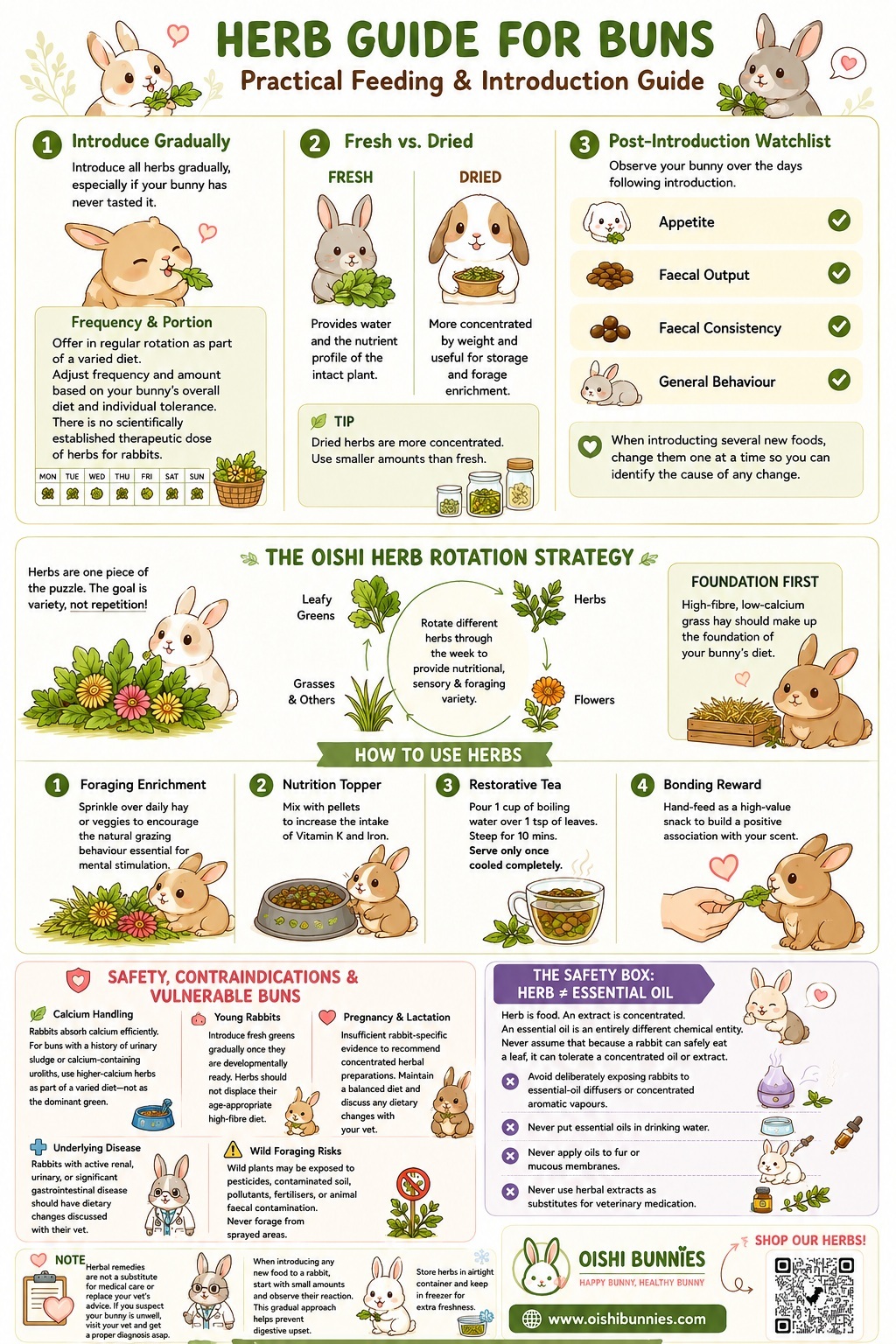
Growing, Harvesting & Storage in Singapore
Mint (Mentha spp.) thrives remarkably well in Singapore’s tropical climate, growing vigorously year-round. However, our intense humidity and sudden torrential downpours require good soil drainage, adequate ventilation, and proactive pest monitoring to ensure your home-grown forage remains healthy and chemical-free for your bun.
Growing in Singapore
| Growing it Safely
| Harvest & Storage
|
The Singapore gardener’s advantage: Mint grows so rapidly in tropical weather that a single small balcony pot can easily yield a fresh, chemical-free weekly sprig for your rabbit. Having total control over soil, water, and organic pest care gives you complete peace of mind over what goes into your bun’s bowl!
Explore Mint with Oishi Bunnies
Looking to introduce a fresh, aromatic twist to your bunny’s daily rotation? Oishi Bunnies brings you premium organic botanical options and freshly baked treats, turning routine daily forage into an exciting sensory experience for your furkid.
Organic Spearmint LeavesPure dried organic Spearmint leaves perfect for sprinkling over Timothy hay, mixing into forage mats, or encouraging picky eaters. Naturally fragrant and gently dried to preserve essential oils without overwhelming delicate noses. | Baked Banana Chips with SpearmintFor buns who enjoy a sweet treat with an herbal crunch. Hand-baked in small batches, combining naturally sweet banana with organic spearmint for a delightful bonding reward or training treat. |
Our forage philosophy: Variety makes lifetime nutrition exciting! Rotate different rabbit-safe herbs, flowers, and leaves to spark natural foraging instincts, while keeping the main foundation solid: endless fresh grass hay and clean water.
Mint for Rabbits FAQ
Part of the Oishi Bunnies Herbal Atlas and Rabbit Herb Guide: practical answers about feeding mint for rabbits, comparing spearmint and peppermint, understanding the evidence behind traditional digestive claims, and growing culinary mint in Singapore.
Can rabbits eat mint?
Does mint help with a rabbit’s digestion or gas?
Are all types of mint safe for rabbits?
Can rabbits eat mint stems and flowers?
Is fresh or dried mint better for rabbits?
Can I use concentrated mint essential oil for my rabbit?
Can mint treat digestive illness or GI stasis?
How easy is it to grow mint in Singapore?
References & Further Reading
Scientific literature, botanical databases, veterinary references, food-composition resources, and Singapore horticultural guidance used to support this Mint Herbal Atlas profile. Where research involves essential oils, extracts, isolated compounds, or livestock-production studies, those preparations and research settings should not be assumed to produce the same effects as feeding ordinary fresh or dried mint leaves to a companion rabbit.
Botany & Identification
- Royal Botanic Gardens, Kew — Spearmint:
Mentha spicata L. — Plants of the World Online.
Accepted botanical name, taxonomy, distribution, morphology, and documented food/medicinal use. - Royal Botanic Gardens, Kew — Peppermint:
Mentha × piperita L. — Plants of the World Online.
Confirms peppermint as an accepted hybrid of M. aquatica × M. spicata.
Traditional Use & Phytochemistry
- Spearmint ethnobotany & pharmacology:
Mahendran, G., Verma, S. K., & Rahman, L.-U. (2021).
The traditional uses, phytochemistry and pharmacology of spearmint (Mentha spicata L.): A review.
Journal of Ethnopharmacology, 278, 114266. - Peppermint leaf, tea & phytochemistry:
McKay, D. L., & Blumberg, J. B. (2006).
A review of the bioactivity and potential health benefits of peppermint tea (Mentha piperita L.).
Phytotherapy Research, 20(8), 619–633. - Spearmint phytochemistry & toxicology:
El Menyiy, N., Naceiri Mrabti, H., El Omari, N., et al. (2022).
Medicinal Uses, Phytochemistry, Pharmacology, and Toxicology of Mentha spicata.
Open-access review covering volatile compounds, polyphenols, experimental pharmacology, and toxicological literature.
Gastrointestinal Pharmacology
- Peppermint oil & rabbit intestinal smooth muscle:
Hills, J. M., & Aaronson, P. I. (1991).
The mechanism of action of peppermint oil on gastrointestinal smooth muscle: an analysis using patch clamp electrophysiology and isolated tissue pharmacology in rabbit and guinea pig.
Gastroenterology, 101(1), 55–65.
This experimental study demonstrated inhibition of calcium currents in rabbit jejunal smooth-muscle cells. It investigated peppermint oil—not dietary mint leaves. - Peppermint oil pharmacology:
Grigoleit, H. G., & Grigoleit, P. (2005).
Pharmacology and preclinical pharmacokinetics of peppermint oil.
Phytomedicine, 12(8), 612–616.
Rabbit-Specific Evidence
- Controlled peppermint feeding study:
Mahmoud, A. E. M. (2015).
Nutrient Utilization, Blood Biochemical Parameters and Performance as Affected by Inclusion of Herbal Additives in the Diets of Growing Rabbits.
Indian Journal of Animal Nutrition, 32(2), 201–206.
Seventy-two weaned New Zealand White rabbits were studied; one group received a diet containing 0.5% Mentha piperita. This was a livestock nutrition study, not a clinical trial of mint for gastrointestinal disease. - Rabbit herbal-feed evidence review:
Adli, D. N., Sugiharto, S., Irawan, A., et al. (2024).
The effects of herbal plant extract on the growth performance, blood parameters, nutrient digestibility and carcase quality of rabbits: A meta-analysis.
Heliyon, 10(4), e25724.
Includes Mentha spicata among herbal interventions studied in rabbits and helps place individual feeding trials within the broader rabbit nutrition literature.
Essential Oil & Concentrated Preparation Safety
- Peppermint essential oil — controlled animal-feed assessment:
EFSA Panel on Additives and Products or Substances used in Animal Feed (FEEDAP) (2025).
Safety and efficacy of a feed additive consisting of an essential oil derived from the aerial parts of Mentha × piperita L. for use in all animal species.
EFSA Journal.
Supports dose-specific safety assessment of a standardised feed additive; it should not be interpreted as approval for homemade essential-oil dosing. - Spearmint essential oil — controlled animal-feed assessment:
EFSA Panel on Additives and Products or Substances used in Animal Feed (FEEDAP) (2025).
Safety and efficacy of a feed additive consisting of an essential oil derived from the aerial parts of Mentha spicata L. for use in all animal species.
EFSA Journal.
Again, this concerns a chemically characterised feed additive used at controlled concentrations, not direct administration of essential oil to a pet rabbit.
Pennyroyal Toxicology
- Pennyroyal oil hepatotoxicity:
National Institute of Diabetes and Digestive and Kidney Diseases. (2020).
Pennyroyal Oil.
LiverTox: Clinical and Research Information on Drug-Induced Liver Injury.
Documents severe liver injury and deaths associated with oral ingestion of pennyroyal oil. This supports caution around Mentha pulegium and particularly its concentrated oil.
Nutrition
- Food composition:
U.S. Department of Agriculture, Agricultural Research Service.
FoodData Central.
Reference database for food-composition data, including fresh and dried spearmint nutrient values. Nutrient concentrations should always be interpreted with serving size and moisture content in mind.
Growing Mint in Singapore
- Singapore cultivation guidance:
National Parks Board (NParks), Singapore. (2025).
Growing Mints? A ‘Cool’ Idea You Can Try at Home!.
Specific local guidance covering spearmint, peppermint, light requirements, drainage, fertilisation, propagation, and harvesting under Singapore conditions. - Singapore botanical record:
National Parks Board (NParks), Singapore.
Mentha spicata L. — Flora & Fauna Web.
Local botanical description, growth habit, cultivation requirements, and identification information for spearmint.
Rabbit Veterinary Context
- Gastrointestinal stasis & clinical care:
MSD Veterinary Manual.
Noninfectious Diseases of Rabbits — Gastric Stasis.
Veterinary reference for the causes, consequences, diagnosis, and treatment of rabbit gastrointestinal stasis. Included to distinguish dietary herb use from veterinary management of genuine GI disease.
Important Notes & Disclaimer
- Educational Use Only: This profile is provided for botanical learning and enrichment, not as veterinary advice, medical diagnosis, or treatment protocols.
- Whole Herb vs Medicine: Edible herbs can contain biologically active phytochemicals and may have interesting nutritional or physiological properties. However, feeding a whole herb is fundamentally different from administering a standardized medicinal preparation, and dietary herbs should not be treated as substitutes for veterinary treatment.
- Dietary Foundation: Unlimited grass hay and clean water remain fundamental; herbs are intended as complementary plant foods and foraging additions, not replacements for the rabbit’s staple diet.
- Individual Sensitivities: Rabbits vary widely in age, digestive health, and medical history. Always introduce new botanicals gradually and watch for changes in appetite or droppings.
- Concentrates & Extracts: Whole dried herbs differ chemically from concentrated extracts or essential oils. Never diffuse or administer concentrated aromatic oils to rabbits.
- Vulnerable Rabbits: Exercise extra caution with young rabbits, seniors, pregnant or nursing does, and rabbits with known kidney, urinary, gastrointestinal, or other chronic health conditions.
- Safety & Sourcing: Ensure proper plant identification and clean sourcing. Discard spoiled or moldy items, and never delay prompt veterinary care if your rabbit shows signs of illness.
- If your rabbit is sick, please seek professional veterinary care rather than relying on dietary remedies.
The Oishi Bunnies Bottom Line
After caring for rabbits through the easy days and the difficult ones, we have learnt that good care does not always look the same.
For a healthy rabbit, herbs can be part of the simple pleasures of everyday life — different scents to investigate, leaves to forage through, new flavours to taste and a little more botanical variety alongside a hay-based diet. Many of these same plants also carry long histories of traditional medicinal use, with fascinating chemistry that modern science continues to investigate.
We believe there is room to respect both traditional herbal knowledge and modern science without asking either to be something it is not. Traditional use does not automatically prove that a herb will treat disease, while limited scientific evidence does not necessarily mean that generations of observation have nothing useful to teach us. Sometimes research supports an old idea, sometimes it changes our understanding, and sometimes the answer simply remains uncertain.
That uncertainty becomes especially important when caring for a rabbit who is elderly, chronically ill or approaching the end of life. There may come a time when surgery is no longer suitable, treatment options have become limited, or the burden of further intervention may outweigh what it can realistically give the rabbit.
In those moments, care does not stop simply because cure is no longer possible.
The priorities may change towards comfort, pain relief, appetite, hydration, familiar foods, companionship, mobility, rest and the small things that tell us a rabbit is still finding pleasure in their day. Herbal and botanical support may sometimes have a place within that bigger picture. At other times, a particular herb may offer little benefit or may be inappropriate because of the rabbit’s condition or medications. The individual rabbit matters more than the reputation of any herb.
For us, palliative care is not about trying everything simply because something might help. Nor is it about dismissing a supportive option simply because it comes from traditional herbal practice. It is about choosing thoughtfully, watching the rabbit in front of us, working with veterinary care where it is needed, and continually asking whether what we are doing is adding comfort and quality to that rabbit’s life.
Sometimes medicine is about curing. Sometimes it is about managing a condition for years. And sometimes our responsibility is simply to make the days that remain comfortable, familiar, interesting and filled with as many good moments as possible.
Respect the tradition. Understand the plant. Follow the evidence. But above all, look at the rabbit in front of you — because their comfort, dignity and quality of life are what ultimately matter.