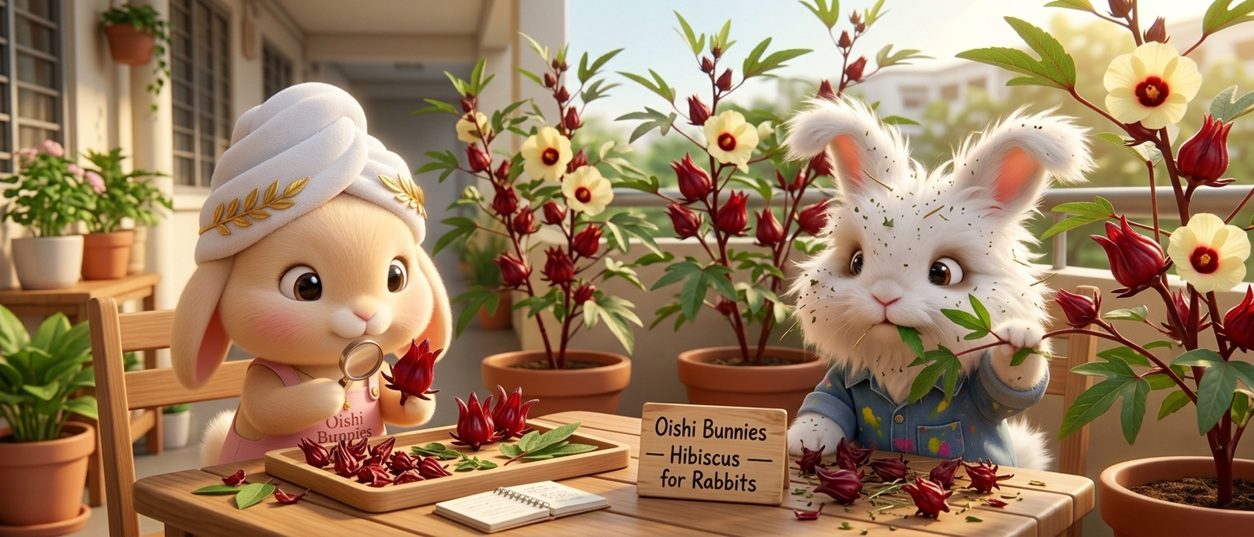
 Pro-Tip: Viewing on a phone? Select desktop mode or rotate to landscape for the best reading experience!
 Estimated Read Time: 10 Mins
Oishi Bunnies Herbal Atlas
Hibiscus
Hibiscus sabdariffa L. (Roselle)
Welcome to the Oishi Bunnies Herbal Atlas. Here, we explore roselle hibiscus for rabbits as food, forage and sensory enrichment—bringing together its long culinary and traditional history, modern phytochemical research and the evidence from studies that used actual rabbits.
A rabbit sees a crisp crimson snack. A botanist sees a fleshy calyx frequently mistaken for a flower. A pharmacologist sees anthocyanins, organic acids and flavonoids. That is why answering “Can rabbits eat roselle hibiscus?” requires a little more care than simply declaring the plant safe or unsafe.
Written by Cookie Yiyi, fosterer of 18 rehabilitated buns, guardian to 4 resident house rabbits, and passionate organic balcony gardener—the Atlas pairs careful research with years of lived sanctuary experience.
Educational Notice: Herbal profiles are provided for botanical learning, responsible forage use and enrichment. Whole roselle hibiscus calyx or leaf is not a concentrated extract, tincture, fragrance oil or essential oil. Hibiscus should never replace professional veterinary diagnosis, treatment, prescription medication or emergency care. If your rabbit is unwell, please seek appropriate veterinary care.
The Verdict
Yes. Properly identified, clean and unsweetened roselle calyx and young leaves make suitable botanical forage and a natural treat for a healthy adult rabbit.
Roselle offers real botanical variety, new flavours and useful foraging enrichment—not decorative potpourri. It also has a genuinely long food history and, unusually for this Atlas, several studies have tested roselle materials directly in rabbits rather than relying entirely on rats standing in for them.
Take extra care with: breeding, pregnant or nursing rabbits. Avoid extracts, strong infusions and medicinal quantities because reproductive safety at ordinary food portions has not been established. Rabbits receiving medication or following a prescribed renal or urinary diet should have regular use discussed with their veterinarian.
How much: start with a thumbnail-sized fragment. Once tolerated, offer up to one small dried calyx—or roughly one loosely filled teaspoon of torn pieces—for an average 1.5–2.5 kg adult, a few times weekly within a varied rotation.
This is a practical household guideline, not a therapeutic dose.
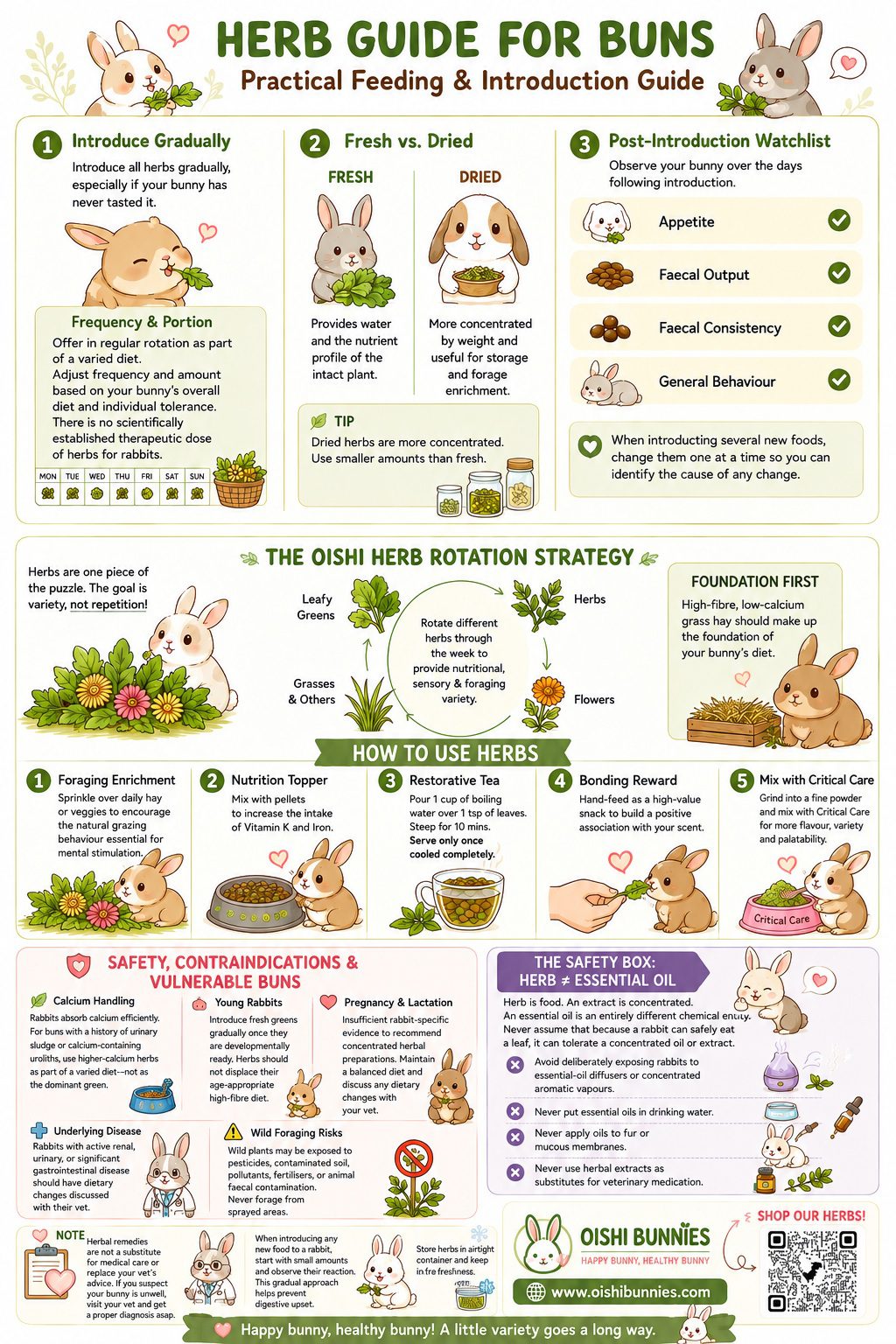
For the universal introduction steps—going slowly, fresh versus dried, the post-introduction watchlist, general vulnerable-bun categories and the essential-oil safety box—see the Oishi Herb Guide for Buns, which applies to every herb in this Atlas.
Think colourful forage, not crimson prescription.
Herb at a Glance
| Scientific name used in research and trade | Hibiscus sabdariffa L. |
| Current accepted name | Sabdariffa gossypiifolia (Mill.) M.M.Hanes & R.L.Barrett |
| Family | Malvaceae — the mallow family |
| Main food parts | Fleshy calyces and epicalyx bracts; young leaves and shoots |
| Notable constituents | Anthocyanins, flavonoids, phenolic acids, hibiscus acid, other organic acids, pectin and structural fibre |
| Taste profile | Tart, fruity and slightly astringent; young leaves have a pleasantly sour flavour |
| Routine frequency | Offer a small amount within a varied herb rotation rather than using it as a daily bowl filler |
| Best evidence-supported role | Botanical variety, sensory enrichment and a source of plant fibre and polyphenols |
| Main practical notes | Confirm the species and plant part. Choose plain, unsweetened material and avoid tinctures, fragrance oils and concentrated extracts. Use additional caution with pregnancy, breeding animals, kidney or urinary disease, low blood pressure, dehydration and medicated rabbits |
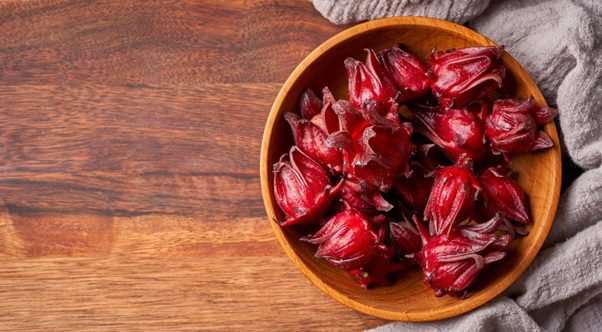
Hibiscus sabdariffa L.
Roselle
Why Offer Roselle?
Botanical Variety
Roselle brings a tart flavour, chewy texture and strong natural colour to a forage rotation. Torn through hay, the dried calyx encourages sniffing, searching and selective grazing.
Enrichment doesn’t need a medical justification to earn its place.
A Natural Treat Alternative
Plain dried roselle can be used instead of sweetened, fruit-heavy or highly processed treats. It supplies plenty of flavour in a small piece without needing syrup, artificial colouring or a tiny cartoon carrot on the packet.
Natural still doesn’t mean unlimited. It simply gives you another sensible option.
Foraging and Sensory Enrichment
Rabbits experience food through smell, texture and the work involved in finding it. Scatter a few torn pieces through hay, hide them in forage toys or hand-feed one as a bonding reward.
The value lies partly in the search—not merely what appears on a nutrient table.
Plant Fibre and Phytochemical Variety
Roselle calyces and leaves contain structural fibre, pectin, organic acids and several families of polyphenols. These include anthocyanins, the pigments responsible for the deep red colour of many roselle cultivars.
None of this means roselle “detoxifies” rabbits or prevents disease. It means the plant contributes a different nutritional and phytochemical profile to a varied diet.
Palatability
Some rabbits genuinely enjoy roselle’s sour-fruity edge. A few torn fragments may make hay or an already-approved recovery food more interesting.
If a sick rabbit is eating poorly, however, flavour tricks should never delay treatment. Reduced appetite and declining faecal output can become urgent remarkably quickly.
Edible Anatomy
| Plant Part | Rabbit Guidance |
|---|---|
| Fleshy calyx and epicalyx | The main roselle product—suitable fresh or dried in modest amounts |
| Petals | Suitable when clean and correctly identified, although most commercial “hibiscus flower” is actually dried calyx |
| Young leaves and shoots | Can join a rotated fresh-green selection when home-grown or confidently sourced |
| Mature stems | Tough, fibrous and not a particularly useful feeding target |
| Fruit capsule | Hard and unpalatable; remove before serving or drying the calyx |
| Seeds | Nutritionally distinct and unnecessary as a companion-rabbit treat; livestock seed-meal studies should not be applied to loose raw seeds |
| Roots | Not recommended for routine feeding because food-use and rabbit evidence are limited |
What’s actually in the packet? Commercial “hibiscus flower” is usually the dried fleshy calyx rather than the delicate petals, which fall away before the calyx is harvested. “Dried roselle calyx” is the more botanically accurate description.
Roselle-Specific Feeding Cautions
Small food portions are suitable for most healthy adult rabbits. Three roselle-specific points are worth keeping in mind:
- Breeding, pregnant or nursing rabbits:
avoid extracts, strong infusions and medicinal quantities. One rabbit study using concentrated anthocyanins altered prolactin and FSH, but it did not show that an occasional piece of whole calyx causes infertility. - Medication or prescribed renal diets:
discuss regular use with the treating veterinarian, particularly for rabbits receiving blood-pressure, cardiac or diuretic medication. - Not a urinary remedy:
roselle should not be used as a bladder flush or treatment for sludge, stones, infection or kidney disease.
Meet the Plant
|
Roselle grows fast. In Singapore’s tropical climate, it can behave as a short-lived perennial shrub; elsewhere, it is often treated as an annual. Expect a mature plant to reach around 1–2 metres. Botanically, this is mainly the enlarged calyx and surrounding epicalyx. The petals fall away after flowering, while the calyx swells around the developing seed capsule. Field identification checklist:
|
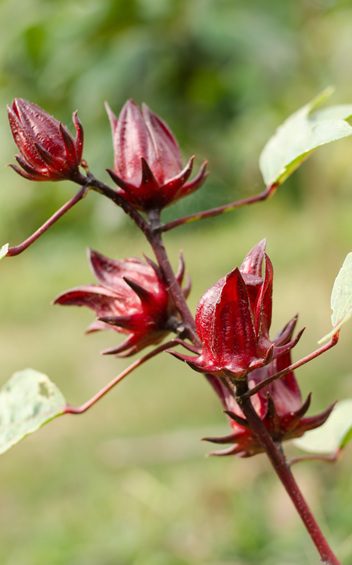
Hibiscus sabdariffa — flower, variable leaves and fleshy fruiting calyx |
Don’t Identify Roselle by Flower Colour Alone
Plenty of Hibiscus cultivars wear red, pink, yellow or white blooms, so colour alone will not get you there. Roselle is identified through the full combination of its stem, shape-shifting leaves, flower structure and—above all—the fleshy fruiting calyx. A bright red Chinese hibiscus flower is not automatically roselle, and a bag labelled simply “hibiscus” is not an adequate botanical identification for rabbit feeding.
Botanical identification references: NParks Flora & Fauna Web and World Flora Online.
Roselle vs Chinese Hibiscus
The greatest source of confusion in rabbit-hibiscus content online isn’t a dramatic toxic lookalike. It is the word “hibiscus” itself, casually applied to different plants with different edible parts and evidence bases.
| Feature | Roselle | Chinese Hibiscus |
|---|---|---|
| Scientific name | Hibiscus sabdariffa, now accepted by Kew as Sabdariffa gossypiifolia | Hibiscus × rosa-sinensis |
| What it is grown for | Food crop, calyx, leafy vegetable, beverage ingredient and fibre | Primarily ornamental |
| Recognisable feature | Fleshy calyx that enlarges after the flower drops | Large showy flower without roselle’s characteristic fleshy calyx |
| Edible part most commonly used | Calyx and young leaves | Usually flowers or leaves in the more limited food literature |
| Research base | Extensive food and phytochemical literature, including rabbit feeding studies | Different phytochemistry and far less rabbit-specific feeding evidence |
| This Atlas entry covers | Yes | No |
This does not mean Chinese hibiscus is automatically poisonous. It means the evidence belongs to another plant and should not quietly borrow roselle’s research to appear better supported than it is.
A red flower on a Singapore balcony is not automatically roselle simply because both answer to “hibiscus.”
Botanical names exist precisely because common names enjoy causing this kind of trouble.
Nutritional Profile — Roselle for Rabbits
Roselle nutrition tables need more caveats than usual. Published values change depending on whether researchers analysed fresh or dried calyx, young or mature leaves, seeds, different cultivars or residue left after beverage processing.
The leaf, calyx and seed are not identical ingredients wearing different outfits.
Legacy USDA Raw Roselle Reference
The legacy entry for “roselle, raw” reports the following approximate composition per 100 g fresh weight:
| Nutrient | Amount | Nutrient | Amount |
|---|---|---|---|
| Water | 86.58 g | Energy | 49 kcal |
| Protein | 0.96 g | Fat | 0.64 g |
| Carbohydrate | 11.31 g | Calcium | 215 mg |
| Phosphorus | 37 mg | Magnesium | 51 mg |
| Potassium | 208 mg | Sodium | 6 mg |
| Iron | 1.48 mg | Vitamin C | 12 mg |
Calculated calcium-to-phosphorus ratio: approximately 5.8:1.
The neat number comes with an untidy limitation: the USDA entry does not clearly identify which plant tissue was analysed. Its calcium value and calculated ratio cannot therefore be confidently assigned to dried roselle calyx.
There is no dependable universal calcium-to-phosphorus ratio for every roselle product. For healthy rabbits eating small rotated portions, the USDA figure is context—not a reason to classify roselle as dangerous.
Fresh vs Dried: Nutritional Origami
Drying does not invent new calcium, carbohydrate or polyphenols. It removes water, so the same gram contains more plant solids. Think of dried botanicals as nutritional origami: fold away the water, and a surprisingly large amount of plant material remains inside that innocent-looking pinch.
About fibre: some republished versions of the USDA entry list fibre as zero. This reflects limitations in the food-composition record—not proof that a plant leaf or calyx contains no structural fibre.
About seeds: roselle seeds are higher in protein and fat and have a different antinutritional profile. They are unnecessary as a companion-rabbit treat, and livestock seed-meal studies should not be applied to loose raw seeds.
Nutrition tables are helpful servants. They make dreadful dictators.
Traditional Use and Modern Scientific Understanding
Traditional knowledge and modern science aren’t opposing systems. Traditional practice records how people prepared and used a plant; phytochemistry identifies its compounds; experimental research asks what those compounds do under controlled conditions. The Atlas connects these layers without pretending they are identical.
Traditional Food and Herbal Use
Roselle has serious food-crop credentials, not merely folk-remedy status. Its fleshy calyx becomes karkadé in North Africa and the Middle East, bissap in West Africa, flor de Jamaica across Mexico and the Americas, festive “sorrel” drinks in the Caribbean, and jams, sauces and preserves across numerous cuisines. Young leaves and shoots are also eaten raw or cooked in parts of Africa and Asia.
Traditional herbal uses vary by region and include preparations associated with thirst, digestion, fever, fluid balance, blood pressure and general restorative drinks.
In modern Chinese food and herbal writing, roselle is commonly called 洛神花 and is often described as sour and cooling. It is a relatively modern introduced crop rather than a major herb of classical Chinese materia medica.
These traditions document real, repeated human experience. They do not, by themselves, establish a rabbit dose or prove that roselle treats the same conditions in another species.
What Modern Phytochemistry Tells Us
Roselle calyces contain anthocyanins—including delphinidin- and cyanidin-based pigments—alongside hibiscus acid, citric and malic acids, flavonoids, phenolic acids, pectin, mucilage and structural fibre.
Cultivar, plant part, maturity, drying temperature, storage and extraction method all change the final composition.
A fresh leaf, dried calyx, processing residue, brewed liquid and concentrated extract are not interchangeable versions of “hibiscus.”
What Research Adds
The most repeatedly studied human effect concerns blood pressure. Controlled trials and evidence reviews report reductions in systolic and diastolic pressure with particular roselle preparations, although products, doses and study durations vary.
Rabbit studies have tested roselle residue within formulated diets and concentrated preparations in vascular, lipid, toxicology and reproductive experiments.
These findings demonstrate biological activity, but they do not establish a health benefit or serving size for companion rabbits. The individual studies are examined in the Herb Profile below.
How This Applies to Rabbits
Roselle has an established food history and has also been used in rabbit feeding research. Taken together, the evidence supports treating correctly identified whole roselle as botanical food and enrichment offered in modest portions.
Extract research helps us understand the plant’s biological activity. It should not be used to turn an ordinary calyx into a medicine—or to make ordinary food use sound more alarming than it is.
Herb Profile
Assessment principle: These assessments describe the quality, depth and relevance of available evidence within each category. They are not assessments of overall safety, therapeutic effectiveness, or whether an herb is “good” or “bad” for rabbits.
| Evidence Category | Assessment | What We Can Say |
|---|---|---|
| Botanical Identification | Strong | Well described in floras and horticultural databases. Its genus placement changed; the plant itself was never a mystery. |
| Traditional Herbal History | Well documented | Deep and geographically diverse food and herbal use across Africa, Asia, the Middle East, the Caribbean and the Americas. |
| Edibility / Food Use | Established food use | Calyces, leaves and young shoots are widely eaten. This assessment concerns the plant as food—not concentrated extracts dressed up in the same name. |
| Phytochemical Evidence | Substantial | Anthocyanins, organic acids, flavonoids and other compounds have been studied extensively, with known variation by cultivar, plant part and processing. |
| Rabbit-Specific Evidence | Direct, with limits | Direct feeding, subchronic extract-toxicity and experimental disease-model studies exist. However, the studies are generally small and none establishes a routine serving size or therapeutic dose for companion rabbits. |
What Has Actually Been Studied in Rabbits?
More than you might expect. The evidence includes production feeding trials, a 90-day extract study, experimental cardiovascular research and one study examining reproductive hormones. Each answers a different question, so they should not be bundled together as if they all tested an ordinary piece of dried calyx.
Production Feeding Studies
A 2019 study followed 30 weaner rabbits for four weeks. The rabbits received concentrate together with forage made from different proportions of Tridax procumbens and roselle calyx residue.
The strongest growth result occurred in the group whose forage portion contained 75% roselle residue and 25% Tridax. That figure describes the forage mixture—not 75% of the rabbit’s entire diet. Most measured serum-biochemistry values were not significantly affected apart from alanine aminotransferase.
A separate 2021 study followed 16 weaned rabbits receiving formulated diets containing 0%, 5%, 10% or 15% roselle residue for nine weeks.
Growth performance did not differ significantly between groups, although several haematological and serum-biochemistry measurements did. The researchers described 15% inclusion as well tolerated within that particular experimental diet. These studies support roselle’s potential as a feed ingredient; they do not define the perfect dried-calyx portion for a house rabbit.
The 90-Day Rabbit Extract Study
A 2026 subchronic study divided 20 New Zealand White rabbits into four groups of five. They received distilled water or aqueous calyx extract at 5, 50 or 500 mg/kg once daily for 90 days.
Body weight declined toward the end of treatment, particularly at 500 mg/kg. Blood-cell changes were recorded at 50 and 500 mg/kg, while slight bile-duct hyperplasia was observed at 500 mg/kg. The authors considered 5 and 50 mg/kg relatively non-toxic during the study.
With only five rabbits per group, this is useful preliminary toxicology—not a serving-size study for dried roselle. It also demonstrates an important recurring point: concentrated daily extract and an occasional piece of whole calyx are different exposures.
Experimental Cardiovascular Research
In a 2003 study, cholesterol-fed rabbits received diets with or without 0.5% or 1% roselle extract for ten weeks. Researchers reported improved blood-lipid measurements and less severe aortic atherosclerosis in treated animals.
A later 2022 study tested isolated delphinidin-3-O-glucoside in rabbits with experimentally induced atherosclerosis. Researchers reported changes in lipid, oxidative-stress, inflammatory and aortic measurements.
Interesting? Absolutely. Evidence that a healthy companion rabbit needs roselle for “heart health”? No. These were induced-disease models using an extract or isolated compound—not ordinary forage feeding.
Reproductive-Hormone Research
A 2010 study involved 40 rabbits—20 male and 20 female. The groups received water, a delphinidin-3-monoglucoside standard, whole roselle calyx extract or calyx anthocyanin extract.
The active preparations were administered orally at 200 mg/kg daily for 28 days. Researchers measured prolactin, follicle-stimulating hormone and testosterone, reporting increased circulating prolactin and reduced FSH in both sexes.
The study did not measure fertility, pregnancy outcomes or testicular histology. It therefore supports precaution around concentrated preparations in breeding animals without showing that an occasional food-sized piece of calyx causes infertility.
The Oishi Bunnies Read: Roselle has established food use, direct rabbit feeding studies, preliminary rabbit toxicology and genuine biological activity. That is enough to support modest, rotated forage use. It is not enough to turn roselle into a treatment—or an extract experiment into a serving suggestion.
Growing Roselle in Singapore
Singapore gives roselle (Hibiscus sabdariffa) exactly the warmth it enjoys—and, unfortunately, the humidity that encourages fungal and bacterial problems. NParks describes it as a sun-loving tropical shrub suited to containers or the ground, provided it receives strong sunlight, moderate watering and well-drained soil.
HDB Balcony Setup
- Light: Provide at least six hours of direct sunlight daily to support compact growth and flowering.
- Container: Use a stable pot around 30–45 cm wide for each plant, with generous drainage holes. Stake it if your balcony catches strong wind.
- Growing medium: Choose a clean, well-drained mix rich in organic matter. NParks recommends slightly acidic soil around pH 5–6.5.
- Watering: Water thoroughly when the surface begins to dry, but never leave the pot standing in stagnant water.
Flowering & Care
- Flowering: NParks places flowering at roughly 45–60 days after sowing under suitable conditions.
- Harvest: Fleshy calyces may be ready around 35 days after the flowers open, depending on cultivar and growing conditions.
- Pollination: The bisexual flowers are self-pollinating, so a balcony plant can produce calyces without a second plant.
- Airflow: Leave space between plants so wet foliage dries quickly.
- Pruning: Pinch or prune growing tips to encourage branching. NParks notes that harder pruning can encourage larger flowers.
Pests & Forage Safety
- Root problems: Roselle is susceptible to root-knot nematodes, root rot and stem rot. Avoid waterlogging and do not reuse infested soil.
- Common pests: Check beneath leaves for whiteflies and two-spotted mites. Remove small infestations manually and isolate affected plants early.
- Bacterial disease: Keep foliage dry where practical and reduce soil splash by watering at the base.
- Rabbit-forage rule: If a treatment is not approved for edible crops or does not provide a harvest interval, do not use it on plants intended for rabbits.
The Singapore gardener’s takeaway: Growing roselle yourself gives you greater control over plant identity, soil cleanliness and chemical use. Prioritise strong sunlight, sharp drainage and good airflow—and keep rabbit-bound leaves and calyces separate from plants treated with unsuitable garden chemicals.
Growing reference: NParks Flora & Fauna Web — Hibiscus sabdariffa.
The Oishi Bunnies Bottom Line
After caring for rabbits through the easy days and the difficult ones, we have learnt that good care does not always look the same.
For a healthy rabbit, herbs can be part of the simple pleasures of everyday life—different scents to investigate, leaves to forage through, new flavours to taste and a little more botanical variety alongside a hay-based diet. Many of these same plants also carry long histories of traditional medicinal use, with fascinating chemistry that modern science continues to investigate.
We believe there is room to respect both traditional herbal knowledge and modern science without asking either to be something it is not. Traditional use does not automatically prove that a herb will treat disease, while limited scientific evidence does not necessarily mean that generations of observation have nothing useful to teach us. Sometimes research supports an old idea, sometimes it changes our understanding, and sometimes the answer simply remains uncertain.
That uncertainty becomes especially important when caring for a rabbit who is elderly, chronically ill or approaching the end of life. There may come a time when surgery is no longer suitable, treatment options have become limited, or the burden of further intervention may outweigh what it can realistically give the rabbit.
In those moments, care does not stop simply because cure is no longer possible.
The priorities may change towards comfort, pain relief, appetite, hydration, familiar foods, companionship, mobility, rest and the small things that tell us a rabbit is still finding pleasure in their day. Herbal and botanical support may sometimes have a place within a veterinary-guided comfort plan. At other times, a particular herb may offer little benefit or may be inappropriate because of the rabbit’s condition or medications. The individual rabbit matters more than the reputation of any herb.
For us, palliative care is not about trying everything simply because something might help. Nor is it about dismissing a supportive option simply because it comes from traditional herbal practice. It is about choosing thoughtfully, watching the rabbit in front of us, working alongside appropriate veterinary care, and continually asking whether what we are doing is adding comfort and quality to that rabbit’s life.
Sometimes medicine is about curing. Sometimes it is about managing a condition for years. And sometimes our responsibility is simply to make the days that remain comfortable, familiar, interesting and filled with as many good moments as possible.
Respect the tradition. Understand the plant. Follow the evidence. But above all, look at the rabbit in front of you—because their comfort, dignity and quality of life are what ultimately matter.
Explore Roselle Hibiscus with Oishi Bunnies
Looking to introduce a vibrant, tangy twist to your bunny’s daily rotation? Oishi Bunnies brings you premium organic botanicals and artisanal hand-baked treats, turning everyday forage into an exciting, sensory-rich enrichment for your furkid.
Organic Hibiscus Flower100% organic, unsweetened dried roselle calyces. Ideal for sprinkling over daily Timothy hay, hiding in snuffle mats, or encouraging picky eaters with a fragrant botanical crunch. | Red Velvet CakeA stunning, rabbit-safe celebration cake crafted with natural botanical colors and wholesome hay! Perfectly baked for birthdays, gotcha days, or special bonding moments. |
Hay PiaTraditional pastry-inspired hay treats baked in small batches with premium fiber and natural ingredients. A delightfully crisp treat to keep teeth trim and buns happy. | Crispy HayExtra crunchy, high-fiber hay bites designed to stimulate natural chewing instincts and support gut health. Great as daily training rewards or hay rack toppers. |
Our forage philosophy: Variety makes lifetime nutrition exciting! Rotate different rabbit-safe botanicals, flowers, and healthy treats to spark natural foraging instincts, while keeping the main foundation solid: unlimited fresh grass hay and clean water.
Hibiscus FAQ
Can rabbits eat hibiscus?
Yes—when “hibiscus” means correctly identified, plain Hibiscus sabdariffa, or roselle.
Healthy adult rabbits can eat modest amounts of its calyx, petals and young leaves as part of a varied diet.
Is dried hibiscus safe for rabbits?
Plain dried roselle calyx is suitable in modest portions.
Avoid sweetened hibiscus, flavoured drinks, mixed tea products, preservatives, tinctures and concentrated extracts.
How much dried roselle can I offer?
Start with a thumbnail-sized fragment.
After several uneventful introductions, offer up to one small dried calyx—or approximately one loosely filled teaspoon of torn pieces—to an average 1.5–2.5 kg healthy adult rabbit, a few times weekly within a rotation.
This is a practical enrichment guideline, not a medicinal dose.
Is the dried red “flower” really a flower?
Not quite.
Most commercial dried hibiscus consists of the fleshy calyx and epicalyx that enlarge after the petals fall. “Dried roselle calyx” is the more accurate name.
Is this the hibiscus growing outside my HDB block?
Probably not. The common landscaping plant is usually Chinese hibiscus, Hibiscus × rosa-sinensis.
Chinese hibiscus is a different plant and should not automatically inherit roselle’s feeding guidance or research.
Why does Kew use a different scientific name?
A 2025 taxonomic revision moved roselle into the genus Sabdariffa. Kew now accepts Sabdariffa gossypiifolia, while most existing research and commercial labels continue to use Hibiscus sabdariffa.
Both names appear here so readers can find the plant under either system.
Does hibiscus lower a rabbit’s blood pressure?
Roselle preparations lower blood pressure in human trials, and concentrated roselle materials affect vascular and cardiovascular measurements in experimental systems.
That is not the same as a validated rabbit treatment.
Do not use roselle to treat suspected cardiovascular disease, dehydration or low blood pressure.
Can hibiscus clear bladder sludge or treat a urinary infection?
No evidence supports either use.
Bladder sludge, stones, infection, kidney disease and reduced urination require veterinary assessment—not a cup of tart tea.
Is roselle high in calcium?
A legacy USDA entry reports a calcium-heavy ratio, but the record does not clearly identify which plant part was analysed. It should not be treated as a verified dried-calyx value.
Small rotated portions make more sense than declaring every roselle product either “high calcium” or “low calcium.”
Can breeding or pregnant rabbits have roselle?
The available reproductive study used concentrated preparations at 200 mg/kg daily and found changes in circulating hormones. It did not test ordinary food-sized portions or demonstrate harm from one small piece.
We take a precautionary approach: avoid extracts, strong infusions, medicinal quantities and regular use during breeding, pregnancy or nursing unless a rabbit-experienced veterinarian advises otherwise.
Can rabbits drink hibiscus tea?
A rabbit does not need hibiscus tea to benefit from roselle as forage.
If a healthy rabbit already tolerates the plant, a weak, plain and fully cooled infusion may occasionally be offered in a separate dish for enrichment. Unlimited plain water must remain available.
Never use hibiscus tea as a bladder flush, medicine or replacement for drinking water.
Can I feed hibiscus from a roadside hedge or florist bouquet?
No.
Species identity, pollution and pesticide exposure are unknown. Florist and ornamental nursery plants are grown to look attractive, not to meet food-crop standards, and systemic pesticides do not simply wash away.
Why did my rabbit refuse it?
Roselle is genuinely tart and mildly astringent.
Some rabbits think it is marvellous. Others react as though you have handed them a tax bill. Remove the rejected piece and offer the usual hay and greens instead.
References & Further Reading
These botanical databases, Chinese botanical and food-regulatory sources, scientific papers, veterinary references and Singapore horticultural resources support the claims made in this roselle profile. Studies involving extracts, isolated compounds, induced disease models or livestock-production diets should not be assumed to produce the same effects as offering a small amount of ordinary fresh or dried roselle to a companion rabbit.
Botanical Identification & Taxonomy
- Royal Botanic Gardens, Kew — Familiar Research Name:
Hibiscus sabdariffa L. — synonym record. Plants of the World Online. This remains the name used throughout most scientific, food and commercial literature. - Royal Botanic Gardens, Kew — Current Accepted Name:
Sabdariffa gossypiifolia (Mill.) M.M.Hanes & R.L.Barrett. Plants of the World Online. - National Parks Board Singapore:
Hibiscus sabdariffa — Flora & Fauna Web. Botanical description, edible uses and Singapore cultivation guidance. - World Flora Online:
Sabdariffa gossypiifolia (Mill.) M.M.Hanes & R.L.Barrett. Current taxonomic record. - Taxonomic Revision:
Barrett, R.L., Yoshikawa, V.N., McLay, T.B.G., Duarte, M.C., Mwachala, G., & Hanes, M.M. (2025).
Reinstatement of Sabdariffa and new combinations to support a monophyletic concept of Hibiscus (Malvaceae: Hibisceae). Australian Systematic Botany, 38, SB24013.
Chinese Botanical & Food-Regulatory Context
- Chinese Academy of Sciences — iPlant:
玫瑰茄 — Hibiscus sabdariffa L. Chinese plant-species record covering accepted Chinese names, botanical classification, morphology and distribution. - National Health Commission of China:
2004 announcement concerning the management of roselle, 玫瑰茄, as an ordinary food. This is a human food-regulatory classification—not proof of safety, serving size or therapeutic effectiveness in rabbits.
Nutrition, Food Use & Phytochemistry
- Phytochemical & Pharmacological Review:
Da-Costa-Rocha, I., Bonnlaender, B., Sievers, H., Pischel, I., & Heinrich, M. (2014).
Hibiscus sabdariffa L. — A phytochemical and pharmacological review. Food Chemistry, 165, 424–443. - Organic Acids in Roselle:
Izquierdo-Vega, J.A., Arteaga-Badillo, D.A., Sánchez-Gutiérrez, M., et al. (2020).
Organic acids from roselle (Hibiscus sabdariffa L.): a brief review of their pharmacological effects. Biomedicines, 8(5), 100. - Plant-Part and Cultivar Composition:
Salami, S.O., & Afolayan, A.J. (2021).
Evaluation of nutritional and elemental compositions of green and red cultivars of roselle: Hibiscus sabdariffa L. Scientific Reports, 11, 1030. - Human Food-Composition Database:
U.S. Department of Agriculture, Agricultural Research Service.
FoodData Central — Roselle, raw, FDC ID 168170. The entry does not clearly identify the plant part analysed and should not be treated as a complete rabbit nutritional analysis or a verified dried-calyx value.
Human Pharmacology — Context Only
These studies explain why blood-pressure effects and possible medication interactions are discussed in the article. Human findings cannot be converted into rabbit treatment claims or doses.
- Randomised Blood-Pressure Trial:
McKay, D.L., Chen, C.Y.O., Saltzman, E., & Blumberg, J.B. (2010).
Hibiscus sabdariffa L. tea lowers blood pressure in prehypertensive and mildly hypertensive adults. Journal of Nutrition, 140(2), 298–303. - Hypertension Evidence Synthesis:
Abdelmonem, M., Ebada, M.A., Diab, S., et al. (2022).
Efficacy of Hibiscus sabdariffa on reducing blood pressure in patients with mild-to-moderate hypertension: a systematic review and meta-analysis of published randomised controlled trials. Journal of Cardiovascular Pharmacology, 79(1), e64–e74.
Rabbit-Specific Research
- Calyx-Residue Feeding Trial:
Awodola-Peters, O.O., Yahaya, M.O., & Adetola, O.O. (2019).
Effect of roselle (Hibiscus sabdariffa L.) calyx residue on growth performance, haematological and serum biochemical indices of weaner rabbits. Journal of Animal Science and Veterinary Medicine, 4(4), 129–134. Roselle residue was varied alongside Tridax procumbens, so the results cannot be attributed to roselle alone. - Dietary Residue & Blood Profile:
Evans, E.I., Udo, E.F., & Sam, I.M. (2021).
Performance characteristics and blood profile of rabbits fed diets containing varying levels of Hibiscus sabdariffa residue. AKSU Journal of Agriculture and Food Sciences, 5(3), 14–25. The study used 16 rabbits and tested 0%, 5%, 10% and 15% roselle residue in formulated production diets. - Sub-Chronic Rabbit Extract-Safety Study:
Ahur, V.M., Swem, F.T., Agu, S.T., et al. (2026).
In-vitro and in-vivo toxicological and safety profile of aqueous extract of Hibiscus sabdariffa calyx in New Zealand White rabbits. Tropical Journal of Natural Product Research, 10(5), 9229–9237. Groups contained five rabbits each. Reduced late-stage body weight and slight bile-duct hyperplasia were reported at 500 mg/kg after daily administration for 90 days. - Reproductive-Hormone Study:
Omotuyi, I.O., Ologundudu, A., Onwubiko, V.O., Wogu, M.D., & Obi, F.O. (2010).
Hibiscus sabdariffa Linn. anthocyanins alter circulating reproductive hormones in rabbits (Oryctolagus cuniculus). Journal of Diabetes and Endocrinology, 1(3), 36–45. The study used roselle-derived preparations at 200 mg/kg daily for 28 days. It measured circulating hormones but did not test fertility, pregnancy outcomes or ordinary food-sized portions. - Cholesterol-Fed Rabbit Model:
Chen, C.C., Hsu, J.D., Wang, S.F., et al. (2003).
Hibiscus sabdariffa extract inhibits the development of atherosclerosis in cholesterol-fed rabbits. Journal of Agricultural and Food Chemistry, 51(18), 5472–5477. This was an induced disease model using extract—not an everyday forage trial. - Isolated Anthocyanin in Atherosclerotic Rabbits:
Sun, B., et al. (2022).
Delphinidin-3-O-glucoside, an active compound of Hibiscus sabdariffa calyces, inhibits oxidative stress and inflammation in rabbits with atherosclerosis. Pharmaceutical Biology, 60(1), 247–254. This study used an isolated compound in an experimental disease model.
Experimental Safety & Herb-Drug Interactions
These studies support the article’s brief cautions concerning breeding animals, medication and heavy sustained intake. Most involved concentrated preparations or non-rabbit models and should not be equated with an occasional piece of whole calyx.
- Lactation and Offspring Development in Rats:
Iyare, E.E., & Adegoke, O.A. (2008).
Maternal consumption of an aqueous extract of Hibiscus sabdariffa during lactation accelerates postnatal weight and delays onset of puberty in female offspring. Nigerian Journal of Physiological Sciences, 23(1–2), 89–94. - Hydrochlorothiazide Interaction:
Ndu, O.O., Nworu, C.S., Ehiemere, C.O., Ndukwe, N.C., & Ochiogu, I.S. (2011).
Herb–drug interaction between the extract of Hibiscus sabdariffa L. and hydrochlorothiazide in experimental animals. Journal of Medicinal Food, 14(6), 640–644. This study examined concentrated extract and medication exposure; it does not establish an interaction from small food portions. - Captopril Interaction in Hypertensive Rats:
Nurfaradilla, S.A., Saputri, F.C., & Harahap, Y. (2019).
Effects of Hibiscus sabdariffa calyces aqueous extract on the antihypertensive potency of captopril in the two-kidney-one-clip rat hypertension model. Evidence-Based Complementary and Alternative Medicine, 2019, 9694212. - High-Concentration Infusion Study in Rats:
Manzano-Pech, L., Soto, M.E., Castrejón-Tellez, V., et al. (2026).
The chronic elevated consumption of Hibiscus sabdariffa Linnaeus results in kidney damage associated with excess H2S. International Journal of Molecular Sciences, 27(5), 2190. Rats received water or a 6% roselle infusion. This exposure bears little resemblance to occasional whole-calyx feeding in rabbits.
Rabbit Care & Veterinary Context
- Rabbit.org Foundation:
Healthy Rabbit Diet Guide: Safe Foods & Treats. General companion-rabbit guidance on hay, leafy greens, gradual food introduction and limited treats. - MSD Veterinary Manual:
Nutrition of Rabbits. Veterinary overview of rabbit digestive physiology and dietary management.
How these sources are used: Botanical and food-composition references establish identity, plant parts and general composition. Rabbit feeding studies provide direct but production-focused evidence. Extract, isolated-compound, human and rat studies supply context for biological activity and precautionary guidance—not proof that ordinary roselle forage prevents or treats disease in companion rabbits.
Our Approach to Herbs and Disclaimer
We write the Herbal Atlas because we believe herbal knowledge is worth taking seriously — humans have found value in these plants for centuries, rabbits naturally interact with a remarkably diverse botanical diet, and modern research keeps giving us better ways to understand what these plants contain and what they may do. This section pairs that respect for herbalism with a few practical ground rules.
- Educational use, not a prescription. This profile is for botanical learning and enrichment — it isn’t veterinary advice, a diagnosis, or a treatment protocol. Use it to make an informed feeding decision, not to replace a vet visit.
- Whole herb ≠ medicine. Edible herbs can carry genuinely active phytochemicals and interesting nutritional properties, but feeding a whole herb is a different act from administering a standardised medicinal preparation. Dietary herbs can complement a healthy rabbit’s diet; they don’t substitute for veterinary treatment of a sick one.
- Hay comes first. Unlimited grass hay and clean water are the foundation of a rabbit’s diet. Herbs are a complementary, rotational addition — flavour, variety and enrichment on top of that foundation, not a replacement for it.
- Every rabbit is different. Age, digestive health and medical history all vary. Introduce anything new gradually, in small amounts, and watch appetite, droppings and general behaviour over the next 24–48 hours.
- Concentrates and extracts are their own category. A dried herb and a standardised extract are chemically different exposures, and neither should be confused with essential oils. Never diffuse or administer concentrated aromatic oils to rabbits, orally or topically.
- Extra care for vulnerable rabbits. Kits, frail seniors, pregnant or nursing does, rabbits taking medication, and rabbits with significant chronic disease may tolerate dietary changes differently. Introduce new herbs more cautiously and check with a rabbit-experienced veterinarian when the rabbit’s condition or medication makes food choices clinically relevant.
- Sourcing matters as much as the herb itself. Identify plants correctly, source cleanly, and discard anything spoiled, mouldy or of uncertain origin. No herb is safe if it’s the wrong herb — or a bad batch.
- When in doubt, see a vet. If your rabbit is unwell, professional veterinary care always comes first — no dietary remedy is a substitute for prompt treatment.
Our evidence promise: This Atlas reflects our best current reading of the evidence, and we update it as better research comes along.