Pro-Tip: Viewing on a phone? Select desktop mode or rotate to landscape for the best reading experience!
Estimated Read Time: 7 Mins
Oishi Bunnies Herbal Atlas
Mint
Spearmint and Peppermint & the Science Behind Mentha
Welcome to the Oishi Bunnies Herbal Atlas, our evidence-led Rabbit Herb Guide exploring the plants commonly offered as forage, enrichment, and leafy greens. In this Mint for Rabbits profile, we take a closer look at spearmint and peppermint, two familiar culinary mints with very different aromatic chemistry.
A rabbit sees a fragrant green leaf. A botanist sees an unusually hybrid-prone genus. A herbalist sees centuries of digestive use. A pharmacologist sees carvone, menthol, menthone, rosmarinic acid, and a rather interesting collection of volatile terpenes. That is why mint for rabbits deserves a little more explanation than simply asking whether mint is “safe.”
This Rabbit Herb Guide compares spearmint and peppermint through botany, nutrition, phytochemistry, rabbit-specific feeding research, practical forage use, and safety. The aim of the Herbal Atlas is not to turn herbs into medicines, but to understand what the plant contains, what has actually been studied, and what those findings mean for companion rabbits.
Created for Oishi Bunnies by Cookie Yiyi—rabbit rescuer, fosterer of rehabilitated buns, guardian to resident house rabbits, and passionate organic balcony gardener—the Oishi Bunnies Herbal Atlas combines careful scientific research with practical rabbit-care and gardening experience.
Educational Notice:
This Mint for Rabbits guide is provided for botanical learning, responsible forage use, and enrichment. Whole mint leaf is not peppermint essential oil, and neither spearmint nor peppermint should be used as a substitute for professional veterinary diagnosis, treatment, prescription medication, or emergency care.
The Verdict
Yes.Correctly identified spearmint (Mentha spicata) and peppermint (Mentha × piperita) leaves can be offered to healthy adult rabbits as part of a varied leafy-green or forage rotation. Rabbit-feeding resources specifically include mint and peppermint leaves among suitable greens, while quality grass hay remains the foundation of the diet.
Fresh mint contributes moisture, aroma and botanical variety. Dried mint works well scattered through hay or forage mixes too, but use a smaller amount because drying removes water and concentrates the plant material per gram.
Where the evidence gets interesting:
peppermint has genuine pharmacological research behind its traditional digestive reputation. A classic experiment demonstrated smooth-muscle effects in rabbit jejunum—but the preparation studied was peppermint oil, not ordinary peppermint leaves. Whole herb, essential oil, tincture and extract are different exposures and should not be treated as interchangeable.
What mint should not become:
a home treatment for gastrointestinal disease. There is currently no good clinical evidence that feeding ordinary fresh or dried mint leaves:
- relieves gas in companion rabbits;
- treats GI stasis;
- pharmacologically stimulates appetite;
- corrects caecal dysbiosis; or
- replaces veterinary diagnosis and treatment.
Good culinary forage. Interesting phytochemistry. Real rabbit research behind it. Not rabbit medicine.
Herbs at a Glance
Spearmint and peppermint belong to the same botanical genus but are not chemically identical. Both are familiar culinary herbs and suitable botanical forage for rabbits, while their aromatic profiles—and the research surrounding them—differ in important ways.
| Quick Reference | Spearmint | Peppermint |
|---|---|---|
| Botanical name | Mentha spicata L. | Mentha × piperita L. |
| Family | Lamiaceae — the mint family | Lamiaceae — the mint family |
| Common names | Spearmint, English mint | Peppermint |
| Growth form | Aromatic perennial herb | Aromatic perennial hybrid herb |
| Main rabbit-use part | Leaves and tender aerial growth | Leaves and tender aerial growth |
| Typical dominant volatile | Carvone-rich | Menthol and menthone-rich |
| Taste & aroma | Sweeter, softer and less cooling | Stronger, cooler and more menthol-forward |
| Fresh or dried? | Both | Both |
| Rabbit-use category | Culinary green, forage and enrichment | Culinary green, forage and enrichment |
| Rabbit-specific research | Limited; much of the published evidence appears within broader herbal-feed or livestock studies | Direct controlled rabbit feeding research and experimental gastrointestinal pharmacology studies exist |
| Main caution | Do not confuse ordinary whole leaf with concentrated essential oil, tincture or extract | The same distinction is especially important because much of peppermint’s pharmacological literature concerns concentrated oil rather than culinary leaves |
| Dietary foundation? | Quality grass hay remains the dietary foundation | Quality grass hay remains the dietary foundation |

Mentha spicata
Spearmint
Why Offer Spearmint and Peppermint?
Aromatic Foraging Enrichment
Mint brings something genuinely different to a hay tray—strong fragrance, soft leaves and dried fragments that scatter easily through forage for sniffing, searching and selective feeding.
Some rabbits fall for it instantly. Others give it three suspicious minutes before deciding the leaf has personally wronged them. Both are fine. Enrichment does not need a medical excuse to earn its place.
Botanical Variety
Spearmint and peppermint sit in a different flavour and texture lane from parsley, dandelion, plantain or raspberry leaf. Rotating them in adds botanical variety and spreads out the plant compounds your rabbit encounters, rather than turning any single herb into a daily fixture.
Fresh-Food Moisture
Fresh spearmint is roughly 85.6% water, while fresh peppermint is about 78.7% water in USDA legacy composition data. That makes fresh mint a genuine contributor to dietary moisture alongside normal drinking water.
That is a different claim from saying mint itself “improves gut motility.”
Polyphenols & Aromatic Phytochemistry
Mint is not just its volatile aroma. Spearmint contains phenolic acids and flavonoids alongside its characteristic carvone-rich chemistry, while peppermint leaf contains rosmarinic acid and several flavonoids in addition to its menthol- and menthone-rich volatile fraction.
That makes mint chemically interesting. It does not mean eating a whole leaf reproduces the effects of a concentrated laboratory extract.
What Rabbit Research Adds
Peppermint has direct dietary rabbit evidence behind it. A 2015 study divided 72 six-week-old New Zealand White rabbits into six groups of twelve, with one experimental diet containing 0.5% Mentha piperita. The peppermint group showed favourable nutrient-digestibility results compared with the control, final body weight was reported 5.84% above control, and measured blood-biochemistry values remained within normal ranges.
That is meaningful rabbit-specific evidence—but it was a growth and nutrition trial, not a clinical study of companion rabbits with gas, appetite loss or gastrointestinal disease.
A broader 2024 meta-analysis of herbal supplementation in farmed rabbits also included Mentha spicata among the plants represented in its dataset. Herbal supplementation influenced some digestibility and production outcomes overall, but did not establish a universal growth or appetite effect across herbs.
Edible Anatomy
| Plant Part | Practical Interpretation |
|---|---|
| Leaves | The primary culinary and rabbit-use portion for both spearmint and peppermint. |
| Tender upper stems | Fine alongside harvested foliage. Some rabbits eat the soft stems readily; others simply leave them behind. |
| Flowers / flowering tips | Can remain attached to correctly identified mint grown under food-safe conditions. Most formal food references focus primarily on the leaves, so there is no need to seek the flowers out specifically. |
| Older tough stems | Still ordinary plant material, but increasingly fibrous and less appealing. There is no particular reason to deliberately select them for feeding. |
| Rhizomes / roots | Not part of routine culinary mint use and unnecessary for companion-rabbit feeding. |
| Seeds | Not relevant to ordinary rabbit feeding. Peppermint is also commonly propagated vegetatively rather than from seed. |
For rabbit use, keep it simple: clean leaves with soft young stems—the same parts most people recognise as culinary mint.
Meet the Plants
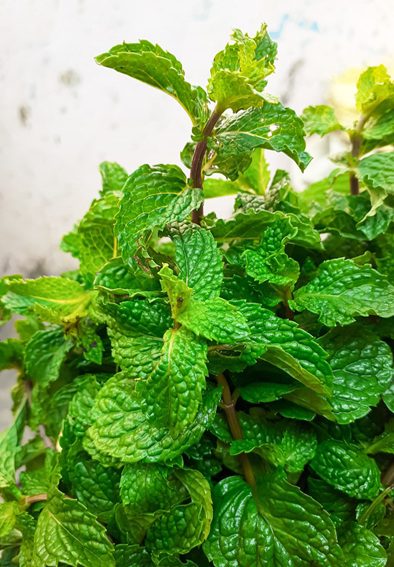
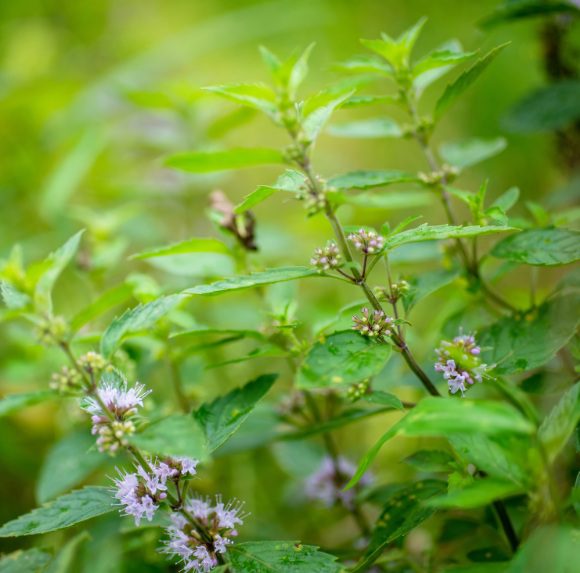
Spearmint — Mentha spicataAn aromatic perennial in the Lamiaceae family. NParks records it growing roughly 0.3–1 metre tall, with upright growth rising from creeping rhizomes. Its opposite, light-green leaves are ovate to lanceolate, deeply veined and serrated, while the stems show the characteristic four-sided structure common to the mint family. The flowers are small and arranged in terminal spike-like clusters, ranging through pink, purple and white. Spearmint’s familiar aroma is commonly associated with carvone-rich volatile chemistry, although the exact composition varies between cultivars and chemotypes. Peppermint — Mentha × piperitaPeppermint is a perennial hybrid, classically derived from watermint and spearmint. Its leaves are opposite and toothed and are often darker than typical spearmint foliage. NParks describes lanceolate leaves with reddish veins and clustered purple flowers. Its volatile profile leans more strongly toward menthol and menthone. These compounds help explain both peppermint’s sharper, cooler aroma and why so much of the pharmacological literature surrounding the plant focuses on peppermint oil rather than ordinary culinary leaves. Field identification checklist:
|
Mentha spicata Spearmint |
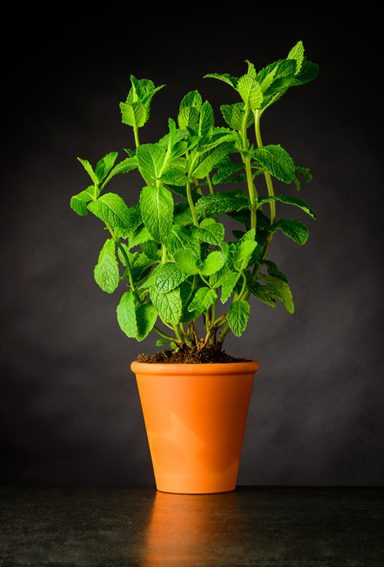
A Useful Identification Clue
Crushing a leaf can tell you that you probably have an aromatic mint. It does not reliably tell you which mint. Mentha hybridises readily, and cultivated forms can overlap considerably in appearance and aroma. When growing your own rabbit forage, keeping the nursery label, seed packet or propagation record is more reliable than deciding that a plant “smells pepperminty enough.”
Spearmint vs Peppermint — Same Genus, Different Chemistry
Spearmint and peppermint are close botanical relatives, but they are not chemically interchangeable. That difference matters most when reading research: spearmint is typically carvone-rich, while peppermint is more strongly associated with menthol and menthone. For everyday rabbit feeding, both still sit comfortably in the same practical category—aromatic culinary forage.
| Feature | Spearmint | Peppermint |
|---|---|---|
| Botanical name | Mentha spicata | Mentha × piperita |
| Botanical status | Recognised species | Hybrid, classically derived from watermint and spearmint |
| Typical aroma | Sweet, green and comparatively soft | Stronger, sharper and distinctly cooling |
| Characteristic volatile profile | Carvone-rich | Menthol- and menthone-rich |
| Menthol character | Usually much lower | A defining part of its characteristic chemistry and cooling sensation |
| Typical culinary use | Salads, sauces, teas and savoury dishes | Tea, flavouring and confectionery |
| Rabbit-feeding role | Suitable culinary mint within a varied leafy-green or forage rotation | Suitable culinary mint within a varied leafy-green or forage rotation |
| Direct rabbit research | Thinner evidence base; often represented within broader herbal-feed or livestock studies | Better direct evidence, including controlled dietary rabbit research and experimental gastrointestinal pharmacology |
| GI pharmacology | Biological activity is documented, but rabbit-specific gastrointestinal evidence is comparatively sparse | Direct experimental research exists on peppermint oil and rabbit intestinal smooth muscle |
| Should one be preferred? | No compelling evidence rabbits need spearmint over peppermint | Same—there is no compelling evidence peppermint leaf is therapeutically superior |
Why the distinction matters:
a paper studying peppermint oil cannot automatically be cited as evidence for spearmint. Likewise, findings from carvone-rich Mentha spicata cannot simply be relabelled “mint research” and transferred to menthol-rich Mentha × piperita.
The same rule applies to preparation. Evidence from an essential oil, tincture or laboratory extract does not automatically describe what happens when a rabbit eats ordinary fresh or dried leaves.
For everyday feeding, the conclusion is much simpler: different chemistry, same practical category—aromatic culinary forage.
Nutritional Profile — Spearmint & Peppermint
Nutrition figures for “mint” need a species label attached. Spearmint and peppermint have separate USDA food-composition entries, and their numbers should not be treated as interchangeable simply because both belong to the Mentha genus.
Same genus. Different plant. Different nutrition table.
Fresh Spearmint
85.55% Water
Lower-energy fresh culinary mint with approximately 199 mg calcium and 60 mg phosphorus per 100 g in the USDA legacy reference.
Fresh Peppermint
78.65% Water
A somewhat more concentrated fresh leaf, with approximately 243 mg calcium and 73 mg phosphorus per 100 g in the USDA legacy reference.
Fresh Spearmint — USDA Legacy Reference
Approximate composition per 100 g fresh Mentha spicata:
| Nutrient | Amount | Nutrient | Amount |
|---|---|---|---|
| Water | 85.55 g | Energy | 44 kcal |
| Protein | 3.29 g | Fat | 0.73 g |
| Carbohydrate | 8.41 g | Fibre | 6.8 g |
| Calcium | 199 mg | Phosphorus | 60 mg |
| Magnesium | 63 mg | Potassium | 458 mg |
| Iron | 11.87 mg | Vitamin C | 13.3 mg |
Calculated calcium-to-phosphorus ratio: approximately 3.3:1.
Fresh Peppermint — USDA Legacy Reference
Approximate composition per 100 g fresh Mentha × piperita:
| Nutrient | Amount | Nutrient | Amount |
|---|---|---|---|
| Water | 78.65 g | Energy | 70 kcal |
| Protein | 3.75 g | Fat | 0.94 g |
| Carbohydrate | 14.89 g | Fibre | 8.0 g |
| Calcium | 243 mg | Phosphorus | 73 mg |
| Magnesium | 80 mg | Potassium | 569 mg |
| Iron | 5.08 mg | Vitamin C | 31.8 mg |
Calculated calcium-to-phosphorus ratio: approximately 3.3:1.
100 g Is a Reference, Not a Rabbit Serving
Food-composition databases standardise values to 100 g because that makes foods easier to compare. It does not mean a rabbit should be served 100 g of mint.
A few leaves contribute only a fraction of the mineral totals shown above. Calcium and phosphorus therefore make more sense when interpreted alongside actual portion size, the rest of the leafy-green rotation, hay and pellet composition, water intake and the individual rabbit’s urinary history.
About the calcium numbers:
both fresh spearmint and peppermint have a calcium-weighted mineral profile, but that does not make either herb automatically unsuitable for healthy rabbits.
For rabbits with recurrent urinary sludge, uroliths, kidney disease or a veterinarian-prescribed mineral-management diet, the more useful question is the overall diet and medical history rather than whether one mint leaf appears on a “high calcium” list.
Fresh vs Dried: Same Plant, Different Concentration
Drying removes water, so fibre, minerals and many phytochemicals become more concentrated per gram. The USDA dried-spearmint entry therefore shows dramatically higher mineral values per 100 g than the fresh-leaf entry—not because drying creates calcium, but because far more plant solids fit into the same weight once the water is gone.
Volatile compounds are less predictable. Drying temperature, oxygen exposure, processing and storage can all shift the aromatic profile, so dried mint should not be described simply as “fresh mint but stronger.” It is a related preparation, not a chemically identical one.
The practical takeaway:
fresh mint contributes water as well as plant solids; dried mint contains much more plant material gram for gram. That is why the dried form naturally calls for a smaller portion.
Nutrition tables are useful for context. The rabbit still eats the portion, not the spreadsheet.
Traditional Use & Modern Scientific Understanding
The Oishi Bunnies Herbal Atlas does not treat traditional herbal practice and modern science as opponents. Tradition records generations of observation; science investigates those observations through botany, phytochemistry, pharmacology and clinical research. The useful question is not “tradition or science?” It is what was traditionally used, what has modern research actually studied, and how much of that evidence transfers to a rabbit eating the whole herb?
Spearmint in Traditional Use
Spearmint carries a long culinary and herbal history across Europe, the Mediterranean, the Middle East and Asia. Ethnobotanical reviews record traditional use for digestive complaints as well as respiratory issues and fever.
That is a genuinely strong food-use and traditional-use history—a different kind of evidence from a modern pharmacological trial, and not one that establishes a therapeutic rabbit dose on its own.
Peppermint in Traditional Use
Peppermint became particularly associated with digestive herbalism, with traditional preparations used for indigestion, colic and intestinal discomfort alongside a long history as a culinary tea.
Modern research gives parts of that reputation a plausible pharmacological footing, although the strongest evidence usually concerns peppermint oil or menthol specifically, not a handful of ordinary leaves.
Chinese Herbal Medicine — A Naming Distinction Worth Getting Right
This is where a lot of herbal content quietly trips up. The traditional Chinese medicinal herb 薄荷 (Bò Hé) belongs to the Mentha genus, but its materia medica source is traditionally identified as Mentha haplocalyx Briq.—not Mentha spicata or Mentha × piperita.
Hong Kong Baptist University’s Chinese medicinal-material database identifies Bò Hé as the dried aerial part of M. haplocalyx. In traditional Chinese herbal terminology it is described as 辛、凉—acrid or pungent and cool—and is traditionally associated with:
- 疏散风热 — dispersing Wind-Heat
- 清利头目 — clearing the head and eyes
- 利咽 — benefiting the throat
- 透疹 — venting rashes
- 疏肝解郁 — coursing constrained Liver Qi
薄荷 Bò Hé
Traditionally identified as Mentha haplocalyx
That history belongs here because it shows how significant the Mentha genus has been in Chinese herbal practice—but TCM Bò Hé is not automatically spearmint or peppermint.
HKBU’s database lists 薄荷 (Mentha haplocalyx) and 留兰香 (Mentha spicata, spearmint) separately. A Bò Hé indication should not quietly be reassigned to peppermint simply because all three plants are called “mint” in English.
What Modern Phytochemistry Tells Us
Spearmint is typically associated with a carvone-rich volatile fraction, alongside phenolic acids and flavonoids. Its extracts and volatile preparations have demonstrated antimicrobial, antioxidant and anti-inflammatory activity in experimental systems.
Peppermint is more characteristically associated with menthol and menthone, while the leaves also contain compounds such as rosmarinic acid and flavonoids including eriocitrin, luteolin derivatives and hesperidin.
Menthol also interacts with sensory ion channels such as TRPM8, helping explain peppermint’s characteristic cooling sensation.
What the Rabbit Evidence Actually Tells Us
The 2015 controlled feeding study using 0.5% peppermint remains the strongest straightforward whole-herb dietary evidence. It suggests peppermint can be incorporated into a formulated rabbit diet at the studied level without disrupting measured blood biochemistry, alongside some favourable production outcomes.
That study does not establish a medicinal dose for companion rabbits.
Spearmint also appears in production-rabbit literature, including herbal-feed studies and meta-analysis datasets, but its evidence is thinner and less cleanly attributable to spearmint alone than the direct peppermint trial.
Peppermint Oil and Rabbit Intestinal Smooth Muscle
The Hills and Aaronson experiment is more pharmacologically interesting still. Peppermint oil inhibited spontaneous activity and altered calcium-channel behaviour in isolated rabbit jejunum, giving the traditional antispasmodic reputation a genuine experimental mechanism.
It is also a very clean demonstration of why preparation matters: the researchers used peppermint oil, not a peppermint leaf salad.
What We Still Don’t Know
We do not have a validated medicinal dose of either spearmint or peppermint leaf for companion rabbits.
We also lack good clinical evidence that ordinary whole leaves:
- relieve gas in companion rabbits;
- treat GI stasis;
- pharmacologically stimulate appetite;
- treat infection;
- meaningfully shift the caecal microbiome;
- treat inflammatory disease; or
- change long-term health outcomes in pet rabbits.
How This Applies to Rabbits
Spearmint and peppermint have strong culinary histories, rich phytochemistry and a modest but genuine rabbit-specific evidence base—particularly for peppermint.
That supports treating correctly identified whole leaves as botanical food, forage and enrichment. It does not require us to pretend every traditional digestive claim has already been demonstrated in companion rabbits.
Traditional use raises questions worth asking. Phytochemistry gives us mechanisms worth investigating. Rabbit studies provide some direct evidence. None of those three should be mistaken for the next one.
Herb Profile
Assessment principle: These assessments describe the quality, depth and relevance of available evidence within each category. They are not assessments of overall safety, therapeutic effectiveness, or whether an herb is “good” or “bad” for rabbits.
| Evidence Category | Assessment | What We Can Say |
|---|---|---|
| Botanical Identification | Strong | Both Mentha spicata and Mentha × piperita are well characterised botanically and readily documented in authoritative botanical and horticultural references. |
| Traditional Herbal History | Well documented | Extensive culinary and herbal history exists across Europe, the Mediterranean, the Middle East and Asia. Species identity still matters, particularly when distinguishing spearmint, peppermint and Chinese Bò Hé. |
| Edibility / Food Use | Established food and forage use | Spearmint and peppermint are established culinary herbs with extensive human food use, and mint leaves also appear on recognised rabbit-green feeding lists. |
| Phytochemical Evidence | Substantial | Carvone-rich spearmint and menthol/menthone-rich peppermint chemistry have been studied extensively, alongside phenolic acids, flavonoids and other constituents. |
| Rabbit-Specific Evidence | Direct, with limits | Direct rabbit evidence exists—especially for peppermint—but much of it concerns production feeding, isolated intestinal tissue or concentrated preparations rather than clinical treatment of naturally occurring disease in companion rabbits. |
What Has Actually Been Studied in Rabbits?
More than a generic “no rabbit studies” statement would suggest—but the evidence comes from very different experimental questions. Whole-herb feeding, isolated intestinal tissue, herbal-feed datasets and standardised feed additives should not be bundled together as if they all tested the same thing.
The 2015 Peppermint Feeding Trial
A controlled 2015 study involved 72 six-week-old New Zealand White rabbits divided into six groups of twelve. One experimental diet contained 0.5% Mentha piperita.
The peppermint group showed favourable nutrient-digestibility results compared with the control and some other treatment groups. Final body weight was reported 5.84% above control, while measured blood-biochemistry values remained within normal ranges.
Useful rabbit-specific evidence? Yes. A clinical trial showing peppermint treats gas, GI stasis or appetite loss? No. This was a growth and nutrition study in young rabbits.
Peppermint Oil and Rabbit Jejunum
A classic experiment by Hills and Aaronson examined peppermint oil in isolated rabbit jejunum. Peppermint oil inhibited spontaneous intestinal smooth-muscle activity and produced concentration-dependent effects on voltage-dependent calcium currents.
That gives peppermint’s traditional antispasmodic reputation a genuine experimental mechanism involving reduced calcium influx into smooth muscle.
It also demonstrates why preparation matters: this was peppermint oil acting on isolated intestinal tissue—not a rabbit eating a few peppermint leaves.
Where Spearmint Fits
Spearmint appears in production-rabbit herbal research and in broader datasets analysing plant-based feed additives. A 2024 meta-analysis of herbal supplementation in rabbits included Mentha spicata among the interventions represented.
Across the wider herbal dataset, some digestibility and production measurements shifted, but the analysis did not establish a universal appetite or growth effect that could simply be attributed to spearmint.
Spearmint therefore has rabbit-relevant evidence, but its direct evidence base is currently thinner and less cleanly attributable to the herb alone than peppermint’s.
Feed-Additive Safety Assessments
Modern EFSA feed-additive assessments have explicitly considered rabbits when evaluating chemically characterised peppermint and spearmint preparations used under controlled feed conditions.
These assessments are useful because they show that concentrated mint preparations are not automatically “toxic at any dose.” Safety depends on preparation, composition and exposure.
They are not a DIY dosing guide. A standardised feed additive assessed in milligrams per kilogram of complete feed is not equivalent to putting an arbitrary drop of household essential oil into a rabbit’s mouth or water bowl.
The Oishi Bunnies Read:
Spearmint and peppermint have established culinary use, extensive phytochemical research and genuine rabbit-specific evidence—especially for peppermint. That is enough to support their use as correctly identified whole-leaf forage within a varied diet. It is not enough to turn ordinary mint into a treatment for GI disease, nor to convert an essential-oil experiment into a serving suggestion.
Growing Spearmint & Peppermint in Singapore
Mint grows very well in Singapore. The real challenge usually is not keeping it alive—it is convincing it that the whole balcony does not belong to it.
Spearmint — Mentha spicata
NParks describes spearmint as a fast-growing perennial suited to full sun or semi-shade, with moderate water requirements and moist, well-drained soil.
It tolerates a range of soils, ideally around pH 5.5–7.5, and may be propagated from seed, stem cuttings or division.
Watch for aphids, rust and powdery mildew. Harvesting before or soon after flowering generally gives the best flavour.
Peppermint — Mentha × piperita
NParks lists peppermint as a perennial suited to full sun to semi-shade with moist, well-drained soil.
It is propagated most reliably from softwood stem cuttings, runners or stolons, and division.
Because peppermint is a hybrid, vegetative propagation is also the most dependable way to keep growing the plant you actually intended to grow.
Singapore Balcony Setup
- Light: Around 4–6 hours of good filtered or partial direct light suits many mints here. Established spearmint can often tolerate stronger sun if watering and root temperature are managed.
- Container: Grow mint in a pot—partly horticulture, partly containment. Mint spreads through runners and will happily claim a shared planter.
- Soil: Use a fertile, well-draining growing medium. Mint enjoys moisture; it does not require an anaerobic swamp.
Water, Airflow & Harvest
- Water: Keep the root zone reasonably moist during hot spells, but avoid leaving pots sitting in stagnant water.
- Airflow: Singapore humidity encourages powdery mildew, fungal leaf problems, rust and pest pressure. Avoid crowding pots into a damp, still corner.
- Harvesting: Regular harvesting encourages fresh growth. Use clean scissors and reject foliage showing mildew, rust, heavy pest damage, unexplained residue or rot.
Propagation & Plant Health
- Cuttings: Both mints root readily from healthy stem cuttings, making propagation straightforward in Singapore.
- Runners: Established plants spread naturally through runners and can be divided to produce new plants.
- Aphids: Inspect tender new growth and leaf undersides regularly.
- Fungal issues: Rust and powdery mildew are easier to manage when plants have good airflow and foliage is not left persistently wet.
Growing Mint Specifically for Rabbits
Starting from seed, a known edible plant or a cutting from a food-safe source gives you the clearest growing history. If you are buying nursery mint, ask about pesticide treatment before assuming the leaves are ready for the rabbit bowl.
Quarantining and repotting are useful for observing pests and reducing cross-contamination, but time in a new pot does not create a universal countdown after which an unknown systemic pesticide can be assumed to have disappeared.
For plants destined for rabbits, know the treatment history whenever possible and follow the labelled harvest interval rather than guessing.
Rabbit-Forage Growing Checklist
- Use fertilisers, pest-control products and other inputs labelled for edible crops.
- Follow any stated pre-harvest interval after treatment.
- Prevent contamination from cat, rodent, bird or other animal faeces.
- Use potable water for rabbit-bound herbs.
- Keep scissors, trays and other rabbit-food gardening equipment clean.
- Keep the plant label, seed packet or propagation record so the botanical identity does not become guesswork six months later.
The Singapore gardener’s takeaway:
spearmint and peppermint are forgiving balcony herbs when drainage, light and airflow are managed. Growing them yourself also gives you much better control over plant identity, water quality and chemical exposure.
For the wider microbial and garden-biosecurity picture—including contaminated soil, animal faeces, watering practices, compost, equipment hygiene and rabbit-specific infection risks—see the Oishi Bunnies Safe Gardening & Biosecurity for Rabbits guide.
The Oishi Bunnies Bottom Line
After caring for rabbits through the easy days and the difficult ones, we have learnt that good care does not always look the same.
For a healthy rabbit, herbs can be part of the simple pleasures of everyday life—different scents to investigate, leaves to forage through, new flavours to taste and a little more botanical variety alongside a hay-based diet. Many of these same plants also carry long histories of traditional medicinal use, with fascinating chemistry that modern science continues to investigate.
We believe there is room to respect both traditional herbal knowledge and modern science without asking either to be something it is not. Traditional use does not automatically prove that a herb will treat disease, while limited scientific evidence does not necessarily mean that generations of observation have nothing useful to teach us. Sometimes research supports an old idea, sometimes it changes our understanding, and sometimes the answer simply remains uncertain.
That uncertainty becomes especially important when caring for a rabbit who is elderly, chronically ill or approaching the end of life. There may come a time when surgery is no longer suitable, treatment options have become limited, or the burden of further intervention may outweigh what it can realistically give the rabbit.
In those moments, care does not stop simply because cure is no longer possible.
The priorities may change towards comfort, pain relief, appetite, hydration, familiar foods, companionship, mobility, rest and the small things that tell us a rabbit is still finding pleasure in their day. Herbal and botanical support may sometimes have a place within a veterinary-guided comfort plan. At other times, a particular herb may offer little benefit or may be inappropriate because of the rabbit’s condition or medications. The individual rabbit matters more than the reputation of any herb.
For us, palliative care is not about trying everything simply because something might help. Nor is it about dismissing a supportive option simply because it comes from traditional herbal practice. It is about choosing thoughtfully, watching the rabbit in front of us, working alongside appropriate veterinary care, and continually asking whether what we are doing is adding comfort and quality to that rabbit’s life.
Sometimes medicine is about curing. Sometimes it is about managing a condition for years. And sometimes our responsibility is simply to make the days that remain comfortable, familiar, interesting and filled with as many good moments as possible.
Respect the tradition. Understand the plant. Follow the evidence. But above all, look at the rabbit in front of you—because their comfort, dignity and quality of life are what ultimately matter.
Explore Spearmint with Oishi Bunnies
Looking to introduce a fresh, aromatic twist to your bunny’s daily rotation? Oishi Bunnies brings you premium organic botanical options and freshly baked treats, turning routine daily forage into an exciting sensory experience for your furkid.
Organic Spearmint LeavesPure dried organic Spearmint leaves perfect for sprinkling over Timothy hay, mixing into forage mats, or encouraging picky eaters. Naturally fragrant and gently dried to preserve essential oils without overwhelming delicate noses. | Baked Banana Chips with SpearmintFor buns who enjoy a sweet treat with an herbal crunch. Hand-baked in small batches, combining naturally sweet banana with organic spearmint for a delightful bonding reward or training treat. |
Our forage philosophy:
Variety makes lifetime nutrition exciting! Rotate different rabbit-safe herbs, flowers, and leaves to spark natural foraging instincts, while keeping the main foundation solid: endless fresh grass hay and clean water.
Spearmint & Peppermint FAQ
Part of the Oishi Bunnies Herbal Atlas and Rabbit Herb Guide: practical answers about feeding mint for rabbits, comparing spearmint and peppermint, understanding traditional digestive claims, and separating whole culinary leaves from concentrated essential oils.
Can rabbits eat spearmint and peppermint?
Which is better for rabbits — spearmint or peppermint?
Can rabbits eat spearmint and peppermint every day?
Does mint help rabbits with gas?
Does peppermint stimulate appetite?
Can mint treat GI stasis?
Is mint high in calcium?
Can rabbits eat dried mint?
Is pennyroyal a mint, and can rabbits eat it?
Can I give my rabbit peppermint essential oil?
References & Further Reading
These botanical databases, rabbit-feeding resources, scientific papers, food-composition records and Singapore horticultural references support the claims discussed in this Mint Herbal Atlas profile. Where research involves essential oils, isolated tissues, standardised feed additives or production-rabbit studies, those findings should not automatically be treated as equivalent to feeding ordinary fresh or dried mint leaves to a companion rabbit.
Botany & Identification
- Royal Botanic Gardens, Kew — Spearmint:
Mentha spicata L. — Plants of the World Online.
Used for accepted taxonomy and botanical identity. - Royal Botanic Gardens, Kew — Peppermint:
Mentha × piperita L. — Plants of the World Online.
Supports peppermint’s accepted hybrid identity and its relationship to M. aquatica and M. spicata. - NParks — Spearmint:
Mentha spicata L. — Flora & Fauna Web.
Singapore botanical description, edible plant part, growth habit and cultivation information. - NParks — Peppermint:
Mentha × piperita L. — Flora & Fauna Web.
Singapore botanical description, edible plant part, propagation and cultivation information.
Rabbit Feeding & Veterinary Context
- Indiana House Rabbit Society — greens and vegetables:
Rabbit Greens and Vegetables.
Lists mint and peppermint among greens used in rabbit diets and supports the article’s practical food-use context. - MSD Veterinary Manual — gastrointestinal stasis:
Noninfectious Diseases of Rabbits.
Veterinary background used to distinguish ordinary herb feeding from diagnosis and treatment of genuine gastrointestinal disease.
Traditional Use & Phytochemistry
- Spearmint ethnobotany, chemistry & pharmacology:
Mahendran, G., Verma, S. K., & Rahman, L.-U. (2021).
The traditional uses, phytochemistry and pharmacology of spearmint (Mentha spicata L.): A review.
Journal of Ethnopharmacology, 278, 114266. - Peppermint leaf, tea & phytochemistry:
McKay, D. L., & Blumberg, J. B. (2006).
A review of the bioactivity and potential health benefits of peppermint tea (Mentha piperita L.).
Phytotherapy Research, 20(8), 619–633.
Chinese Herbal Medicine & Species Identity
- Hong Kong Baptist University — 薄荷 Bò Hé:
Chinese Medicinal Material Images Database — 薄荷.
Identifies Bò Hé as the dried aerial portion of Mentha haplocalyx Briq. and records its traditional properties and functions. - Hong Kong Baptist University — 留兰香 Spearmint:
Medicinal Plant Images Database — Mentha spicata.
Lists 留兰香 separately as Mentha spicata, supporting the distinction between spearmint and traditional Bò Hé.
Rabbit-Specific Research
- Controlled peppermint feeding study:
Mahmoud, A. E. M. (2015).
Nutrient Utilization, Blood Biochemical Parameters and Performance as Affected by Inclusion of Herbal Additives in the Diets of Growing Rabbits.
Indian Journal of Animal Nutrition, 32(2), 201–206.
Seventy-two weaned New Zealand White rabbits were studied; one group received 0.5% Mentha piperita. - Peppermint oil & rabbit intestinal smooth muscle:
Hills, J. M., & Aaronson, P. I. (1991).
The mechanism of action of peppermint oil on gastrointestinal smooth muscle: an analysis using patch clamp electrophysiology and isolated tissue pharmacology in rabbit and guinea pig.
Gastroenterology, 101(1), 55–65.
This was an experimental peppermint-oil study, not a feeding trial of whole mint leaves. - Rabbit herbal-feed meta-analysis:
Adli, D. N., Sugiharto, S., Irawan, A., et al. (2024).
The effects of herbal plant extract on the growth performance, blood parameters, nutrient digestibility and carcase quality of rabbits: A meta-analysis.
Heliyon, 10(4), e25724.
Includes Mentha spicata among the herbal interventions represented in the rabbit literature.
Essential Oils & Concentrated Preparations
- Peppermint essential oil — controlled feed-additive assessment:
EFSA Panel on Additives and Products or Substances used in Animal Feed (FEEDAP) (2025).
Safety and efficacy of a feed additive consisting of an essential oil derived from the aerial parts of Mentha × piperita L. for use in all animal species.
EFSA Journal.
Used to distinguish controlled feed-additive exposure from household essential-oil dosing. - Spearmint essential oil — controlled feed-additive assessment:
EFSA Panel on Additives and Products or Substances used in Animal Feed (FEEDAP) (2025).
Safety and efficacy of a feed additive consisting of an essential oil derived from the aerial parts of Mentha spicata L. for use in all animal species.
EFSA Journal. - Pennyroyal oil hepatotoxicity:
National Institute of Diabetes and Digestive and Kidney Diseases.
Pennyroyal Oil.
LiverTox: Clinical and Research Information on Drug-Induced Liver Injury.
Supports the caution around pulegone-rich pennyroyal preparations and the decision not to recommend Mentha pulegium as rabbit forage.
Nutrition
- USDA food-composition data:
U.S. Department of Agriculture, Agricultural Research Service.
FoodData Central.
Legacy food-composition data used for the fresh spearmint and peppermint nutrient comparisons and the fresh-versus-dried discussion.
Growing Mint in Singapore
- NParks Singapore cultivation guidance:
Growing Mints? A “Cool” Idea You Can Try at Home!.
Local guidance on light, drainage, propagation, harvesting and growing spearmint and peppermint under Singapore conditions.
How to read these references:
a botanical database establishes plant identity; a food database describes nutrients; traditional literature records historical use; pharmacology explores mechanisms; and rabbit experiments provide species-specific evidence. They answer different questions, so evidence from one category should not quietly be promoted into another.
Our Approach to Herbs and Disclaimer
We write the Herbal Atlas because we believe herbal knowledge is worth taking seriously — humans have found value in these plants for centuries, rabbits naturally interact with a remarkably diverse botanical diet, and modern research keeps giving us better ways to understand what these plants contain and what they may do. This Rabbit Herb Guide pairs that respect for herbalism with a few practical ground rules.
- Educational use, not a prescription.
This profile is for botanical learning and enrichment — it isn’t veterinary advice, a diagnosis, or a treatment protocol. Use it to make an informed feeding decision, not to replace a vet visit. - Whole herb ≠ medicine.
Edible herbs can carry genuinely active phytochemicals and interesting nutritional properties, but feeding a whole herb is a different act from administering a standardised medicinal preparation. Dietary herbs can complement a healthy rabbit’s diet; they don’t substitute for veterinary treatment of a sick one. - Hay comes first.
Unlimited grass hay and clean water are the foundation of a rabbit’s diet. Herbs are a complementary, rotational addition — flavour, variety and enrichment on top of that foundation, not a replacement for it. - Every rabbit is different.
Age, digestive health and medical history all vary. Introduce anything new gradually, in small amounts, and watch appetite, droppings and general behaviour over the next 24–48 hours. - Concentrates and extracts are their own category.
A dried herb and a standardised extract are chemically different exposures, and neither should be confused with essential oils. Never diffuse or administer concentrated aromatic oils to rabbits, orally or topically. - Extra care for vulnerable rabbits.
Kits, frail seniors, pregnant or nursing does, rabbits taking medication, and rabbits with significant chronic disease may tolerate dietary changes differently. Introduce new herbs more cautiously and check with a rabbit-experienced veterinarian when the rabbit’s condition or medication makes food choices clinically relevant. - Sourcing matters as much as the herb itself.
Identify plants correctly, source cleanly, and discard anything spoiled, mouldy or of uncertain origin. No herb is safe if it’s the wrong herb — or a bad batch. - When in doubt, see a vet.
If your rabbit is unwell, professional veterinary care always comes first — no dietary remedy is a substitute for prompt treatment.
Our evidence promise:
This Atlas reflects our best current reading of the evidence, and we update it as better research comes along.