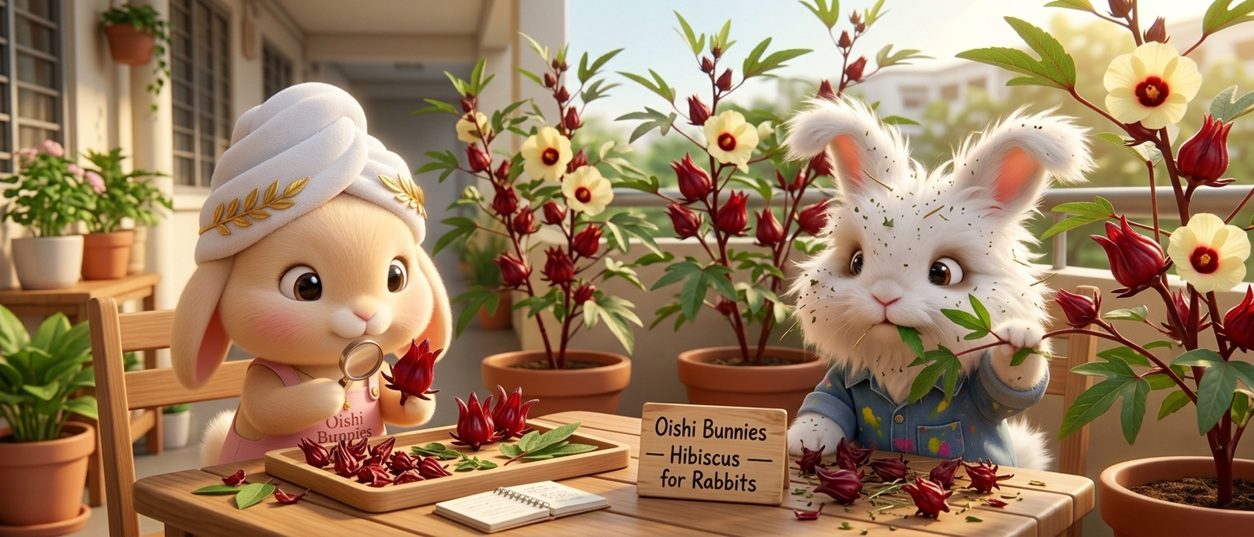
 Pro-Tip: Viewing on a phone? Select desktop mode or rotate to landscape for the best reading experience!
 Estimated Read Time: 7 Mins
Oishi Bunnies Herbal Atlas
Hibiscus
Hibiscus sabdariffa L. (Roselle)
Welcome to the Oishi Bunnies Herbal Atlas. Here, we explore roselle hibiscus for rabbits as food, forage and sensory enrichment—bringing together its long culinary and traditional history, modern phytochemical research and the evidence from studies that used actual rabbits.
A rabbit sees a crisp crimson snack. A botanist sees a fleshy calyx frequently mistaken for a flower. A pharmacologist sees anthocyanins, organic acids and flavonoids. That is why answering “Can rabbits eat roselle hibiscus?” requires a little more care than simply declaring the plant safe or unsafe.
Written by Cookie Yiyi, fosterer of 18 rehabilitated buns, guardian to resident house rabbits, and passionate organic balcony gardener—the Atlas pairs careful research with years of lived sanctuary experience.
Educational Notice: Herbal profiles are provided for botanical learning, responsible forage use and enrichment. Whole roselle hibiscus calyx or leaf is not a concentrated extract, tincture, fragrance oil or essential oil. Hibiscus should never replace professional veterinary diagnosis, treatment, prescription medication or emergency care. If your rabbit is unwell, please seek appropriate veterinary care.
Herb at a Glance
| Scientific name used in research and trade | Hibiscus sabdariffa L. |
| Current accepted name | Sabdariffa gossypiifolia (Mill.) M.M.Hanes & R.L.Barrett |
| Family | Malvaceae — the mallow family |
| Main food parts | Fleshy calyces and epicalyx bracts; young leaves and shoots |
| Notable constituents | Anthocyanins, flavonoids, phenolic acids, hibiscus acid, other organic acids, pectin and structural fibre |
| Taste profile | Tart, fruity and slightly astringent; young leaves have a pleasantly sour flavour |
| Routine frequency | Offer a small amount within a varied herb rotation rather than using it as a daily bowl filler |
| Best evidence-supported role | Botanical variety, sensory enrichment and a source of plant fibre and polyphenols |
| Main practical notes | Confirm the species and plant part. Choose plain, unsweetened material and avoid tinctures, fragrance oils and concentrated extracts. Use additional caution with pregnancy, breeding animals, kidney or urinary disease, low blood pressure, dehydration and medicated rabbits |
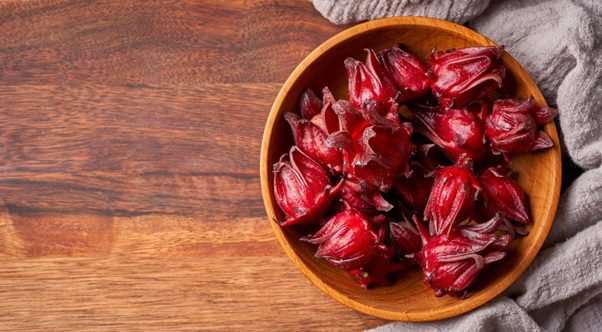
Hibiscus sabdariffa L. (Roselle)
Can Rabbits Eat Roselle Hibiscus? The Short Answer
Yes—with a bit of nuance, because I’m contractually obligated, by my own standards if nothing else, never to give you a one-word answer about anything a rabbit eats.
Properly identified, clean and unsweetened roselle can be offered as an occasional forage treat to a healthy adult rabbit. It has a genuinely long food history and—more unusually for this Atlas—several studies have tested roselle materials directly in rabbits rather than using only rodents as stand-ins.
That is the good news. The catch is that these studies involved formulated feed residues, induced disease models, isolated tissues or concentrated extracts—not ordinary companion rabbits receiving a treat-sized piece of dried calyx. One high-dose extract study also altered reproductive hormone patterns in rabbits, which supports extra caution around breeding animals and concentrated preparations without proving that an occasional whole-calyx serving causes infertility.
Think colourful forage, not crimson prescription.
Herb Profile: Roselle Hibiscus for Rabbits
Rating principle: As featured in our Herbal Atlas Rabbit Herb Guide, these ratings describe the quality, depth, and relevance of available evidence for roselle hibiscus within each category. They are not ratings of overall safety, therapeutic effectiveness, or whether an herb is “good” or “bad” for rabbits.
| Category | Rating | Why Roselle Earns This Rating |
|---|---|---|
| Botanical Identification | ★★★★★ | Roselle hibiscus is well described in botanical floras and horticultural databases. Kew now accepts Sabdariffa gossypiifolia, while Hibiscus sabdariffa remains the dominant name in hibiscus for rabbits research and trade. |
| Traditional Herbal History | ★★★★★ | Roselle hibiscus has a deep and geographically broad history of culinary and medicinal use across Africa, Asia, the Middle East, the Caribbean and the Americas. These traditions deserve accurate documentation in any rabbit herb guide, but they do not establish a medicinal dose for roselle for rabbits. |
| Edibility / Food Use | ★★★★★ | Roselle hibiscus calyces, young leaves and shoots are genuinely and widely eaten. When offering roselle for rabbits, this rating applies to ordinary food forms—not concentrated extracts, tinctures or supplements dressed in the same botanical name. |
| Phytochemical Evidence | ★★★★★ | The anthocyanins, organic acids, flavonoids, phenolic acids, and pectin in roselle hibiscus have been studied in detail. Researchers studying hibiscus for rabbits have also documented meaningful variation between cultivars, plant parts, harvest stages and processing methods. |
| Rabbit-Specific Evidence | ★★★☆☆ | Several studies evaluated hibiscus for rabbits using actual animals rather than rodent stand-ins. However, the research remains heterogeneous and focused on production feeding of roselle for rabbits, concentrated extracts, or experimental models rather than companion care standards. |
Why Rabbit-Specific Evidence for Roselle Hibiscus Earns Three Stars
Rabbits have actually been on the receiving end of roselle hibiscus in several published studies from our Herbal Atlas database:
- Weaner rabbits received formulated diets in which roselle hibiscus calyx residue replaced part of a conventional feed ingredient. Researchers monitored growth, blood counts and serum biochemistry.
- A separate production study examined different dietary levels of roselle for rabbits using calyx residue and recorded performance characteristics and blood profiles.
- Concentrated hibiscus for rabbits extract reduced atherosclerotic development and altered oxidised-lipid markers in cholesterol-fed New Zealand White rabbits. Later research examined delphinidin-3-O-glucoside in another experimental model.
- Calyx anthocyanin extract reduced biochemical evidence of oxidative tissue injury in rabbits exposed to the experimental toxicant 2,4-dinitrophenylhydrazine. This demonstrates activity under induced laboratory conditions—not routine protection for pet rabbits.
- An older isolated-tissue experiment found that aqueous roselle hibiscus calyx extract inhibited the tone of rabbit aortic strips. That provides a mechanical pharmacology clue, not evidence that feeding hibiscus for rabbits treats high blood pressure in a living animal.
- One exploratory study administered whole calyx extract of roselle hibiscus to male and female rabbits at 200 mg/kg daily for 28 days. It reported increased prolactin and altered FSH patterns, raising a caution signal for sustained concentrated exposure.
What This Rabbit Herb Guide Evidence Does Not Prove
Feed trials measure growth and production suitability—not the lifetime wellbeing of a desexed companion pet. Roselle hibiscus residue meal is not chemically identical to a whole dried calyx. Cholesterol-fed models examining hibiscus for rabbits are experimental setups, and isolated aortic tissue is not a living animal. Most importantly, the pharmacology studies used concentrated, defined-dose preparations. None of this evidence proves that feeding roselle for rabbits treats active disease.
The Oishi Bunnies Read: Roselle hibiscus has better rabbit-specific research than many entries in our Herbal Atlas Rabbit Herb Guide. That earns it three stars—not a medicinal halo. The studies confirm biological activity and safety clues for roselle for rabbits. For companion pets, Hibiscus sabdariffa is best understood as a tart, polyphenol-rich addition to a varied forage rotation when serving hibiscus for rabbits.
Meet the Plant
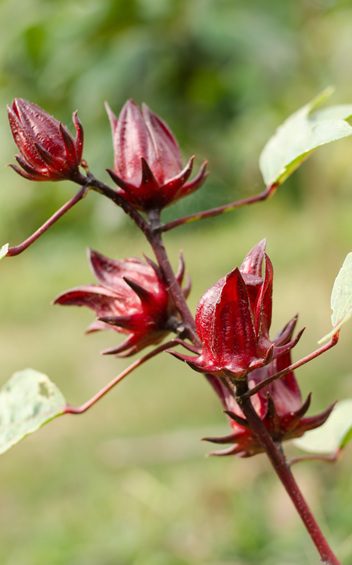
Roselle grows fast. In Singapore’s tropical climate, it can behave as a short-lived perennial shrub; elsewhere, it is often treated as an annual. Expect a mature plant to reach around 1–2 metres. Botanically, this is mainly the enlarged calyx and surrounding epicalyx. The petals fall away after flowering, while the calyx swells around the developing seed capsule. Field identification checklist:
|
Hibiscus sabdariffa — flower, variable leaves and fleshy fruiting calyx |
Don’t Identify Roselle by Flower Colour Alone
Plenty of Hibiscus cultivars wear red, pink, yellow or white blooms, so colour alone will not get you there. Roselle is identified through the full combination of its stem, shape-shifting leaves, flower structure and—above all—the fleshy fruiting calyx. A bright red Chinese hibiscus flower is not automatically roselle, and a bag labelled simply “hibiscus” is not an adequate botanical identification for rabbit feeding.
Botanical identification references: NParks Flora & Fauna Web and World Flora Online.
Botanical & Scientific Profile
Taxonomy: Kingdom Plantae | Order Malvales | Family Malvaceae (mallow family). Traditional genus name: Hibiscus | Familiar species name: Hibiscus sabdariffa L. | Current Kew-accepted name: Sabdariffa gossypiifolia (Mill.) M.M.Hanes & R.L.Barrett.
Most food, pharmacology, and rabbit literature still calls this plant Hibiscus sabdariffa, but a 2024–2025 taxonomic revision moved it into its own genus—so Kew now treats H. sabdariffa as a synonym of the newly accepted Sabdariffa gossypiifolia. The plant hasn’t changed; the paperwork has. Both names earn a place in a serious reference article—the new one is technically correct, while the old one is what existing studies actually list on their labels.
Major Phytochemical Groups
AnthocyaninsThe pigments behind that deep red calyx—chiefly delphinidin-3-sambubioside and cyanidin-3-sambubioside—and the main reason this plant shows up in antioxidant research at all. “Antioxidant” here means a measurable chemical property, not a blanket promise against every disease involving oxidative stress. | Phenolic Acids & FlavonoidsProtocatechuic acid, chlorogenic-acid derivatives, caffeic-acid derivatives, quercetin, and kaempferol glycosides. The leaf and the calyx don’t share a chemical fingerprint, which is one more reason to treat them as different ingredients rather than the same plant wearing two hats. |
Organic AcidsHibiscus acid, hydroxycitric acid, citric, malic, and tartaric acid—the whole tart, low-pH character of roselle tea traces back to this group, and the exact ratios shift with cultivar, growing conditions, and processing. | Polysaccharides, Pectin & MucilageLike its mallow-family cousins, roselle carries structural and soluble carbohydrates. The pectin gives the calyx structure for jams, while the mucilage provides unique coat-and-soothe carbohydrate properties under scientific investigation. |
Tannins, Alkaloids & GlycosidesPresent at modest levels. Cardiac glycosides have real activity on heart tissue at sufficient doses; while calyx levels sit comfortably within safety margins, it is why portion sizes for herbivores should always remain small. | Seeds (A Different Animal)Carries a completely different profile—higher protein and fat (including tocopherols), alongside distinct antinutritional compounds. A study on processed seed meal is not permission to hand a rabbit a fistful of raw seeds. |
Why colour is a bad way to judge potency: A darker calyx probably has more pigment, but it doesn’t tell you the whole phytochemical story. White and green roselle cultivars can carry fewer anthocyanins while still holding plenty of other phenolics and organic acids. Additionally, drying temperature, oxygen exposure, light, storage time, and moisture all rewrite the final chemistry anyway. Judging a calyx by its colour alone is a bit like judging a wine by its label art.
Nutritional Profile — Roselle for Rabbits
In the Oishi Bunnies Herbal Atlas, nutrition tables for roselle need more caveats than usual: published numbers shift depending on whether someone analysed fresh calyx, dried calyx, leaf, seed, a particular cultivar, or leftover beverage material. The one consistent pattern is that the leaf tends to carry more protein, calcium, and iron than the fleshy calyx.
Nutrition note: The reference composition below is based on legacy USDA raw roselle data (per 100g fresh weight: 86.58g water, 49 kcal, 0.96g protein, 0.64g fat, 11.31g carbohydrate, 215mg calcium, 37mg phosphorus, 51mg magnesium, 208mg potassium, 6mg sodium, 1.48mg iron, 12mg Vitamin C). The calculated Ca:P ratio is roughly 5.8:1, though actual mineral levels vary widely by tissue type, cultivar, soil, and maturity.
| Young Fresh Leaves High Moisture Comparatively higher protein, minerals, and fibre with a sour taste; slots into rotations as a leafy green | Fresh Fleshy Calyx Tart & Hydrating Rich in organic acids, minerals, pectin, and polyphenols; a small, colourful fresh treat, not a daily green | Dried Calyx Concentrated Solids Water is removed, concentrating plant solids; use far less by weight than fresh material |
Calcium & Mineral Considerations: Legacy data shows a calcium-heavy ratio (~5.8:1), but this entry doesn’t specify which part of the plant was measured. Because mineral content swings dramatically with cultivar, soil, and tissue type, you shouldn’t assume every calyx runs 5.8:1. However, this inherent variability—combined with roselle’s documented calcium oxalate content—is reason enough to keep roselle as an occasional treat for rabbits managing urinary calcium or bladder sludge concerns.
Fresh vs Dried (“Nutritional Origami”): Drying doesn’t invent new calcium, sugar, or polyphenols out of thin air—it simply removes water so the same gram packs more plant solids. Think of dried botanicals as nutritional origami: fold up the water, and what unfolds when rehydrated is far more concentrated than it looks sitting dry in a jar. A “pinch of dried calyx” and a “whole fresh calyx” are completely different nutritional portions.
Antinutritional Factors: Roselle tissues carry oxalates, phytates, and tannins in amounts that shift with maturity and processing. While this doesn’t invalidate roselle’s food value, it reinforces why it should be rotated rather than crowned a permanent star of the daily salad bowl.
Seeds & Processed Meals: Roselle seeds are a completely different chemical animal—richer in protein, fat, tocopherols, and carrying their own antinutritional baggage. Research on livestock feed using processed seed meal is not permission to hand companion rabbits a fistful of raw seeds. Skip the seeds as a casual pet snack entirely.
Traditional Use & Modern Scientific Understanding of Roselle Hibiscus for Rabbits
Traditional knowledge and modern science aren’t opposing systems—our Rabbit Herb Guide in the Herbal Atlas layers them seamlessly. Traditional practice records accumulated human observations, while modern phytochemistry investigates active toolkits under controlled lab conditions. For roselle hibiscus, both perspectives offer valuable context, but neither replaces species-specific care when offering roselle for rabbits.
Traditional PracticeRoselle hibiscus enjoys a global legacy—known as karkadé (North Africa/Middle East), bissap (West Africa), flor de Jamaica (Americas), and sorrel (Caribbean). Leaves and calyces have long served as cooling beverages and remedies for digestive complaints, fevers, and fluid balance. Naming Trap: Historical records frequently tangle “hibiscus” or “sorrel” without preserved specimens, confusing roselle hibiscus with unrelated plants. Traditional observation carries cultural weight, but it isn’t automatically a safe serving of roselle for rabbits. | Modern PhytochemistryRoselle hibiscus brings a credible chemical toolkit: anthocyanins and polyphenols active in redox chemistry, organic acids shaping extraction, flavonoids altering enzyme pathways, and pectin fractions influencing gut mechanics in hibiscus for rabbits research. Human research confirms modest blood pressure reductions in clinical trials. While this baseline explains why researchers study hibiscus for rabbits, lab chemistry alone does not magically transform a dried calyx into a precisely dosed medical treatment for rabbits. |
What Has Actually Been Studied in Hibiscus for Rabbits?
Targeted lab models show biological activity: Isolated rabbit aortic-strip tissue relaxed under aqueous roselle hibiscus extract. In cholesterol-fed New Zealand White rabbits, roselle hibiscus extracts (and compounds like delphinidin-3-O-glucoside) reduced atherosclerotic build-up, improved lipid oxidation, and shielded tissue from induced oxidative damage.
The Flipside: These findings do not prove that feeding dried roselle for rabbits prevents routine heart disease. Furthermore, studies on hibiscus for rabbits cut both ways—one trial found that concentrated calyx extract lowered reproductive hormones and altered testicular tissue in male rabbits.
What Our Rabbit Herb Guide Notes We Still Don’t Know
No study in our Herbal Atlas has established a validated medicinal dose of roselle for rabbits. Preparation matters enormously—water infusions, ethanol extracts, calyx meal, fresh leaves, and whole seeds represent vastly different exposures when feeding hibiscus for rabbits.
When factoring in a rabbit’s unique calcium metabolism, delicate hindgut fermentation, and vulnerability to GI stasis, laboratory activity for roselle hibiscus serves as an intriguing clue—not a treatment plan for pet rabbits.
Potential Relevance of Roselle for Rabbits
In the Oishi Bunnies Herbal Atlas, roselle for rabbits is valued primarily as a vibrant, multi-sensory forage item and supplementary green. While its rich anthocyanin and polyphenol profile is scientifically intriguing, laboratory chemistry should not be confused with disease-curing claims for companion rabbits.
Foraging & Sensory
| Botanical Variety
| Polyphenol Exposure
|
The Practical View: Roselle functions brilliantly as interactive forage and a flavourful treat. Its active chemistry helps us understand the plant’s biological properties, but it does not convert a handful of calyces or leaves into veterinary medicine.
What Does the Evidence Say About Roselle for Rabbits?
While laboratory studies and feed trials demonstrate that roselle is biologically active in rabbit tissue and can be safely formulated into diets, translating these findings requires realistic context. Research shows potential biological mechanisms, but disease-specific clinical evidence for companion rabbits does not exist.
Palatability & Appetite RealitySome rabbits genuinely love roselle’s sour-fruity edge, and a few fragments can make hay or a recovery meal more enticing. However, one firm line exists: if a sick rabbit has a reduced appetite, flavour tricks buy you nothing. Shrinking fecal output can turn critical fast, and tart calyces must never delay a veterinary call. | Feed & Tissue ResearchControlled feed trials and extract studies show roselle can be included in formulated rabbit diets without obvious harm, confirming its tissue-level biological activity. Neither finding equals claims like “flushes bladder sludge” or “cures urinary infection”—those require specific companion-rabbit clinical data that currently does not exist. |
Antioxidant & Vascular ActivityIn lab models, roselle extracts relaxed aortic tissue and protected cholesterol-fed rabbits against lipid oxidation and vessel plaque. These findings illustrate active plant pharmacology, but they do not prove that feeding dried calyces prevents routine heart disease or manages cholesterol in healthy companion rabbits. | The Evidence in ContextRoselle is neither an empty snack nor a veterinary cure. Its rich chemistry makes it a fascinating plant, but claims of medical treatment are unwarranted. For house rabbits, roselle is best enjoyed as a colourful, tart forage treat within a balanced, hay-centric diet. |
Edible Anatomy
Roselle (Hibiscus sabdariffa) is a multifaceted botanical whose various parts differ sharply in texture, chemistry, and culinary application. Understanding the unique anatomy of roselle ensures you offer only safe, appropriate plant parts for your rabbit’s occasional forage enrichment.
Fleshy Calyx & EpicalyxFood History: The main event—served fresh, dried, infused, cooked, or preserved across global culinary traditions. Rabbit Guidance: The go-to dried roselle part for occasional forage enrichment. Serve unsweetened in small, controlled pieces. | PetalsFood History: Edible in roselle and a few other correctly identified Hibiscus species. Rabbit Guidance: A clean petal is fine, but most commercial “hibiscus flower” products are actually dried calyces wearing a misleading label. |
Young Leaves & ShootsFood History: Established vegetable use, raw or cooked, across several African and Asian cuisines. Rabbit Guidance: Can join a rotated fresh-green lineup when home-grown or confidently sourced without pesticides. | Fruit CapsuleFood History: Usually removed before the calyx is processed for culinary consumption. Rabbit Guidance: Remove it before serving, same as everyone else does. |
SeedsFood History: Used in human food and processed livestock feed in select regions. Rabbit Guidance: Compositionally its own thing and unnecessary as a pet snack—never extrapolate seed-meal research to raw seeds. | Mature Stems & RootsFood History: Stems serve mainly as industrial fibre crops; roots have sparse traditional medicine mentions. Rabbit Guidance: Not recommended. Skip tough, potentially treated stems and unstudied root systems completely. |
What’s Actually in the Pack: Commercial “whole hibiscus flower” is almost always the dried fleshy calyx, not the delicate petals that fell off weeks earlier. “Dried roselle calyx” is the more honest name for the product, and the one worth putting on the label.
The practical takeaway: Stick to dried fleshy calyces and young, home-grown leaves for safe botanical rotation. Always remove fruit capsules, avoid raw seeds or woody stems, and introduce any new plant part gradually!
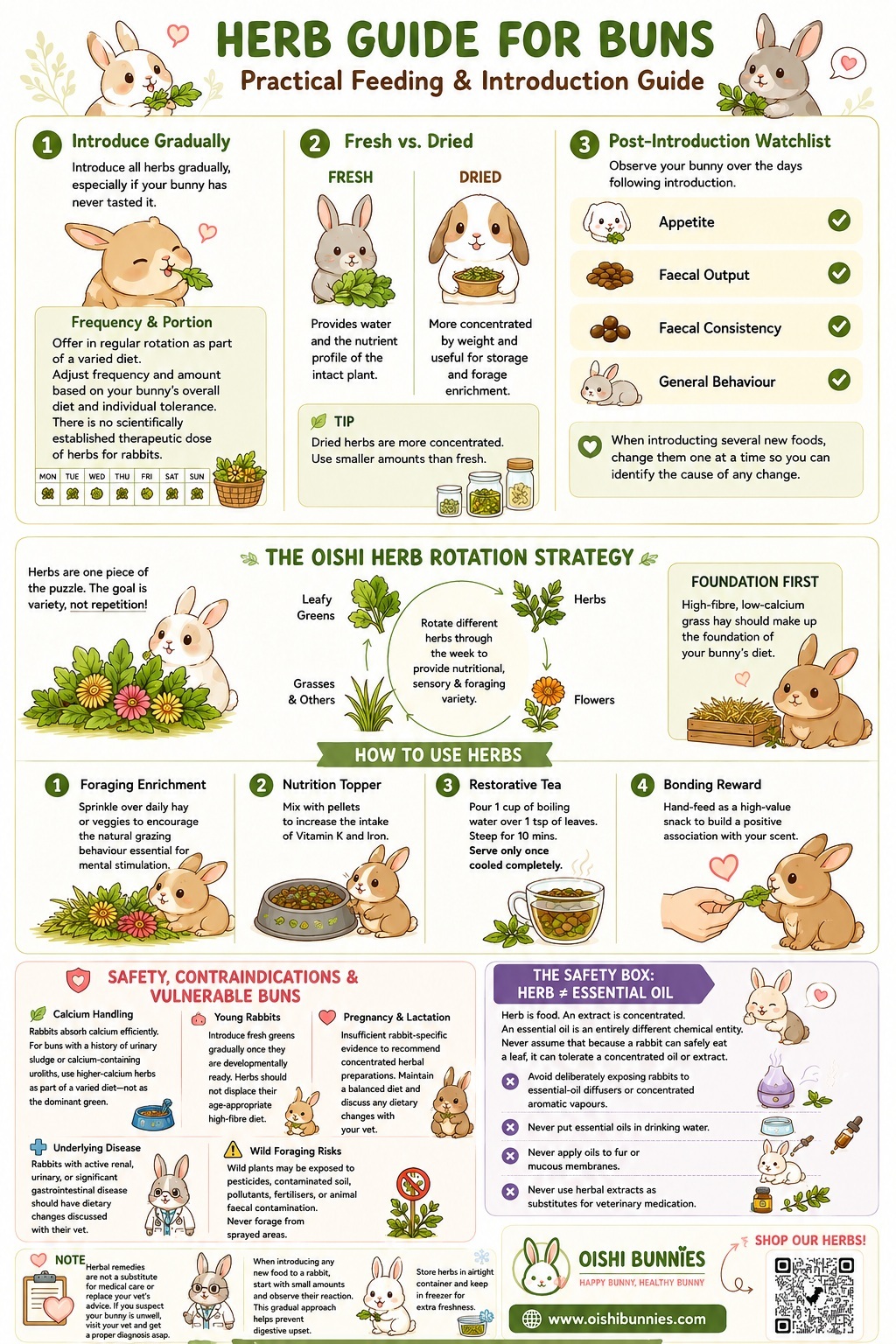
Growing Roselle Hibiscus in Singapore
Singapore gives roselle (Hibiscus sabdariffa) exactly the warmth it craves—and, unfortunately, exactly the humidity its fungal issues thrive on. NParks lists roselle as a cultivated tropical plant needing full sun, moderate watering, and excellent drainage. It will grow happily here on local HDB balconies or in gardens, provided you don’t skimp on airflow and soil ventilation!
HDB Balcony Setup
| Flowering & Care
| Pests & Safety
|
The Singapore gardener’s takeaway: Growing roselle locally gives you complete control over soil cleanliness and pesticide-free care. Prioritize strong sunlight, sharp drainage, and good ventilation to harvest crisp leaves and rich calyces safely for your bun!
Explore Roselle Hibiscus with Oishi Bunnies
Looking to introduce a vibrant, tangy twist to your bunny’s daily rotation? Oishi Bunnies brings you premium organic botanicals and artisanal hand-baked treats, turning everyday forage into an exciting, sensory-rich enrichment for your furkid.
Organic Hibiscus Flower100% organic, unsweetened dried roselle calyces. Ideal for sprinkling over daily Timothy hay, hiding in snuffle mats, or encouraging picky eaters with a fragrant botanical crunch. | Red Velvet CakeA stunning, rabbit-safe celebration cake crafted with natural botanical colors and wholesome hay! Perfectly baked for birthdays, gotcha days, or special bonding moments. |
Hay PiaTraditional pastry-inspired hay treats baked in small batches with premium fiber and natural ingredients. A delightfully crisp treat to keep teeth trim and buns happy. | Crispy HayExtra crunchy, high-fiber hay bites designed to stimulate natural chewing instincts and support gut health. Great as daily training rewards or hay rack toppers. |
Our forage philosophy: Variety makes lifetime nutrition exciting! Rotate different rabbit-safe botanicals, flowers, and healthy treats to spark natural foraging instincts, while keeping the main foundation solid: unlimited fresh grass hay and clean water.
Frequently Asked Questions
Can rabbits eat hibiscus?
Is the dried red “flower” really a flower?
Is Chinese hibiscus the same as roselle?
Why does Kew use a different scientific name now?
Does hibiscus lower a rabbit’s blood pressure?
Can hibiscus clear bladder sludge or a urinary infection?
Is hibiscus high in calcium?
Can pregnant or breeding rabbits have roselle?
Can I feed hibiscus from a roadside hedge or florist bouquet?
How much dried hibiscus can an average rabbit eat?
Why did my rabbit refuse it?
References & Further Reading
Scientific literature, botanical databases, veterinary references, food-composition resources, and Singapore horticultural guidance used to support this botanical profile. Where research involves essential oils, extracts, isolated compounds, or livestock-production studies, those preparations and research settings should not be assumed to produce the same effects as feeding ordinary fresh or dried plant material to a companion rabbit.
Botanical Identification & Taxonomy
- Royal Botanic Gardens, Kew:
Hibiscus sabdariffa L. — Synonym Record. Plants of the World Online. - Royal Botanic Gardens, Kew:
Sabdariffa gossypiifolia (Mill.) M.M.Hanes & R.L.Barrett. Plants of the World Online. - National Parks Board Singapore (NParks):
Hibiscus sabdariffa — Flora & Fauna Web. - World Flora Online:
Hibiscus sabdariffa L. Record. - Taxonomic Revision:
Hanes, M.M., et al. (2025). Reinstatement of Sabdariffa and new combinations to support a monophyletic concept of Hibiscus (Malvaceae: Hibisceae). Systematic Botany.
Nutrition, Food Use & Phytochemistry
- Phytochemical & Pharmacological Review:
Da-Costa-Rocha, I., Bonnlaender, B., Sievers, H., Pischel, I., & Heinrich, M. (2014). Hibiscus sabdariffa L. — A phytochemical and pharmacological review. Food Chemistry, 165, 424–443. - Organic Acids in Roselle:
Izquierdo-Vega, J.A., et al. (2020). Organic acids from roselle (Hibiscus sabdariffa L.): a brief review of its pharmacological effects. Biomedicines, 8(5), 100. - Elemental & Nutritional Composition:
Salami, S.O., & Afolayan, A.J. (2021). Evaluation of nutritional and elemental compositions of green and red cultivars of roselle: calyces, leaves and seeds. Scientific Reports, 11, 1030. - Extract Analysis:
Sindi, H.A., Marshall, L.J., & Morgan, M.R.A. (2014). Comparative chemical and biochemical analysis of extracts of Hibiscus sabdariffa. Food Chemistry, 164, 23–29. - Antioxidant Profiling:
Wang, J., Cao, X., Jiang, H., Qi, Y., Chin, K.L., & Yue, Y. (2014). Antioxidant activity of leaf extracts from different Hibiscus sabdariffa accessions and simultaneous determination of five major antioxidant compounds by LC-Q-TOF-MS. Molecules, 19, 21226–21238. - Food Composition Database:
U.S. Department of Agriculture, Agricultural Research Service.
FoodData Central — Legacy raw roselle food-composition entry.
Human Pharmacology & Evidence Synthesis
- Therapeutic Uses Review:
Riaz, G., & Chopra, R. (2018). A review on phytochemistry and therapeutic uses of Hibiscus sabdariffa L. Biomedicine & Pharmacotherapy, 102, 575–586. - Blood Pressure Trial:
McKay, D.L., Chen, C.Y.O., Saltzman, E., & Blumberg, J.B. (2010). Hibiscus sabdariffa L. tea lowers blood pressure in prehypertensive and mildly hypertensive adults. Journal of Nutrition, 140(2), 298–303. - Hypertension Meta-Analysis (2022):
Abdelmonem, M., et al. (2022). Efficacy of Hibiscus sabdariffa on reducing blood pressure in patients with mild-to-moderate hypertension: a systematic review and meta-analysis. Journal of Cardiovascular Pharmacology. - Hypertension Combination Meta-Analysis (2023):
García-Muñoz, A.M., et al. (2023). Effect of the combination of Hibiscus sabdariffa in patients with hypertension: systematic review and meta-analysis.
Rabbit-Specific Research
- Atherosclerosis Inhibition Study:
Chen, C.C., Hsu, J.D., Wang, S.F., et al. (2003). Hibiscus sabdariffa extract inhibits the development of atherosclerosis in cholesterol-fed rabbits. Journal of Agricultural and Food Chemistry, 51(18), 5472–5477. - Calyx Residue Livestock Feeding Trial:
Awodola-Peters, O.O., Yahaya, M.O., & Adetola, O.O. (2019). Effect of roselle (Hibiscus sabdariffa L.) calyx residue on growth performance, haematological and serum biochemical indices of weaner rabbits. Journal of Animal Science and Veterinary Medicine. - Dietary Residue Performance & Blood Profile:
Evans, E.I., et al. (2021). Performance characteristics and blood profile of rabbits fed diets containing varying levels of Hibiscus sabdariffa residue. AKSU Journal of Agriculture and Food Sciences. - Active Anthocyanin Inflammation Study:
Sun, B., et al. (2022). Delphinidin-3-O-glucoside, an active compound of Hibiscus sabdariffa calyces, inhibits oxidative stress and inflammation in rabbits with atherosclerosis. - Toxicant Protection Study:
Comparative study of calyx anthocyanins and ascorbate on 2,4-dinitrophenylhydrazine-induced tissue damage in rabbits (2012). - Aortic Smooth Muscle In-Vitro Pharmacology:
Obiefuna, P.C.M., et al. Effect of aqueous extract of Hibiscus sabdariffa on isolated rabbit aortic strip. (Cited in Da-Costa-Rocha et al. 2014 review.) - Preliminary Reproductive Inquiries:
Research progress of Hibiscus sabdariffa medicinal plant as fertility/infertility agents on male and female rabbits (Calyx anthocyanin extract effects on reproductive hormones and testicular histology).
Safety, Reproductive Evidence & Herb-Drug Interactions
- Toxicity Assessment in Rodents:
Sireeratawong, S., et al. (2013). Toxicity studies of the water extract from the calyces of Hibiscus sabdariffa L. in rats. African Journal of Traditional, Complementary and Alternative Medicines. - Oral Extract Safety Limits:
Fakeye, T.O., et al. (2009). Toxic effects of oral administration of extracts of dried calyx of Hibiscus sabdariffa Linn. (Malvaceae). Phytotherapy Research. - Lactation & Offspring Toxicity:
Iyare, E.E., & Adegoke, O.A. (2008). Maternal consumption of an aqueous extract of Hibiscus sabdariffa during lactation accelerates postnatal weight and delays onset of puberty in female offspring. Nigerian Journal of Physiological Sciences. - Herb-Drug Interaction (Hydrochlorothiazide):
Ndu, O.O., et al. (2011). Herb–drug interaction between the extract of Hibiscus sabdariffa L. and hydrochlorothiazide in experimental animals. Journal of Ethnopharmacology, 139(3), 751–756. - Herb-Drug Interaction (Captopril):
Nurfaradilla, S.A., et al. (2019). Effects of Hibiscus sabdariffa calyces aqueous extract on the antihypertensive potency of captopril in spontaneously hypertensive rats. - Renal Impact of Chronic High Doses:
Manzano-Pech, L., et al. (2026). The chronic elevated consumption of Hibiscus sabdariffa Linnaeus results in kidney damage associated with excess H2S. International Journal of Molecular Sciences, 27, 2190.
Rabbit Care & Veterinary Context
- House Rabbit Society:
Rabbit Diet and Health Resources. - MSD Veterinary Manual:
Management & Noninfectious Diseases of Rabbits.
Important Notes & Disclaimer
- Educational Use Only: This profile is provided for botanical learning and enrichment, not as veterinary advice, medical diagnosis, or treatment protocols.
- Whole Herb vs Medicine: Edible herbs can contain biologically active phytochemicals and may have interesting nutritional or physiological properties. However, feeding a whole herb is fundamentally different from administering a standardized medicinal preparation, and dietary herbs should not be treated as substitutes for veterinary treatment.
- Dietary Foundation: Unlimited grass hay and clean water remain fundamental; herbs are intended as complementary plant foods and foraging additions, not replacements for the rabbit’s staple diet.
- Individual Sensitivities: Rabbits vary widely in age, digestive health, and medical history. Always introduce new botanicals gradually and watch for changes in appetite or droppings.
- Concentrates & Extracts: Whole dried herbs differ chemically from concentrated extracts or essential oils. Never diffuse or administer concentrated aromatic oils to rabbits.
- Vulnerable Rabbits: Exercise extra caution with young rabbits, seniors, pregnant or nursing does, and rabbits with known kidney, urinary, gastrointestinal, or other chronic health conditions.
- Safety & Sourcing: Ensure proper plant identification and clean sourcing. Discard spoiled or moldy items, and never delay prompt veterinary care if your rabbit shows signs of illness.
- If your rabbit is sick, please seek professional veterinary care rather than relying on dietary remedies.
The Oishi Bunnies Bottom Line
After caring for rabbits through the easy days and the difficult ones, we have learnt that good care does not always look the same.
For a healthy rabbit, herbs can be part of the simple pleasures of everyday life — different scents to investigate, leaves to forage through, new flavours to taste and a little more botanical variety alongside a hay-based diet. Many of these same plants also carry long histories of traditional medicinal use, with fascinating chemistry that modern science continues to investigate.
We believe there is room to respect both traditional herbal knowledge and modern science without asking either to be something it is not. Traditional use does not automatically prove that a herb will treat disease, while limited scientific evidence does not necessarily mean that generations of observation have nothing useful to teach us. Sometimes research supports an old idea, sometimes it changes our understanding, and sometimes the answer simply remains uncertain.
That uncertainty becomes especially important when caring for a rabbit who is elderly, chronically ill or approaching the end of life. There may come a time when surgery is no longer suitable, treatment options have become limited, or the burden of further intervention may outweigh what it can realistically give the rabbit.
In those moments, care does not stop simply because cure is no longer possible.
The priorities may change towards comfort, pain relief, appetite, hydration, familiar foods, companionship, mobility, rest and the small things that tell us a rabbit is still finding pleasure in their day. Herbal and botanical support may sometimes have a place within that bigger picture. At other times, a particular herb may offer little benefit or may be inappropriate because of the rabbit’s condition or medications. The individual rabbit matters more than the reputation of any herb.
For us, palliative care is not about trying everything simply because something might help. Nor is it about dismissing a supportive option simply because it comes from traditional herbal practice. It is about choosing thoughtfully, watching the rabbit in front of us, working with veterinary care where it is needed, and continually asking whether what we are doing is adding comfort and quality to that rabbit’s life.
Sometimes medicine is about curing. Sometimes it is about managing a condition for years. And sometimes our responsibility is simply to make the days that remain comfortable, familiar, interesting and filled with as many good moments as possible.
Respect the tradition. Understand the plant. Follow the evidence. But above all, look at the rabbit in front of you — because their comfort, dignity and quality of life are what ultimately matter.