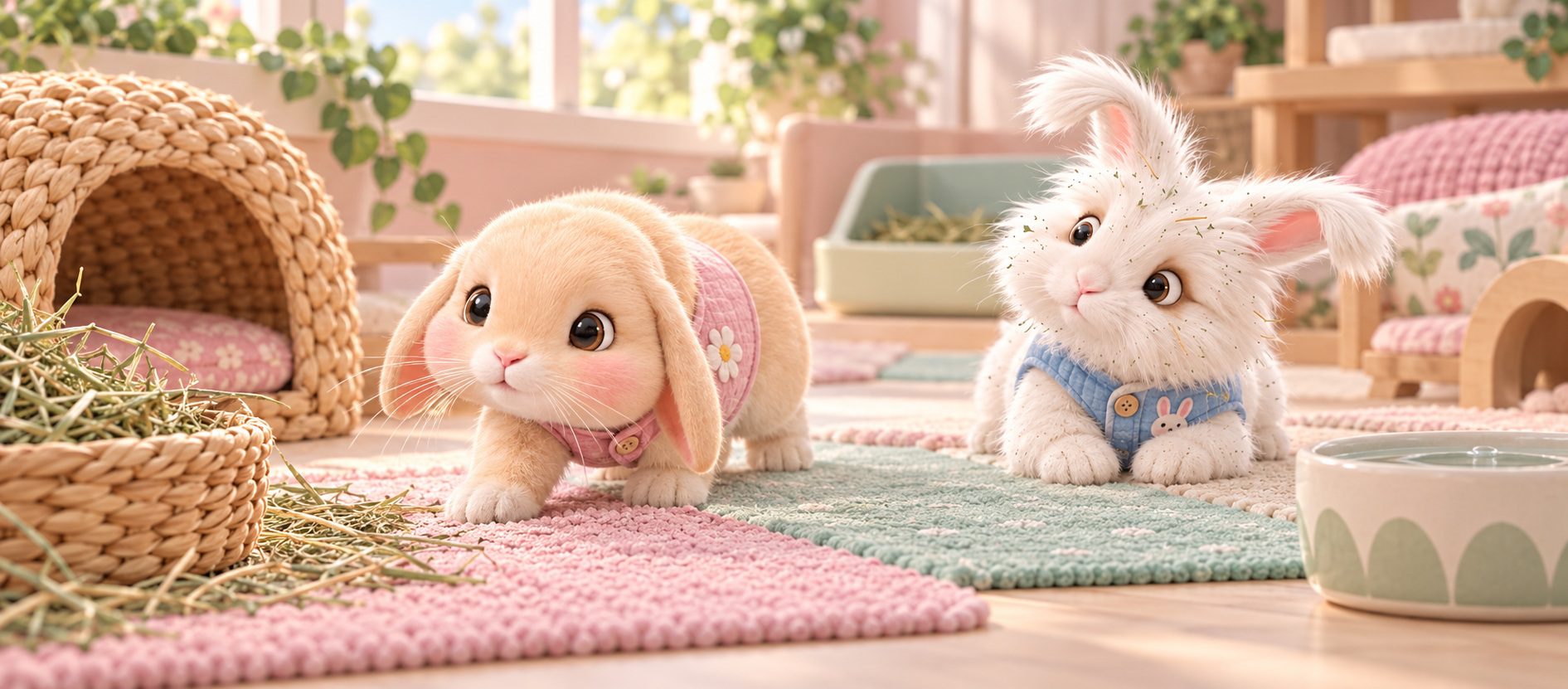
FAMILIAR PLACES · MORE THAN EYESIGHT
How Do Visually Impaired Rabbits Navigate?
Visually impaired rabbits use more than eyesight to explore their surroundings. Whiskers, familiar smells, sounds, textures, and learned routes can all provide clues about what’s nearby and where to go. Understanding these clues helps make blind rabbit care more thoughtful and practical.
Blind and partially sighted rabbits won’t all use these clues in the same way. Their remaining vision, hearing, mobility, and familiarity with the space can differ. Whether you’re caring for blind rabbits or supporting a bunny with partial sight, watch your own rabbit, give them time, and build on what helps them feel confident.

Whiskers: Close-Up Feelers
A rabbit’s whiskers provide sensory information when they brush against nearby objects and surfaces. For visually impaired rabbits, these close-up clues are useful when investigating the edge of a hideaway, a wall, or something unfamiliar.
They aren’t a built-in GPS, but they are working sensory tools. Do not cut or trim your rabbit’s whiskers, including during grooming.
Light, Shadow, and Remaining Vision
Partial sight loss is different from complete blindness. Depending on their condition, a rabbit may still detect some shapes, movement, or differences between light and dark.
Those remaining visual clues may help them orient themselves. Rabbit cataracts and other eye conditions can affect vision differently, so avoid assuming that every bunny sees the same way—or that a rabbit with no useful vision can follow light cues.
A Familiar Bonded Companion
An already bonded rabbit can offer familiar company and reassurance. Some visually impaired rabbits may follow their companion’s movements or settle near them.
Think of a trusted friend rather than a trained guide. Their companion cannot be relied upon to steer them away from hazards, so a safe setup still matters.
Memory and Spatial Familiarity
With time to explore, a rabbit can learn familiar routes between their food, water, litter tray, and favourite resting places. You might think of this as learning their own little map of home.
Keeping essentials in consistent positions is a practical part of blind rabbit care. Leave walking routes clear: even a well-learned route becomes less predictable when someone leaves a bag in the middle of it.
Hearing and Familiar Sound Cues
Your voice, footsteps, and familiar everyday sounds can provide clues about what is happening nearby. Speak softly before approaching so your bunny has a chance to recognise your presence.
Senior rabbit care also means noticing whether your bunny responds to sounds as they used to. Hearing can vary; use the cues they respond to without adding constant noise or treating their hearing as a form of echolocation.
Tactile Cues and Floor Textures
A change in texture underfoot can mark a familiar area. Some rabbits also explore along walls or other stable edges, using contact to gather information about the space.
Secure, non-slip mats can provide both footing and recognisable landmarks for visually impaired rabbits. Keep edges flat and routes free from loose fabric or obstacles.
Smell and Familiar Scent Cues
Familiar smells—from hay to their usual surroundings and companions—can help a rabbit recognise what is nearby. Scent is another part of the picture when eyesight is limited.
Keep their space clean without trying to perfume it into a navigation system. Familiar surroundings matter more than adding strong fragrances.
Time and Daily Routine
Familiar feeding, rest, and activity routines help make the day more predictable. Your bunny can learn what usually happens next without needing to see every detail.
When caring for blind rabbits, keep daily care consistent, allow unhurried exploration, and avoid repeatedly moving them between unfamiliar places.
Further reading on rabbit vision and sensory cues:
What Do Rabbits See? — Dana Krempels, Rabbit.org
A FAMILIAR HOME · GENTLE EVERYDAY SUPPORT
Helping Visually Impaired Rabbits Explore with Confidence
You don’t need to turn your home into an obstacle-free laboratory. Practical blind rabbit care starts with the routes your bunny uses every day: the way to their hay, water, litter tray, and favourite resting spot.
Caring for blind rabbits and partially sighted bunnies means making those journeys more predictable, providing secure footing, and offering support without directing every step. For visually impaired rabbits, familiar surroundings and patient interaction work together.
Home Adjustments for Visually Impaired Rabbits
Rugs and Texture Paths

Use securely placed, non-slip rugs or mats along everyday routes. Different textures can provide recognisable landmarks for visually impaired rabbits while giving them a more secure surface to walk on.
- Keep mat edges flat and check that they don’t slide or bunch up.
- Avoid loose loops, fraying edges, or materials your rabbit pulls apart and swallows.
- Keep routes to food, water, hiding places, and the litter tray clear.
Keep the Layout Predictable
Leave essential items in consistent positions. A familiar room becomes a different place when the water bowl moves, the hideaway turns around, or a delivery box appears in the usual walkway.
Predictability is a useful foundation of blind rabbit care. When changes are necessary, make them gradually where possible. Let your rabbit investigate under supervision rather than placing them in the middle of a newly rearranged space and expecting instant confidence.
Familiar Scents and Landmarks
Keep the hay station and familiar belongings in their usual places. Clean bedding and litter areas regularly; maintaining familiarity doesn’t mean leaving the space dirty.
There’s no need to rub herbs around the room or add fragrances as navigation markers. Keep strong perfumes and scented products away from your rabbit’s living area.
Gentle, Consistent Sound Cues
Speak softly before approaching and use familiar phrases during everyday care, such as “Your hay is here.” Give your rabbit time to respond before reaching towards them.
You don’t need a ticking clock or wind chime beside their resting place. Start with your voice and a calm environment, and pay attention to whether your rabbit finds a sound helpful or unsettling.
Furniture, Boundaries, and Safe Retreats

Stable furniture edges and familiar boundaries can become useful landmarks. Keep routes alongside them clear and provide an accessible hideaway where your rabbit can rest undisturbed.
- Secure unsafe areas. Block stairs, drops, and other hazards with stable, securely fitted barriers suitable for your rabbit.
- Check gaps. Your bunny should not be able to squeeze through, become trapped, or get their head stuck.
- Avoid makeshift obstacles. Loose sheets and exposed foam pool noodles can create chewing or entanglement problems instead of dependable boundaries.
Check Sharp Corners and Projections
Look around at bunny height for projecting furniture corners, handles, and objects along familiar routes. Remove or reposition hazards where possible.
Any protective covering must stay securely attached and be inaccessible for chewing. Check barriers and corner protection regularly rather than assuming they will remain safe indefinitely.
Lighting and Remaining Vision
If your rabbit retains useful vision, observe how they manage in their usual lighting and discuss their needs with your vet. Whether sight loss involves rabbit cataracts or another condition, avoid assuming that a particular light colour will help.
Keep lamps and cables inaccessible, and don’t use glow sticks as navigation aids. Continue providing a normal day-and-night routine rather than leaving bright lights on continuously.
Interactive Support for Visually Impaired Rabbits

A predictable home is the starting point. Caring for blind rabbits also means adapting how we interact: announce your presence, offer gentle guidance, and give them room to make their own choices.
Support doesn’t mean directing every step. Sometimes the most useful thing you can do is sit nearby and let your bunny finish investigating that very important corner.
The Bonded Buddy System

If your rabbit already has a trusted bonded companion, allow them to enjoy familiar activities together. Some visually impaired rabbits may follow their companion or take reassurance from having them nearby.
Let this happen naturally. Their friend isn’t a trained guide, and following another rabbit doesn’t remove the need for secure barriers and clear routes.
For a solo rabbit, a stuffed animal or heartbeat toy should not be presented as an equivalent substitute for a bonded companion. Any comfort item needs checking for chewable parts, exposed stuffing, and accessible batteries or wires.
Gentle Hand Guidance

Speak softly before bringing your hand close. Offer it where your rabbit can investigate by scent, then let them choose whether to approach or follow.
A gentle tap on the floor nearby can be tried as a consistent cue if your bunny responds comfortably. Avoid sudden tapping, loud noises, or reaching in without warning.
Guide without pushing, pulling, or repeatedly picking them up and repositioning them. Pause if your rabbit turns away or seems unsettled.
Optional Clicker or Marker Training
If your rabbit enjoys reward-based interaction, you can use a soft, consistent marker—a quiet click or a short word—to mark an action you want to reward.
For example, mark and reward a voluntary approach to a familiar mat. First help your rabbit learn that the marker predicts a small reward; the sound won’t automatically tell them which direction to travel.
- Keep sessions short, relaxed, and optional.
- Use a sound your rabbit can hear without startling them.
- Use tiny portions of a familiar, suitable food within their normal daily allowance. Never withhold meals to encourage participation.
Grooming Visually Impaired Rabbits: Leave Whiskers Intact
Tell your groomer that your rabbit has limited vision, explain how they prefer to be approached, and ask that their whiskers remain untouched.
Whiskers are sensory tools, not stray hairs to tidy away. Whether your appointment involves senior rabbit care or grooming a younger bunny with sight loss, handling and pauses should suit the individual rabbit.
At Oishi Bunnies, we don’t trim whiskers. Contact Cookie Yiyi to discuss your bunny’s needs before arranging a grooming session at our Boon Keng studio.
Discuss Your Bunny’s Grooming Needs →
THE PERSON BEHIND OISHI BUNNIES
Meet Cookie Yiyi
Founder · Private Rabbit Rescuer · Groomer
Behind Oishi Bunnies is Cookie Yiyi, whose hands-on experience includes rabbit rescue, fostering, rehabilitation, and caring for senior bunnies. Her approach starts with understanding the rabbit in front of her—their habits, comfort, and individual needs.
Barley’s experience with cataracts inspired this guide to visually impaired rabbits. It brings together personal observations and practical care guidance, with veterinary assessment remaining an essential part of understanding changes in a rabbit’s health.