 Pro-Tip: Viewing on a mobile device? Switch your browser to Desktop Mode or
rotate to Landscape Layout for the ultimate masterclass reading layout. Estimated Reading Time: 12–14 mins
Comparing drinking water for rabbits
These categories help organise the discussion, but water labels can overlap. Bottled water may be spring water, RO-treated or alkaline, while “natural” describes its origin rather than establishing its safety or health benefits.
“Purified” describes treatment rather than a separate source or a demonstrated health benefit. Check the treatment method and ingredients behind the label.
1. Everyday Sources
Tap Water?
Yes—rabbits can drink tap water when the supply is potable and household plumbing is sound. For everyday rabbit care, the best water for rabbits doesn’t need an impressive label. It needs to be safe, fresh and readily available. Oxbow’s small-pet guidance recommends tap water when local authorities consider it safe to drink.
In Singapore, PUB states that tap water is suitable for drinking directly without additional filtration. Its quality falls within Singapore’s Food Safety and Security (Non-Packaged Drinking Water) Regulations 2025 and WHO drinking-water guidelines. That makes the municipal supply a sensible starting point when choosing drinking water for rabbits.
There’s quite a journey between a reservoir and your rabbit’s bowl. PUB’s treatment process includes coagulation to bring suspended particles together for removal, filtration to remove finer particles, and disinfection to target harmful microorganisms. Ammonia is added to form chloramines, a more stable disinfectant residual. Singapore has also fluoridated its public supply since 1957 for human dental-health purposes; this is not an added rabbit-health benefit. PUB describes the finished tap water as moderately soft.
PUB conducts close to 500,000 tests annually, covering physical, chemical, radiological and microbiological parameters. Sampling spans reservoirs, treatment facilities and distribution systems, with online sensors providing real-time checks during treatment and at service reservoirs. Household tanks, plumbing problems and any local water advisories still matter.
NEWater
Singapore’s tap water is not entirely NEWater. NEWater is reclaimed water produced from treated used water through membrane filtration, reverse osmosis and ultraviolet disinfection. It mainly supplies industrial processes and air-conditioning cooling through a dedicated pipe network.
During dry periods, NEWater is also added to reservoirs, where it blends with raw water. That blend undergoes further treatment at the waterworks before reaching households as tap water. Your kitchen tap therefore does not deliver the same standalone product as a bottle of NEWater. PUB’s page does not specify a fixed percentage of NEWater reaching household taps.
What does this mean for your rabbit’s bowl? The practical consideration is the quality of the finished drinking-water supply. NEWater’s use in that supply does not, by itself, give pawrents a reason to switch water types. PUB’s guidance remains that Singapore tap water is suitable for drinking directly without further filtration.
Bottled Water
Bottled water is not automatically the best water for rabbits, but plain, still bottled drinking water can be useful during travel, supply interruptions or a water-quality problem. “Bottled” alone does not identify its mineral content or treatment method.
Choose water intended for drinking. Check the label for added flavours, sweeteners, vitamins or electrolyte blends.
2. Natural Sources
Spring and mineral water
Spring water and mineral water are not interchangeable terms, and their composition varies by source. Look at calcium, magnesium and sodium rather than assuming “natural” means better.
Mineral content alone does not make a product the best water for rabbits. There is no established reason to buy mineral water as a rabbit supplement. Oxbow takes a precautionary approach and advises against routine long-term mineral-water use when tap water is available. This is care guidance, not proof that every mineral water harms rabbits.
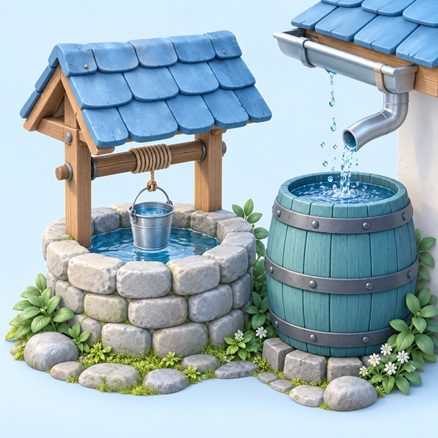
Well water and collected rainwater
Private well water needs appropriate testing for microbes and chemical contamination. Water can look clear while containing contaminants. Rainwater collection also introduces risks from roofs, gutters, wildlife and storage.
Haze, grey rainwater and your rabbit’s bowl
Seeing dark residue in a rain-filled pail can understandably make you look twice at the kitchen tap.
Rain can capture airborne pollutant particles as it falls, transferring some of that material from the air into the water. This removal process is commonly called wet deposition, or rain scavenging. However, the colour of collected rainwater alone cannot identify its contents or tell us how much contamination came from the air, collection surface or container.
An NIE explanation of rainfall and haze confirms that rainfall can reduce airborne particle concentrations, but the relief may be temporary. Clearer skies after a shower do not necessarily mean the haze has disappeared.
A pail of collected rainwater and treated tap water have very different journeys. PUB treats raw water before distribution and checks water quality throughout its supply system. Murky rainwater therefore does not, by itself, show that household tap water is unsafe. Follow any specific water advisory if one is issued.
For practical rabbit care:
- Fill drinking bowls from a dependable potable supply.
- Keep bowls sheltered from rain, outdoor runoff and visible residue.
- Replace water and wash the bowl if rainwater or debris enters it.
- Avoid using untreated collected rainwater as drinking water for rabbits.
- If tap water develops an unusual colour, smell or visible particles, use another known-safe drinking supply while checking with building management or PUB.
These are practical precautions based on keeping the drinking supply clean—not findings from a rabbit-specific haze-water trial.
3. Filtered and Treated Water
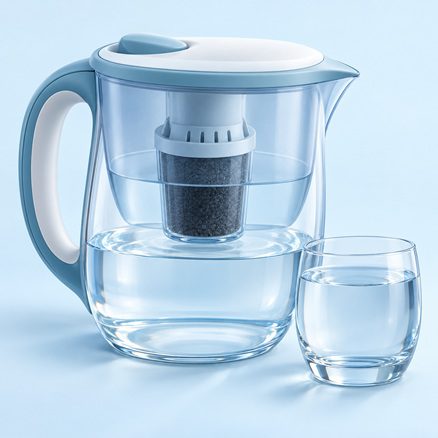
Activated-carbon filtered water
Filtered drinking water for rabbits can be useful when the filter addresses a particular water-quality concern. Carbon filters commonly improve chlorine-related taste and odour. Some certified products also reduce specific contaminants, such as lead. Their capabilities depend on the exact filter.
Singapore’s treatment process includes adding ammonia to form chloramines, a stable disinfectant residual, and adding fluoride for dental-health purposes. Chloramine reduction is a separate performance claim from chlorine taste-and-odour reduction: a chlorine claim alone does not establish chloramine performance. If chloramine reduction is your aim, check the exact model’s certified claim and rated capacity, rather than relying on the word “carbon.” PUB and NSF’s claims guide explain the treatment and certification distinctions.
A basic carbon filter does not necessarily soften water, substantially remove calcium or make contaminated water microbiologically safe. Replace cartridges and clean reservoirs according to instructions.
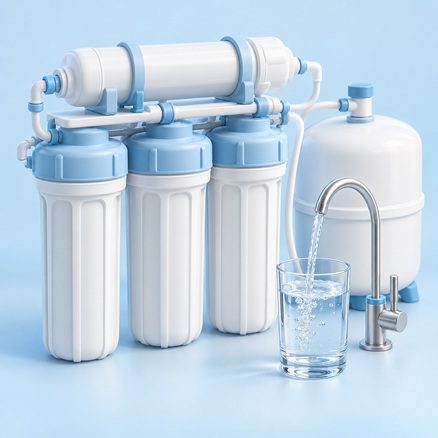
Reverse-osmosis drinking water for rabbits
Reverse osmosis uses a membrane to reduce many dissolved substances. Depending on the system, this can include calcium, magnesium, sodium and particular contaminants.
RO water may contain few minerals, although some systems add minerals afterwards. Neither low mineral content nor remineralisation alone establishes that the water is better for rabbits.
There is no rabbit-specific evidence here establishing that every RO supply needs remineralisation. Removing minerals from already suitable water does not, by itself, demonstrate an improvement in rabbit health.
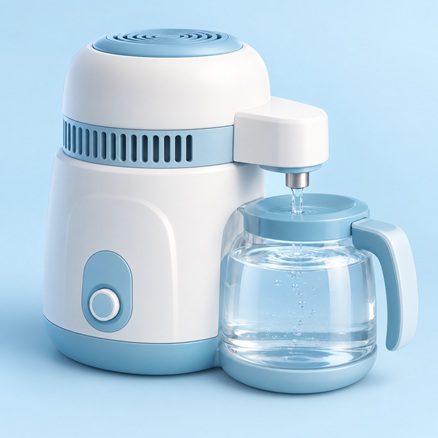
Distilled water
Distillation collects condensed steam, leaving most dissolved minerals behind. Low mineral content does not make water nutritionally complete—or automatically toxic.
Lafeber’s rabbit-care article advises against long-term distilled-water use and notes that a small amount is acceptable. Oxbow likewise discourages routine use, allowing an emergency exception because of a possible nutritional-deficiency risk. These are published care recommendations; neither page presents a controlled rabbit trial demonstrating deficiencies in rabbits eating a balanced diet.
Human research on demineralised water
Four studies in the Sunardi review examined demineralised water. The review reported poorer intake of certain nutrients with long-term consumption. This human finding does not establish that distilled water causes deficiencies in rabbits eating a balanced diet, and it should not be treated as a result specific to every RO or distilled-water system.
What this means for rabbits
Distillation removes most dissolved minerals, but mineral intake must be considered across the whole diet, including food. Low mineral content alone does not establish that drinking distilled water will “leach” minerals from a rabbit’s body or cause an electrolyte imbalance. Those mechanisms are not demonstrated by the sources reviewed here.
For long-term water choices, especially in rabbits with urinary or kidney disease, ask a rabbit-savvy vet to assess the overall diet, water supply and medical findings. The sources reviewed here do not establish distilled water as a standard short-term treatment for bladder stones or sludge.
Use only water labelled for drinking; products sold for technical or industrial use are not interchangeable.
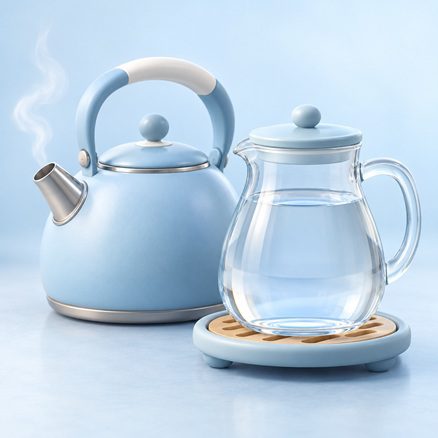
Boiled and cooled water
Boiling can control many infectious hazards when used correctly. It does not reliably remove dissolved minerals, salts or chemical contaminants. It therefore does not turn hard water into low-calcium water.
Let boiled water cool before offering it and store it hygienically. PUB describes Singapore tap water as safe to drink straight from the tap.
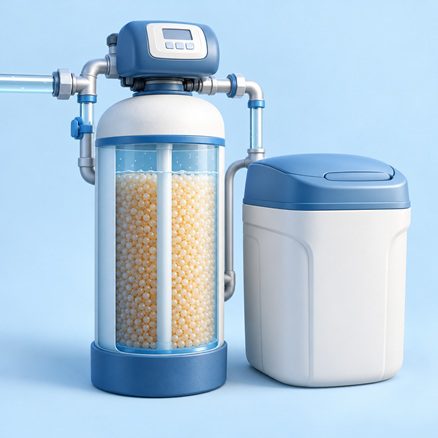
Softened water
Naturally soft water is different from water treated by an ion-exchange softener. Some softeners replace calcium and magnesium with sodium; other systems work differently.
Oxbow advises against offering softened water unless an exotics veterinarian recommends it. Check the system rather than assuming “soft” means rabbit-friendly.
4. Specialty Drinking Water
Rabbit-specific research on most specialty waters is thin. That means their benefits and long-term effects are uncertain, not proven absent. Fresh, potable plain water stays the practical default. It meets a rabbit’s hydration needs without needing a health claim to back it up.
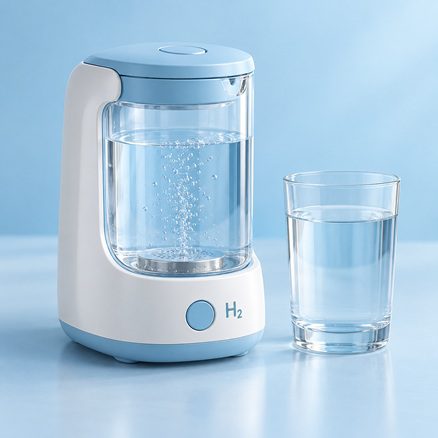
Hydrogen-rich water: what does the machine add?
That unexpected answer at the pet blessing sent me looking beyond the water bowl, towards the machine filling it. Could adding hydrogen make a meaningful difference?
So what is hydrogen-rich water?
It’s water with extra dissolved molecular hydrogen, H₂. The water itself is still H₂O. Here, we’re looking at water made by electrolysis machines. These use electricity to generate hydrogen at the negative electrode, or cathode, and some of that gas dissolves into the drinking water.
Not every machine makes the same water
Machine design matters. Some machines make alkaline water that contains hydrogen. Others add hydrogen with relatively little change in pH. Hydrogen concentration and alkalinity are separate properties, so findings from one preparation don’t automatically apply to another.
That’s the first rule for reading any hydrogen-water claim: ask which machine, which water and which settings the study used.
What has the research found?
Researchers are investigating hydrogen’s possible effects on oxidative stress and inflammation. Human studies using electrolysis machines have reported some encouraging changes in laboratory markers. The two larger randomised trials summarised here, in people with diabetes or metabolic syndrome, didn’t find significant improvements in their main outcomes, although some secondary and subgroup findings gave researchers more to investigate.
The smaller studies are harder to read. One had no control group, and in another the two waters differed in both pH and hydrogen, so the results can’t be pinned on hydrogen alone. None of the human work involved rabbits. The table below sets out each study for the curious.
What does safety research tell us?
Safety research offers some reassurance. A study of neutral-pH electrolysed hydrogen water found no treatment-related toxic changes in rats over 28 days. That describes the tested preparation and exposure. It doesn’t establish lifelong safety for rabbits.
Molecule size, concentration and the water in the bowl
The hydrogen molecule is always H₂. A machine can’t make a smaller version. “Microbubble” and “nanobubble” describe bubbles holding many gas molecules, not smaller hydrogen molecules. No particular bubble size or hydrogen concentration has been established as best for rabbit absorption or health.
If you’re comparing machines, these are the details worth asking for:
- directly measured dissolved hydrogen in mg/L
- final pH
- output-water quality
- measurements taken after pouring into an open bowl
A negative ORP (oxidation-reduction potential) reading can’t stand in for a hydrogen measurement, because pH and other substances affect it too.
Does the hydrogen last?
Hydrogen can escape over time. Container material, temperature, exposure to air and handling all affect how much stays in the water. Sealed-container results can’t tell us exactly how much remains when a rabbit returns for another sip. Comfortable drinking conditions and continuous access to water matter more than preserving a number on a display.
Our lovely 15-year-old bunny friend sparked a worthwhile question. The research gives us more to explore, but it can’t yet tell us whether hydrogen water contributed to her sparkling appearance.
A closer look: studies of machine-generated hydrogen water
These studies tested electrolysed preparations. Read each one in light of its device, water chemistry, participants and outcomes.
| Study | Preparation and participants | Findings and limits |
|---|---|---|
| Alternating-current electrolysis, 2020 | Approximately 1.55 mg/L hydrogen, pH 7.7–7.8. Nine people with elevated diabetes-related markers drank 1.5 litres daily for eight weeks. | Several glucose-related and oxidative-damage markers improved. The study had no parallel control group, so it couldn’t establish that the water caused the changes. |
| OASIS-ERW randomised trial, 2020 | Approximately 0.59 mg/L hydrogen, pH 9.4. Electrolysed-reduced water versus mineral water for eight weeks; 53 participants completed the study. | Some oxidative-stress measures improved, while other outcomes showed no clear treatment effect. Both pH and hydrogen differed between the waters, which makes it hard to attribute results specifically to hydrogen. |
| Randomised diabetes trial, 2021/2022 | Fifty adults assigned to home-generated electrolysed hydrogen water or filtered water for three months. | No significant between-group improvement in the primary insulin-resistance measure. Researchers reported secondary findings involving lactate and exploratory associations. The study received manufacturer funding and included manufacturer employees as authors. |
| Randomised metabolic-syndrome trial, 2024 | Electrolysed hydrogen water versus filtered water for three months; 181 participants analysed. | No significant differences in the overall primary or secondary outcomes. A smaller, more physically active subgroup showed reduced waist circumference; this needs confirmation. |
Safety testing: A 2010 study tested neutral-pH electrolysed water containing 0.90–1.14 ppm hydrogen. Laboratory tests found no mutation or chromosome-damage signals. Rats given 20 mL/kg daily by stomach administration for 28 days showed no treatment-related toxic changes in the assessed clinical, blood and tissue measures. This exposure is not a rabbit drinking recommendation.
Output chemistry: A 2021 hydrogen-bottle study reported approximately 0.44 mg/L hydrogen after ten minutes using tap water. Residual free chlorine fell from 0.18 to 0.12 mg/L, and ozone was below detection. These findings apply to the tested device and conditions. They don’t establish every machine’s output quality.
Understanding the numbers: In dilute water, 1 mg/L is approximately 1 ppm. The concentrations reported in these studies describe the preparations. They are not a proven safe or effective range for rabbits. Human breath measurements and rat tissue measurements show uptake after drinking, but they don’t establish a rabbit dose.
Retention and measurement: Container and temperature research shows why storage conditions matter. An analysis of ORP measurement explains why ORP can’t reliably estimate dissolved hydrogen. Measuring the actual water at the point of drinking tells you more than relying on a generator’s initial reading.
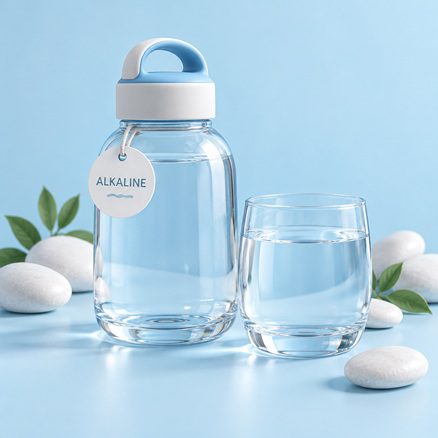
Alkaline and ionised water
Alkaline water has an elevated pH. Some products get there through minerals, others through electrolysis. An electrolysed product may also contain dissolved hydrogen, but alkalinity and hydrogen concentration are separate properties.
Human research: A systematic review published in a 2024 journal issue included 10 human studies, two of which examined alkaline water. Compared with mineral water, the alkaline-water studies showed no significant differences in the reported health measures. This small evidence base doesn’t settle every proposed benefit.
What this means for rabbits: A rabbit’s normally alkaline urine isn’t a reason to make its drinking water more alkaline. Nor does that fact alone prove alkaline water will cause urinary disease. Oxbow recommends avoiding alkaline water unless an exotics veterinarian specifically advises it. That’s a precaution, not evidence that every mildly alkaline water is toxic.
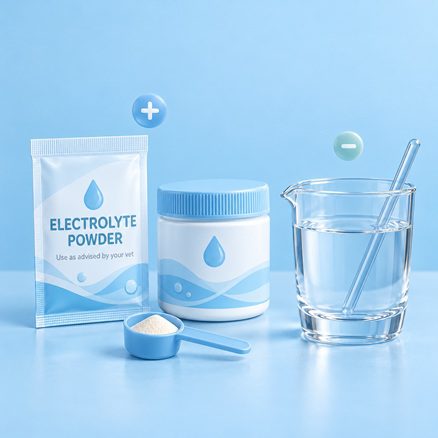
Electrolyte water
Human electrolyte waters contain added minerals such as sodium and potassium. Formulations vary, and they aren’t interchangeable with veterinary oral-rehydration products.
For rabbits, the useful version is the veterinary one: oral-rehydration powders that you mix with water. These belong in a veterinary-directed fluid plan during illness. An individual rabbit’s needs depend on its condition and the product’s composition, so ask your vet which product to use and how.
Human research: Evidence on human sports drinks and oral rehydration addresses particular fluid-loss situations and formulations. This article doesn’t assess a specific electrolyte product, or use that evidence to recommend one for rabbits.
Vitamin and flavoured water
These products may contain vitamins, sugars, sweeteners, acids or other ingredients. The full ingredient list matters more than the label on the front.
Human research: Results for one formulation can’t establish benefits for another, and human findings can’t determine rabbit nutritional requirements. No specific vitamin-water or flavoured-water trial is assessed here.
What this means for rabbits: A vet may suggest carefully chosen flavouring to encourage an individual rabbit to drink. That’s different from routinely offering commercial wellness waters or adding supplements to every bowl.
Sparkling water
Offer plain, still drinking water rather than sparkling. Sparkling water contains dissolved carbon dioxide, which is different from hydrogen-rich water. Flavoured carbonated drinks may also contain sugars, sweeteners or acids that need separate consideration.
What is known about rabbits’ digestion?
Rabbits can’t vomit. Veterinary references describe gastrointestinal stasis and acute gastric dilation as serious conditions, with intestinal obstruction among the causes of dangerous stomach distension. These clinical facts don’t, on their own, show that drinking sparkling water causes GI stasis or stomach rupture. The sources reviewed here don’t establish the dose, likelihood or mechanism of harm from plain sparkling water in pet rabbits.
What this means for rabbits
Avoid carbonated drinks as drinking water. That’s a precaution, not a claim that a small accidental sip is an emergency. If a rabbit develops a swollen abdomen, pain, reduced appetite or fewer droppings, seek prompt veterinary assessment regardless of what it drank.
Rabbit care basics: the bowl still matters
Rabbit preference research supports offering an open bowl. In Tschudin’s diet-and-intake study, though, drinker type didn’t significantly affect intake when water was freely available. Bowls increased intake under restricted access. Preference and greater daily intake are different findings.
Choose a stable, food-safe bowl your rabbit can reach comfortably, and keep water available continuously. See The Hydration Equation: Bowl vs Bottle for the apparatus comparison.
Good rabbit care includes replacing water at least daily, and sooner if it’s contaminated, and cleaning the container thoroughly. Check bottle flow if a bottle is also provided. Fountain filters don’t replace cleaning.
Choosing the best water also means watching what each rabbit actually drinks. If changing the water changes its willingness to drink, reconsider the change. A marked change in drinking, especially alongside reduced appetite, fewer droppings, pain or straining, needs veterinary attention rather than another water product.